What to See in Larnaca, Cyprus: Free Audio Guide
Things to do in Larnaca
Larnaca is a coastal city on the island of Cyprus where ancient ruins, seaside promenades and multicultural monuments sit side by side. Its layered past—from the Bronze Age settlement of Kition to Ottoman aqueducts and modern churches—makes it a rewarding place to explore on foot. Neywo offers a free audio guide for Larnaca with 19 narrated places, letting you hear the story of each site as you walk.
Top sights to explore
Hala Sultan Tekke
The Hala Sultan Tekke complex combines an ancient archaeological site with an Ottoman‑era mosque on the western shore of Larnaca Salt Lake. The settlement dates back to around 1650 BC and flourished between the 12th and 13th centuries BC when the lake was still open to the sea and served as a protected harbour. Tectonic shifts later raised the area, the site was destroyed twice and finally abandoned circa 1150 BC. Although its original name is unknown, it is also referred to as Dromolaxia Vyzakia and covers at least sixty acres.
Larnaca Castle
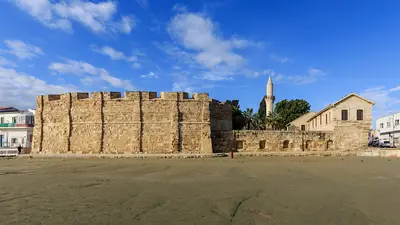
Overlooking the seafront, Larnaca Castle (Greek: Κάστρο Λάρνακας, Turkish: Larnaka Kalesi) was erected to guard Cyprus’s southern coast and its harbour town. Over time it functioned as an artillery station, a prison and now houses the Larnaka Medieval Museum. Its stone walls and seaside position make it a prominent landmark on the waterfront.
Church of Saint Lazarus
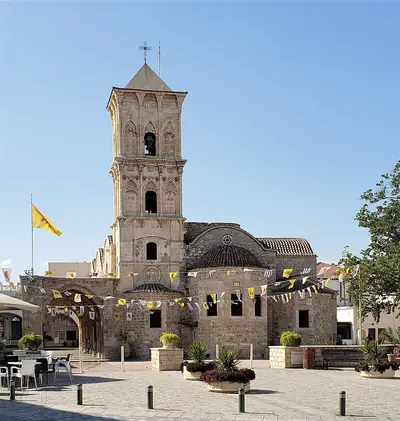
This late‑ninth‑century Greek Orthodox church (Agios Lazaros) is dedicated to Lazarus of Bethany, whom tradition says fled to Cyprus after being raised from the dead. According to local belief, the apostles Paul and Barnabas appointed him the first bishop of Kition, and the church was built over what is regarded as his second tomb. Lazarus is thought to have lived in Larnaca for about thirty more years before dying and being buried here for the final time.
Larnaca District Archaeological Museum
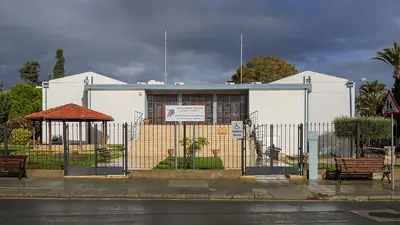
Situated a short walk from the remains of ancient Kition, the museum provides a compact overview of the region’s history. Two exhibition halls display finds from Kition as well as artefacts from the Neolithic settlement of Choirokoitia, located roughly twenty kilometres southwest. Opened in 1969 and overseen by the Department of Antiquities, its permanent exhibition was refreshed in 2022 with material from recent digs. The courtyard features larger archaeological pieces and a restored olive press, while an adjacent open area reveals additional structural remains.
Terra Santa Our Lady of Grace Catholic Church
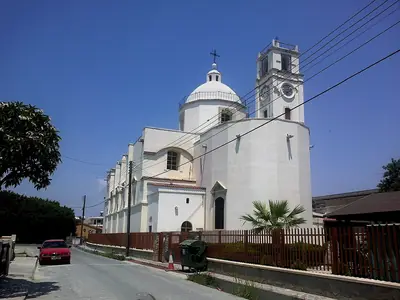
Also known as St. Mary’s Church, this Catholic landmark belongs to a Franciscan monastery that has been present in Larnaca since 1593. The present building is the third on the site; its foundation stone was laid on 10 July 1842 and it was consecrated on 8 December 1848 by Father Bernardino Trionfetti. Designed by Serafino Da Roccascelima, the church follows a Latin‑cross plan with three narthexes, a dome, a peristyle and a bell tower rising from a square base. Although consecrated in 1848, the façade was only completed in 1993, and the complex has housed a retirement home since 1972.
Europe Square
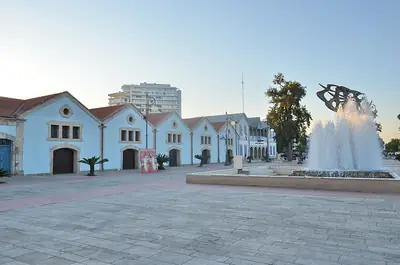
This urban space incorporates the Municipal Art Gallery Larnaka (also called the Larnaca Municipal Gallery) and the nearby sculpture Seagulls in Flight. According to 2021 data, the Larnaca district had a population of 155 753, with 58.1 percent living in urban zones. Part of the district remains under the de facto administration of Northern Cyprus following the 1974 division of the island.
Pierides Museum
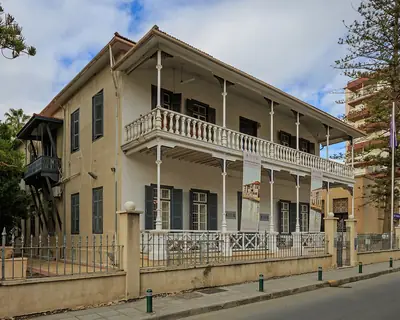
Housed in the former Pierides family residence—a colonial‑style building dating from 1825—the Pierides Museum is Cyprus’s oldest private museum. It originated from the nineteenth‑century collecting efforts of Demetrios Pierides, who sought to safeguard the island’s antiquities. Over five generations the family expanded the collection, which now traces Cypriot history from the Neolithic period through the Bronze Age, Geometric, Archaic, Hellenistic, Roman and Byzantine Medieval eras.
Larnaca Salt Lake
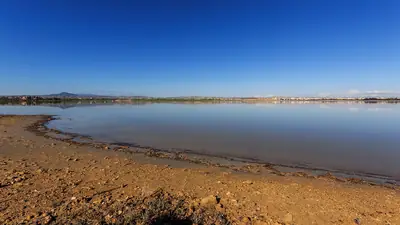
Just outside the city, a chain of four interconnected salt lakes forms a striking seasonal landscape. In winter the lakes fill with water and attract thousands of flamingos, often giving the surface a pink hue. Summer evaporation leaves a crust of salt and a grey dust haze; historically salt was gathered with donkeys and piled into pyramids near the shore, a practice that ended in 1986. The western shore hosts Hala Sultan Tekke, linked to Ottoman Islam and the tomb of Umm Haram. A local tale connects the lake to Saint Lazarus, while a scientific explanation points to seawater entering through porous rock.
Bekir Pasha Aqueduct (Kamares Aqueduct)
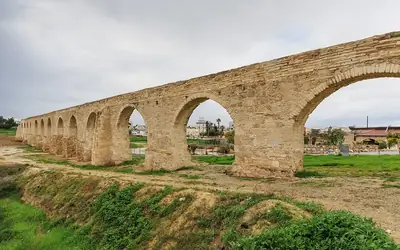
Located a short distance from the old road to Limassol, this Ottoman‑era aqueduct is famed for its long row of arches, some of which are illuminated at night. Construction began in 1747 and finished in 1750 under the patronage of Abu Bekir Pasha, the Ottoman governor of Larnaca. It remained in service until 1939, delivering fresh water to the city for nearly two centuries. The structure contains seventy‑five arches and is regarded as one of the most important Ottoman monuments in Cyprus; historian Tassos Mikropoulos described it as the island’s most prominent water‑supply work.
Larnaca International Airport
Situated southwest of the city, Larnaca International Airport (codes LCA/LCLK) is Cyprus’s main international gateway and the larger of the two commercial airports controlled by the Republic of Cyprus. Its current name, adopted in July 2016, honours former president Glafcos Clerides (1993‑2003). The principal terminal opened in November 2009, spread over two levels with departures on one floor and arrivals on the other, and features sixteen air‑bridges for passenger boarding. A second terminal serves as a reserve facility and is also used for private aircraft, cargo flights and official visits.
Kyriazis Medical Museum
This museum focuses on the medical, healing and health traditions of Cyprus. Its collections trace medical practice from antiquity through the twentieth century, presenting instruments, textbooks and archival documents that illustrate how healing was carried out across the ages. Visitors gain a concise picture of the island’s medical heritage.
Kition
The ancient city‑kingdom of Kition (Latin: Citium) lay on Cyprus’s southern coast and was shaped by successive Greek, Phoenician, Assyrian, Egyptian, Persian, Macedonian and Roman influences. The earliest evidence dates to the thirteenth century BC. Excavations at Kathari uncovered an inscription identifying Greeks as the original founders, along with five successive temples and copper‑working workshops from the late thirteenth to late eleventh centuries BC. During this era Kition prospered and was inhabited by Mycenaean Achaeans. After these early buildings were destroyed, Phoenicians erected a monumental temple around 850 BC, identified with the cult of Astarte, which remained in use until the start of the third century BC. Phoenician and Greek communities coexisted, with the Greek population concentrated in the southern part of the city. Kition later fell under Assyrian rule in the seventh century BC, among other powers.
Sourp Stepanos (Armenian Church)
Founded by Armenian refugees fleeing the Adana massacre, Sourp Stepanos began as a small chapel in 1909 dedicated to the patron saint of Adana. Fundraising in 1912‑1913 enabled its completion on 1 April 1913; it was inaugurated on 20 April 1914 and consecrated on 30 June 1918. An inscription at the entrance marks the dedication to the Cilician Martyrs and repeats the 1909 date. The church is regarded as the world’s first monument commemorating the Armenian massacres, predating the Armenian Genocide. Inside, icons adorn the walls, the wooden altar dates from 1909 and the central icon was painted in 1913. The building has undergone renovations in 1956, 1957, 1998, 2022‑2023 and again in 2025, and an external narthex (kavit) was added between 2020 and the present.
Chrysosotiros Church
Located at Plateia Mitropoleos, this Orthodox landmark is also known as Sotiros (Σωτήρος). It stands on one corner of the ancient necropolis of Kition, linking the site to the much older name of Larnaca used in the twelfth century BC.
Chryspolitissa Orthodox Church
Also called Panagia Chrysopolitissa, this church reflects a long dedication to the Virgin Mary. Built in the eighteenth century, it most likely rests on the foundations of an earlier place of worship, giving it a deep historical layer within the city.
Explore Larnaca with Neywo
Neywo’s free audio guide turns a simple walk into a self‑guided discovery of Larnaca’s stories. The app offers three walking routes and one bus route:
- Larnaca in One Walk: Castle, Saints and Ancient Kition – 3.69 km, 119 minutes, 12 stops (Larnaca Castle, Djami Kebir mosque, Church of Saint Lazarus, Larnaca Synagogue, Sourp Stepanos, Pierides Museum, Municipal Art Gallery Larnaka, Armenian Genocide Memorial, Larnaca District Archaeological Museum, Kyriazis Medical Museum, Chryspolitissa Orthodox Church, Terra Santa Our Lady of Grace Catholic Church).
- Many Faiths, One Town – 3.06 km, 82 minutes, 7 stops (Djami Kebir mosque, Church of Saint Lazarus, Larnaca Synagogue, Sourp Stepanos, Chryspolitissa Orthodox Church, Terra Santa Our Lady of Grace Catholic Church, Chrysosotiros church).
- Collectors, Doctors and a Lost City – 2.37 km, 59 minutes, 5 stops (Pierides Museum, Municipal Art Gallery Larnaka, Larnaca District Archaeological Museum, Kyriazis Medical Museum, Kition).
- Larnaca Loop: Station, Harbour and the Old Town – 14.9 km, 64 minutes, 7 stops (Kyriazis Medical Museum, Larnaca District Archaeological Museum, Municipal Art Gallery Larnaka, Larnaca Castle, Larnaca Synagogue, Terra Santa Our Lady of Grace Catholic Church, Chryspolitissa Orthodox Church).
As you approach each point, the app plays a narrated story that explains the place’s significance, letting you move at your own pace with no group timetable or schedule. The narration is available in eleven languages, so you can choose the one that suits you best. Download Neywo today and let the city reveal its layers, one story at a time.
Places with an audio guide in Larnaca
8 places in Larnaca with a Neywo audio guide. Each one starts telling its story as you reach it.
Self-guided tours in Larnaca
4 tours in Larnaca, free in the Neywo app. Each stop tells its story as you reach it.
- Bus ride
Larnaca Loop: Station, Harbour and the Old Town
Local bus 427 is a circular ride from Larnaca Station through the harbour, the old hospital, Foinikoudes and the new hospital. Ride it to pass the medical museum, the archaeological museum, the seafront castle, the synagogue and the churches of Terra Santa and Chrysopolitissa.
Kyriazis Medical Museum · Larnaca District Archaeological Museum · Municipal Art Gallery Larnaka · Larnaca Castle · Larnaca Synagogue · Terra Santa Our Lady of Grace Catholic Church …
Open this tour: Larnaca Loop: Station, Harbour and the Old Town - Walk
Larnaca in One Walk: Castle, Saints and Ancient Kition
Start at the sea-facing castle and finish at the Franciscan church of Terra Santa, passing the mosque, the tomb church of Saint Lazarus, the Armenian church and the museums of the old town. It is the full sweep of Larnaca, from Ottoman and Byzantine monuments to the memorial where Armenian refugees first landed.
Larnaca Castle · Djami Kebir mosque · Church of Saint Lazarus, Larnaca · Larnaca Synagogue · Sourp Stepanos · Pierides Museum …
Open this tour: Larnaca in One Walk: Castle, Saints and Ancient Kition - Walk
Many Faiths, One Town
In barely two kilometres Larnaca packs a mosque, a Byzantine church said to hold the tomb of Lazarus, a modern synagogue, an Armenian church and Orthodox and Catholic landmarks. A walk through the town's religious map and the communities that built it.
Djami Kebir mosque · Church of Saint Lazarus, Larnaca · Larnaca Synagogue · Sourp Stepanos · Chryspolitissa Orthodox Church · Terra Santa Our Lady of Grace Catholic Church …
Open this tour: Many Faiths, One Town - Walk
Collectors, Doctors and a Lost City
Cyprus's oldest private museum, a municipal gallery by the sea, the district archaeological museum and a museum of medicine, ending at the site of ancient Kition, the city-kingdom that became Larnaca.
Pierides Museum · Municipal Art Gallery Larnaka · Larnaca District Archaeological Museum · Kyriazis Medical Museum · Kition
Open this tour: Collectors, Doctors and a Lost City
Walk Larnaca with Neywo
Neywo turns Larnaca into a self-guided audio tour. Stories arrive as you reach the place they belong to, and the route reshapes when you wander off it.

