What to See in Helsinki, Finland: Free Audio Guide
Things to Do in Helsinki: What to See in Finland’s Capital
The best things to do in Helsinki include exploring historic squares, striking churches, art museums, modern architecture and a sea fortress spread across rocky islands. Finland’s capital brings together Swedish, Russian and Finnish influences with a distinctive design culture and a strong connection to the sea. Neywo’s free Helsinki audio guide covers 87 narrated places, helping you discover the city as you walk.
What to See in Helsinki
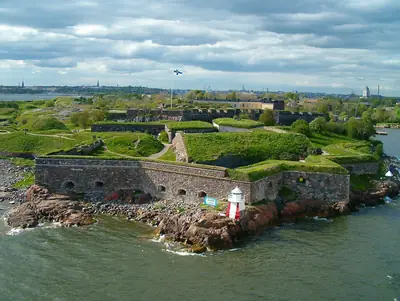
Suomenlinna
Just off Helsinki, Suomenlinna is a sea fortress built across eight islands. It is also known by its older names, Sveaborg and Viapori. Construction began in 1748 under the Swedish Crown, with Admiral Augustin Ehrensvärd responsible for the fortification work.
The fortress was designed as a star-fort system adapted to rocky islands, with bastions and casemates—openings that helped evacuate smoke after firing. Russian forces besieged Suomenlinna during the Finnish War, and the fortress surrendered on 3 May 1808 after two months. That event helped pave the way for Russia’s seizure of Finland in 1809.
The fortress later served as a base for the Baltic Fleet during the First World War. After Finland declared independence in 1917, Russian forces abandoned it. Its name changed to Suomenlinna, meaning “Fortress of Finland”, in 1918.
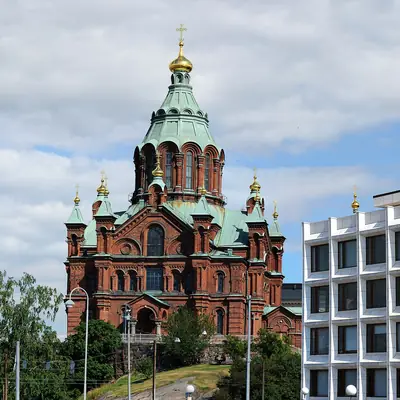
Uspenski Cathedral
Uspenski Cathedral is the main cathedral of the Orthodox Church of Finland and one of Helsinki’s most prominent landmarks. Dedicated to the Dormition of the Theotokos, it was completed in 1868 after six years of work. The Russian architect Alexey Gomostaev designed the building, although he died before its completion.
Inside, the cathedral contains icons valued as art antiquities. A crypt chapel is dedicated to Alexander Hotovitzky, one of the church’s former vicars. The cathedral’s elevated position also gives it a strong presence over the surrounding city and harbor area.
Helsinki Cathedral and Senate Square
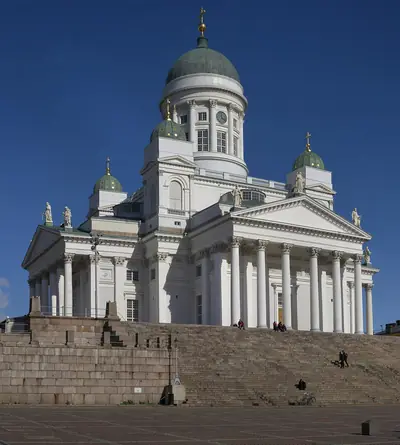
Helsinki Cathedral dominates Senate Square in the Kruununhaka neighborhood. It is the main Lutheran cathedral of the Diocese of Helsinki and one of the city’s most recognizable symbols.
The present cathedral was built between 1830 and 1852 on the site of the earlier Ulrika Eleonora Church. Its construction formed part of the redevelopment of central Helsinki after the city became the capital of the Grand Duchy of Finland in 1812. It was first called Saint Nicholas’ Church, then the Great Church after Finland’s independence, before receiving its current name in 1959.
The building appears white from a distance, although its façade is painted in three light gray shades. Its position above Senate Square makes the church and its surrounding neoclassical ensemble one of the essential sights to see in Helsinki.
Ateneum
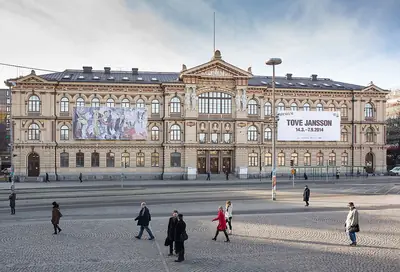
Ateneum is one of Finland’s most important art museums. It stands on Rautatientori Square, close to Helsinki Central Railway Station, in a neoclassical building designed by Theodor Höijer and completed in 1887.
The façade is decorated with busts of famous artists, including Raphael, as well as four female figures representing architecture, painting, sculpture and geometry. Above them, Pallas Athene represents art and wisdom.
Inside, Ateneum presents Finnish art from the 18th to the 20th centuries. Its collection includes works by Akseli Gallen-Kallela, Albert Edelfelt and Helene Schjerfbeck, allowing visitors to follow the development of Finnish painting and sculpture.
Temppeliaukio Church
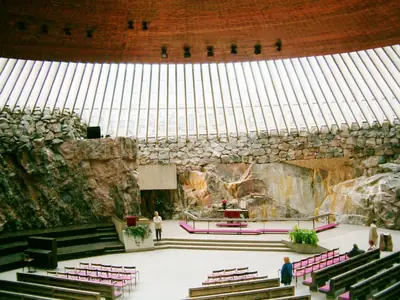
Temppeliaukio Church, often called the Rock Church, is built directly into solid granite. Its rough rock walls remain exposed around the circular sanctuary, while daylight enters through a ring of skylights beneath the large copper dome.
The dome is made from copper strips supported by concrete radial beams. Together with the uneven granite, it creates the church’s distinctive interior and excellent acoustics. The building is also used as a concert venue. Instead of traditional bells, recorded bell ringing is used.
Kiasma
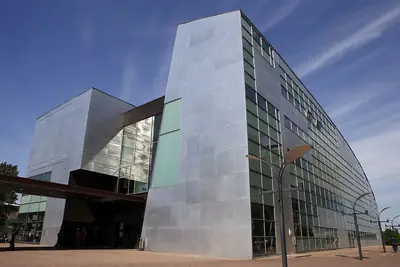
Kiasma is Finland’s leading museum of contemporary art and part of the Finnish National Gallery. It opened in 1998 and presents contemporary Finnish and international art.
The building is designed to shape the visitor’s movement through the museum. Sloping concrete ramps guide visitors through the central atrium in a slow spiral, while the galleries use curved walls, irregular angles and carefully controlled natural light. The name refers to the chiasma, the crossing point of the optic nerves—a fitting idea for a museum dedicated to new ways of seeing the world.
Sibelius Monument
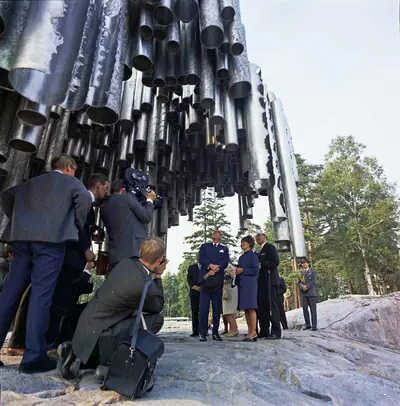
In Sibelius Park, the Sibelius Monument pays tribute to Finnish composer Jean Sibelius. Created by sculptor Eila Hiltunen, it was unveiled on 7 September 1967.
The main structure consists of 569 acid-resistant stainless-steel pipes arranged in an undulating, wave-like cluster. The sculpture measures about 8.5 by 10.5 by 6.5 metres and weighs 24 tonnes. Visitors can step inside the cavity formed by the pipes, where echoes and sounds from voices, wind, rain and birdsong become part of the experience.
Vesikko
Vesikko is a Finnish submarine preserved as a museum ship. Launched in Turku on 10 May 1933, it was originally known by its yard number, CV 707, until the Finnish state purchased it and named it Vesikko in 1936.
The submarine served during the Winter War and the Continuation War, sinking the Soviet merchant ship Vyborg as its only victory. After the 1944 cease-fire, Finland was banned from operating submarines. Vesikko was eventually preserved and turned into a museum ship.
Tamminiemi
Tamminiemi, also known as Villa Ekudden, is a villa and house museum in Helsinki’s Meilahti district. It served as one of the official residences of the President of Finland from 1940 to 1982 and was the home of President Urho Kekkonen from 1956 until his death in 1986.
Since 1987, it has been the Urho Kekkonen Museum. The villa shows the house as it looked during Kekkonen’s stay in the 1970s. Built in 1904 by Sigurd Frosterus and Gustaf Strengell, it stands in a seaside park and includes a sauna associated with Kekkonen.
Presidential Palace and Havis Amanda
The Presidential Palace stands on the north side of Esplanadi, overlooking Market Square. Known in Finnish as Presidentinlinna, it is one of the three official residences of the president of Finland. Its architecture reflects influences from the Petersburg empire tradition, and it hosts the Independence Day reception every year on December 6.
Nearby, Havis Amanda is one of Helsinki’s best-known public artworks. Created by Ville Vallgren in 1906 and installed at Market Square in 1908, the bronze fountain shows a mermaid surrounded by sea lions and fish. It was commissioned as a symbol of Helsinki rising from the sea.
Havis Amanda is especially associated with Vappu, when the statue becomes the centre of the student celebration known as “Mantan lakitus”. The tradition includes washing the statue and placing a student cap on it.
Finlandia Hall and Hakasalmi Villa
Finlandia Hall is one of Helsinki’s defining examples of Alvar Aalto’s architecture. Completed in 1971, it hosts concerts, conferences, exhibitions and cultural events. Its white Lasa marble cladding, curved slabs and asymmetrical forms give the building a distinctive appearance. Aalto also used asymmetry to support the building’s acoustics.
Nearby, Hakasalmi Villa is one of the few remaining Empire-style villas in Helsinki. Built in the mid-1840s as a summer residence for Carl Johan Walleen, it was designed by Ernst Lohrmann. Today, the villa is a local-history museum with changing exhibitions.
Helsinki Self-Guided Walking Tours
Neywo offers five walking tours in Helsinki, plus one bus route and one bike route. The walks include:
- Senate Square, the Cathedral and the market: 1.16 km, 70 minutes and 8 narrated stops.
- Töölönlahti: Finlandia Hall and the National Museum: 1.76 km, 81 minutes and 9 stops.
- Ateneum, Kiasma and Amos Rex: 1.84 km, 91 minutes and 12 stops.
- Kamppi: architecture museums and St John’s: 0.6 km, 29 minutes and 4 stops.
- The Ultimate Helsinki: Temppeliaukio to Uspenski: 4.17 km, 164 minutes and 11 stops.
The bus route, Bus 23: Ateneum to Kallio and Alppila, covers 3.6 km in 15 minutes and includes 4 stops. The bike route, Töölönlahti Bay to Hakaniemi: Music, Aalto and Markets by Bike, covers 6.1 km in 30 minutes with 8 stops.
Explore Helsinki with Neywo
Download Neywo to explore Helsinki with a free audio guide covering 87 narrated places. The app offers five walking tours, one bus route and one bike route, with stories available in 11 languages.
Each story plays as you reach the place, at your own pace. There is no group and no schedule: simply choose a route, walk, cycle or take the bus, and let the app tell you the story of Helsinki’s squares, churches, museums and waterfront landmarks.
Helsinki is also a natural starting point for discovering Finland, with other destinations including Porvoo, Tampere, Turku and Rovaniemi.
Places with an audio guide in Helsinki
8 places in Helsinki with a Neywo audio guide. Each one starts telling its story as you reach it.

Self-guided tours in Helsinki
8 tours in Helsinki, free in the Neywo app. Each stop tells its story as you reach it.
- Bike ride
Töölönlahti Bay to Hakaniemi: Music, Aalto and Markets by Bike
Ride the cycle paths from Ruoholahti past the Hietaniemi cemetery chapel to Töölönlahti Bay: the Natural History Museum, the glass-and-steel Music Centre and Alvar Aalto's white marble Finlandia Hall, then on to his red-brick House of Culture in Sörnäinen, the City Theatre and the Hakaniemi market hall. Mostly flat, waterfront and park riding.
Shopping Centre Ruoholahti · Hietaniemi cemetery chapel · Natural History Museum of Helsinki · Helsinki Music Centre · Finlandia Hall · Kulttuuritalo …
Open this tour: Töölönlahti Bay to Hakaniemi: Music, Aalto and Markets by Bike - Bus ride
Bus 23: Ateneum to Kallio and Alppila
A local ride that leaves Rautatientori beside the Ateneum and heads north into working-class Kallio. Get off at Hakaniemi Market Hall for the produce stalls, pass Alvar Aalto's brick House of Culture, and end at the Alppila church. A plain city bus, so it is a cheap way to see the Helsinki residents know.
Ateneum · Hakaniemi market hall · Kulttuuritalo · Alppila church
Open this tour: Bus 23: Ateneum to Kallio and Alppila - Bus ride
Bus 23 · Ateneum to Alppila
Board at Rautatientori, laituri 4, alight at Linnanmäki (pohj.). 5 narrated places along the way: Ateneum, Kaisaniemi, Hakaniemi market hall, Kulttuuritalo, Alppila church.
Ateneum · Kaisaniemi · Hakaniemi market hall · Kulttuuritalo · Alppila church
Open this tour: Bus 23 · Ateneum to Alppila - Walk
Senate Square, the Cathedral and the market
Engel's neoclassical Helsinki, built to be a small St Petersburg: the white cathedral above the square, the university and the national library, the presidential palace, and the harbour market with the old market hall.
National Library of Finland · Pyhän Kolminaisuuden kirkko · Helsinki Cathedral · Suomen Pankin rahamuseo · Senate Square · Helsinki City Museum …
Open this tour: Senate Square, the Cathedral and the market - Walk
Töölönlahti: Finlandia Hall and the National Museum
The bay north of the centre, and Finnish twentieth-century architecture in sequence — Aalto's Finlandia Hall, the National Romantic museum, parliament, and the Oodi library, which is the one the locals actually use.
Natural History Museum of Helsinki · Eduskuntatalo · Helsinki Central Library Oodi · Helsinki Music Centre · Hakasalmi Villa · Finlandia Hall …
Open this tour: Töölönlahti: Finlandia Hall and the National Museum - Walk
Ateneum, Kiasma and Amos Rex
Three art museums in two kilometres: the national collection at the Ateneum, contemporary at Kiasma, and Amos Rex, dug in under a square whose skylight domes children climb on. Saarinen's railway station is in the middle.
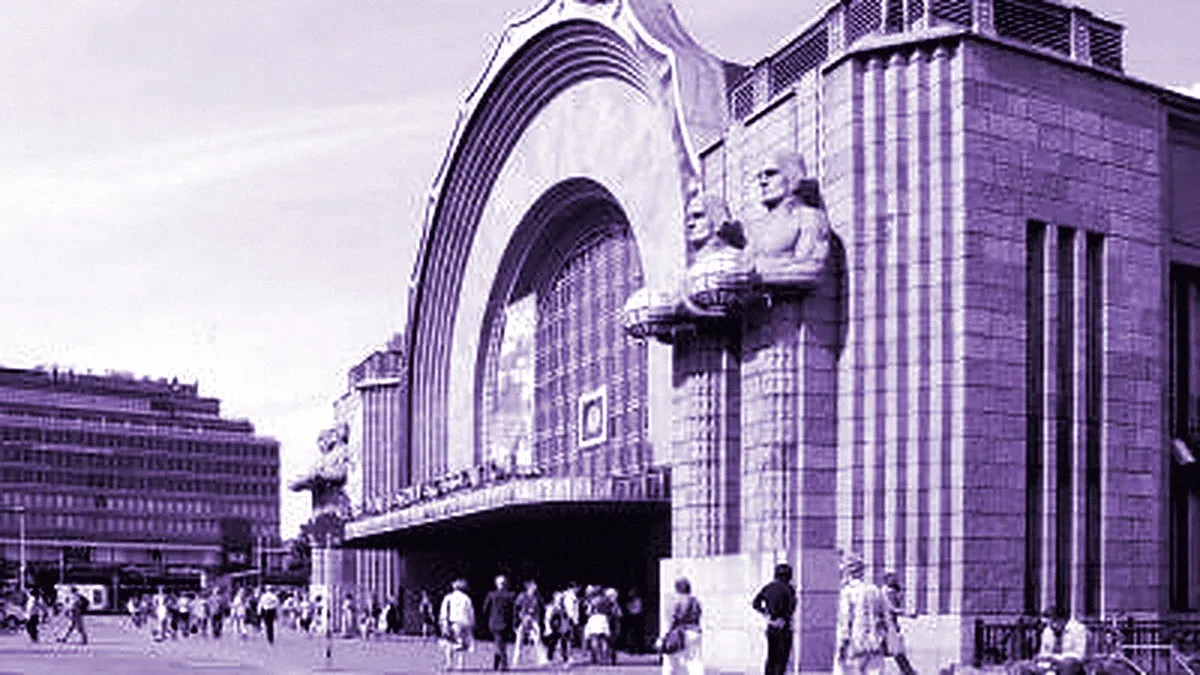
Ateneum · Helsinki Central Railway Station · Kiasma · Amos Rex · Lasipalatsi · Narinkka …
Open this tour: Ateneum, Kiasma and Amos Rex - Walk
Kamppi: architecture museums and St John's
Six hundred metres and two design institutions — the Museum of Finnish Architecture and the Design Museum, soon to merge — beside the twin-spired brick Gothic of St John's.
Saint John's Church · Architecture & Design Museum · Museum of Finnish Architecture · Helsinki German Church
Open this tour: Kamppi: architecture museums and St John's - Walk
The Ultimate Helsinki: Temppeliaukio to Uspenski
Four kilometres from the church blasted out of solid rock, past Finlandia Hall, the National Museum, Kiasma and the Ateneum to the Lutheran cathedral and the Russian Orthodox one above the harbour. Suomenlinna needs the ferry.
Temppeliaukio Church · Memorial to Risto Ryti · National Museum of Finland · Finlandia Hall · Hakasalmi Villa · Kiasma …
Open this tour: The Ultimate Helsinki: Temppeliaukio to Uspenski
Walk Helsinki with Neywo
Neywo turns Helsinki into a self-guided audio tour. Stories arrive as you reach the place they belong to, and the route reshapes when you wander off it.

