What to See in Turku, Finland: Free Audio Guide
Things to do in Turku: a guide to Finland’s historic riverside city
Turku is Finland’s oldest city and a historic centre on the Aura River, known for its medieval landmarks, museums, churches and distinctive architecture. The best things to do in Turku range from exploring Finland’s only medieval basilica to visiting a castle, walking through a surviving wooden quarter and discovering the city’s maritime heritage. Neywo offers a free audio guide for Turku with 162 narrated places.
What to see in Turku
Turku Cathedral
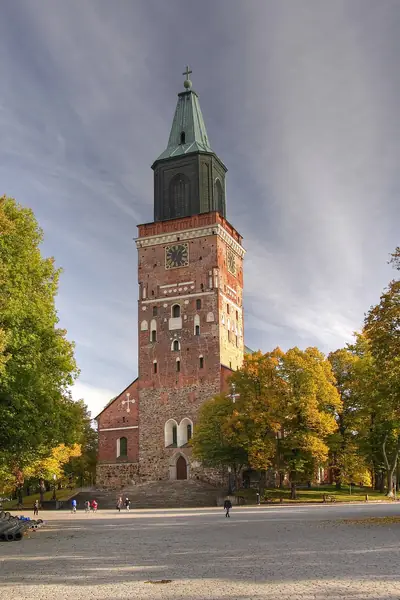
Turku Cathedral is Finland’s mother church and the country’s only medieval basilica. Its history reaches back to the late thirteenth century, when it began as a wooden church and was dedicated in 1300 as the seat of the Catholic bishop of Turku. Later additions transformed it into a stone and brick Gothic church with side chapels and vaulted spaces.
The cathedral burned during the Great Fire of 1827. Its stone walls survived, while the roof and medieval tower were destroyed. Carl Ludvig Engel designed the replacement spire, giving the building the silhouette that still defines Turku’s skyline.
Old Great Square
The Old Great Square was Turku’s administrative and commercial heart from the city’s foundation until the Great Fire. Roads from Häme, Satakunta and Viborg met here by the Aura River, while merchants traded in the square’s market stalls.
The fire cleared the northern side, which later became Porthaninpuisto park. Historic buildings remain along the southern edge, close to the cathedral, offering a sense of the square’s former importance.
Aboa Vetus Ars Nova
Aboa Vetus Ars Nova brings medieval archaeology and contemporary art together. The museum began with plans for a contemporary art museum, but excavations uncovered a medieval quarter beneath the building. The discovery led to the creation of Aboa Vetus, meaning Old Turku, alongside Ars Nova.
Below ground, visitors can see genuine medieval cobblestone streets, stone walls and cellar vaults in their original locations. It is Finland’s only archaeological museum and one of the most popular attractions in Southwest Finland.
Luostarinmäki museum quarter
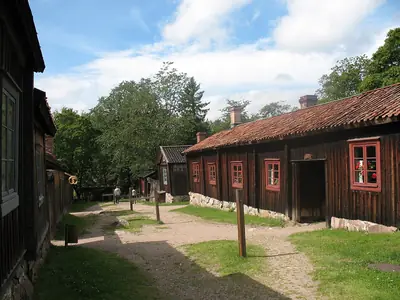
Luostarinmäki is the only complete wooden quarter in Turku to survive the Great Fire of 1827. Its eighteen courtyard blocks contain more than thirty wooden buildings, most dating from the period between the 1780s and 1803.
The houses stand on their original foundations. They belonged to carpenters and other artisans who lived and worked in this working-class district inside the city walls. Walking through its lanes offers a particularly direct glimpse of everyday urban life before the fire.
Turku Castle
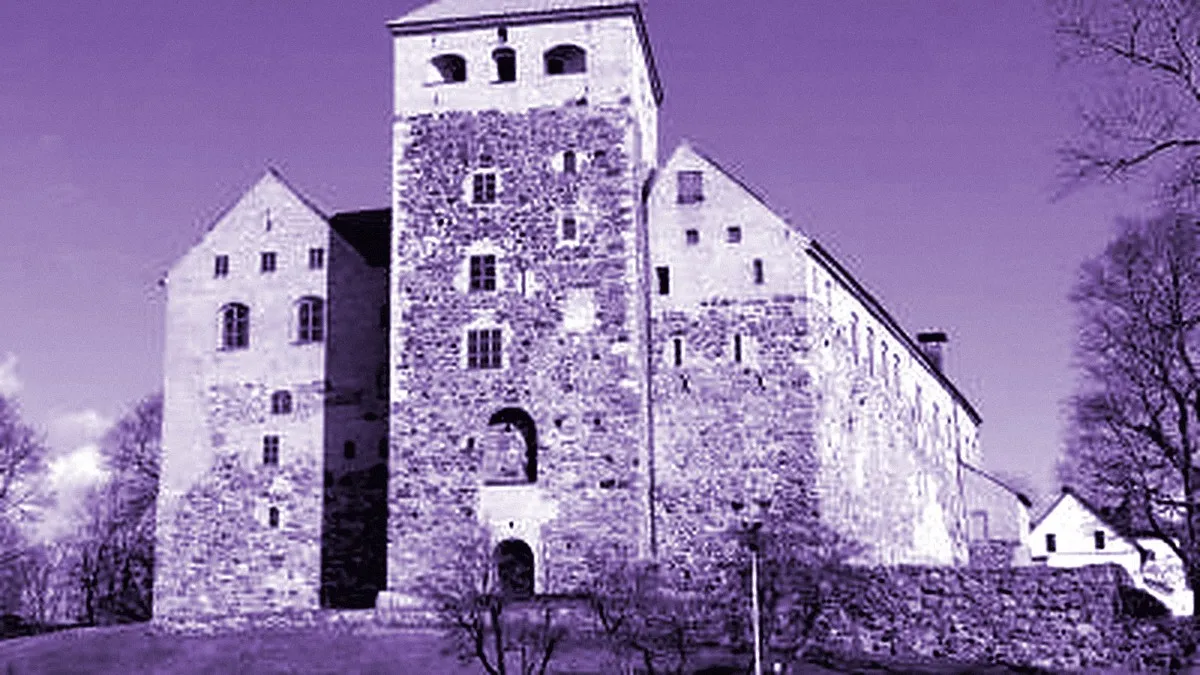
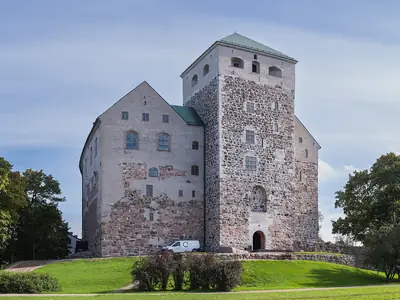
Construction of Turku Castle began around 1280 beside the Aura River. Founded as a Swedish royal stronghold, it became the administrative centre of Finland and later reached a Renaissance high point under Duke John of Finland and Catherine Jagellon.
The medieval keep and the Renaissance bailey, with its distinctive round tower, form the castle’s recognisable shape. Fires and wartime damage led to repeated restoration, and the building now houses Finland’s most visited museum. The castle church continues to hold services and weddings.
Suomen Joutsen and MS Bore
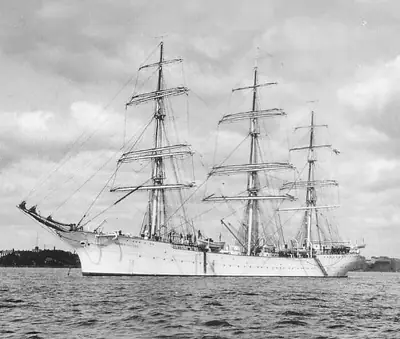
The Aura River waterfront is home to two museum ships with very different histories. Suomen Joutsen is a three-masted, steel-hulled full-rigged ship built in 1902 in Saint-Nazaire, France. Finland acquired it in 1930 and converted it into a naval training ship. Before the Second World War, it completed eight international voyages with Finnish cadets.
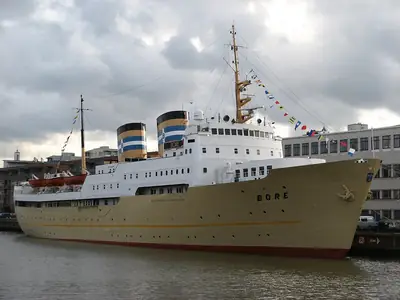
MS Bore was built in Sweden in 1960 as the SS Bore, the last commercial steamship constructed in Scandinavia. It was the first car ferry on the Finland–Sweden route and later became a cruise ship. Today, it is a floating hotel, restaurant and museum ship.
St Mary’s Church and the ruins of Koroinen Church
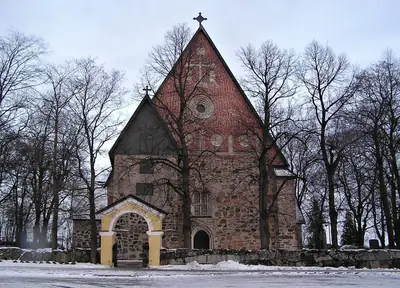
St Mary’s Church stands in the Räntämäki district on a site that was sacred as early as the first decades of the 1200s. The current grey-stone church was built in the middle of the fifteenth century. Its medieval limestone paintings include Hanseatic ships, labyrinths, crosses and images of saints.
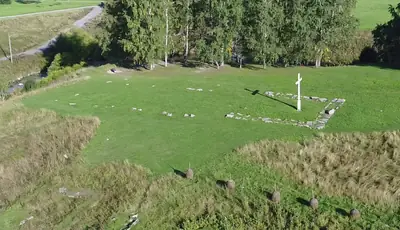
At the ruins of Koroinen Church, foundation stones mark the site where the bishop’s seat was moved in 1229. Two or three successive stone churches were built here between the 1200s and early 1400s, beside a fortified episcopal residence. The settlement was destroyed in 1396 after being attacked and burned by the Victual Brothers.
Turku Orthodox Church
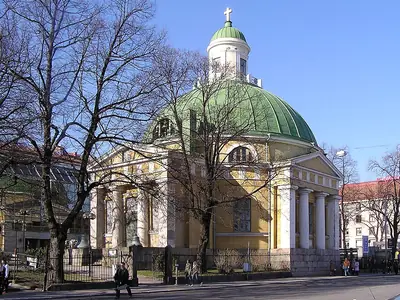
At the Market Square, Turku Orthodox Church combines a Byzantine cross-shaped plan with late Empire-style architecture. Commissioned by Tsar Nicholas I in 1838 and designed by Carl Ludvig Engel, it was completed in 1845.
Inside, sixteen artificial-marble columns support the space beneath a blue, star-painted dome. The two-level iconostasis includes icons from Valaam Monastery in Russian Karelia.
Turku Art Museum
The Turku Art Museum has stood on Puolalanmäki hill since 1904. Designed by Gustaf Nyström, it was only the second building in Finland created specifically as an art museum. Its collections include works by Akseli Gallen-Kallela, Helene Schjerfbeck and Robert Wilhelm Ekman.
The museum’s setting also makes it a worthwhile stop for the city views from Café Victor’s terrace.
WAM Museum of Contemporary Art
The Wäinö Aaltonen Museum of Art, usually called WAM, stands on the east bank of the Aura River. Opened in 1967, it is Finland’s regional museum for contemporary art in Southwest Finland.
The modernist building was designed by Wäinö Aaltonen with his son Matti and daughter-in-law Irma. Pale travertine, large windows and skylights give the exhibition spaces a bright character, while three bronze figures from Aaltonen’s Work and Future series stand on the terrace.
Sibelius Museum
Beside Turku Cathedral, the Sibelius Museum is Finland’s only museum devoted entirely to music. Its collection includes historical instruments from around the world and honours the composer Jean Sibelius.
The 1968 building, designed by Woldemar Baeckman, is a notable example of Brutalist architecture. Its concrete exterior retains the texture of the timber formwork used during construction, while the ceiling inside forms a hyperbolic paraboloid.
Pharmacy Museum and Qwensel House
The Pharmacy Museum occupies Qwensel House, the oldest wooden house still standing in Turku. The building dates from around 1700 and combines an eighteenth-century bourgeois home with a nineteenth-century pharmacy.
The museum preserves Finland’s oldest surviving pharmacy interior, including a material room, herb room, laboratories and the officiini, or office, with its original shelves and drawers.
Turku Concert Hall
Turku Concert Hall, on the north side of Puutori market square, was Finland’s first purpose-built concert hall. Designed by Risto-Veikko Luukkonen, it opened in 1952 as a clean example of functionalist architecture.
The hall was funded by a donation from Turku’s sister city, Gothenburg. A sculpture across the square, When Friendship Ties Are Tied, commemorates that connection.
Explore Turku with a self-guided audio tour
For a Turku self-guided walking tour, Neywo offers four walking tours, one bus route and one bike route. The four walks cover between 1.68 and 3.32 km and take between 82 and 112 minutes, with 10 to 12 narrated stops each:
- Finland’s First Capital: Cathedral, Academy and Old Turku — 1.68 km, 94 minutes, 11 stops
- Castle, Ships and the River: Turku’s Waterfront — 2.36 km, 102 minutes, 11 stops
- Markets, Music and Sculpture in Central Turku — 3.32 km, 112 minutes, 12 stops
- Two Banks, Two Hills: The Aura Crossing — 2.45 km, 82 minutes, 10 stops
The bus route, from the Castle Harbour to the Concert Hall, covers 3.8 km in 16 minutes and has five narrated stops. The bike route, from the castle to the cathedral along the Aura River, covers 5.3 km in 26 minutes and has eight stops.
Download Neywo to explore Turku at your own pace. The app tells the story of each place as you reach it, with no group and no schedule. You can also continue discovering Helsinki, Tampere, Porvoo or Rovaniemi with the app’s free audio guides.
Places with an audio guide in Turku
8 places in Turku with a Neywo audio guide. Each one starts telling its story as you reach it.
Self-guided tours in Turku
6 tours in Turku, free in the Neywo app. Each stop tells its story as you reach it.
- Bike ride
Along the Aura River: Castle to Cathedral by Bike
Ride the river that made Turku, from the medieval castle past the museum ships and the Whale's Tail fountain to the Wäinö Aaltonen art museum, the city theatre, the medieval quarter under Aboa Vetus and the cathedral. Cycle paths follow the riverbank almost all the way.
Turku Castle · Suomen Joutsen · Harmonia · WAM Museum of Contemporary Art · Turku City Theatre · Auransilta …
Open this tour: Along the Aura River: Castle to Cathedral by Bike - Bus ride
Bus 1: From the Castle Harbour to the Concert Hall
Turku's main city line starts at the harbour by the castle and rolls east along the Aura River. Hop off at the museum ships of Forum Marinum, the old shipyard concert hall, Wikstrom's bank sculptures, the Swedish theatre and the functionalist Concert Hall on Puutori square.
Forum Marinum · Sigyn · Säästöpankki Sculptures · Åbo Svenska Teater · Turku Concert Hall
Open this tour: Bus 1: From the Castle Harbour to the Concert Hall - Walk
Finland's First Capital: Cathedral, Academy and Old Turku
Turku was Finland's medieval capital and home of its first university. Walk from a merchant family's wooden home to the mother church of the nation, past Count Brahe's statue, the balcony that declares Christmas Peace, medieval cellars under a villa, Engel's observatory and the wooden quarter that survived the Great Fire of 1827.
Ett Hem · Sibelius Museum · Turku Cathedral · Royal Academy of Turku · Per Brahe Statue · Old Great Square …
Open this tour: Finland's First Capital: Cathedral, Academy and Old Turku - Walk
Castle, Ships and the River: Turku's Waterfront
Follow the Aura River from Finland's largest surviving medieval castle to the museum ships of Forum Marinum: a four-masted swan of the seas, a gunboat, a minelayer and the last Scandinavian steamship, ending at the shimmering Whale's Tail fountain.
Aura River · Turku Castle · Turku Castle church · Turku Castle, Sture Church · Forum Marinum · MS Bore …
Open this tour: Castle, Ships and the River: Turku's Waterfront - Walk
Markets, Music and Sculpture in Central Turku
A walk through the Turku of cafes and culture: a golden-age art museum, an Engel church for the Tsar, a synagogue with a Byzantine dome, a friendship gift from Gothenburg, the brick market hall and the city's first public statue.
Turku Art Museum · Turku Orthodox Church · Turku Market Square · Turku Synagogue · Kun ystävyyssuhteet solmitaan · Turku Concert Hall …
Open this tour: Markets, Music and Sculpture in Central Turku - Walk
Two Banks, Two Hills: The Aura Crossing
Cross the oldest part of Turku's riverfront: the city's oldest wooden house, a Neo-Renaissance corner, the bridge to the hill parks of Samppalinna, an open-air summer theatre, a contemporary art museum and a school turned brewery.
Verdandi House · Pharmacy Museum · Qwensel House · Auransilta · Samppalinna Park · Samppalinna Summer Theatre …
Open this tour: Two Banks, Two Hills: The Aura Crossing
Walk Turku with Neywo
Neywo turns Turku into a self-guided audio tour. Stories arrive as you reach the place they belong to, and the route reshapes when you wander off it.

