Kerman, Iran: Self-Guided Walking Tour
Things to do in Kerman
Kerman is a city in southeastern Iran that blends historic architecture, traditional bazaars, and easy access to the otherworldly Lut Desert. Visitors come for its well‑preserved caravanserais, mosques, and fortresses, as well as the chance to explore a landscape shaped by wind and salt. Neywo offers a free audio guide for Kerman with 18 narrated places.
Explore Kerman’s highlights
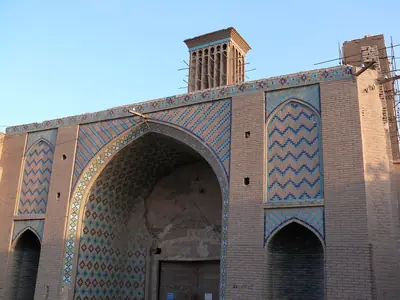
Vakil Caravanserai
This former caravanserai is one of the largest in the world, featuring 120 rooms spread over two floors. It sits on the edge of Shariati Street at the city’s north‑south junction and was built in the late 19th century under Mohammad Ismail Khan Vakil al‑Molok, finishing in 1287 AH under his son Morteza Qoli Khan Nouri.
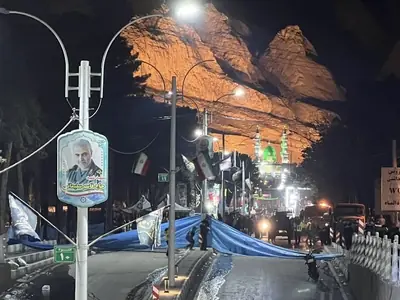
2024 Kerman bombings memorial
Located in eastern Kerman, this site marks the tragic attack on 3 January 2024 during a ceremony for Qasem Soleimani. Two explosions struck the area—first at roughly 2:50 p.m., then a stronger blast at 3:17 p.m.—causing more than eighty deaths and 284 injuries. The Iranian government labelled the incident a terrorist attack, and the place now serves as a memorial to those affected.
Ganjali Khan Caravanserai
Part of the Ganjali Khan complex, this caravanserai is linked to a former school, combining two traditional Safavid‑era functions. It was registered as an Iranian national heritage work on 29 Azar 1316 under number 297.
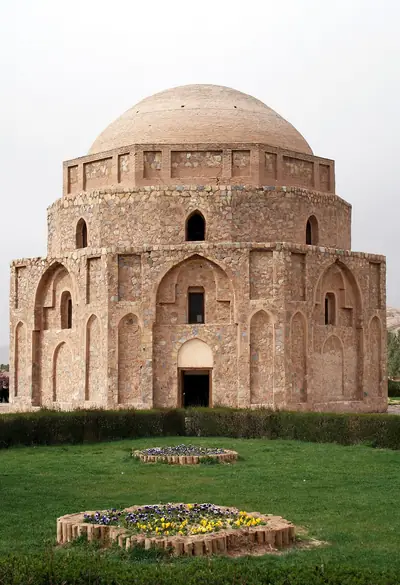
Gonbad‑e Jabaliyeh
Known locally as the Rock Dome or Gabri Dome, this stone mausoleum stands out with its eight‑sided plan and foundations about four metres wide. Eight doorways once surrounded the building; most were filled with stone to strengthen the monument, leaving only one opening. The lower section is stone and gypsum, while the upper dome is brick. Its origins are debated—some link it to a Zoroastrian fire temple, others to the Seljuk, late Sasanian, or early Islamic periods.
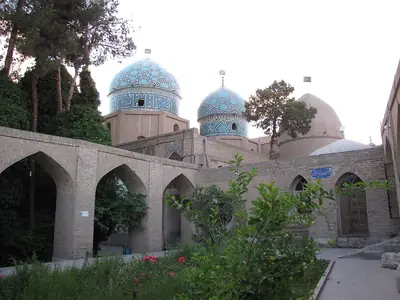
Mushtaqieh Dome (Three Domes)
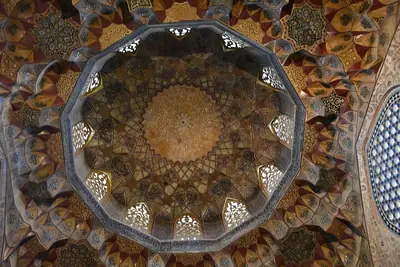
This mausoleum complex dates to the Qajar period, with three domes erected in 1838 over the graves of Moshtaq Ali Shah, Sheikh Ismail Herati Yazdi, and Kowsar Hamadani. Two domes are tiled; the dome above Sheikh Ismail’s tomb remains brick, as it was when built. The site features tilework, painting, plasterwork, geometric ceiling patterns, and muqarnas. Moshtaq Ali Shah earned the complex’s name after being stoned to death in 1206 AH for reciting the Quran to the sound of a setar.
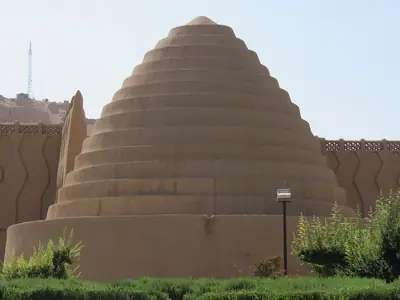
Zarisf Icehouse
A Qajar‑era icehouse that once stored winter ice for summer use, this structure is now an Iranian national heritage site. It stands on Zarisf Street at the Alashat intersection and was officially registered on 25 March 2001.
Ganjali Khan Mosque
Located on the northeastern side of Ganjali Khan Square, this mosque was built around 1007 AH by Ganjali Khan, the Safavid governor appointed by Shah Abbas. Its position beside the Ganjali Khan School highlights the historic link between worship and learning in the complex.
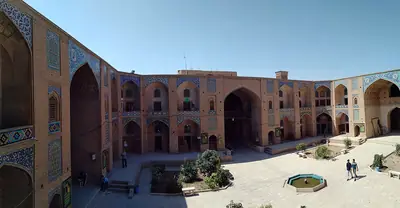
Malek Mosque (Imam Mosque)
Recognized as the largest and oldest mosque in Kerman, the Malek Mosque dates to the Seljuk era under Turan Shah the First in the eleventh century. It spans roughly 101 metres by 91 metres, with a spacious courtyard, several prayer halls, and a four‑iwan layout. Three finely plaster‑carved mihrabs stand out, and a brick Seljuk tower flanks its northeastern side. An ancient qanat called Mastureh once ran beneath the mosque, named after the daughter of Turan Shah.
Pamenar Mosque (Al‑Zahra Mosque)
This place of worship originates from the Muzaffarid era of the fourteenth century. Its history is tied to the Muzaffarid dynasty, which shaped much of Kerman’s medieval past.
Ardashir Castle (Mountain Castle)
Perched on a mountain summit within the city’s historic fabric, this Sasanian‑era fortress gained its name after Ardashir Babakan captured Kerman and erected a fire temple on the peak. The castle is linked to the legendary figure Haftvad, who originally built a stronghold there, later renamed Ardashir Castle after the conqueror’s fire temple.
Dokhtar Castle (Old Castle)
Situated on a low mountain beside Ardashir Castle, this ruined fortress dates back at least to the Median period, making it over 2,500 years old. Built entirely of clay and adobe, its eastern side still shows remnants of three stories, while the enclosing walls feature square and circular towers. During the Seljuk era it served as a refuge for Kerman’s inhabitants, and its name “Dokhtar” (daughter) reflects local traditions about its early role.
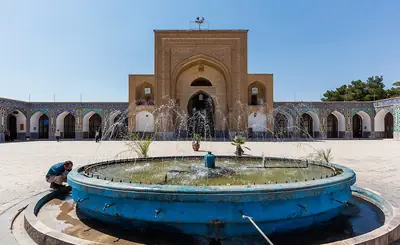
Jameh Mosque of Kerman (Mozaffari Mosque)
Founded in the fourteenth century under Amir Mobarez al‑Din, the founder of the Muzaffarid dynasty, this Friday mosque bears an inscription dated 750 AH. The building centres on a courtyard with four porches; the western entrance is noted for its elaborate tilework. A high portal and watchtower complement the structure, and the mosaic tiles of the prayer niche are among its most valued features. Later additions include a re‑tiled porch during the Vakil al‑Molok period and a northern prayer hall added in more recent times. The mosque has endured damage from cannon fire under Agha Mohammad Khan Qajar and an earthquake in the month of Sha’ban.
Agha Gholam Ali Mosque
This Qajar‑era mosque stands on the southeastern side of Arg Square (or Bagh). It was entered into Iran’s national heritage list on 26 February 2008.
Haj Agha Ali Mosque
Completed in 1870 during the Qajar period, this mosque was added to Iran’s National Heritage List on 21 March 1966. Built in the style of Shiraz’s Chehel Sotoun Mosque, its construction reportedly cost over one hundred thousand tomans—a large sum at the time. The mosque’s story is linked to the local merchant Haj Agha Ali, who rose from poverty to wealth through his villages, funding this and other projects.
Saheb al‑Zaman Mosque
A Qajar‑era mosque in Kerman, it is recognized as part of Iran’s national heritage, though the source notes provide no further architectural details.
Experience Kerman with Neywo
Neywo provides two self‑guided walking tours in Kerman. The first, “The Bazaar of Kerman: Caravanserais and Mosques,” covers 3.02 km in about 96 minutes and stops at ten sites including Pamenar Mosque, Haj Agha Ali Mosque, Ganjali Khan Mosque, Ganjali Khan Square, Agha Gholam Ali Mosque, Ganjali Khan Caravanserai, Vakil Caravanserai, Vakil Mosque, Malek Mosque, and the Jameh Mosque of Kerman. The second tour, “Domes, Fire Temples and Castles of Old Kerman,” runs 5.45 km over roughly 108 minutes and visits six stops: Mushtaqieh Dome, the fire temple (آتشکده کرمان), Dokhtar Castle, Ardashir Castle, the Zarisf Icehouse, and Gonbad‑e Jabaliyeh. As you walk, the app plays the story of each place exactly when you reach it, allowing you to explore at your own pace with no group and no schedule. Narration is available in 11 languages, and the free audio guide includes 18 narrated locations across the city.
Ready to discover Kerman’s monuments, desert vistas, and lively bazaars? Download Neywo, choose a tour, and let the city’s stories unfold step by step.
Places with an audio guide in Kerman
8 places in Kerman with a Neywo audio guide. Each one starts telling its story as you reach it.
Self-guided tours in Kerman
2 tours in Kerman, free in the Neywo app. Each stop tells its story as you reach it.
- Walk
The Bazaar of Kerman: Caravanserais and Mosques
Kerman's covered bazaar is one of the oldest in Iran, and its alleys hide caravanserais, Qajar mosques and Safavid squares. Follow the route from a Qajar merchant's mosque to the great Seljuk Malek Mosque, passing the Vakil complex and ending at the Muzaffarid Jameh Mosque.
Pamenar Mosque · Haj Agha Ali Mosque · Ganjali Khan Mosque · Ganjali Khan Square · Agha Gholam Ali Mosque · Ganjali Khan Caravanserai …
Open this tour: The Bazaar of Kerman: Caravanserais and Mosques - Walk
Domes, Fire Temples and Castles of Old Kerman
Kerman's oldest layers lie east of the bazaar: three Qajar domes, the world's only museum of Zoroastrian anthropology, a Median-era fortress, an old icehouse and the hilltop castle of the Sasanian kings. Finish with the odd stone dome that locals say was built with camel's milk.
Mushtaqieh Dome · Dokhtar Castle (Kerman) · Zarisf Icehouse · Ardashir Castle (Kerman) · Gonbad-e Jabaliyeh
Open this tour: Domes, Fire Temples and Castles of Old Kerman
Walk Kerman with Neywo
Neywo turns Kerman into a self-guided audio tour. Stories arrive as you reach the place they belong to, and the route reshapes when you wander off it.

