What to See in Yazd, Iran: Free Audio Guide
Things to do in Yazd: what to see in Iran’s desert city
The best things to do in Yazd include exploring its historic mosques, learning about Zoroastrian traditions, and discovering the ingenious water systems that made life possible in the desert. Yazd’s old neighborhoods bring together Persian architecture, religious heritage, caravan history, and distinctive landmarks such as windcatchers and underground reservoirs. Neywo offers a free audio guide for Yazd with 40 narrated places, available in 11 languages.
Yazd is also an excellent starting point for discovering more of Iran. If you are planning a wider journey, you could combine it with Isfahan, Kashan, Kerman, or Tehran.
What to see in Yazd
Jameh Mosque of Yazd
The Jameh Mosque of Yazd has stood at the spiritual heart of the city for centuries. Its history stretches across nearly a thousand years, beginning on a site where a Zoroastrian fire temple stood in the 9th century. The mosque was later developed through the Ilkhanid, Timurid, Safavid, and Qajar periods.
Its soaring Timurid entrance portal dates from the 15th century and leads towards an Ilkhanid dome chamber. Intricate tilework, medieval engineering, and the mosque’s long architectural history make it one of the essential places to visit in Yazd.
Amir Chakhmaq Mosque
On the southern side of Amir Chakhmaq Square stands one of Yazd’s most important mosques. It is also known as the Dahouk Mosque and the Jameh Nou Mosque, or “New Congregational Mosque.” It was completed in 841 on the Islamic calendar, corresponding to the early 15th century.
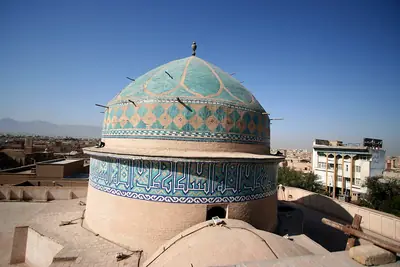
The entrance vestibule includes a stone slab with a waqf inscription in Naskh calligraphy. Inside, mosaic tile networks filter light through the windows, while the portal is decorated with bands of tilework in warm brick tones. A ribbed, arched dome covered in green tiles rises above the mosque, with a Kufic inscription around its exterior.
Yazd Water Museum
Water has always been central to life in Yazd. The Yazd Water Museum introduces the systems that allowed the city to capture, store, and distribute water in its desert environment. It is a useful place to visit before exploring the city’s reservoirs and traditional neighborhoods, since it helps explain the practical thinking behind Yazd’s historic architecture.
Kushk-e Now Ab Anbar
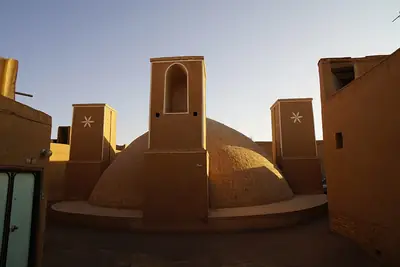
The Kushk-e Now Ab Anbar is a historic underground water reservoir on Seyyed Golsorkh Street. Dating from the Safavid era, the ab anbar was built to store precious water through Yazd’s hot, dry summers.
Reservoirs such as this one are an important part of what makes Yazd distinctive. They show how the city adapted its buildings and infrastructure to a demanding desert climate.
Fort Mosque
In the Dar al-Shafa neighborhood, the Fort Mosque offers a quieter example of Yazd’s Islamic heritage. It dates from the middle centuries after the arrival of Islam, making it one of the city’s older surviving religious buildings. The mosque was recognized as an Iranian national heritage site in 1997.
Hazireh Mosque
The Hazireh Mosque is located in the Ab-o-Barakeh neighborhood, on the eastern side of Imam Khomeini Street. It is also known locally as the Rowzeh-ye Mohammadieh and is recognized as an Iranian national heritage site.
Moshir Caravanserai
The Moshir Caravanserai recalls Yazd’s importance on historic desert trading routes. Dating from the Qajar era, it served as a stopover for merchants and travelers crossing the region. The caravanserai is on Qiam Street, in the alley beside the Mola Esmail Mosque, and was registered as an Iranian national heritage site in 2000.
The site is also associated with several local names, including Emamzadeh Jafar, Harandi House, and the Mola Esmail Mosque. These names reflect the different layers of community life connected with the complex.
Yazd Fire Temple
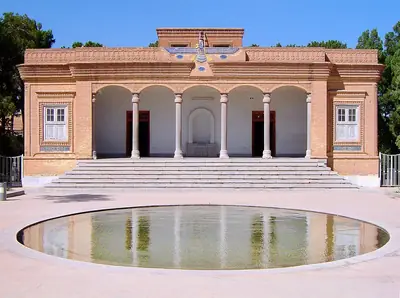
The Yazd Fire Temple, known locally as Atash Behram, is one of the most sacred Zoroastrian sites in the world. Its fire has been burning continuously since 470 AD. It is one of only nine Atash Behrams, the highest grade of sacred fire in the Zoroastrian tradition, and the only one in Iran.
Zoroastrians have practiced their faith in Yazd since at least 400 BC. The present building dates from the early Pahlavi period and was created to house and honor the ancient flame. The temple was opened to non-Zoroastrian visitors in the 1960s.
Towers of Silence
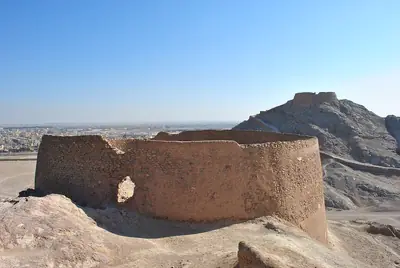
The Towers of Silence are among the most distinctive places to see in Yazd. These circular stone structures, known as dakhmehs, were used for Zoroastrian funerary practices. The dead were placed on the towers under the open sky, allowing sun, wind, and vultures to clean the bones. The bones then fell into a central well, returning them to the earth without defiling it.
Three towers were built in different periods. The oldest, the Jamshid Dakhmeh, dates from the Safavid period and now lies in ruins. The Mankji Dakhmeh dates from the Qajar era, while the Golestan Banu tower was built during the Pahlavi period and remains the most intact.
Each tower has a high circular wall and a floor divided into three concentric rings: the outer ring for men, the middle ring for women, and the inner ring for children.
Markar Clock Tower
Markar Clock Tower rises above Markar Square, a landmark considered to stand at the geographic center of Iran. The tower is part of a larger complex that includes the square, a high school, and an orphanage and boarding school. The complex was funded through an endowment whose ongoing costs are still covered by the original foundation.
A local story says that gold was hidden somewhere in the structure during construction, intended to pay for rebuilding if the tower were ever destroyed. The square itself provides a quiet setting for appreciating the tower and the surrounding school buildings.
Mirror and Lighting Museum
The Mirror and Lighting Museum is a recognized Iranian national heritage site. It adds another perspective to Yazd’s cultural history, alongside the city’s mosques, reservoirs, and Zoroastrian monuments.
Heydarzadeh Coin and Anthropology Museum
Located in the historic Fahadan district, the Heydarzadeh Coin and Anthropology Museum is a cultural stop within one of Yazd’s most historic areas. It can be combined with a walk through the city’s older streets and the sites around the Jameh Mosque.
Abarndabad Castle
Outside the central sequence of Yazd’s religious and urban landmarks, Abarndabad Castle has watched over the surrounding landscape for well over a thousand years. Its origins reach back to the Sasanian Empire, between the third and seventh centuries.
The castle also contains traces of the centuries that followed the Islamic conquest, making it a reminder of the long historical arc of the Yazd region.
Explore Yazd with a self-guided audio tour
A Yazd self-guided walking tour lets you explore the city without joining a group or following a fixed timetable. Neywo’s free audio guide tells the story of each place as you reach it, at your own pace, with no group and no schedule.
The app includes three walking tours:
- From Amir Chakhmaq to the Four Minarets: 3.43 km, 118 minutes, and 12 narrated stops. The route includes Amir Chakhmaq Square and Mosque, the Yazd Water Museum, Fort Mosque, Moshir Caravanserai, and Dowlatabad Garden.
- A Thousand Years Around the Jameh Mosque: 3.44 km, 112 minutes, and 12 narrated stops. Highlights include Hazireh Mosque, the Jameh Mosque of Yazd, Kushk-e Now Ab Anbar, and the Heydarzadeh Coin and Anthropology Museum.
- Sacred Fire and Six Windcatchers: 2.49 km, 61 minutes, and 5 narrated stops. This walk connects the Yazd Fire Temple, Markar Clock Tower, Beheshti Square, and Posht-e Bagh Mosque.
Download Neywo to explore Yazd with a free audio guide that accompanies you from one landmark to the next. Choose a walk, reach each narrated stop, and listen to the city’s history as you discover it—at your own pace, without a group or a schedule.
Places with an audio guide in Yazd
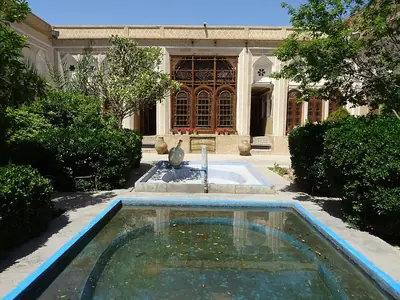
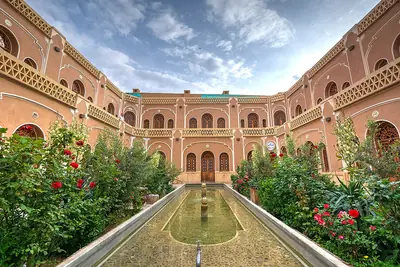
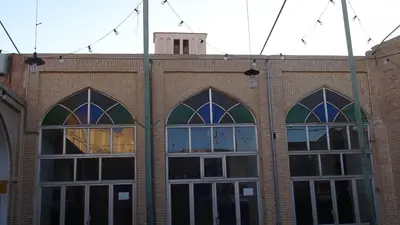
8 places in Yazd with a Neywo audio guide. Each one starts telling its story as you reach it.
Self-guided tours in Yazd
3 tours in Yazd, free in the Neywo app. Each stop tells its story as you reach it.
- Walk
From Amir Chakhmaq to the Four Minarets
Start at the glowing alcoves of Amir Chakhmaq Square, then follow the old lanes west past qanat water, Qajar mansions, a mosque once buried in sand and a Safavid crossroads. You finish at the Four Minarets Mosque and the windcatcher of Dowlatabad Garden, the tallest adobe windcatcher in the world.
Amir Chakhmaq Square · Amir Chakhmaq Mosque · Yazd Water Museum · Fort Mosque (Yazd) · Malek al-Tojar House (Yazd) · Rig Mosque …
Open this tour: From Amir Chakhmaq to the Four Minarets - Walk
A Thousand Years Around the Jameh Mosque
Wander the alleys around Yazd's Friday mosque, built and rebuilt for nearly a thousand years on the site of a Zoroastrian fire temple. Pass the square of the lost clock tower, a Qajar synagogue, mansion hotels and old water cisterns on the way.
Gazorgah Mosque · Hazireh Mosque · Jameh Mosque Clock Tower Square · Dowlatshahi Mosque · Vaqt va Saat Square · Silk Road Hotel (Yazd) …
Open this tour: A Thousand Years Around the Jameh Mosque - Walk
Sacred Fire and Six Windcatchers
Walk the southern quarter of Yazd to see the Atash Behram, a Zoroastrian flame burning since 470 AD, the Markar clock tower at the geographic centre of Iran, a six-windcatcher water reservoir and the old mosque of Posht-e Bagh.
Yazd Fire Temple · Markar Clock Tower · Shesh Badgir Ab Anbar · Beheshti Square · Posht-e Bagh Mosque (Yazd)
Open this tour: Sacred Fire and Six Windcatchers
Walk Yazd with Neywo
Neywo turns Yazd into a self-guided audio tour. Stories arrive as you reach the place they belong to, and the route reshapes when you wander off it.

