What to See in Tehran, Iran: Free Audio Guide
Things to Do in Tehran: Palaces, Museums and Historic Streets
Tehran is Iran’s energetic capital, a vast city where Persian heritage meets contemporary art, busy commercial districts and modern landmarks. The best things to do in Tehran range from exploring the historic Grand Bazaar and royal palaces to visiting major museums and seeing the city’s distinctive towers. Neywo offers a free audio guide to Tehran with 235 narrated places, helping you discover the city while you walk.
What to See in Tehran
Golestan Palace
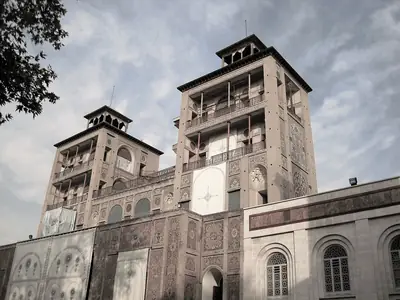
Golestan Palace is one of Tehran’s oldest historic monuments and a UNESCO World Heritage Site. Once the official royal complex of the Qajar dynasty, it developed within the historic citadel of Tehran and now consists of around seventeen palaces, museums and halls set among gardens.
The site’s history reaches back to the Safavid period, when Shah Tahmasp I established Tehran’s citadel. It later served as a residence for Karim Khan during the Zand period before being expanded under the Qajars. The palace buildings mostly date from the nineteenth century and contain Iranian and European crafts and gifts from the eighteenth to the twentieth centuries.
Golestan Palace is an essential stop for understanding Tehran’s royal history and the artistic ambitions of the Qajar court.
Tehran Grand Bazaar
The Tehran Grand Bazaar is one of the largest covered bazaars in the world and one of the city’s defining places. Its covered corridors extend for more than 10 kilometres, with different sections devoted to goods such as spices, textiles, jewellery and carpets.
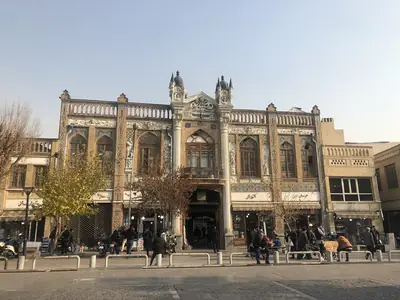
The oldest parts date to the seventeenth century, during the Safavid era, while the bazaar continued to grow under the Qajars. Its roughly 110-hectare complex includes about 60,000 active commercial units, as well as mosques, guest houses and banks. Walking through it offers a direct encounter with Tehran’s traditional commercial life.
Shah Mosque
In the northern section of the Grand Bazaar, the Shah Mosque connects religious, royal and political history. Built during the Qajar era on the orders of Shah Fath-Ali Qajar, it was originally known as Masjed-e Shah, or the Royal Mosque, and was also called the Soltani Mosque.
The mosque was the scene of the assassination of Prime Minister Haj Ali Razmara on March 7, 1951. It was added to the Iran National Heritage List in 1984.
National Museum of Iran
The National Museum of Iran is the country’s most important museum for archaeology and history, with the richest collection of Iranian antiquities in the world. It consists of two buildings: the Museum of Ancient Iran and the Museum of the Islamic Era.
The Museum of Ancient Iran opened in 1937 in a building designed by the French architect André Godard. Its entrance recalls the Sasanian vaults of the great iwan at Ctesiphon. Inside, the galleries follow Iran’s history from the Paleolithic and Neolithic periods through the Bronze and Iron Ages and the Median, Achaemenid, Seleucid, Parthian and Sasanian eras.
The Museum of the Islamic Era, which opened in 1995, focuses on the archaeology and art of Iran’s Islamic period. Together, the two buildings provide one of the clearest introductions to the country’s long cultural development.
Tehran Museum of Contemporary Art
The Tehran Museum of Contemporary Art, often called TMoCA, holds one of the most important collections of modern Western art outside Europe and North America. Its permanent collection contains more than 3,000 works, including nearly 400 considered of exceptional value.
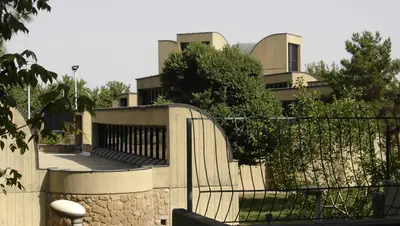
The museum was inaugurated in 1977 through the initiative of Shahbanu Farah Pahlavi. Designed by Iranian architect Kamran Diba, its architecture draws inspiration from the windcatchers of Iran’s deserts. The collection includes works associated with Abstract Expressionism, Pop Art, Minimalism, Conceptual art and Photorealism, as well as important works by artists including Paul Gauguin, Pierre-Auguste Renoir and Pablo Picasso.
Milad Tower
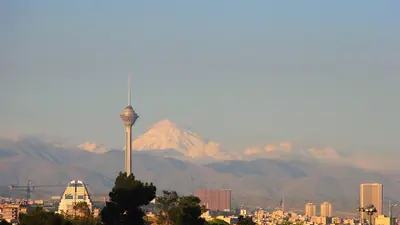
Milad Tower is one of the most recognisable landmarks on Tehran’s skyline. It rises 435 metres from its base to the tip of its antenna, making it the tallest tower in Iran. Together with Azadi Tower, it has become one of the symbols of the capital.
The tower was inaugurated in 2008 after about eleven years of construction. Its design incorporates elements of traditional Iranian architecture, while its main purpose was to strengthen radio and television broadcasting and improve telecommunications and internet services. The large 12-floor pod at the top contains 13,000 square metres of usable space.
Azadi Square and Tower
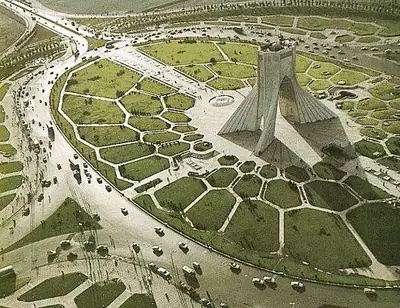
Azadi Square, or Freedom Square, is one of Tehran’s most iconic public spaces and a gateway to western Tehran. The square covers around 50,000 square metres, with Azadi Tower standing at its centre.
The tower was completed in 1971 and designed by Iranian architect Hossein Amanat. Its form combines Achaemenid, Sasanian and Islamic Iranian architectural traditions. Before the 1979 revolution, the square was called Shahyad Square, or Shah’s Memorial Square; it was later renamed Azadi, meaning freedom.
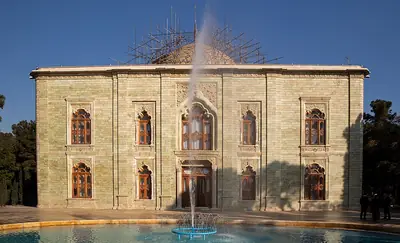
Marble Palace
Marble Palace, known in Persian as Kakh-e Marmar, is a striking historic landmark at the intersection of Imam Khomeini Street and Valiasr Avenue. Built in 1933 during the Pahlavi dynasty, it served as a royal residence.
After the 1979 revolution, the building was used by several government institutions for nearly four decades. In 2018, it was transferred to the Mostazafan Foundation, which began an extensive restoration project. Its changing role reflects the political history of Tehran during the twentieth century.
Niavaran Palace and Ahmad Shahi Pavilion
The Niavaran Palace complex in northern Tehran brings together buildings from the Qajar and Pahlavi periods across roughly eleven hectares of the Niavaran Garden. Niavaran Palace, completed in 1967, was the winter residence of Shah Mohammad Reza Pahlavi and his family until the 1979 revolution. It is now a museum.
Nearby, the Ahmad Shahi Pavilion dates from the 1910s and was built as a summer retreat for Ahmad Shah Qajar. The two-storey pavilion later became the home and workplace of Mohammad Reza Pahlavi. Its collections include decorative objects made from silver, bronze, ivory and wood, as well as paintings, medals, fossils and a piece of moon rock.
Saint Sarkis Cathedral and the Cathedral of the Consolata
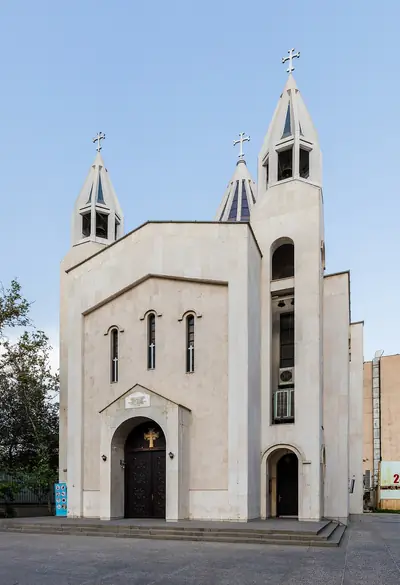
Tehran’s religious heritage includes important Armenian and Catholic institutions. Saint Sarkis Cathedral is the cathedral of the Armenian Diocese of Tehran and the seat of its archbishop. Completed in 1970, it was designed by the Armenian-Iranian engineer Aftandilian and funded by Markar Sarkisian.
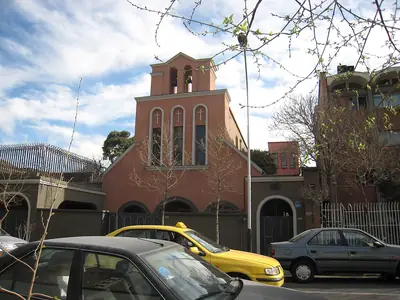
The Cathedral of the Consolata, near the Italian embassy, is Tehran’s Roman Catholic cathedral. Dedicated to the Blessed Virgin Mary under the title of Our Lady of Consolation, it is the main church of the Roman Catholic Archdiocese of Teheran-Isfahan, created in 1629 by Pope Urban VIII.
Malek National Library and Museum
The Malek National Library and Museum is a national heritage site and the first private museum established in Iran. Founded in 1937 by Hossein Agha Malek, it is also one of Iran’s six major libraries dedicated to precious manuscripts.
Its building, completed in 1996, uses a traditional Persian architectural style. The collections include important manuscripts and historical Iranian artworks, making it a valuable stop in Tehran’s museum district.
Explore Tehran with Neywo
A Tehran self-guided walking tour with Neywo lets you explore the capital at your own pace. Tehran has six walking tours and one bus route:
- Golestan to the Grand Bazaar: Qajar Tehran — 2.48 km, 118 minutes and 10 narrated stops.
- National Museum Quarter: Museums, Jewels and Dar ul-Funun — 4.46 km, 115 minutes and 9 stops.
- Tajrish to Sa’dabad: Gardens at the Foot of the Alborz — 4.41 km, 111 minutes and 9 stops.
- Niavaran: The Last Royal Residence — 4.56 km, 93 minutes and 5 stops.
- 30 Tir Street: Churches, Synagogues and the Tehran Conference — 3.78 km, 105 minutes and 9 stops.
- Tabiat Bridge to the Book Quarter — 4.2 km, 85 minutes and 5 stops.
- Line 107: Down Valiasr Street — a 9.2-kilometre bus route lasting 39 minutes, with 4 narrated stops.
The app tells the story of each place as you reach it, at your own pace, with no group and no schedule. Narration is available in 11 languages. Download Neywo and explore Tehran independently, from the Grand Bazaar and Golestan Palace to its museums, churches, royal residences and modern landmarks.
Tehran is also a starting point for discovering Iran, with cultural destinations such as Yazd, Kerman, Kashan and Isfahan.
Places with an audio guide in Tehran
8 places in Tehran with a Neywo audio guide. Each one starts telling its story as you reach it.
Self-guided tours in Tehran
7 tours in Tehran, free in the Neywo app. Each stop tells its story as you reach it.
- Bus ride
Line 107: Down Valiasr Street
Ride one of Tehran's longest avenues, Valiasr Street, lined with plane trees, from the north of the city towards the south. Pass Vanak Square and its giant Arash the Archer, the City Theater, the Marble Palace and Moniriyeh Square.
Statue of Arash the Archer · City Theater of Tehran · Marble Palace · Moniriyeh Square
Open this tour: Line 107: Down Valiasr Street - Walk
Golestan to the Grand Bazaar: Qajar Tehran
Begin in the tiled courtyards of Golestan Palace, a UNESCO World Heritage Site, then climb the Edifice of the Sun and the windcatcher tower of Emarat-e Badgir. Cross Arg Square into the bazaar quarter, through Qajar mosques and schools, the Shah Mosque and the covered lanes of the Grand Bazaar, and end at Tehran's oldest mosque.
Golestan Palace · Museum of Anthropology Tehran · Shams-ol-Emareh · Emarat-e Badgir · Citadel Square · Mosque and School of Khazen al-Molk …
Open this tour: Golestan to the Grand Bazaar: Qajar Tehran - Walk
National Museum Quarter: Museums, Jewels and Dar ul-Funun
Visit the district of Tehran's great museums. Start at Dar ul-Funun, Iran's first modern university, pass the National Museum of Iran, the Museum of the Islamic Era and the Malek Library, then see Saint Peter's church and the Treasury of National Jewels, and end at the Sepahsalar Mosque and the National Arts Museum on Baharestan Square.
Dar ul-Funun · Majd al-Dawla Mosque · National Museum of Iran · Museum of the Islamic Era · Malek National Library and Museum · Saint Peter Church (Tehran) …
Open this tour: National Museum Quarter: Museums, Jewels and Dar ul-Funun - Walk
Tajrish to Sa'dabad: Gardens at the Foot of the Alborz
Walk from Tajrish's old bazaar into the northern foothills, where Qajar and Pahlavi gardens became museums. Visit the cinema and time museums, the physicist's house and the art garden, then the Sa'dabad royal complex.
Mahmoud Hessabi Museum · Iranian Art Museum Garden · Iran Cinema Museum · Ferdows Garden Palace · Hossein Khodadad House · Tajrish Bazaar …
Open this tour: Tajrish to Sa'dabad: Gardens at the Foot of the Alborz - Walk
Niavaran: The Last Royal Residence
Visit the royal residences of northern Tehran. See the Niavaran palace complex with the Sahebgharaniyeh Palace and the Ahmad Shahi Pavilion, then continue south to the Qajar Saltanat Abad Palace.
Niavaran Complex · Niavaran Palace · Saheb Qaraniyeh Palace · Ahmad Shahi Pavilion · Saltanat Abad Palace
Open this tour: Niavaran: The Last Royal Residence - Walk
30 Tir Street: Churches, Synagogues and the Tehran Conference
Tehran is home to old Christian and Jewish communities. Walk past the Polish synagogue, the Haim synagogue, the Armenian museum and the Catholic cathedral to the former Soviet embassy where Stalin, Roosevelt and Churchill met in 1943, and on to the Chaldean, Russian and Greek Orthodox churches.
Danial Synagogue · Haim Synagogue · Archbishop Ardak Manoukian Museum · Cathedral of the Consolata (Tehran) · Tehran Conference · Saint Gregory the Illuminator Armenian Catholic Church (Tehran) …
Open this tour: 30 Tir Street: Churches, Synagogues and the Tehran Conference - Walk
Tabiat Bridge to the Book Quarter
Cross the Tabiat Bridge, Tehran's celebrated pedestrian bridge, and see the statue of Arash the Archer before visiting the National Library, the Book and Documentary Heritage Museum and the Iranian House of Cartoon.
Statue of Arash the Archer · Tabiat Bridge · Book and Documented Heritage Museum of Iran · National Library and Archives of Iran · Iranian House of Cartoon
Open this tour: Tabiat Bridge to the Book Quarter
Walk Tehran with Neywo
Neywo turns Tehran into a self-guided audio tour. Stories arrive as you reach the place they belong to, and the route reshapes when you wander off it.

