Visiting Podgorica, Montenegro: Top Sights on Foot
Things to Do in Podgorica: What to See in Montenegro’s Capital
The best things to do in Podgorica include exploring its historic churches, Ottoman-era landmarks, museums, rivers, parks, and modern city centre. Montenegro’s capital is a compact city with a layered past, where Roman, medieval, Ottoman, Yugoslav, and contemporary influences appear alongside the Zeta and Morača rivers. Neywo offers a free audio guide for Podgorica with 33 narrated places, so you can discover the city while walking at your own pace.
As the capital of Montenegro, Podgorica is also a useful starting point for exploring the country. Its character is quieter than that of coastal destinations such as Budva, but its combination of history, culture, religious buildings, and green spaces gives it plenty to explore.
What to see in Podgorica
Natural History Museum and the Old Town
The Natural History Museum of Montenegro introduces the country’s rich plant and animal life through botanical, zoological, entomological, and palaeozoological displays. Its collections include flowering plants, ferns, insects, spiders, mollusks, crustaceans, fish, reptiles, birds, and evidence of prehistoric life.
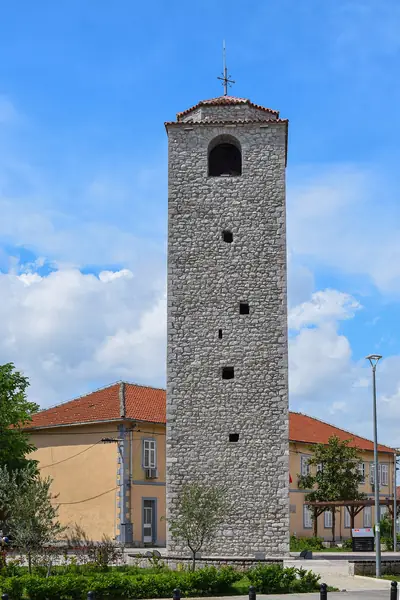
The museum is close to the Podgorica Clock Tower, one of the few Ottoman landmarks to survive the bombing of the city during the Second World War. Built in 1667 by Hadži Pasha Osmanagić, the sixteen-metre tower was once Podgorica’s only public clock. It stands in Bećir Beg Osmanagić Square, in Stara Varoš, the city’s oldest neighbourhood.
Museums and Galleries of Podgorica
The Podgorica City Museum traces the capital’s story from prehistoric settlement and Roman civilisation to religious art, local traditions, and craftsmanship. Its permanent exhibition is divided into archaeology, ethnography, history, and cultural history.
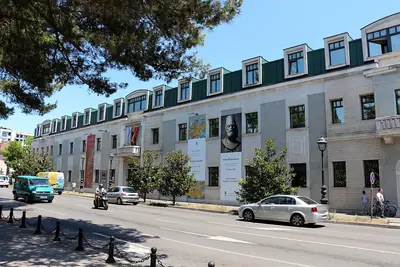
Highlights include Bronze Age objects from Boljevic, finds from the Hellenistic settlements of Gostilj and Momisici, and Roman discoveries from Doclea dating from the first to the fourth century AD. The museum occupies a renovated post-war Graphic Institute building and forms part of Museums and Galleries of Podgorica.
Depedogen and Adži-paša’s Bridge
The remains of Depedogen and Adži-paša’s Bridge reflect Podgorica’s older defensive and transport heritage. They are among the historic places included in Neywo’s Old Podgorica walk, which connects the city’s museums and old neighbourhoods with its more recent landmarks.
Independence Square and Republic Square
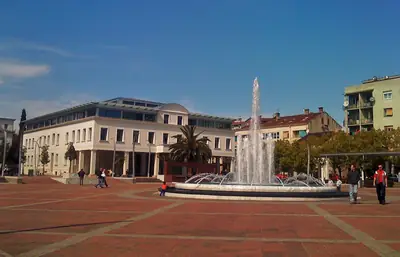
Independence Square is Podgorica’s central urban gathering place. Formerly known as Republic Square, it lies in Nova Varoš, the administrative and socio-cultural heart of the city. The square hosts events, celebrations, art, and everyday city life.
The city library, Radosav Ljumović, and the state gallery Art are both located here. Pedestrian areas extend from the square along Freedom Street and Njegoševa Street. Freedom Street is lined with boutiques, brands, cafés, and places to pause during a walk.
The name Republic of Montenegro recalls the country’s recent political history. From 1992 to 2006, Montenegro was a constituent state of the Federal Republic of Yugoslavia and later of the state union of Serbia and Montenegro.
Montenegrin National Theatre
The Montenegrin National Theatre is the country’s national theatre and a major professional cultural institution in Podgorica. It was founded in 1953 as the Titograd City National Theatre.
The theatre building burned down in 1989 and was rebuilt before reopening in May 1997. Its first performance after reconstruction was Njegoš’s The Mountain Wreath, directed by Branislav Mićunović.
St. George’s Church and Gorica Hill
At the foot of Gorica Hill, St. George’s Church stands among trees and an old cemetery. It is Podgorica’s oldest church and one of the city’s oldest surviving buildings. The Orthodox church remains in use today.
Its small, single-nave form is associated with early medieval, pre-Romanesque architecture. Repairs and modifications over the centuries have left a mixture of periods inside, including parts of the nave dating from the sixteenth century. The interior contains frescoes and gilded icons introduced in the nineteenth century.
The Cathedral of the Resurrection of Christ
The Cathedral of the Resurrection of Christ, known locally as Hram Hristovog vaskrsenja, is Podgorica’s Serbian Orthodox cathedral. It is the cathedral church of the Metropolitanate of Montenegro and the Littoral of the Serbian Orthodox Church.
The main project was conceived by architect Dr Predrag Ristić, with Jovan Popović also named among the cathedral’s architects. The foundations were consecrated in 1994 by Alexy II of Moscow, Metropolitan Amfilohije, and bishops from the Russian and Serbian Churches. Work on the crypt was completed in 1997.
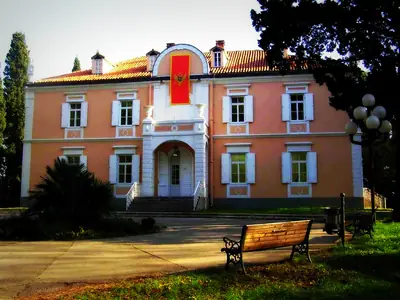
Dvorac Kralja Nikole
Dvorac Kralja Nikole, also called the Podgorica Royal Palace or Petrović Palace, was commissioned by King Nicholas I of Montenegro between 1891 and 1894 as a winter residence for the royal family. It stands in Kruševac forest park.
During the Balkan Wars, the palace buildings were converted into a hospital. Today, the palace is part of the Petrović complex and houses the Petrović Palace Contemporary Art Centre, an exhibition space of the Museum of Contemporary Art of Montenegro.
The palace’s two floors have different roles. The second floor is used for art exhibitions, while the first floor is used by descendants of the Petrović dynasty, including Regent Prince Nikola Petrović when he visits Montenegro. The collection contains about 1,500 works by Montenegrin artists.
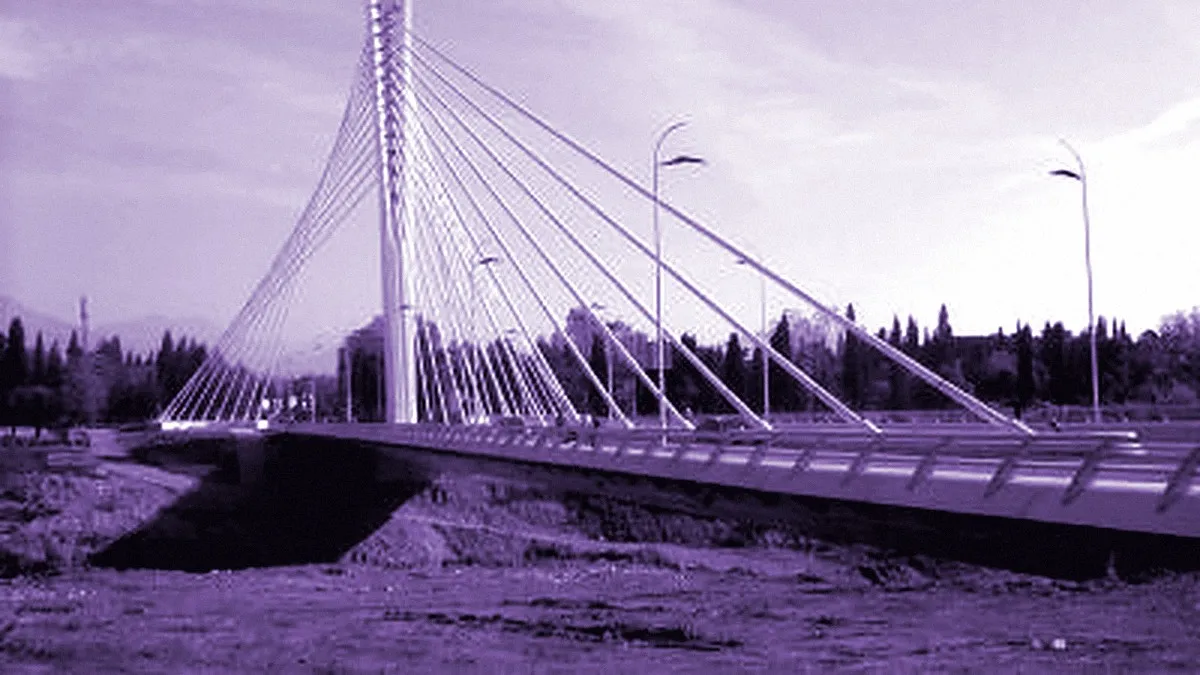
The Millennium Bridge
The Millennium Bridge is one of Podgorica’s most recognizable modern landmarks. It crosses the Morača and represents the contemporary side of the capital, contrasting with the nearby historic buildings, museums, and churches.
The bridge appears on both of Neywo’s walking routes, making it a useful point for connecting the city centre with the areas around the river, Njegošev park, and the stadium.
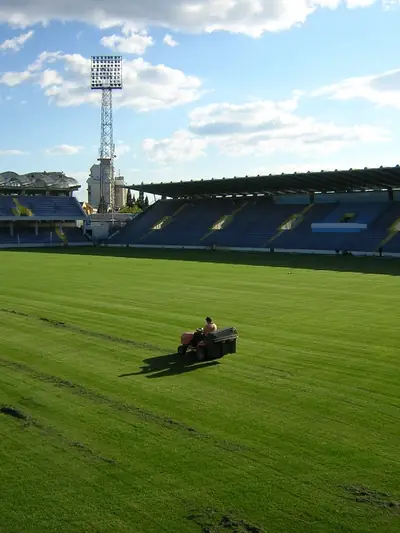
Podgorica City Stadium
Podgorica City Stadium, known locally as Stadion pod Goricom, is Montenegro’s largest and most important football venue. It is the home ground of the Montenegro national team and Budućnost, the country’s biggest club.
The stadium has a capacity of 15,230 seats after the addition of its north and south stands. For international fixtures, UEFA safety regulations reduce the capacity to around 11,500 to 12,000 spectators. The pitch measures 105 by 70 metres and was completely relaid in 2006.
Budućnost has played at the stadium since 1945. Montenegro’s national team played its first official match there in March 2007, defeating Hungary 2–1. The stadium also hosts the Montenegrin Cup final and is one of only two venues in Montenegro with a UEFA licence for international matches.
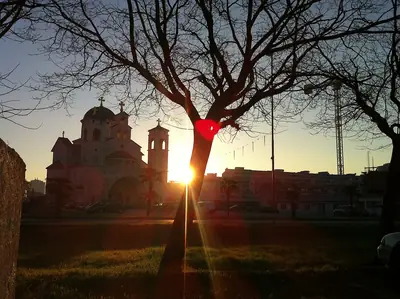
The Church of the Holy Heart of Jesus
In the Konik neighbourhood, the Church of the Holy Heart of Jesus, or Crkva Presvetog Srca Isusovog, offers a very different architectural experience. Built in 1969, it replaced an earlier church in the city centre destroyed during the bombing of Podgorica in the Second World War.
Its distinctive brutalist design makes it one of the city’s most unusual religious buildings. The church is included among the stops on Neywo’s Old Podgorica route.
The University of Montenegro
The University of Montenegro is the country’s only public university. It was established on 29 April 1974, when Podgorica was still called Titograd, by merging several colleges across Montenegro. It later separated from the University of Belgrade and became an independent institution.
The main campus represents the academic heart of the country, with generations of doctors, engineers, lawyers, and artists having studied there since the mid-1970s.
Dajbabe Monastery
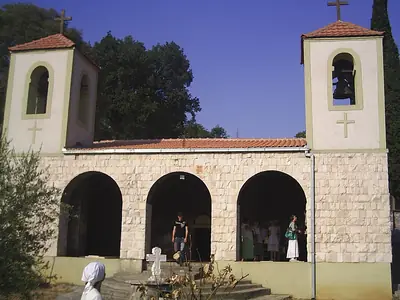
Dajbabe Monastery lies on Dajbabe Hill above the Zeta Valley near Podgorica. Its unusual design combines a built church with a natural cave: part of the church stands outside the rock, while much of the sanctuary extends inside it.
The monastery was founded in 1897 and dedicated to the Assumption of the Theotokos. The cave initially served as the sanctuary, with chapels added later. Outside, the entrance porch is framed by two belfries, creating a striking meeting point between architecture and landscape.
The Zeta River
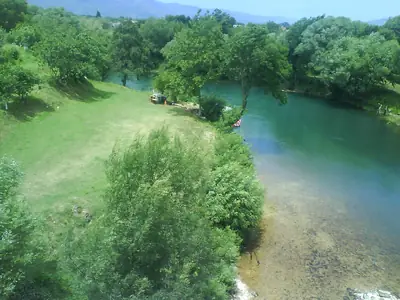
The Zeta is the largest tributary of the Morača. It begins near Nikšić beneath Mount Vojnik, initially flowing as a stream called Surduk, and travels roughly 65 kilometres eastward before joining the Morača just north of Podgorica.
Its most unusual feature is the way it disappears underground. About halfway along its course, the river loses its water through sinkholes, including the largest, Slivlje. It then flows underground for about five kilometres before re-emerging at the Perućica and Glava Zete springs. The re-emergence creates the Slap waterfall near Tvorila, after which the river continues through the Bjelopavlići plain.
Explore Podgorica with a self-guided audio tour
Neywo’s Podgorica audio guide includes 33 narrated places and three ways to explore the city: two walking tours and one bus route. The app tells the story of each place as you reach it, at your own pace, with no group and no schedule. Narration is available in 11 languages.
The available routes are:
- Where Two Rivers Meet: Old Podgorica — a 4.78 km walk lasting 114 minutes, with 10 narrated stops.
- New Town: Royal Winter Palace to the Cathedral — a 4.46 km walk lasting 105 minutes, with 8 narrated stops.
- Bus 19 through the heart of Podgorica — a 6.6 km bus route lasting 28 minutes, with 4 narrated stops.
Download Neywo and explore Podgorica through its old quarters, museums, churches, royal heritage, rivers, parks, and modern landmarks—one story at a time.
Places with an audio guide in Podgorica
8 places in Podgorica with a Neywo audio guide. Each one starts telling its story as you reach it.
Self-guided tours in Podgorica
3 tours in Podgorica, free in the Neywo app. Each stop tells its story as you reach it.
- Bus ride
Bus 19 through the heart of Podgorica
A city bus that crosses the centre from the City Museum past Independence Square, the National Theatre and the Millennium Bridge. A cheap way to see the capital's main axis.
Muzeji galerije Podgorice · Millennium Bridge · Montenegrin National Theatre · Republic of Montenegro
Open this tour: Bus 19 through the heart of Podgorica - Walk
Where Two Rivers Meet: Old Podgorica
Start in the Ottoman old quarter at the clock tower, the ruined Ribnica fortress and the city's oldest bridge, then follow the Morača north through Njegoš Park and past the national theatre to the modern Millennium Bridge. A compact walk from 15th-century stone to 21st-century cables.
JU Prirodnjački Muzej Crne Gore · Depedogen · Adži-paša's bridge · Muzeji galerije Podgorice · Republic of Montenegro · Montenegrin National Theatre …
Open this tour: Where Two Rivers Meet: Old Podgorica - Walk
New Town: Royal Winter Palace to the Cathedral
Cross to the modern western side of the capital: King Nikola's winter palace in its forest park, the great Orthodox cathedral with its crypt, and the squares and campus of the post-war city. A walk through the Podgorica that grew after 1945.
University of Montenegro · Roman Square · Cathedral of the Resurrection of Christ · Dvorac Kralja Nikole · Millennium Bridge · Njegošev park …
Open this tour: New Town: Royal Winter Palace to the Cathedral
Walk Podgorica with Neywo
Neywo turns Podgorica into a self-guided audio tour. Stories arrive as you reach the place they belong to, and the route reshapes when you wander off it.

