What to See in Yangon, Myanmar: Free Audio Guide
Things to Do in Yangon: Pagodas, Heritage and Everyday City Life
The best things to do in Yangon include visiting its sacred Buddhist monuments, exploring its colonial downtown, and discovering museums and historic buildings that reveal Myanmar’s layered past. From the golden Shwedagon Pagoda to the quiet Musmeah Yeshua Synagogue, Yangon rewards travellers who take time to explore beyond its most famous landmark. Neywo offers a free audio guide for Yangon with 29 narrated places.
What to See in Yangon
Shwedagon Pagoda
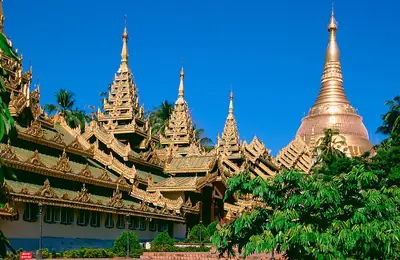
Shwedagon Pagoda is Myanmar’s most sacred Buddhist site and Yangon’s defining monument. The gilded stupa rises 112 metres from a platform on Singuttara Hill, placing its summit 170 metres above sea level. Its dominance over the skyline is so important that city zoning laws limit nearby building heights to preserve its prominence.
The pagoda is believed to enshrine relics associated with the four previous Buddhas of the present era, including eight strands of hair from Gautama Buddha. The structure standing today dates from the late 18th century, after an earthquake destroyed the earlier pagoda in 1768. It was rebuilt under King Hsinbyushin, with its ornamental umbrella crown, or hti, installed in 1775.
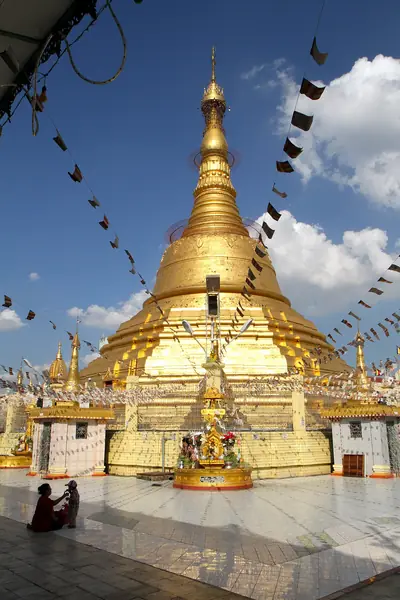
Botataung Pagoda
Near the river in downtown Yangon, Botataung Pagoda is unusual because it is hollow inside. Visitors can walk through its interior corridors, which lead towards a chamber believed to contain a sacred hair relic of the Buddha.
The name Botataung means “1,000 military officers”. Local tradition attributes the original pagoda to the Mon people more than 2,500 years ago. The ancient structure was destroyed during the Second World War and rebuilt afterwards, preserving its importance as a pilgrimage site.
Chaukhtatgyi Buddha Temple
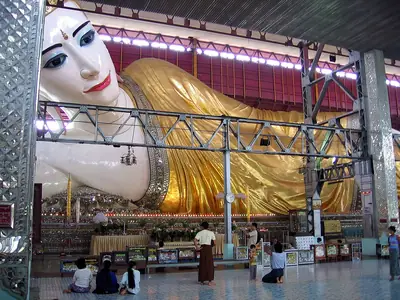
Chaukhtatgyi Buddha Temple, in Bahan Township, houses one of Myanmar’s most remarkable reclining Buddha images. The statue is 66 metres long and is sometimes called the six-story Buddha because of its scale.
The present image was consecrated in 1973 after an earlier version, completed in 1907, was replaced. Its peaceful expression and enormous glass eyes are among its most striking details. The temple is a short walk from Shwedagon Pagoda, making the two sites easy to combine when exploring Yangon.
Colonial downtown and its cathedrals
Yangon’s downtown preserves an extensive collection of colonial-era buildings alongside markets, religious sites and busy streets. Walking through the area reveals the city’s British-period history, but also its strongly multicultural character.
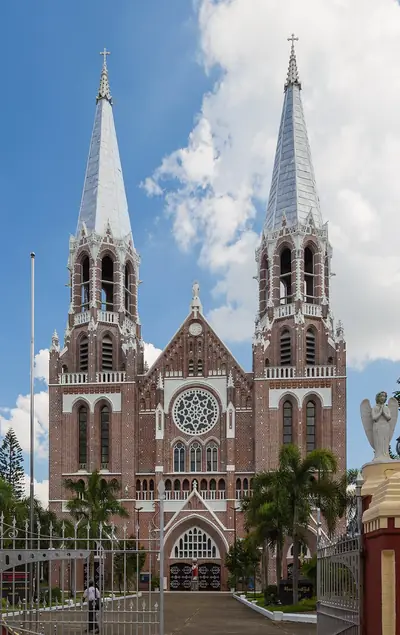
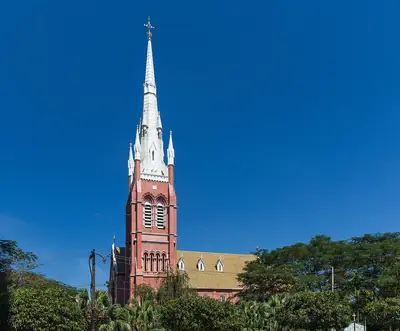
Saint Mary’s Cathedral stands at the corner of Bogyoke Aung San Road and Bo Aung Kyaw Street. Its red-brick exterior, elegant spires and prominent bell tower make it a notable landmark. It is the largest cathedral in Myanmar.
Holy Trinity Cathedral, beside Bogyoke Aung San Market, is Myanmar’s primary Anglican cathedral. Designed by Robert Chisholm in the Indo-Saracenic style, it was built between 1886 and 1894. Its stained-glass windows were repaired in 2003, and the building appears on the Yangon City Heritage List. Inside, wall tablets commemorate young soldiers connected with British military regiments during the colonial period.
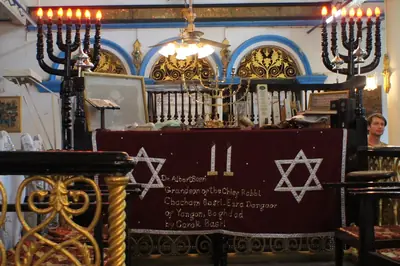
Downtown’s religious diversity also includes the Musmeah Yeshua Synagogue, the only synagogue in Myanmar. The stone building was completed in 1896, replacing a smaller wooden synagogue dating from 1854. Its congregation originally served a Jewish community that had arrived from Baghdad.
Maha Bandula Park and Sule Pagoda
Maha Bandula Park provides a green space in the centre of downtown. It is named after General Maha Bandula, who led Burmese forces during the First Anglo-Burmese War of the 1820s. A stone pillar erected in 1948 commemorates Burma’s independence.
The park sits among some of Yangon’s most important civic and religious buildings, including Yangon City Hall and the High Court. Sule Pagoda stands just across the road. According to legend, it is more than 2,600 years old and predates Shwedagon Pagoda. The stupa is 151 feet high and occupies the centre of Yangon, with major roads radiating from it. It has also been a gathering point during major modern uprisings, including those of 1988, the Saffron Revolution and the Spring Revolution.
University of Yangon
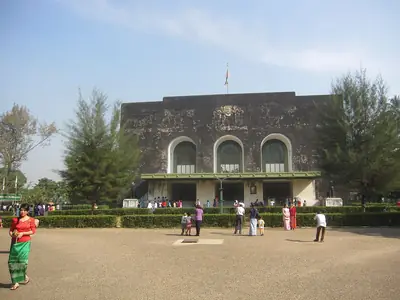
On the southwestern shore of Inya Lake, the University of Yangon is the country’s oldest university. Founded through the union of Rangoon College and Judson College under the University of Rangoon Act of 1920, it was modelled on British universities but became an important centre of Burmese nationalism.
Student strikes in 1920, 1936 and 1938 played a role in the anti-colonial struggle. The university’s alumni include Aung San, U Nu, Ba Maw and U Thant, as well as several presidents and prime ministers. The campus continued to be a focal point for protest after the institution was reorganised following the 1962 coup.
National Museum of Myanmar
The National Museum of Myanmar, in Dagon on Pyay Road, is the country’s premier showcase of Burmese art, history and culture. The five-storey building contains more than 4,000 permanent objects, including ancient artefacts, ornaments, works of art, inscriptions and historical memorabilia.
Its most important object is the Lion Throne, the only surviving original throne of the Burmese monarchs. The galleries provide a broad introduction to Myanmar’s civilisation, from ancient history through more recent periods.
Bogyoke Aung San Museum
The Bogyoke Aung San Museum occupies a colonial-era villa in Bahan Township. Built in 1921, the two-storey house was the final home of General Aung San, the founding father of modern Myanmar, before his assassination in 1947. It became a museum in 1962 and was also where his daughter, Aung San Suu Kyi, spent part of her childhood.
Personal belongings remain on display, including clothing, books, furniture and family photographs. His car is preserved on the grounds. The museum fully reopened to the public in March 2012.
Myanmar Gems Museum
The Myanmar Gems Museum presents the country’s mineral wealth through displays of rubies, sapphires, pearls, jade and other precious stones. The collection includes both raw and finished examples.
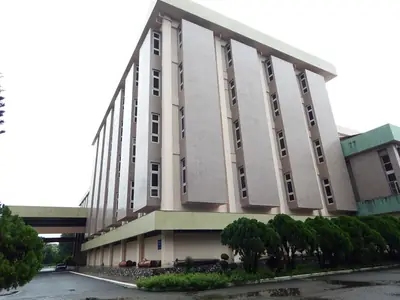
The museum is located on the third floor of a four-storey building near Kaba Aye Pagoda. The same building hosts the Myanmar Gems Emporium twice a year, attracting merchants and collectors from around the world.
Hlawga National Park
For a nature-focused day out, Hlawga National Park lies around 35 kilometres northwest of Yangon in Mingaladon Township. Established in 1982, it was Myanmar’s first park created specifically for nature conservation education.
The park covers more than six square kilometres and is divided into a wildlife park, a mini-zoo and a buffer zone. Its protected forest and open animal enclosures offer a different perspective on the area beyond Yangon’s urban streets.
Other unusual places to visit
The Drug Elimination Museum explores drug abuse and efforts to combat it through three floors of direct, sometimes unsettling exhibits. Its dioramas are deliberately provocative and often macabre, making it unlike a conventional museum.
Yangon’s main bridge, Maha Bandula Bridge, crosses Pazundaung Creek between Botataung and Dagon townships. The cable-stayed structure carries six lanes of traffic and has pedestrian walkways on both sides. Its three-span semi-fan cable system is particularly distinctive when illuminated at night.
For a wider journey through the country, you can also continue to Mandalay or Bagan, two other major destinations in Myanmar.
Explore Yangon with Neywo
Neywo’s free Yangon audio guide includes 29 narrated places and lets you explore independently. The app offers two walking tours and one bus route:
- Colonial Downtown: Cathedrals, a Synagogue and Independence Park — a 5 km walk lasting 114 minutes, with 8 narrated stops.
- Golden Spire to the Giant Buddhas — a 4.66 km walk lasting 100 minutes, with 6 narrated stops.
- YBS 89: From the Giant Buddha to Downtown Yangon — a 14.9 km bus route lasting 64 minutes, with 5 narrated stops.
The app tells the story of each place as you reach it, at your own pace, with no group and no schedule. Download Neywo and explore Yangon through its pagodas, museums, cathedrals and historic streets.
Places with an audio guide in Yangon
8 places in Yangon with a Neywo audio guide. Each one starts telling its story as you reach it.
Self-guided tours in Yangon
3 tours in Yangon, free in the Neywo app. Each stop tells its story as you reach it.
- Bus ride
YBS 89: From the Giant Buddha to Downtown Yangon
Ride the YBS 89 city bus from the Nga Htat Gyi temple in Bahan down to the old centre, as locals do. It passes the only synagogue in Myanmar, Maha Bandula Park and Emmanuel Baptist Church, then crosses Maha Bandula Bridge over Pazundaung Creek.
Nga Htat Gyi Pagoda · Musmeah Yeshua Synagogue · Maha Bandula Park · Emmanuel Baptist Church · Maha Bandula Bridge
Open this tour: YBS 89: From the Giant Buddha to Downtown Yangon - Walk
Colonial Downtown: Cathedrals, a Synagogue and Independence Park
Yangon's centre is a layered city of British-era churches, Muslim and Jewish communities and the pagoda at the heart of every uprising. Start at the riverside Botataung Pagoda, walk past the Armenian church and the red-brick cathedral to Maha Bandula Park, the mosque and the only synagogue in Myanmar, then reach the Anglican cathedral beside Bogyoke Market.
Botataung Pagoda · Armenian Apostolic Church of St. John the Baptist · Saint Mary's Cathedral, Yangon · Emmanuel Baptist Church · Maha Bandula Park · Bengali Sunni Jameh Mosque …
Open this tour: Colonial Downtown: Cathedrals, a Synagogue and Independence Park - Walk
Golden Spire to the Giant Buddhas
Start on the hill beside Shwedagon, Myanmar's most sacred pagoda, and pay respects at the Martyrs' Mausoleum. Then walk east to the home of General Aung San and to two neighbouring temples, a huge seated Buddha and one of the largest reclining Buddhas in the country.
Maha Wizaya Pagoda · Shwedagon Pagoda · Martyrs' Mausoleum · Bogyoke Aung San Museum · Nga Htat Gyi Pagoda · Chaukhtatgyi Buddha Temple
Open this tour: Golden Spire to the Giant Buddhas
Walk Yangon with Neywo
Neywo turns Yangon into a self-guided audio tour. Stories arrive as you reach the place they belong to, and the route reshapes when you wander off it.

