Things to Do in Niš, Serbia: Walking Guide
Things to Do in Niš: What to See in Serbia’s Historic Southern City
Looking for things to do in Niš? Serbia’s third-largest city brings together Roman archaeology, Ottoman fortifications, Orthodox churches, and memorials connected to the country’s difficult modern history. Its most important sights range from the vast Niš Fortress and Constantine the Great’s imperial residence at Mediana to the powerful Skull Tower and Bubanj Memorial Park. Neywo offers a free audio guide for Niš with 30 narrated places.
Niš is a rewarding destination for travellers who want to explore a city shaped by successive empires and conflicts while still enjoying an approachable urban atmosphere. To put the city in its national context, you can also explore our guide to Serbia.
What to see in Niš
Niš Fortress
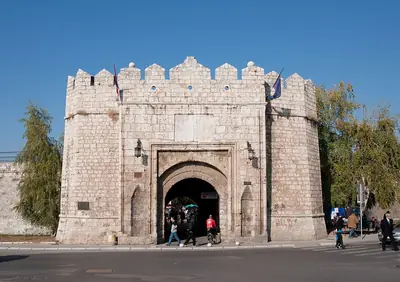
Niš Fortress is the city’s essential historic landmark. Its position on the right bank of the Nišava River has been a centre of settlement and development for roughly two thousand years. Archaeological discoveries reveal layers from ancient Naissus, while the present fortress was reconstructed by the Ottomans in the early eighteenth century.
The polygonal fortification has eight bastion terraces, walls about eight metres high and approximately 2,100 metres in total length. More than twenty hectares lie within its walls. The fortress also contains several buildings and memorials, making it one of the best places to begin exploring Niš’s history.
Salon 77
Inside Niš Fortress, Salon 77 occupies the former Bali-Bey Mosque, also known as the Reis-efendi Mosque or Burmali Mosque. Built between 1521 and 1523 during the Ottoman period, it was one of ten mosques constructed inside the fortress.
The building became an exhibition space for the Gallery of Contemporary Fine Arts in Niš in 1977. Its square plan, dome, sixteen windows, and impressive acoustics give the gallery an especially distinctive setting for exhibitions, concerts, and performances.
Digital Museum
The Digital Museum is another cultural space within Niš Fortress. It occupies a former Turkish arsenal and forms one of the permanent exhibition displays of the National Museum in Niš. Established in 2015, it brings a contemporary museum experience into one of the fortress’s historic buildings.
Monument to the Liberators of Niš
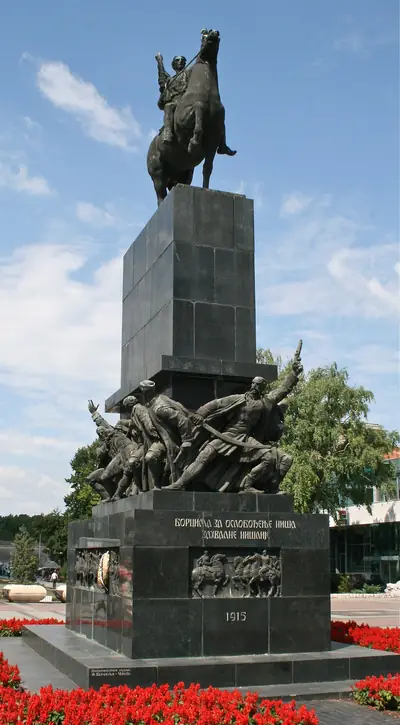
At King Milan Square, the Monument to the Liberators of Niš commemorates the city’s liberation wars against the Turks, Bulgarians, and Germans. Its central figure is a life-size Morava soldier on horseback, raising one hand and holding a flag of freedom in the other.
The monument brings together several periods of Niš’s history, including the struggles associated with 1874 and 1877 and the occupations and liberation of 1915 and 1918.
National Theatre in Niš
The National Theatre in Niš stands on Sinđelić Square and has played a role in Serbia’s theatrical history since the nineteenth century. It was founded on 11 March 1887 as the Sinđelić Theatre. In 1906, after a new theatre building had been completed, it was reorganised as the National Theatre.
Skull Tower
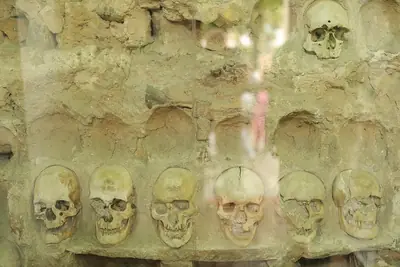
Skull Tower, or Ćele kula, is one of Niš’s most striking and unsettling monuments. It was built from the skulls of Serbian fighters killed at the Battle of Čegar in May 1809, during the First Serbian Uprising.
The Serbian rebels were led by Stevan Sinđelić. Surrounded by Ottoman forces, Sinđelić detonated a powder magazine inside the rebel position rather than be captured. Hurshid Pasha, governor of the Rumelia Eyalet, later ordered a tower made from the skulls of the fallen rebels.
The original tower was about four and a half metres high and contained 952 skulls arranged in fourteen rows. Today, 58 skulls remain embedded in its walls. Sinđelić’s skull is displayed in a glass container beside the structure. Preserved as a museum, the tower is a powerful reminder of the First Serbian Uprising and its human cost.
Mediana
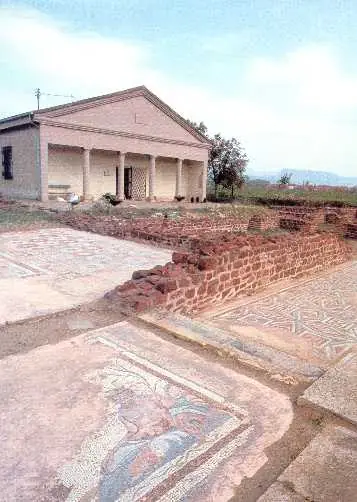
East of Niš, Mediana preserves the remains of a luxurious late Roman residence and estate associated with Emperor Constantine the Great. Created in the late third or early fourth century, it formed part of ancient Naissus and is considered the best-preserved section of Roman Naissus.
The centre of the complex was a large villa with a peristyle, measuring about 98.6 by 63 metres. The estate also included baths, a granary, and a water tower, revealing the scale and organisation of the residence. Excavated mosaics have been conserved, and paths allow visitors to explore the archaeological park.
Mediana reopened at the end of December 2022 after ten years of excavation, conservation, and other work. It is one of the most important places to visit for understanding Niš’s Roman past.
Saborna crkva
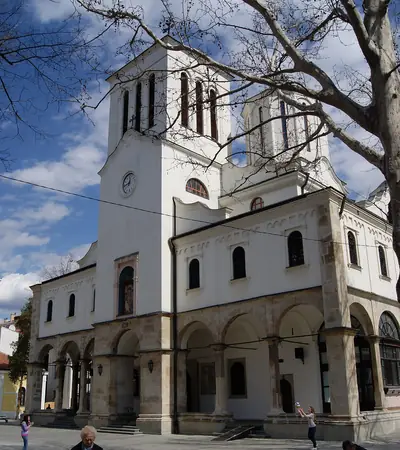
The Holy Trinity Cathedral, known locally as Saborna crkva, is the cathedral church of the Serbian Orthodox Church’s Eparchy of Niš. Its architecture combines Serbian Byzantine, Romanesque Byzantine, and Islamic motifs with Renaissance and Western Baroque elements.
This mixture marked an important shift in Serbian architecture, away from classical concepts and towards national forms. The cathedral is also significant for its icons and iconostasis. It is protected as a cultural monument, although it suffered severe damage during the Allied bombing of 1944 and again in a fire in 2001.
St. Nicholas Church
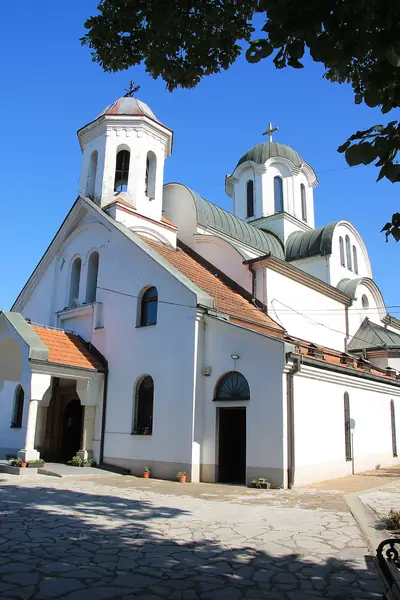
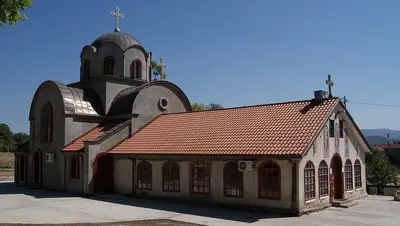
St. Nicholas Church stands in Niš’s Palilula urban area and is protected as a cultural monument. Local tradition says that the church changed between Christian and Muslim use six times, giving it an unusual place in the city’s religious and cultural history.
St. Pantaleon Church
St. Pantaleon Church was one of the first churches built in liberated Niš and southern Serbia after the end of Ottoman rule. Its foundation stone was laid in April, and the building was completed on 8 August 1878, the feast day of Saint Pantaleon.
The small church has a semicircular apse and a barrel vault. Its present bell tower was built in 1928 and contains three bells. The church stands on the right bank of the Nišava, in the suburb of Jagodin Mala.
Crveni Krst concentration camp
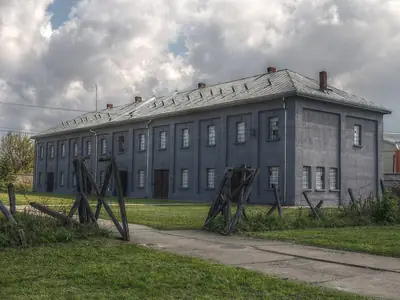
The Crveni Krst concentration camp is preserved as a memorial complex, also known as the Memorial Complex “12th February”. The buildings originally served as military storage facilities before the occupation and later became a place of imprisonment under German control.
The camp operated in Niš from 1941 to 1944. It held captured Serbs, Jews, Roma, political prisoners, and others regarded as opponents of the occupation. Its location near Crveni Krst railway station gave it the name by which it is commonly known. The site offers an important place for confronting the history of wartime persecution in Serbia.
Bubanj Memorial Park
Bubanj Memorial Park commemorates more than ten thousand citizens of Niš, southern Serbia, and other parts of the country who were executed at the site during the Second World War. The victims included civilians and entire families.
The park’s central memorial consists of three large concrete fists. Their different sizes represent a man’s hand, a woman’s hand, and a child’s hand. Together, they express defiance and remember the families killed at Bubanj.
Islam-aga’s Mosque
Islam-aga’s Mosque, also known as Islam-aga Hadrović’s Mosque, is on General Miloјko Lešjanin Street. Built in 1720 and reconstructed in 1870, it is the only mosque in Niš still used by the city’s Islamic community.
Of the twenty mosques that existed in Niš during Ottoman rule, it is the only one that remains in use. The building was torched during riots in 2004 and reconstructed in 2013.
Čair Stadium
Čair Stadium, or Stadion Čair, is a multi-purpose sports venue beside Čair Park. It forms part of the wider Čair Sports Complex and is mainly used for football as the home ground of Radnički Niš.
Built in 1963, the stadium underwent a partial reconstruction beginning in 2011 and reopened to the public on 15 September 2012. It now has 18,151 seats.
A Niš self-guided walking tour with Neywo
Neywo’s Niš audio guide includes three walking tours and one bus route, with narration available in 11 languages:
- Naissus: Camp, Fortress and the Heart of Old Niš — 3.39 km, 113 minutes, 11 narrated stops.
- Cathedral Quarter to the Skull Tower — 4.57 km, 118 minutes, 8 narrated stops.
- Emperor’s Villa to the Skull Tower: Eastern Niš — 4.73 km, 103 minutes, 5 narrated stops.
- Bus 1: From the Railway Station to the Skull Tower — 4.8 km, 21 minutes, 6 narrated stops.
The app tells the story of each place as you reach it, at your own pace, with no group and no schedule. Download Neywo and explore Niš through its fortress, Roman remains, churches, museums, and memorials.
If you are continuing through Serbia, you can also compare Niš with Belgrade, Smederevo, Vrnjačka Banja, or Novi Sad.
Places with an audio guide in Niš
8 places in Niš with a Neywo audio guide. Each one starts telling its story as you reach it.
Self-guided tours in Niš
4 tours in Niš, free in the Neywo app. Each stop tells its story as you reach it.
- Bus ride
Bus 1: From the Railway Station to the Skull Tower
Ride Niš-Ekspres line 1, a regular city route towards Niška Banja. It runs from the Saint Paraskeva church by the railway station past Dardania, the Monument to the Liberators and the National Theatre to the Museum of Health Culture and the Skull Tower, where it has a stop named after the monument.
Saint Paraskeva church in Niš · Dardania · Monument to Liberators of Niš · National Theatre in Niš · Museum of Health Culture in Niš · Skull Tower
Open this tour: Bus 1: From the Railway Station to the Skull Tower - Walk
Naissus: Camp, Fortress and the Heart of Old Niš
Begin at Crveni Krst, the best-preserved Nazi concentration camp in the Balkans, then cross to the Ottoman fortress that has guarded the Nišava for two thousand years. Inside its walls a mosque is now a gallery, a Turkish bath is a jazz museum and an arsenal is a digital museum. Leave by Stambol Gate for the liberators' monument and the National Theatre.
Crveni Krst concentration camp · Niš Fortress · Salon 77 in Niš · Споменик кнезу Милану Обреновићу и ослободиоцима Ниша 1878. године · Digital museum · Nišville Jazz muzej …
Open this tour: Naissus: Camp, Fortress and the Heart of Old Niš - Walk
Cathedral Quarter to the Skull Tower
Walk from the Catholic Sacred Heart church to Niš's Orthodox cathedral quarter, with its museums of church antiquities and local history, then east to the old Pasteur Institute and finally the Skull Tower, the chilling monument built from the skulls of Serbian rebels in 1809.
Sacred Heart Church, Niš · National Museum of Niš · Saborna crkva · Crkva Svetih arhanđela Mihaila i Gavrila u Nišu · Museum of Church Antiquities · St. Nicholas Church, Niš …
Open this tour: Cathedral Quarter to the Skull Tower - Walk
Emperor's Villa to the Skull Tower: Eastern Niš
Start at Mediana, the villa complex built beside Naissus in the age of Constantine the Great, and see the temple-like museum rising above its mosaics. Walk west to the chilling Skull Tower, the Museum of Health Culture and the Čair Stadium.
Mediana · Museum building at the archaeological site of Mediјana · Skull Tower · Museum of Health Culture in Niš · Čair Stadium
Open this tour: Emperor's Villa to the Skull Tower: Eastern Niš
Walk Niš with Neywo
Neywo turns Niš into a self-guided audio tour. Stories arrive as you reach the place they belong to, and the route reshapes when you wander off it.

