Visiting Sremski Karlovci, Serbia: Top Sights on Foot
Things to Do in Sremski Karlovci: History, Churches and Local Museums
Sremski Karlovci is a historic town in Vojvodina, Serbia, known for its churches, cultural heritage, museums and distinctive landmarks. Compact enough to explore on foot, it is especially rewarding for travellers interested in Serbian religious history, the Treaty of Karlowitz and the stories preserved in the town’s old centre. Neywo offers a free audio guide for Sremski Karlovci with 15 narrated places.
What to See in Sremski Karlovci
Most of the town’s main sights are concentrated in and around the historic centre. A self-guided walk makes it possible to connect grand religious buildings, small museums and places tied to important moments in European history.
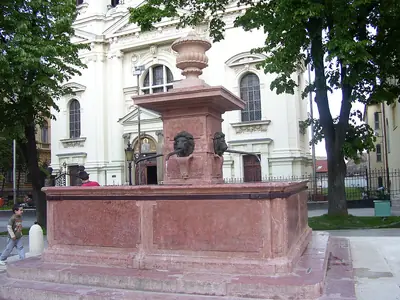
Fountain “Four Lions”
At the centre of Branko Radičević Square stands the Fountain of Four Lions, one of Sremski Karlovci’s best-known symbols. Built in 1799 in Baroque style from red marble, it was the crowning feature of the town’s first waterworks. Its architect was the Italian Giuseppe Aprili.
The fountain was restored in 1858, 1925 and 2007, and moved to its present position in 1903. Local tradition says that anyone who drinks its water will return to Sremski Karlovci and marry.
The Patriarchate Court
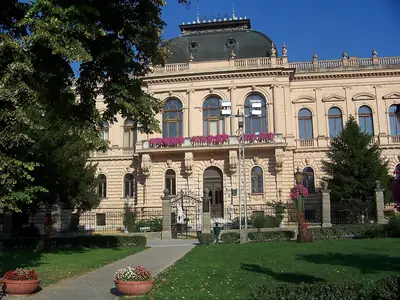
The Palace of the Patriarchate is one of the town’s most impressive buildings. It was the residence of the Serbian bishops of Srem and, until 1930, the seat of the Serbian Patriarchs. From 1848 to 1920, it served as the seat of the Patriarchate of Karlovci.
Recognised as a Cultural Heritage Site of Exceptional Importance, the palace forms an important spiritual and architectural ensemble with the nearby Cathedral Church of the Eparchy.
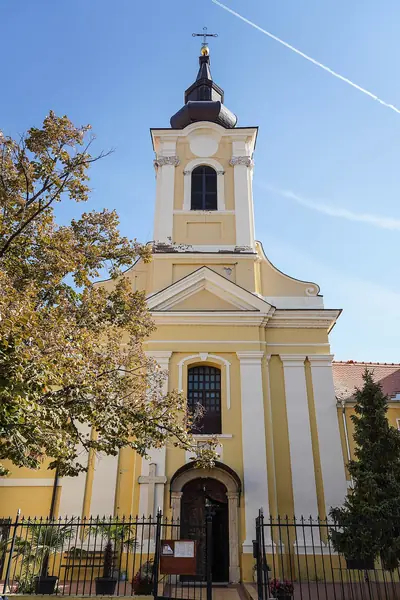
Church of the Presentation of the Blessed Virgin Mary
This Serbian Orthodox church belongs to the Eparchy of Srem. It was once a metoh, or dependency, of Hilandar Monastery on Mount Athos. In 2016, it was officially proclaimed the Monastery of the Presentation of the Blessed Virgin Mary of the Eparchy of Srem by decision of Bishop Vasilije.
The Roman Catholic Church of the Holy Trinity
The Roman Catholic Church of the Holy Trinity is one of the most significant buildings in the old centre. It forms part of a spatial cultural-historical unit recognised as being of exceptional importance for Serbia.
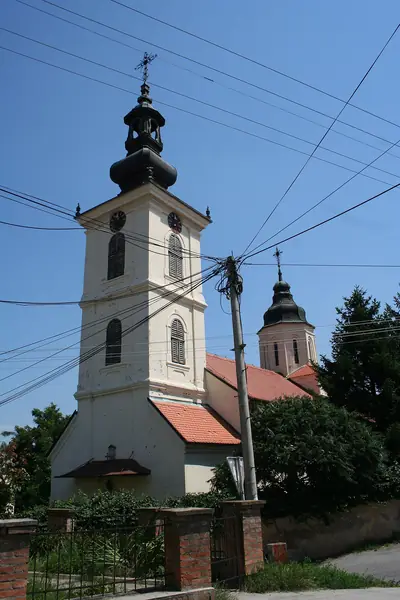
The Lower Church
The Church of the Holy Apostles Peter and Paul is also known as the Lower Church. The first church on this site was mentioned in 1599, while the present building dates from the early eighteenth century.
Its white façades, natural stone construction, black clock faces and Habsburg Baroque-style spire give it a distinctive appearance. The church grounds are also home to a large plane tree that parishioners regard as one of the oldest trees in Europe and that is protected as a state treasure.
The Chapel of Peace
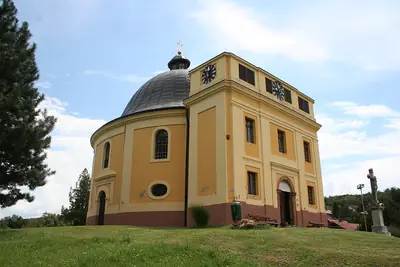
The Chapel of Peace marks the place where the Treaty of Karlowitz was signed in 1699, ending the Great Turkish War. The present chapel was built in 1817 as an expression of gratitude to the Virgin Mary.
Its unusual circular design resembles an Ottoman military tent. Three entrances represent the passageways used by the Venetian, Austrian and Polish delegations during the negotiations. A planned fourth entrance, intended for the Ottoman delegation, was sealed when the chapel was completed.
The Treaty of Karlowitz
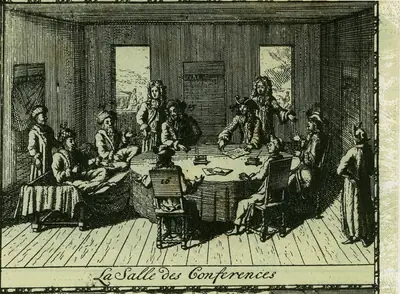
Sremski Karlovci gave its name to the Treaty of Karlowitz, signed here on January 26, 1699. The agreement ended the Great Turkish War of 1683–1699 and marked the end of Ottoman control in much of Central Europe.
The negotiations were notable for their diplomatic design. Delegations met around a round table, so that no representative occupied a position of precedence, and each delegation entered through its own door. The treaty established the Habsburg monarchy as the dominant power in the region and reshaped the map of Central Europe.
Palata Ilion and the Native Collection
Palata Ilion is one of the most important buildings in the old centre and a site of exceptional cultural significance in Serbia. It was formerly the residence of the aristocratic Rajačić family and now houses the Native Collection, a branch of the Museum of Novi Sad.
The collection brings together archaeological, historical, ethnological and art exhibits. Highlights include an exhibition dedicated to the poet Branko Radičević, depictions of old Karlovci and a preserved peasant kitchen from the late nineteenth and early twentieth centuries.
Museum of Beekeeping
The Museum of Beekeeping explores Serbia’s long beekeeping tradition. Founded in 1968 by Borivoje Živanović, the grandson of professor Jovan Živanović, it displays beehives, traditional tools, family photographs, diplomas and awards.
Among the most unusual objects are honey extractors from 1876 and 1899, a steam wax melter from 1881 and a decorative beehive shaped like a replica of Ravanica Monastery, made in 1880.
Museum of Matches
The Museum of Matches is one of only two museums of its kind in Europe. Its collection contains more than 40,000 exhibits from countries around the world, displayed in an adapted family home belonging to Jovana Popović Benišek.
The matchboxes feature statesmen, animals, plants, vehicles and caricatures. The collection also includes Italian packages decorated with reproductions of famous paintings, Japanese examples made on parchment and silk, French designs and a large selection of matchbox labels.
The Nikolić Family Chapel
In Čerat Cemetery, the Nikolić Family Chapel offers a more intimate historic site. Built in 1903 and dedicated to Saint Catherine, it was designed by architect Vladimir Nikolić in memory of his mother, Katarina Nikolić.
Its iconostasis was painted by the Serbian artist Uroš Predić. The faces of the saints are said to resemble members of the Nikolić family, giving the chapel a particularly personal character.
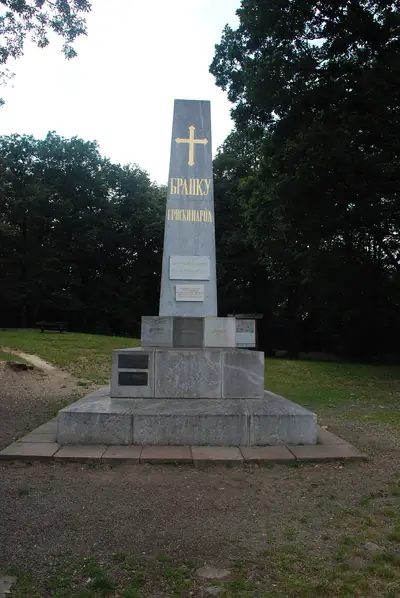
Branko Radičević’s Grave in Stražilovo
On Stražilovo hill, the grave of Branko Radičević commemorates one of Serbia’s most beloved poets. The site is an important place of remembrance and connects the town with the poet’s role in Serbian literature and national history.
Duško’s Viewpoint
Duško’s viewpoint, on Magareći hill, looks over Sremski Karlovci, its historic monuments and the Bačka plain. The viewpoint includes a two-level open-air stage with a gilded cross, standing where a wooden cross had stood for several decades.
The Church of the Blessed Virgin Mary in Banstol
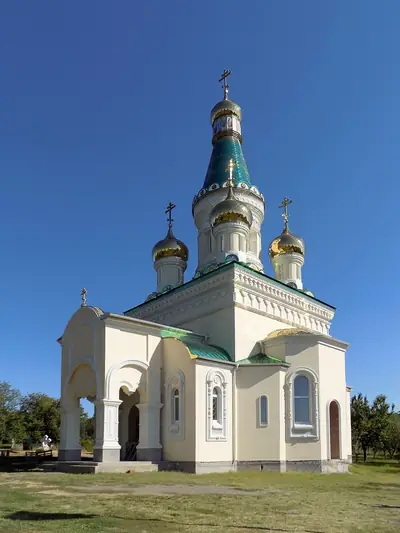
The Church of the Blessed Virgin Mary in Banstol is a Serbian Orthodox church dedicated to the victims of Croatia’s Operation Storm. It is the first Serbian Orthodox church dedicated to those victims and the first church in the region built in the Russian architectural style.
The idea dates from 2015, construction began in 2017 and the dome was placed in 2018. A wall of sorrow bearing the names of innocent victims is planned for the church grounds.
Explore Sremski Karlovci with a Free Audio Guide
For an easy Sremski Karlovci self-guided walking tour, download Neywo and explore without a group or fixed schedule. The app has one walking route: “Sremski Karlovci: Patriarchs, Peace and a Fountain of Legend”. It covers 2.21 km, takes about 92 minutes and includes 10 narrated stops, including the Fountain of Four Lions, the Patriarchate Court, the Lower Church, Palata Ilion, the Museum of Beekeeping, the Chapel of Peace and Duško’s viewpoint.
Neywo tells the story of each place as you reach it, at your own pace, with no group and no schedule. Narration is available in 11 languages, making it a practical alternative to a traditional free walking tour in Sremski Karlovci. Download the app and discover the town’s churches, museums and historic landmarks while walking through its streets.
Sremski Karlovci is part of Vojvodina, and it can also be combined with a visit to Novi Sad. For more ideas across the country, explore Serbia, or continue to other Vojvodina destinations such as Subotica and Vršac.
Places with an audio guide in Sremski Karlovci
8 places in Sremski Karlovci with a Neywo audio guide. Each one starts telling its story as you reach it.
Self-guided tours in Sremski Karlovci
1 tour in Sremski Karlovci, free in the Neywo app. Each stop tells its story as you reach it.
- Walk
Sremski Karlovci: Patriarchs, Peace and a Fountain of Legend
Walk the baroque old core of the town where the Serbian Patriarchs once sat and where the Treaty of Karlowitz redrew the map of Europe in 1699. Pass the Four Lions fountain, palaces and churches, climb to a poet's viewpoint over the Danube plain, and end at the tent-shaped Chapel of Peace.
Church of the Presentation of the Blessed Virgin Mary in Sremski Karlovci · Native collection Sremski Karlovci · Palata Ilion · Fountain "Four Lions" · The Patriarchate Court, Sremski Karlovci · Rimokatolička crkva Sv. Trojstva …
Open this tour: Sremski Karlovci: Patriarchs, Peace and a Fountain of Legend
Walk Sremski Karlovci with Neywo
Neywo turns Sremski Karlovci into a self-guided audio tour. Stories arrive as you reach the place they belong to, and the route reshapes when you wander off it.

