Visiting Celje, Slovenia: Top Sights on Foot
Things to Do in Celje, Slovenia: A Walk Through Its Medieval Heritage
Wondering what to do in Celje? This historic city in Slovenia’s Styria region brings together a medieval castle, churches, museums and the legacy of the Counts of Celje in a compact urban setting. Neywo’s free audio guide for Celje tells the story of 11 narrated places as you explore.
What to See in Celje
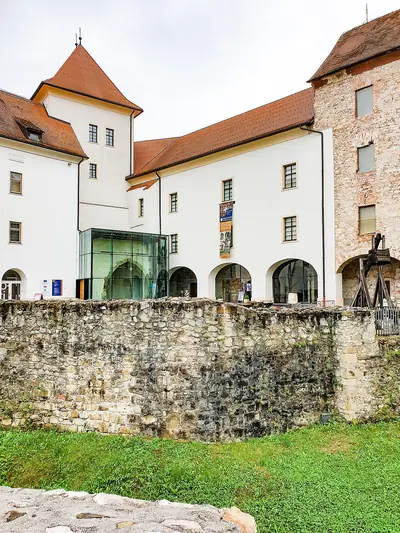
Celje Castle
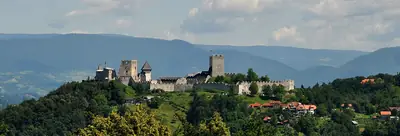
Start with Celje Castle, or Celjski grad, high above the city on three hills where the Savinja River bends towards the Laško valley. The ruined walls belonged to the former seat of the Counts of Celje, one of the most influential noble families in the Slovene lands.
The castle was once the largest fortification in the territory of present-day Slovenia. In the Middle Ages, it covered almost 5,500 square metres. The earliest documentary references date from 1322 and 1344. Below it, in the old part of the city, the Counts of Celje also had their urban residence, the Lower Castle, or Spodnji grad.
The castle remains the landmark most closely associated with Celje. Its position above the city makes the Counts’ medieval legacy a visible part of the landscape.
St. Nicholas’s Church
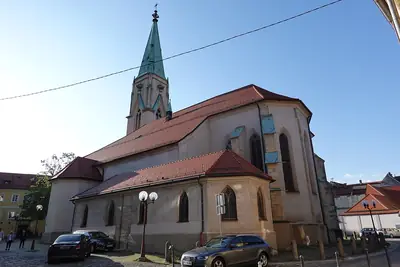
St. Nicholas’s Church, also known as Sveti Miklavž, is one of the historic religious landmarks in the City Municipality of Celje. It forms part of the old town route between the castle and the city’s other central sights.
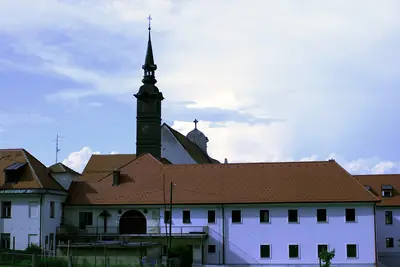
Capuchin Monastery
The Capuchin Monastery offers a quieter stop among Celje’s historic buildings. As one of the city’s religious landmarks, it adds another layer to a walk through the old town.
Celje Cathedral
In the heart of Celje’s medieval town stands Celje Cathedral, also known as the Cathedral of Saint Daniel. It has been the episcopal seat of the Diocese of Celje since the diocese was established in 2006.
The present building began to take shape around 1306, on the site of a single-nave Romanesque church from the twelfth century. It was originally a three-nave basilica with pillars, a flat ceiling and a gallery for nuns. After 1379, it was transformed in the Gothic style, with ribbed cross vaults, a bell tower and a presbytery.
A chapel was added on the north side around 1400. Originally dedicated to the Three Kings, it is now known as the Chapel of Our Lady of Sorrows. Inside, the richly furnished interior reflects the building’s development from its Romanesque beginnings through its Gothic transformation.
Celje Regional Museum and Stara grofija
The Celje Regional Museum explores and preserves the cultural heritage of the wider region, from the earliest periods up to the First World War. Founded in 1882 as the City Museum, it has operated continuously ever since and is one of the oldest museums in Slovenia. Its current name has been used since 1965.
The museum is based in Knežji dvorec, while its main collection is housed nearby in Stara grofija. The grand ceremonial hall at Stara grofija is particularly memorable for its seventeenth-century illusionistic painting, which has become a symbol of the museum.
Stara grofija, or the Old Count’s Mansion, is itself an important part of Celje’s history. Its oldest core has an L-shaped plan, with wings facing south and east. A building known as the Schreibhauzz, or writing office, was mentioned here in 1414 and served the Counts of Celje as an administrative building.
After the counts died out in 1456, ownership passed to the provincial ruler. The building was sold in 1580 to the Thurn-Valsassina family, who created a late Renaissance palace on the site. Arcaded corridors were added between 1620 and 1640, followed by a staircase between 1650 and 1680. The family remained its owner until 1869.
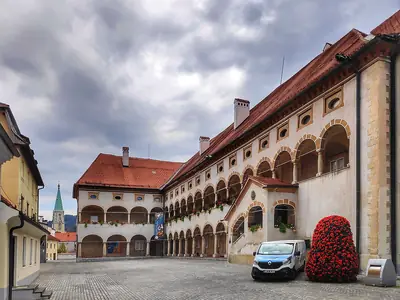
Ducal Court
Celje’s Ducal Court, known locally as Knežji dvorec, is a medieval town palace in the old part of the city. It was once the residence of the Counts of Celje and is thought to have developed from a towered court mentioned in the fourteenth century.
After the counts, the building became the seat of the Celje vicegerent. During the time of Maria Theresa, the Austrians remodelled the palace and converted it into military barracks. A severe city fire in 1798 led to the demolition of its walls and other defensive structures.
The façade still preserves traces of the earlier building: the original Gothic windows can be seen beneath the later changes. The palace now forms part of the city’s museum heritage.
St. Maximilian’s Church
St. Maximilian’s Church, or Sv. Maksimilijan, stands opposite the new bus station beside Mariborska cesta. Built towards the end of the fifteenth century, it is dedicated to Saint Maximilian.
The church is connected with the tradition of Maximilian’s martyrdom. According to the story, he was beheaded by the Roman governor Eulasius in 284 after refusing to sacrifice to Mars, the god of war. His body was said to have been secretly buried where the church now stands, before Saint Rupert later moved the remains to Bischofshofen in the Salzburg region.
Above the so-called Well of Saint Maximilian’s Beheading, a small chapel marks the place where tradition says Maximilian’s blood fell. The church’s present form dates from the period of the Counts of Celje, while the legend itself dates from the thirteenth century. The surviving records of the martyrdom are considered unreliable, making the site a meeting point between religious tradition and history.
Pečovnik – the house of Alma M. Karlin
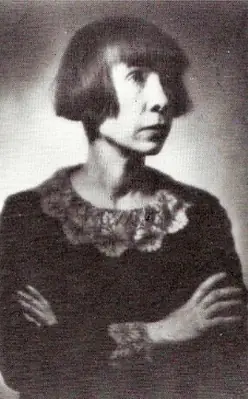
Outside the medieval centre, Pečovnik is connected with Alma Maximiliana Karlin, one of Celje’s most remarkable literary and travelling figures. She was also known as a Slovenian traveller and a theosophist.
Karlin died at the house in Pečovnik in January 1950. The site offers a more personal perspective on Celje’s cultural history, beyond the city’s medieval monuments and noble legacy.
Celje and the 2004 European Men’s Handball Championship
Celje also has a place in Slovenia’s modern sporting history. In 2004, it was one of four hosts of the European Men’s Handball Championship, alongside Ljubljana, Velenje and Koper.
The tournament took place from 22 January to 1 February 2004 and featured sixteen teams. Germany won its first European title by defeating Slovenia in the final. Slovenia claimed silver, its first medal at a major competition, while Denmark took bronze after beating Croatia.
Exploring Slovenia Beyond Celje
Celje is a useful stop for travellers discovering Slovenia, especially if they want to combine a historic city with other parts of the country. The more famous destinations of Bled, Ljubljana and Piran offer very different experiences, while Škofja Loka and Kobarid provide further ways to explore the country’s historic and regional character.
Explore Celje with Neywo
Neywo’s Celje self-guided walking tour, “Counts of Celje: From Castle Hill to the Old Town,” covers 3.4 km in about 84 minutes and includes 7 narrated stops: Celje Castle, St. Nicholas’s Church, the Capuchin monastery, Celje Cathedral, Pokrajinski muzej Celje, Ducal Court and St. Maximilian’s Church.
The app tells the story of each place as you reach it, at your own pace, with no group and no schedule. Celje’s audio guide is available in 11 languages, making it an easy way to explore the city independently while keeping its medieval history and cultural landmarks connected.
Places with an audio guide in Celje
8 places in Celje with a Neywo audio guide. Each one starts telling its story as you reach it.
Self-guided tours in Celje
1 tour in Celje, free in the Neywo app. Each stop tells its story as you reach it.
- Walk
Counts of Celje: From Castle Hill to the Old Town
The Counts of Celje rose from local nobles to rivals of the Habsburgs, and their story is still written in stone. Climb to the ruined castle that was once the largest in Slovenia, then wander down into the old town past a Gothic cathedral, the counts' town palace and the mansion that holds a famously painted ceiling, ending at a church tied to a legend of martyrdom.
Celje Castle · St. Nicholas's Church · Capuchin monastery · Celje Cathedral · Pokrajinski muzej Celje · Ducal Court …
Open this tour: Counts of Celje: From Castle Hill to the Old Town
Walk Celje with Neywo
Neywo turns Celje into a self-guided audio tour. Stories arrive as you reach the place they belong to, and the route reshapes when you wander off it.

