Things to Do in Škofja Loka, Slovenia: Walking Guide
Things to do in Škofja Loka, Slovenia
Škofja Loka is one of Slovenia’s oldest and best-preserved medieval towns, with historic castles, Gothic churches, rural estates and a former partisan workshop to discover. Its compact streets and surrounding villages make it a rewarding place to explore slowly, especially for travellers interested in medieval architecture and local history. Neywo offers a free audio guide for Škofja Loka with 11 narrated places.
What to see in Škofja Loka
The most important sights are spread through the historic town and the surrounding Municipality of Škofja Loka. Together, they reveal the area’s medieval, artistic and modern history.
Holy Cross Church
The Holy Cross Church, known locally as Cerkev Sv. Križa, is one of the historic churches in Škofja Loka Municipality. It forms part of the area’s collection of religious buildings and heritage sites.
St. Jacob’s Church
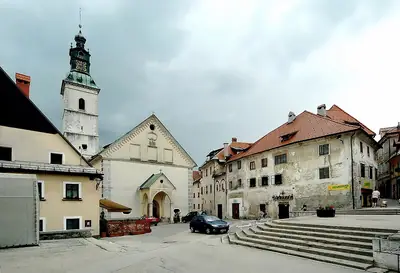
St. Jacob’s Church, or Cerkev sv. Jakoba, is the parish church of Škofja Loka and one of the town’s distinctive landmarks. It is a late Gothic hall church with a long chancel and bell tower.
Inside, the star-ribbed vault is the main architectural highlight. Its carefully crafted ribs draw the eye upwards and give the interior an elegant sense of height.
Loka Castle
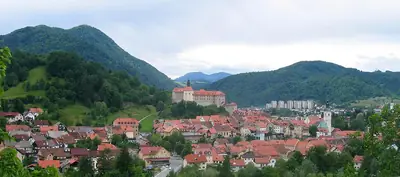
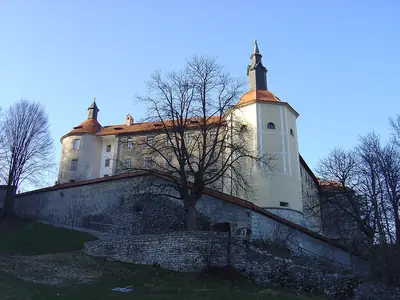
Loka Castle, also called Loški grad or Škofjeloški grad, stands on a rise above the town and is one of the defining features of the Škofja Loka skyline. The castle is now home to the Loški muzej, the local museum of Škofja Loka.
Its elevated position makes it an important part of the town’s historic setting, linking the castle with the medieval streets below.
Stara Loka Castle
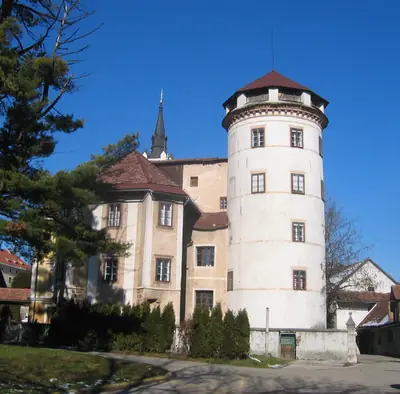
Stara Loka Castle, also known as Starološki grad or Strahlov grad, is one of the oldest castles in Slovenia. It likely developed from a manor house belonging to the local lordship before becoming a fortified residence.
The castle’s surviving round defensive towers give it a distinctive silhouette. Its southern wing has overhanging balconies supported by corbels, while slight dips in the ground mark the position of the former defensive moat.
Galerija Ivana Groharja
Galerija Ivana Groharja is dedicated to Ivan Grohar, one of Slovenia’s most celebrated painters. His work is closely connected with the region, making the gallery a natural stop while exploring Škofja Loka’s cultural heritage.
The gallery also fits into the wider character of the town, where well-preserved medieval streets reward visitors who take the time to notice architectural and artistic details.
Vešterski mlin
Vešterski mlin is a cultural monument of local importance beside the Sora River. The mill is particularly significant because of its connection with the Second World War.
An underground partisan workshop operated secretly beneath the mill during the war, when Škofja Loka was annexed into the German Reich and resistance movements organized across the Gorenjska region. On February 8, 1944, German soldiers surrounded and searched the area but did not find the hidden workshop. They set fire to the neighbouring house, sawmill and mill instead.
The mill was later partially rebuilt as a monument to the fallen partisans. Its setting beside the river adds a quieter dimension to a site shaped by difficult events.
Annunciation Church, Crngrob
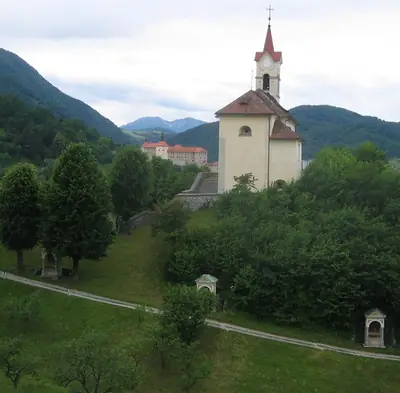
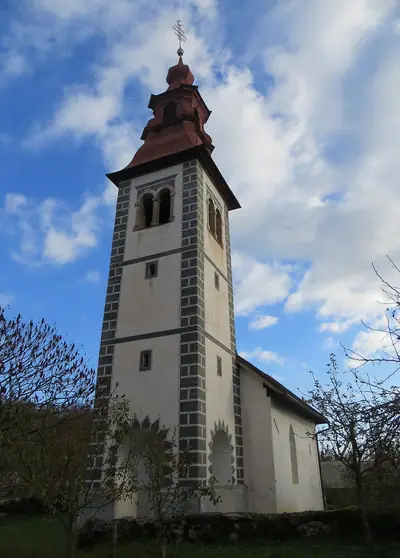
About four kilometres from Škofja Loka, the Annunciation Church in Crngrob stands on the edge of a hillside. It is one of Slovenia’s most important medieval art monuments and a notable pilgrimage church.
The church is dominated by a massive Renaissance bell tower with a Baroque dome. On the south nave wall, a large fresco of Saint Christopher dates from 1464. Another depiction of the saint appears on the western wall of the bell tower and was painted by Janez Gosar in the second half of the 19th century.
The oldest part of the building is the northern wall, which dates back at least to the 13th century. Later Gothic additions added new sections, vaults and frescoes, creating the architectural character visible today.
St. Andrew’s Church, Gosteče
St. Andrew’s Church in Gosteče is a small village church with an unusually rich interior. Built over a long period from the late 13th to the 15th century, it is especially valued for its complete, high-quality fresco paintings.
Two wooden ceilings are among its most remarkable features. One is a pre-Baroque coffered ceiling from 1699. The other is a Romanesque-Gothic ceiling from 1515, hidden beneath a later covering and rediscovered during restoration in 1987. It is considered one of the finest Gothic-Renaissance ceilings in Central Europe.
The bell tower is also unusual for the Gorenjska region because it stands above the chancel, at the eastern end of the church.
Dvorec Visoko
Dvorec Visoko, also known as Tavčarjev dvorec or Kalanov dvorec, is an important example of rural estate architecture from the second half of the 18th century. The complex reflects the wealth of the most prosperous members of the farming class during that period.
The estate belongs to the Municipality of Gorenja vas–Poljane and includes the main residential building, an agricultural building, a hayrack, a tennis court, a bronze monument to the writer Ivan Tavčar and the Tavčar family tomb.
Ivan Tavčar became the estate’s last owner after purchasing it in 1893 from Anton Hafner, the son of Ana Hafner, born Kalan. He later arranged the estate according to German models.
Ajman Castle
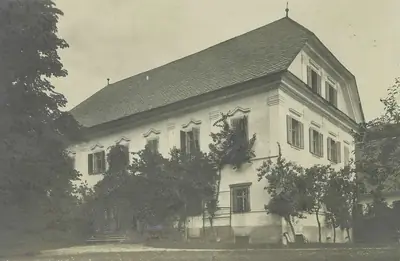
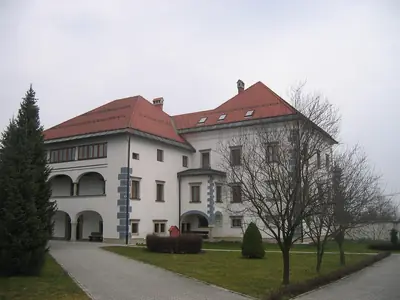
Ajman Castle is a 17th-century manor near Sveti Duh in the Municipality of Škofja Loka. It was originally built in 1679 as Ehrenau Castle by Franc Matija the noble Lampfrizhaimb, then governor of the Škofja Loka lordship.
The building is a late-Renaissance example and passed through the hands of several noble families, including the Angerburgs, Widmannsstättens and Dietrichs. It received its current name in the late 18th century after an owner named Heimann.
Inside, the manorial chapel of the Holy Virgin dates from 1733. Its altar-wall mural by Franc Jelovšek depicts the Virgin with St. John Nepomuk and St. Francis Xavier.
Church of St. Ursula
The Church of St. Ursula, or Cerkev sv. Uršule, is another notable church in the Municipality of Škofja Loka. It adds to the area’s rich collection of historic religious buildings and is a worthwhile stop for visitors exploring beyond the central town.
Explore Škofja Loka with a self-guided audio tour
For a Škofja Loka self-guided walking tour, Neywo’s walk, “Škofja Loka: Castles, Gothic Vaults and a Partisan Mill”, covers 3.6 km in 79 minutes and includes five narrated stops: Holy Cross Church, St. Jacob Church, Loka Castle, Stara Loka Castle and Vešterski mlin.
Neywo has one walking tour in Škofja Loka. The app tells the story of each place as you reach it, at your own pace, with no group and no schedule. The narration is available in 11 languages.
Download Neywo to explore Škofja Loka with an audio guide that connects its castles, churches and riverfront history as you walk. If you are planning a wider trip through Slovenia, you can also continue to Ljubljana, Bled, Piran, Kobarid or Celje.
Places with an audio guide in Škofja Loka
8 places in Škofja Loka with a Neywo audio guide. Each one starts telling its story as you reach it.
Self-guided tours in Škofja Loka
1 tour in Škofja Loka, free in the Neywo app. Each stop tells its story as you reach it.
- Walk
Škofja Loka: Castles, Gothic Vaults and a Partisan Mill
Slovenia's best-preserved medieval town, a thousand years old, in an easy loop. Climb to the castle that rules the roofline, look up at the star vault of St Jacob's, visit one of the country's oldest castles with its round towers and carved tombstone, and end on the Sora river at the mill where partisans hid a secret workshop.
Holy Cross Church · St. Jacob Church · Loka Castle · Stara Loka Castle · Vešterski mlin
Open this tour: Škofja Loka: Castles, Gothic Vaults and a Partisan Mill
Walk Škofja Loka with Neywo
Neywo turns Škofja Loka into a self-guided audio tour. Stories arrive as you reach the place they belong to, and the route reshapes when you wander off it.

