Things to Do in Ghent, Belgium: Walking Guide
Things to do in Ghent
Ghent is a historic city in Flanders, Belgium, celebrated for its medieval towers, winding canals and lively student culture. The city blends grand landmarks such as the Belfry and Saint Bavo’s Cathedral with contemporary art, bustling markets and canalside cafés. Neywo offers a free audio guide for Ghent with 199 narrated places, letting you explore at your own pace.
Explore Ghent’s highlights
Gravensteen (Castle of the Counts)
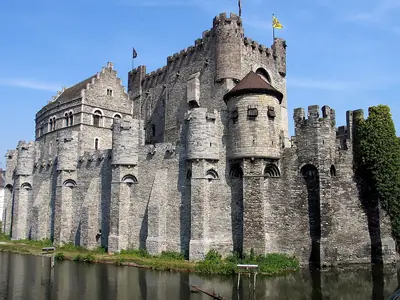
Gravensteen is a medieval fortress whose defensive system remains almost completely intact. Dating from 1180, it was originally called the “new castle” and served as the residence of the Counts of Flanders until 1353. Visitors can walk through the gatehouse, curtain wall, keep, former comital residence and stables. Inside the museum you’ll find weapons, armour, a crypt, a torture chamber, dungeons and the rooms once used by the counts. Over the centuries the building has also been a courthouse, a prison, a mint and even a cotton mill.
Museum of Fine Arts Ghent (MSK)
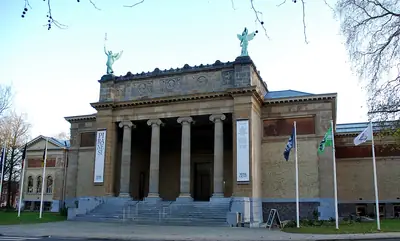
Located on the east side of Citadelpark, the MSK is one of Belgium’s oldest museums. Its collection spans medieval works to the first half of the twentieth century, ranging from Bosch to Magritte. Flemish art forms the core, complemented by French paintings and a substantial sculpture group. The museum originated in 1798 when Ghent became the capital of the French department of the Scheldt and the state opened a public art collection. The current building was designed around 1900 by city architect Charles van Rysselberghe and reopened in 2007 after a four‑year restoration.
Belfry of Ghent
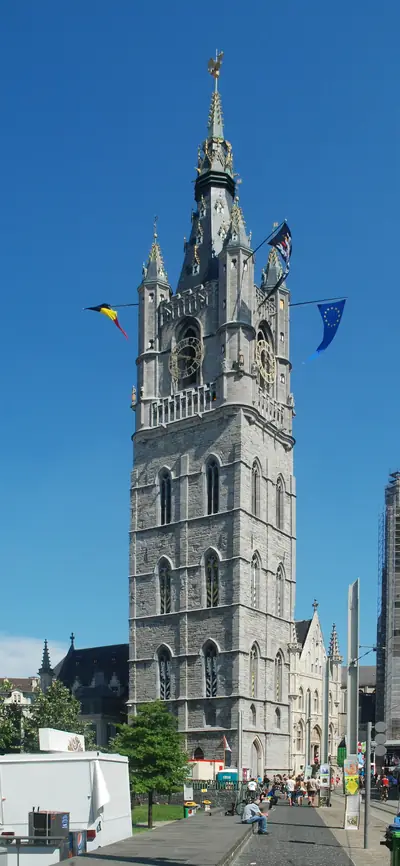
The Belfry rises beside Saint Bavo’s Cathedral and Saint Nicholas’ Church, forming Ghent’s famous three‑tower skyline. Construction began around 1314; by 1338 four levels were in place before work halted. A temporary wooden crown held the legendary dragon weather vane from 1377. In 1851 a neo‑Gothic cast‑iron spire by Louis Roelandt replaced the wood, and in 1911 Vaerwijck installed the present structure, inspired by the original Gothic form. Four stone guardian figures from 1339 (now represented by copies) stand on the corner turrets. The belfry is part of the UNESCO World Heritage Site of the Belfries of Belgium and France.
Saint Bavo’s Cathedral
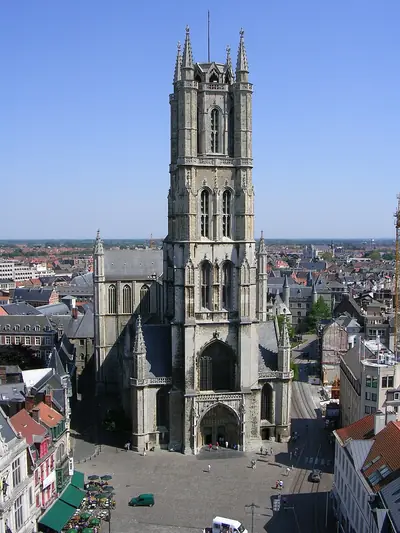
Saint Bavo’s Cathedral, or Sint‑Baafskathedraal, reaches 89 metres and is the seat of the Diocese of Ghent. It is named for Saint Bavo of Ghent and houses the celebrated Ghent Altarpiece, also known as the Adoration of the Mystic Lamb, by Jan and Hubert van Eyck. The building began as a thirteenth‑century parish church dedicated to Saint John, became a collegiate church in 1536 and was elevated to cathedral status in 1559.
Arnold Vander Haeghen Museum
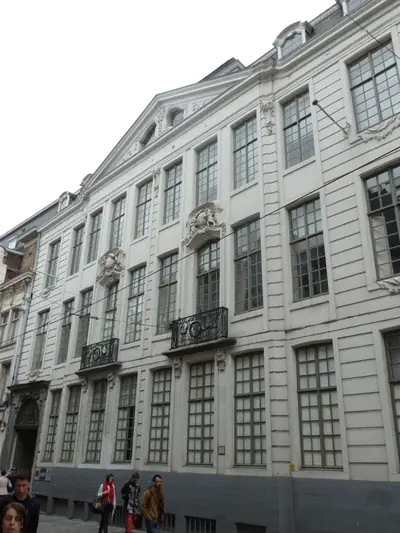
This museum occupies the former Hotel Clemmen on Veldstraat. Built in 1746 to designs by David ’t Kindt, it was bought in 1771 by textile baron Josse Clemmen, who added a Classical‑Baroque façade and a rear wing for a cotton‑printing workshop. The Chinese salon displays eighteenth‑century silk wall coverings and wall paintings from the eighteenth and nineteenth centuries. In 1836 the house passed to the Vander Haeghen family, who bequeathed it to the city on the condition it become a museum; it opened to the public in 1953.
Caermersklooster (Kunsthal Gent)
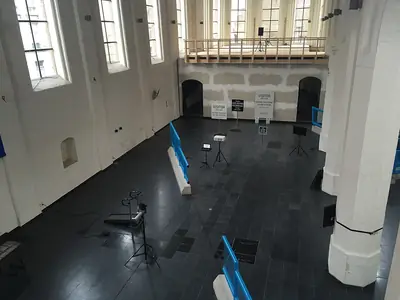
The Caermersklooster is a monumental thirteenth‑century monastery in the city centre. Today it houses Kunsthal Gent, an experimental institution dedicated to presenting and developing contemporary art through exhibitions and other programmes, set within the historic monastic walls.
Huis van Alijn (Cecilia Jaime Gallery)
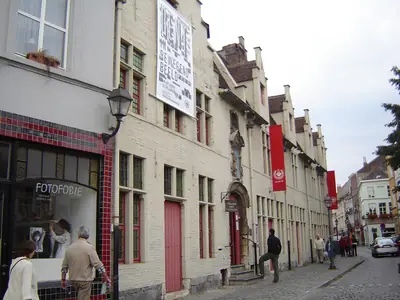
Huis van Alijn is a museum of everyday life and popular culture in Ghent. Set in a medieval former almshouse arranged around an intimate inner courtyard, it traces daily life from the early twentieth century to the present. The courtyard features eighteen small houses standing in rows around the patio, a layout that dates back to the fourteenth century when the Rijm family built the almshouse as part of a pardon after a killing in the cathedral. The condition was to provide shelter for eighteen elderly women without means; later patrician families added eight more houses and a chapel.
Lakenhalle (Cloth Hall)
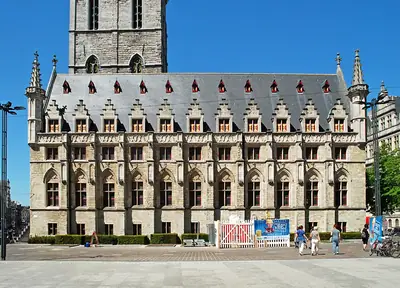
The Lakenhalle is a defining Gothic building that recalls Ghent’s prosperous cloth industry before the seventeenth century. Standing in the city centre, its monumental style reflects the wealth once generated by textile trade. Adjacent to the hall stands the Mammelokker, a former jailer’s residence whose tympanum bears a sculpture from around 1741 by David ’t Kindt depicting the Roman story of Cimon and Pero. The monument has been protected since 1999 and forms part of the UNESCO Belfry site.
Koninklijke Academie voor Nederlandse Taal- en Letterkunde
Founded in 1886, this academy was Belgium’s first official institution to study Dutch scientifically. It promotes the Dutch language and literature in Flanders, advises the Flemish government and awards literary and scientific prizes. Its secretariat and library are located on Koningstraat in Ghent.
Hotel d’Hane-Steenhuyse
Set on Veldstraat, this elegant eighteenth‑century townhouse once belonged to the D’Hane de Steenhuyse family. The building is now managed by Historische Huizen Gent and offers a glimpse into Ghent’s historic urban residences.
Bisschoppelijk Paleis Gent
The Episcopal Palace of Ghent serves as the administrative headquarters of the Diocese of Ghent and the residence of its bishop. Situated on Bisdomplein, it remains a working centre of diocesan life.
Kasteel Potuit
Although called a castle, Kasteel Potuit in Sint‑Amandsberg is a neoclassical country house. Built in the first half of the nineteenth century, it was remodelled and enlarged in 1866. The original core is visible in the three right‑hand bays that project slightly forward; the estate also includes an orangery in the same neoclassical style.
Sint‑Annakerk (Church of Saint Anne)
Sint‑Annakerk displays an eclectic mix of Romanesque, Byzantine and Gothic elements. Designed in 1851 by Lodewijk Roelandt, construction began in 1853 and, after Roelandt’s departure in 1855, was completed in a simplified form by Jacques Van Hoecke. The church was inaugurated on June 12 1866, even though work was still unfinished. It replaced an older chapel from 1644 and is regarded as Ghent’s finest example of Rundbogenstil; inside, wall paintings by Théodore‑Joseph Canneel (finished after his death by Théophile Lybaert) adorn the nave, while the intended west tower was never built.
Sint‑Coletakerk
Located between Heuvelpoort and the railway, Sint‑Coletakerk presents a neo‑Gothic façade that is easy to miss but worth a closer look. The church has three aisles and five bays; its crossing tower was added in 1911 following a design by Gerard De Meyer. Over its 124‑year history the building has had only two organists, the second of whom, Edgard Guns, played for more than seventy years.
Royal Dutch Theatre (Koninklijke Nederlandse Schouwburg)
The Royal Dutch Theatre on Sint‑Baafsplein was erected between 1897 and 1899 in an eclectic style with strong Renaissance influences, to a design by architect Edmond De Vigne. It became the new home of the Nederlandsch Tooneel van Gent. The façade stretches over three storeys and five bays; its central section is highlighted by four statues of men in seventeenth‑century clothing representing the city’s rhetoric chambers. Above the entrance rises a monumental pediment containing a nine‑metre‑wide, four‑metre‑high mosaic made from 70 000 ceramic pieces in 500 shades, designed by Constant Montald to depict Apollo in his sun chariot accompanied by the nine Muses.
Explore Ghent with Neywo
Neywo’s free audio guide for Ghent includes 199 narrated places and a selection of self‑guided tours. You can choose from four walking routes, one bus line and one bike route:
- Ghent’s Three Towers: Cathedral, Belfry and Cloth Hall – 1 km, 109 minutes, 11 stops
- Quays, Bridges and Merchant Houses – 1.34 km, 103 minutes, 11 stops
- Counts, Cannons and Cobbles: Gravensteen and Patershol – 1.34 km, 104 minutes, 10 stops
- Museums, Book Tower and Saint Peter’s Hill – 2.81 km, 108 minutes, 11 stops
- Bus 70: Station, Fine Arts and Saint Anne’s – 7.2 km, 31 minutes, 7 stops
- Ghent North‑South: From the Rabot Water Gate to the Peperbus – 5 km, 25 minutes, 6 stops
Each story starts automatically when you reach the associated spot, allowing you to move at your own pace with no group and no schedule. Narration is available in 11 languages. Download the Neywo app, pick a tour that interests you, and let the city’s history unfold as you walk.
Places with an audio guide in Ghent
8 places in Ghent with a Neywo audio guide. Each one starts telling its story as you reach it.
Self-guided tours in Ghent
6 tours in Ghent, free in the Neywo app. Each stop tells its story as you reach it.
- Bike ride
Ghent North-South: From the Rabot Water Gate to the Peperbus
A ride along Ghent's cycle lanes from the 1491 Rabot water gate through Ekkergem and the Bijloke to the Museum of Fine Arts and the Peperbus, the little tower of the old city defences. Mostly flat and separated from traffic.
Maria Gorettikerk (Gent) · Rabot · Saint Martin's Church · STAM Ghent City Museum · Museum of Fine Arts Ghent (MSK) · Peperbus
Open this tour: Ghent North-South: From the Rabot Water Gate to the Peperbus - Bus ride
Bus 70: Station, Fine Arts and Saint Anne's
A regular De Lijn city line from the Redemptorist church by Voskenslaan. It passes the Art Deco Ciné Rex, the Emile Claus statue, the Museum of Fine Arts by Citadel Park and the Capitole theatre, then the unfinished neo-Romanesque Saint Anne's church and out to the neoclassical Kasteel Potuit. Handy for arriving by train and seeing the city south to north.
Redemptoristenkerk · Ciné Rex · Emile Claus · Museum of Fine Arts Ghent (MSK) · Capitole · Sint-Annakerk …
Open this tour: Bus 70: Station, Fine Arts and Saint Anne's - Walk
Ghent's Three Towers: Cathedral, Belfry and Cloth Hall
Walk the medieval heart of Flanders' great cloth city. Start where the Scheldt was reopened in 2018, pass the devil's castle and the cathedral that holds the Van Eyck altarpiece, then the theatre with its mosaic, the belfry and its dragon, the Cloth Hall with its Mammelokker relief, the city hall and the fountain of kneeling youths, and finish at the Gothic church that closes the famous skyline of towers.
Statue of Lieven Bauwens · Geeraard de Duivelsteen · Bisschoppelijk Paleis Gent · St Bavo's Cathedral · Jan-Frans Willems · Royal Dutch Theatre …
Open this tour: Ghent's Three Towers: Cathedral, Belfry and Cloth Hall - Walk
Quays, Bridges and Merchant Houses
From the Wheat Market to the Corn Quay, then across the stone bridge for the view that every Ghent postcard uses. Continue to a former Dominican monastery that now holds a museum of medicine, two grand townhouses on Veldstraat, one with Maeterlinck's reconstructed study, then the university's neoclassical hall, the Sunday flower market on the Kouter and the Royal Opera.
Korenmarkt, Ghent · Korenlei · Sint-Michielsbrug · Saint Michael's Church, Ghent · Het Pand · Museum voor de Geschiedenis van de Geneeskunde …
Open this tour: Quays, Bridges and Merchant Houses - Walk
Counts, Cannons and Cobbles: Gravensteen and Patershol
The castle of the Counts of Flanders, a Baroque fish-market gate with sea gods, a medieval supergun called Mad Meg, an almshouse courtyard with eighteen tiny houses, and the Friday Market where Artevelde proclaimed an English king French. Add the Design Museum, two old monasteries and the Great Butchers' Hall for Ghent's most atmospheric corner.
Design Museum Gent · Groentenmarkt · Oude vismijn · Gravensteen · Augustinian Monastery (Ghent) · Caermersklooster …
Open this tour: Counts, Cannons and Cobbles: Gravensteen and Patershol - Walk
Museums, Book Tower and Saint Peter's Hill
A southern loop from Citadel Park, where the Museum of Fine Arts faces the contemporary S.M.A.K., through Saint Peter's quarter. See the little pepper-pot tower of the old city wall, the abbey and Ghent's largest square, the Baroque church beside it, Van de Velde's concrete Book Tower and the city museum in the Bijloke abbey.
Ghent University Museum · Stedelijk Museum voor Actuele Kunst · Museum of Fine Arts Ghent (MSK) · Peperbus · Kunsthal Sint-Pietersabdij · Saint Peter's Square …
Open this tour: Museums, Book Tower and Saint Peter's Hill
Walk Ghent with Neywo
Neywo turns Ghent into a self-guided audio tour. Stories arrive as you reach the place they belong to, and the route reshapes when you wander off it.

