Visiting Namur, Belgium: Top Sights on Foot
Things to do in Namur
Namur, the capital of Belgium’s Wallonia region, lies where the Sambre and Meuse rivers converge. Its blend of a towering citadel, Baroque churches, and quiet historic streets offers a rewarding glimpse of what to see in Wallonia. Neywo provides a free audio guide for Namur with 52 narrated places, letting you explore the city at your own pace.
Explore Namur’s highlights
St Aubin’s Cathedral
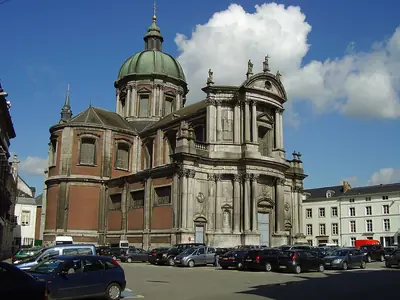
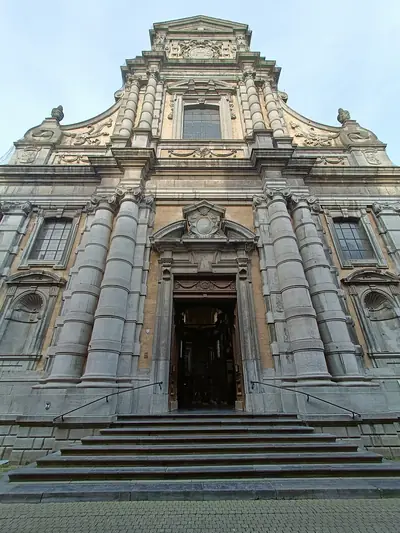
Located on Saint‑Aubin Square, St. Aubin’s Cathedral (Cathédrale Saint‑Aubain) is the Roman Catholic cathedral and seat of the Diocese of Namur. It is recognised as part of Wallonia’s Major Heritage and is the only cathedral in Belgium built in the academic Late Baroque style. The present building replaced an eleventh‑century collegiate church, with construction starting in 1751 and finishing in 1767; it was consecrated on 20 September 1772. The cathedral also houses the Diocesan Museum and Treasury of Saint Aubin’s Cathedral, preserved with support from the Pierre François Tilmon Fund managed by the King Baudouin Foundation.
Citadel of Namur
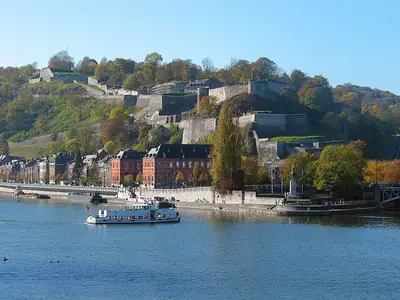
Rising above the confluence of the Sambre and Meuse, the Citadel of Namur is one of the largest citadels in Europe, its summit reaching 190 metres. The site combines castle ruins, fortifications, terraces, woodland and a vast network of underground passages arranged in three levels: the Donjon (lower), the Médiane (middle) and Terra Nova (upper). Together they preserve more than a thousand years of history, from the former castle of the Counts of Namur to a later military fortress. The hill was fortified as early as the Roman era; a medieval castle once served as the counts’ residence, and from the sixteenth century artillery prompted new outer earthworks, bastions and gun casemates. The fortress endured sieges, most notably in 1692 when Menno van Coehoorn was captured by Sébastien de Vauban, and was recaptured by Coehoorn in 1695.
Halle al’Chair
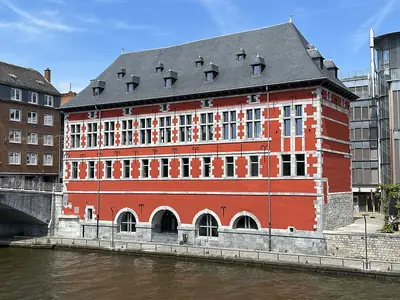
At the foot of the citadel stands the Halle al’Chair, a sixteenth‑century building that once served as the guildhall of Namur’s butchers. It is a fine example of Mosan architecture and has undergone a major renovation; before that it housed the city’s archaeological museum and is now linked to the tourist office. Nearby, the Musée Archéologique de Namur presents a journey through the region’s distant past, displaying prehistoric, Gallo‑Roman and Merovingian objects such as sculptures, ceramics, mosaics, jewellery, glassware and weapons, including notable late Roman treasures from the fourth and fifth centuries.
Église Notre-Dame-du-Rosaire de Wierde
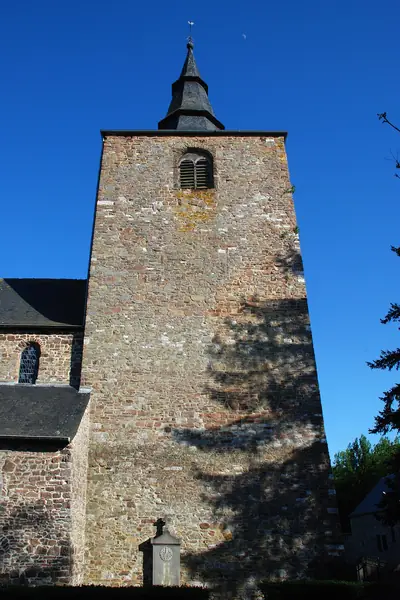
In the village of Wierde, the Church of Our Lady of the Rosary (église Notre-Dame-du-Rosaire de Wierde) grew from an eleventh‑century medieval keep. Over the centuries it was altered several times, giving the building a long history beyond its present form. It was dedicated to Our Lady of the Rosary around 1707 and underwent its most recent restoration in 1975.
Hôtel de Groesbeeck - de Croix
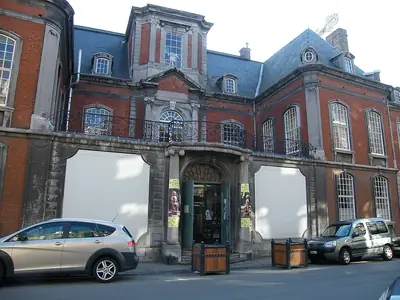
The Hôtel de Groesbeeck-de Croix is home to Namur’s Museum of Decorative Arts. This classified building began in the thirteenth century and was extensively redesigned in the mid‑eighteenth century by architect Jean‑Baptiste Chermanne, restoring its eighteenth‑century Louis XV character around a garden. Inside, it displays paintings, sculptures, antique furniture, tapestries, silverwork, clocks and other works of art. Notable objects include a silver coffee pot from the Abbey of Our Lady of Leffe, a collection of black terracotta works and a painting depicting the siege of Dinant in May 1675. The city acquired the hôtel in 1935; after restoration between 2013 and 2016 it became part of the Les Bateliers museum complex together with the Archaeological Museum, and since September 2024 it forms part of that ensemble.
Namur Open-Air Theatre
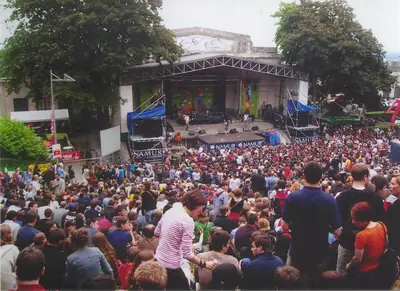
Set within the fortress of Namur, the Namur Open-Air Theatre (Théâtre de Verdure) is an outdoor venue offering a distinctive place to pause and take in the setting. The theatre is currently undergoing restoration; work began in mid‑August 2024 and is expected to last 650 working days, or nearly three years.
Saint Lupus Church
Saint Lupus Church (Église Saint-Loup) stands in the centre of Namur and is one of Belgium’s important Baroque churches. Built between 1621 and 1645 by the Jesuits, it was originally known as Saint Ignatius Church and served the neighbouring Jesuit college. Its origins lie in the seventeenth century as part of the Jesuit college complex, and it forms part of Wallonia’s major heritage.
Belfry of Namur
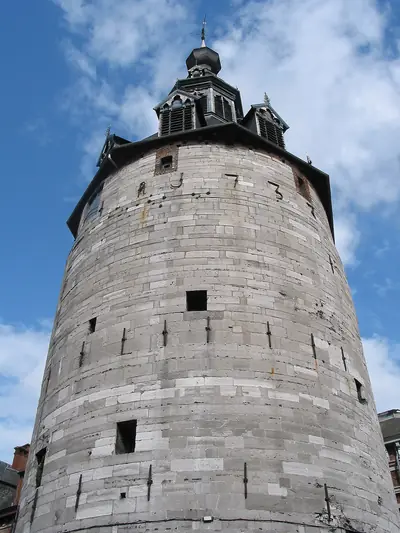
The Belfry of Namur, also known as Tour Saint‑Jacques or Saint Jacob’s Tower, is a medieval tower erected around 1388 as part of the city’s wall. In 1746 it became the city’s belfry after the tower of the Collegiate Church of Saint‑Pierre-au‑Château burned down. It remains a historic landmark and a memorable element of Namur’s heritage.
Théâtre Royal de Namur
In the heart of Namur, the Théâtre Royal de Namur is an elegant theatre à l’italienne, a traditional style of theatre design. Built in 1863, it is recognised as part of Wallonia’s public civil heritage and has hosted generations of performances since the nineteenth century, offering a special place in the city’s cultural life.
Château de Dave
Château de Dave is a castle situated in Wallonia. Though the description is brief, its setting invites attention to the surrounding landscape.
Château de Flawinne
A little beyond Namur, in the northern part of Flawinne, lies Château de Flawinne (also known as Château David). Built at the beginning of the eighteenth century, it is protected as part of Wallonia’s listed architectural heritage. Because it belongs to a private estate, the main opportunity to appreciate it comes from the access avenue, where the trees form the remarkable Drève Flovana—so large they can be seen from buildings in Namur’s city centre, adding a striking presence to the otherwise private domain.
Chateau-ferme de Wartet
In the hamlet of Wartet, in Marche-les-Dames, the Château-ferme de Wartet stands at the entrance to the place known as Bayet. Its name—“the château farm”—reflects the close link between residence and farm. The building is a listed monument in the Mosan style, and a farm is thought to have existed here as early as the thirteenth century, giving the site a long history within the province of Namur.
Seigneurie d’Anhaive
In Jambes, a section of Namur, the Seigneurie d’Anhaive is a listed monument comprising the Tour d’Anhaive Donjon (also called Enhaive) together with a residential building. The keep forms one of the monument’s two principal elements alongside the residential house.
Our Lady of Vivier Abbey
Our Lady of Vivier Abbey (Marche-les-Dames Abbey) is a former monastic complex in Marche-les-Dames, within Namur. Its buildings have remained a remarkably complete ensemble without major destruction. Founded many centuries ago for a community of nuns, the community became affiliated with the Cistercian order about a century after its foundation; the monastery was later suppressed, ending its original religious life.
Church of our Lady of Harscamp
In the heart of old Namur, the Church of Our Lady of Harscamp (Espace Culturel d’Harscamp) is a former church now used as a cultural venue. Built in 1750 in the Renaissance style, it was originally known as the Church of Saints Peter and Paul and was recognised as a major heritage site of Wallonia in 1936. Its religious role ended in 2004 when the building was deconsecrated; since then it has hosted cultural activities, and from January 2022 it has been operated by a collective under the name La Nef.
Explore with Neywo
Neywo’s free audio guide for Namur includes 52 narrated places and a selection of self‑guided tours. You can choose from three walking tours—“Cathedral, Jesuits and Belfry: the Baroque heart of Namur” (1.7 km, 117 min, 12 stops), “Where the Sambre meets the Meuse” (3.02 km, 96 min, 10 stops) and “Up to the Citadel of Namur” (3.21 km, 93 min, 6 stops)—one bus route, “The free Namur city‑centre shuttle” (3.1 km, 13 min, 7 stops), and one bike route, “Meuse and Sambre by bike: from Anhaive to the Citadel” (2.3 km, 12 min, 4 stops). Each story plays automatically as you reach the site, letting you explore at your own pace with no group and no schedule. Narration is available in 11 languages.
To continue discovering Wallonia, you might also enjoy visiting nearby cities such as Dinant, Liège or Charleroi. For broader context, see the Wallonia region page or the Belgium country page.
Places with an audio guide in Namur
8 places in Namur with a Neywo audio guide. Each one starts telling its story as you reach it.
Self-guided tours in Namur
5 tours in Namur, free in the Neywo app. Each stop tells its story as you reach it.
- Bike ride
Meuse and Sambre by bike: from Anhaive to the Citadel
A short ride along Namur's cycle infrastructure from the medieval Anhaive keep, past the riverside quays and the old butchers' hall, to the gate of the Citadel.
Tour d'Anhaive Donjon · Church of our Lady of Harscamp · Halle al'Chair · Bordial gate
Open this tour: Meuse and Sambre by bike: from Anhaive to the Citadel - Bus ride
The free Namur city-centre shuttle
The free electric shuttle looping through central Namur, linking the station area with the old town. Hop on to pass the Carmelite and Jesuit-era churches, the Marie Spilar tower, the Citadel gate and the park by the old ramparts without a single hill.
Église Saint-Joseph de Namur · Église Saint-Jean-Baptiste de Namur · Tour Marie Spilar · Searching for Utopia · Bordial gate · Hôtel de Groesbeeck - de Croix …
Open this tour: The free Namur city-centre shuttle - Walk
Cathedral, Jesuits and Belfry: the Baroque heart of Namur
Start behind the eighteenth-century cathedral and its Romanesque bell tower, then wander the lanes of old Namur past Jesuit and Carmelite churches, the Félicien Rops museum and the patrician houses of Rue de Fer. The walk ends at the medieval Belfry and the surviving tower of the city's defensive wall, facing the Royal Theatre.
Tour Saint-Aubain · St Aubin's Cathedral · Hôtel de Groesbeeck - de Croix · Musée provincial Félicien Rops · Saint Lupus Church · Église Saint-Jacques de Namur …
Open this tour: Cathedral, Jesuits and Belfry: the Baroque heart of Namur - Walk
Where the Sambre meets the Meuse
A riverside loop through the lower town: the trompe-l'oeil mural of the Walloons, Place d'Armes, the confluence, the modern seat of Wallonia's government and a quirky Jan Fabre sculpture. It ends among the churches and the Africa museum of the Herbatte quarter.
Fresque des Wallons · Place d'Armes · Nicolas Bosret · Searching for Utopia · Élysette · Sambre …
Open this tour: Where the Sambre meets the Meuse - Walk
Up to the Citadel of Namur
Climb from the old butchers' hall at the foot of the hill through the Bordial Gate to one of Europe's largest fortresses, a thousand years of castle, siege and underground tunnels, and on to the open-air theatre set inside its walls.
Halle al'Chair · Place Saint-Aubain · Parc Louise-Marie · Bordial gate · Citadel of Namur · Namur Open-Air Theatre
Open this tour: Up to the Citadel of Namur
Walk Namur with Neywo
Neywo turns Namur into a self-guided audio tour. Stories arrive as you reach the place they belong to, and the route reshapes when you wander off it.

