What to See in Tournai, Belgium: Free Audio Guide
Discover Tournai: What to See in Tournai and Best Things to Do
Tournai is one of Belgium’s most distinctive destinations, combining a rich medieval past with a charming borderland setting in Wallonia. As you plan your visit, you will find a city shaped by centuries of trade, religion, and civic pride, offering a rewarding alternative to Belgium’s busier tourist routes. To explore every corner at your own pace, Neywo provides a free audio guide for Tournai featuring 26 narrated places.
What to See in Tournai: Key Landmarks and Historic Architecture
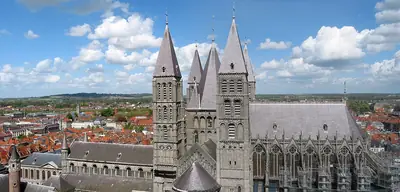
Tournai Cathedral
The Cathedral of Our Lady, known locally as the Cathédrale Notre-Dame, sits in the heart of the historic center and has served as the seat of the Diocese of Tournai for centuries. Its silhouette is unforgettable, featuring five towers that all rise to the exact same height—a design matched nowhere else. At 134 meters long, it is one of the largest churches in the country and a Romanesque masterpiece containing early elements of Gothic design. It is the only religious building in Belgium constructed from the beginning as a cathedral, recognized as a major heritage site of Wallonia since 1936 and a UNESCO World Heritage site since 2000.
Belfry of Tournai
Standing 72 meters tall on the eastern edge of the Grand-Place, the Belfry of Tournai dates back to the end of the 12th century and is the oldest belfry in Belgium. This freestanding bell tower is part of the UNESCO-listed belfries of Belgium and France, symbolizing the independence, civic power, and municipal pride of medieval European towns. Nearby lies the Place du Vieux Marché aux Poteries, adding to the historic character of the district.
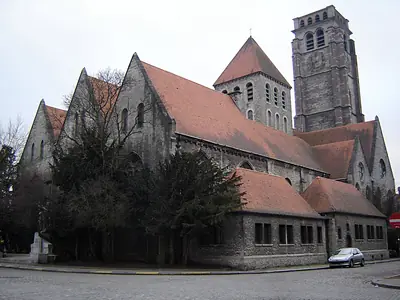
Church of Saint Quentin
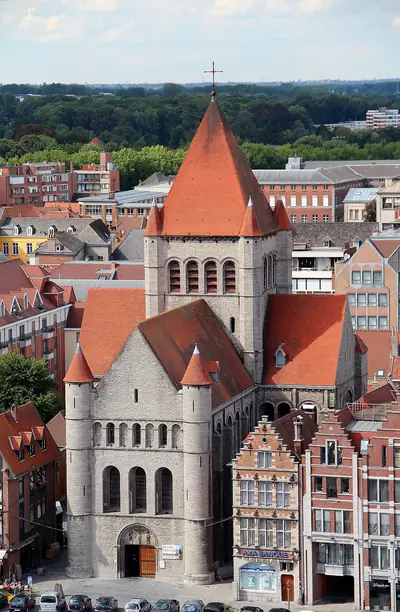
Standing at one end of the Grand-Place, this Romanesque church has origins stretching back to the 10th century, with the current structure largely built around 1200. Heavily damaged during World War II bombing in 1940, it was carefully restored and reopened in 1968, complete with reconstructed facade and tower. Inside, it houses two Late Gothic wooden sculptures and a chancel rebuilt in the late 15th century with funding from local tapestry maker Pasquier Grenier and his wife Marguerite de Lannoye.
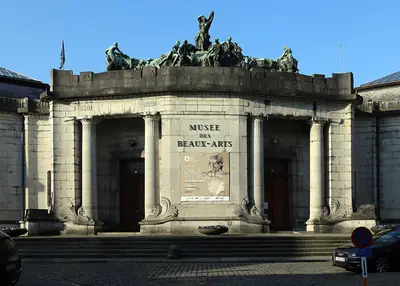
Musée des Beaux-Arts
Designed by the renowned Belgian architect Victor Horta, the Musée des Beaux-Arts offers an overview of painting from the 15th century to the present, alongside graphic art and sculpture. The museum’s origins trace to 1905 when art collector Henri Van Cutsem donated his collection of 19th-century French works by Manet, Monet, and Seurat. Interrupted by the First World War, Horta shifted his initial Art Nouveau plans to an elegant, curved Art Deco design, which finally opened in 1928.
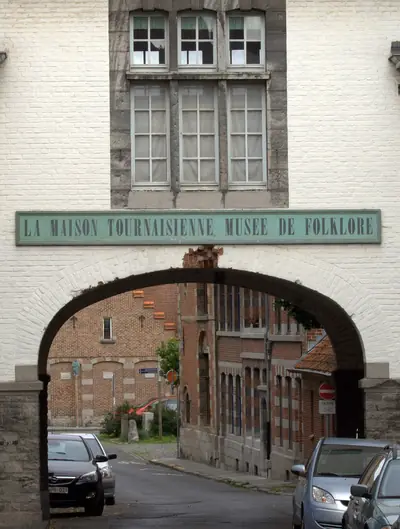
Centre de la Marionnette
Tucked away in a quiet side street off the main square, this folklore museum occupies the Maison Tournaisienne, a pair of 17th-century houses featuring distinctive stepped gables. Operating since 1930, the museum spans over 1,000 square meters across 23 rooms, displaying reconstructed scenes of everyday life between 1800 and 1950. Visitors can view a schoolroom, traditional home, tavern, printing workshop, and craftsmen’s studios highlighting clog makers, weavers, and coopers.
Musée d’Archéologie and Natural History Museum
Housed in a 17th-century former charitable pawnshop designed by Cobergher, the Musée d’Archéologie presents finds from the Stone Age, Gallo-Roman, and Merovingian periods, including sarcophagi, pottery, weapons, and jewelry from local excavations. Meanwhile, the Natural History Museum and Vivarium, founded in 1828 and moved to its Bruno Renard-designed gallery in 1839, displays taxidermied animals—including the first elephant to arrive in Belgium in 1839—alongside a living vivarium.
Historic Churches
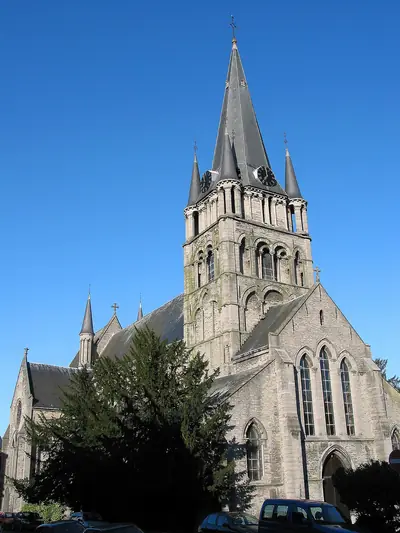
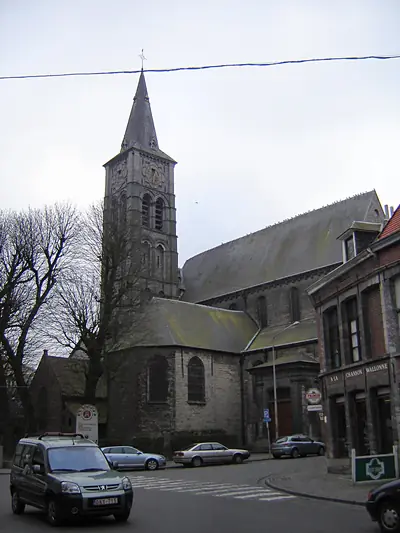
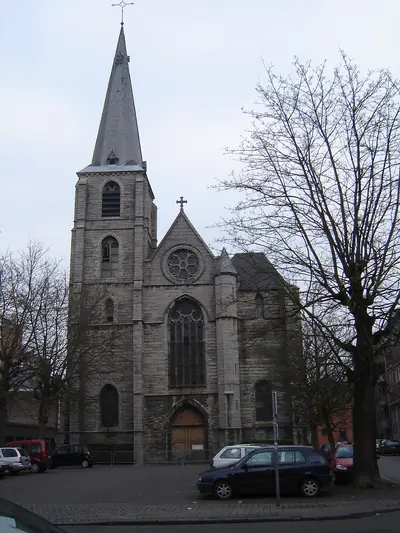
Tournai’s religious heritage extends across several notable medieval structures. The 12th-century Église Saint-Brice is one of the city’s oldest hall churches. Saint James Church showcases Scheldt Gothic architecture along the Rue du Palais Saint-Jacques, while the 12th-century Sint-Piatuskerk honors the city’s first Christian missionary. Additionally, both the Église Sainte-Marie-Madeleine in the city center and the church of the same name in nearby Rumillies feature striking Scaldian Gothic design.
Explore Tournai with Neywo
Discovering Tournai is best done on foot, allowing you to absorb the atmosphere of its quiet squares, traditional buildings, and local cafés. When you are ready to explore, Neywo offers a free audio guide for Tournai with 26 narrated places. The app tells the story of each landmark as you reach it, allowing you to walk at your own pace without groups or fixed schedules, with narration available in 11 languages.
After visiting Tournai, you can continue your travels across the region by exploring nearby destinations in Wallonia, including Mons, Namur, Charleroi, Dinant, Rochefort, and Liège.
Places with an audio guide in Tournai
8 places in Tournai with a Neywo audio guide. Each one starts telling its story as you reach it.
Walk Tournai with Neywo
Neywo turns Tournai into a self-guided audio tour. Stories arrive as you reach the place they belong to, and the route reshapes when you wander off it.

