What to See in Ostrava, Czech Republic: Free Audio Guide
Things to do in Ostrava
Ostrava, a city in the Czech Republic, blends a historic centre with a striking industrial heritage and modern districts shaped by coal mining and steel production. Visitors are drawn to its contrasts—from medieval churches and castles to preserved mines, museums, and revitalised industrial sites like Dolní Vítkovice. Neywo offers a free audio guide for Ostrava with 96 narrated places.
Explore Ostrava’s highlights
Church of Saint Anne
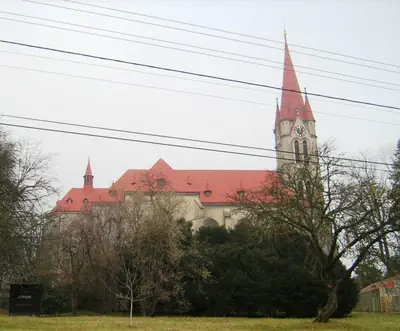
Located in the Polanka nad Odrou district, the Church of Saint Anne was completed in 1893 after a difficult build on shifting sands that required long wooden piles. Just days after the tower’s cross was consecrated, the tower collapsed completely; it was later rebuilt to a height of twenty‑two metres, complete with a clock, a roof cupola and a wrought‑iron cross at the expense of Prince Blücher.
Church of the Assumption of the Virgin Mary
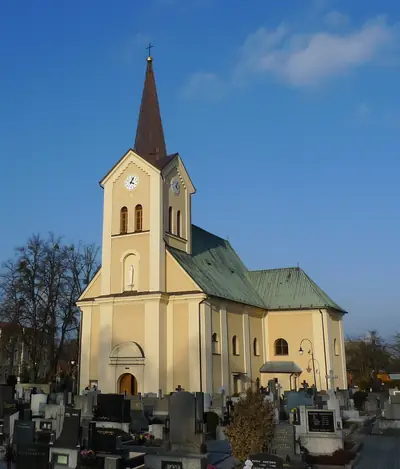
In Třebovice stands the oldest Marian church in Ostrava, protected as a cultural monument since 2011. A small wooden chapel from 1553 was replaced by the masonry Baroque building seen today in 1738, and in 1931 the interior was enriched with paintings proposed by the Viennese artist Josef Kleinert.
Obětem hornické stávky u Dolu Trojice
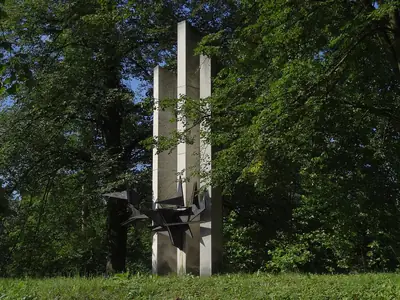
This monument commemorates the victims of the miners’ strike at the Trojice Mine. It stands in Ostrava as a reminder of the labour conflicts that shaped the city’s industrial past.
Silesian Ostrava Castle
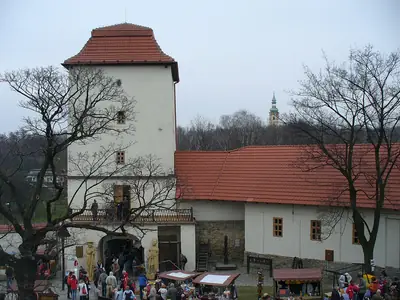
Perched in the Slezská Ostrava district, the Gothic castle dates back to 1290 when Duke Mieszko the First of Cieszyn built it on the border between the Duchy of Cieszyn and Moravia, near the confluence of the Lučina and Ostravice rivers. Originally Gothic, it was rebuilt as a Renaissance residence in 1534, suffered a fire in 1872, and was repaired in 2004 after years of deterioration caused by coal mining beneath the hill.
Church of Saint Catherine
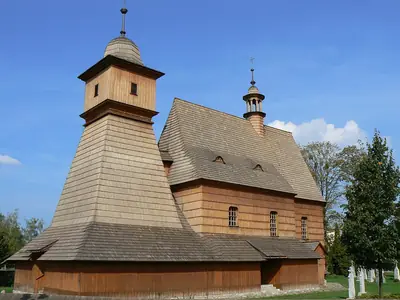
In Hrabová the wooden Church of Saint Catherine combines late‑Gothic form with early‑Renaissance details. Erected in the second quarter of the sixteenth century, its timber frame was assembled without nails. A fire in April 2002 destroyed much of the building; it was reconstructed using surviving fragments and reopened in 2004, with new bells blessed in honour of Saint Francis of Assisi and Saint Clare.
Michal Mine
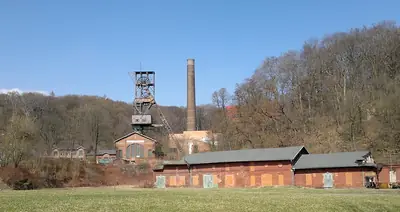
Michal Mine, situated in Michálkovice, is a former hard‑coal mine preserved as a museum. Its buildings remain as they appeared at the turn of the twentieth century, offering a vivid impression of a historic mining workplace. After mining ceased the site retained its original name, having been known temporarily as Petr Cingr from 1946.
Gallery of Fine Arts in Ostrava
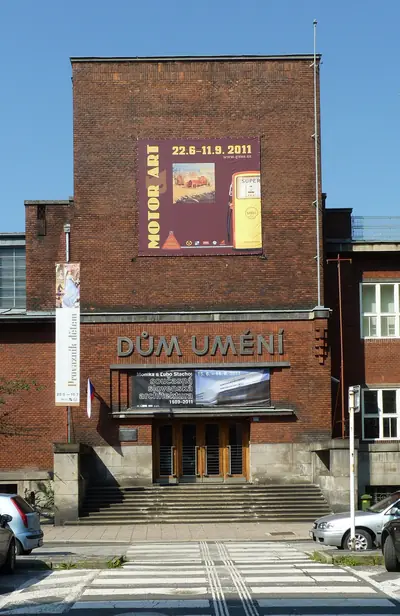
Housed in the House of Art, the Gallery of Fine Arts is Ostrava’s oldest gallery and one of the Czech Republic’s five most significant collecting institutions. Founded as a regional gallery in 1952, its origins trace to a 1923 society that created an exhibition pavilion in Moravian Ostrava, beginning with the collection of František Jureček. Since the 1960s the gallery has expanded through acquisitions and now pairs temporary shows of contemporary and classical art with a permanent exhibition titled House of Art in Ostrava, which includes Gustav Klimt’s Judith among its notable works.
Hornické muzeum Ostrava (Ostrava Mining Museum)
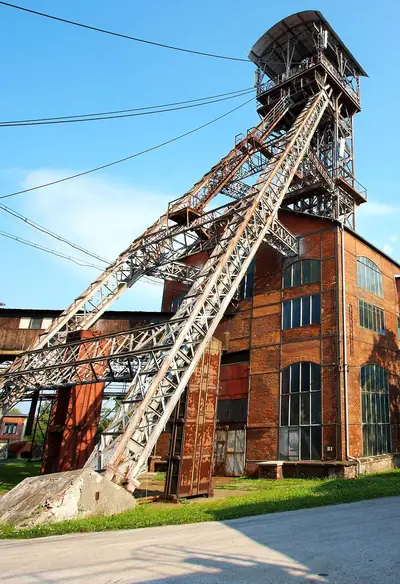
Set beneath Landek Hill in Petřkovice, the Ostrava Mining Museum is the largest enterprise museum in the Czech Republic, covering about ten hectares. It preserves the former Anselm Mine complex, which operated from 1835 to 1991, and presents an underground exhibition accessed via an original mining cage from the basement of a former compression building. About 250 metres of nineteenth‑century galleries are open, displaying mining workplaces, wall mining, machines and miners’ lamps, while the surrounding Landek hill also reveals ancient coal seams.
National Museum of Agriculture Ostrava
Located in reconstructed halls that once formed part of a copper smelter in the Vítkovice industrial area, this museum offers an unexpected view of a region usually linked to mining. Inside, agriculture, food production and farming technology take centre stage, with a Food Depository, a Gallery of Czech Foods and study collections of agricultural machinery that highlight the importance of farming technology in Northern Moravia and Czech Silesia.
Ostravské muzeum (Ostrava Museum)
Situated in the Old Town Hall on Masaryk Square, the Ostrava Museum brings together the city’s history, art, folk culture, music, prehistoric archaeology and natural‑science collections. Established after the merger of several earlier institutions in 1904, it has occupied the Old Town Hall since 4 October 1931. Highlights include an astronomical clock (orloj) that displays not only the time but also the phases of the Moon and the planets.
Svět techniky Ostrava
This science and technology centre in the Dolní oblast Vítkovice aims to make research accessible to the public. It consists of two parts: Malý svět techniky, housed in the U6 interactive exhibition, which explores the history of traditional technical fields, and Velký svět techniky, which looks toward the present and future of scientific disciplines. Supported by EU funds and the Czech Republic budget, the centre officially opened on 26 September 2014.
Landek Castle
On Landek Hill in Ostrava‑Koblov lie the remains of Landek Castle, a vanished medieval stronghold. The hill itself has a much older human history, with traces of Paleolithic settlement, later Iron Age activity and a hillfort period.
Polanka nad Odrou Castle
Also known as Polanský zámek, this building stands above the Polančice stream and is the oldest structure in Polanka. Its origins date to the second half of the sixteenth century when the Sedlničtí family erected a Renaissance fortress; it was first mentioned in 1586, transformed into a Baroque castle in the 1660s by the Vanecký family, and given a Neo‑Renaissance façade in 1895 by the Blücher family before later agricultural use turned it into storage space.
Zámek Poruba
Poruba Château, or Porubský zámeček, is a small château on the northern slope of the Porubka River, facing the extensive housing estate that defines modern Poruba. Regarded as the second‑oldest building in Poruba, it is protected as a cultural monument of the Czech Republic.
Rothschild Palace in Vítkovice
The Rothschild Palace, also called Schloss Witkowitz, is the oldest surviving building in Vítkovice and a state‑protected cultural monument. Standing on Výstavní Street, it was originally erected in the Empire style, and elements of that character are still visible today.
Explore Ostrava with Neywo
Neywo’s free audio guide lets you discover the city at your own pace, with no group and no schedule. In Ostrava you can choose from four walking tours, one bus route and one bike route. The walks are: “Masaryk Square and the Red Church: Ostrava before the steel” (2.81 km, 100 min, 12 stops); “Ostravian Hradcany: the Vitkovice ironworks, from palace to Bolt Tower” (3.43 km, 94 min, 9 stops); “Silesian Ostrava: the castle, the smithy that found coal and a T‑34” (2.64 km, 89 min, 9 stops); and “Poruba: the socialist‑realist garden town” (3.1 km, 79 min, 7 stops). The bus line, “Line 99: a loop through Ostrava’s centre,” covers 5.7 km in 24 minutes with 7 stops, while the bike route “Along the Ostravice: from Silesian Ostrava to Landek hill” stretches 7.6 km, takes 38 minutes and includes 3 stops. As you approach each point of interest, the app narrates its story, allowing you to explore Ostrava’s heritage, culture and industry whenever and however you wish.
Places with an audio guide in Ostrava
8 places in Ostrava with a Neywo audio guide. Each one starts telling its story as you reach it.
Self-guided tours in Ostrava
6 tours in Ostrava, free in the Neywo app. Each stop tells its story as you reach it.
- Bike ride
Along the Ostravice: from Silesian Ostrava to Landek hill
A flat ride on cycle lanes along the Ostravice river. Start at the Aréna theatre in Slezská Ostrava, pass Gagarin Square with its space-age sculpture and ride north to Landek hill, an ancient hillfort whose coal seams started the Ostrava mining story.
Komorní scéna Aréna · Náměstí Jurije Gagarina · Landek Castle
Open this tour: Along the Ostravice: from Silesian Ostrava to Landek hill - Bus ride
Line 99: a loop through Ostrava's centre
A DPO city minibus line that runs through the middle of Moravian Ostrava every 15 minutes on weekdays: the liberation monument by the Miloš Sýkora bridge, the Aréna theatre, the Old Town Hall, the Dvořák Theatre and Beneš square, finishing near the Krause villa.
Pomník osvobození Rudou armádou · Komorní scéna Aréna · Stará radnice · Antonín Dvořák Theatre · Náměstí Dr. E. Beneše (Ostrava) · Krausova vila …
Open this tour: Line 99: a loop through Ostrava's centre - Walk
Masaryk Square and the Red Church: Ostrava before the steel
Moravian Ostrava's old centre, rebuilt after fires and wars, still shows how a coal-and-iron boom town saw itself. Visit the Old Town Hall with its onion-roofed tower, the twin-towered cathedral, the Red Church and the neo-Baroque opera house.
Stará radnice · Sv. Florián · Stará Aréna Ostrava · Church of Saint Wenceslaus (Ostrava) · Gambrinus Hotel · Socha Leoše Janáčka …
Open this tour: Masaryk Square and the Red Church: Ostrava before the steel - Walk
Ostravian Hradcany: the Vitkovice ironworks, from palace to Bolt Tower
The blast furnaces of Lower Vitkovice are Ostrava's skyline and its UNESCO-candidate industrial heritage. Start at the oldest building in Vitkovice, the Rothschild palace, walk through the ironworks and its science centre and climb Bolt Tower for the best view of the city.
Mírové náměstí (Ostrava) · Church of Saint Paul · Synagoge Vítkovice · Český dům (budova : Vítkovice, Ostrava, Česko) · Rothschild Palace in Vítkovice · National Museum of Agriculture Ostrava …
Open this tour: Ostravian Hradcany: the Vitkovice ironworks, from palace to Bolt Tower - Walk
Silesian Ostrava: the castle, the smithy that found coal and a T-34
Across the Ostravice river, the old Silesian side of the city. The Gothic castle on the border of Moravia and Silesia, the smithy of the man credited with discovering local coal, the theatre named four times best in Czechia and the tank that liberated Ostrava in 1945.
Church of Saint Joseph · Obětem hornické stávky u Dolu Trojice · Hradní náměstí · Silesian Ostrava Castle · Keltička's Smithy Museum · Monument of Miloš Sýkora in Slezská Ostrava …
Open this tour: Silesian Ostrava: the castle, the smithy that found coal and a T-34 - Walk
Poruba: the socialist-realist garden town
Poruba was built from 1951 as a showcase workers' town of broad avenues, arcades and parks. Start at the old church of Saint Nicholas and the small château that predate it, walk through Alšovo square and the Poklad house of culture, and finish on the university campus among its sculptures and the geological pavilion.
Church of Saint Nicholas (Ostrava) · Zámek Poruba · Alšovo náměstí (Ostrava) · Poklad House of Culture · Myslitel (Jaromír Gargulák) · Geologický pavilon prof. F. Pošepného …
Open this tour: Poruba: the socialist-realist garden town
Walk Ostrava with Neywo
Neywo turns Ostrava into a self-guided audio tour. Stories arrive as you reach the place they belong to, and the route reshapes when you wander off it.

