Třebíč, Czech Republic: Self-Guided Walking Tour
Things to do in Třebíč
Třebíč is a historic town in the Moravia region of the Czech Republic, renowned for its well‑preserved Jewish Quarter and Benedictine monastery complex that together form a UNESCO World Heritage site. Visitors come to walk its quiet streets, see Romanesque‑Gothic architecture, and explore museums that tell the story of centuries of Jewish‑Christian coexistence. Neywo offers a free audio guide for Třebíč with 31 narrated places, letting you hear the stories as you walk.
Explore Třebíč’s highlights
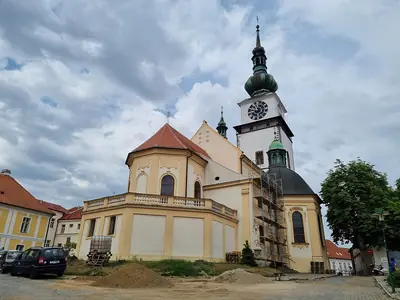
Church of Saint Martin
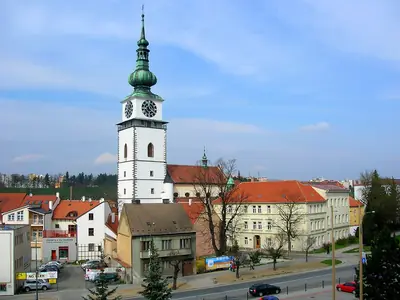
The Church of Saint Martin dominates Martinské náměstí with its 75‑meter tower, a landmark visible across the inner town. Founded around the middle of the 13th century by Abbot Martin, it became a parish church in the 14th century and was remodeled in 1502 under Vilém of Pernštejn, preserving elements such as the sacristy doors, vaulting and corridors. After changing hands in the 17th century, Baroque work enlarged the side chapels of Saint Anne and Saint Joseph.
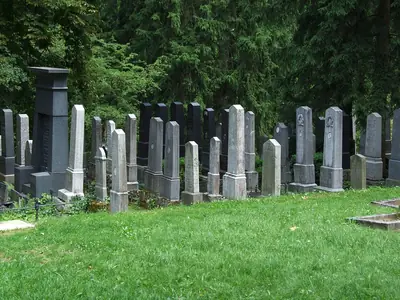
Jewish cemetery, Třebíč
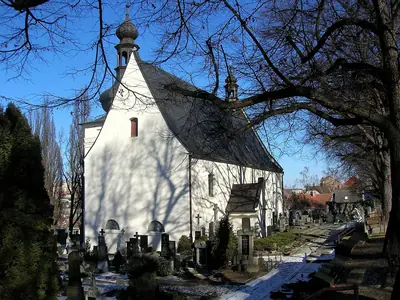
Just outside the former Jewish Quarter lies the Jewish cemetery, a national cultural monument and part of the UNESCO World Heritage ensemble. Covering nearly 12,000 m², it holds about 2,600 legible gravestones, the oldest readable dating to 1625, and is the second‑largest Jewish cemetery in the Czech Republic after Prague’s Old Jewish Cemetery. Established in the second half of the 16th century, it was expanded after an 1888 flood and now includes memorials to victims of the world wars.
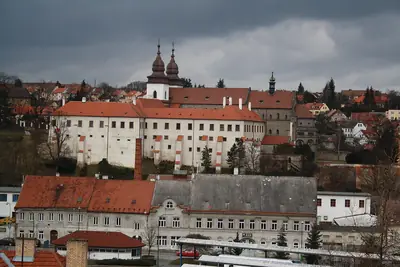
St. Procopius Basilica
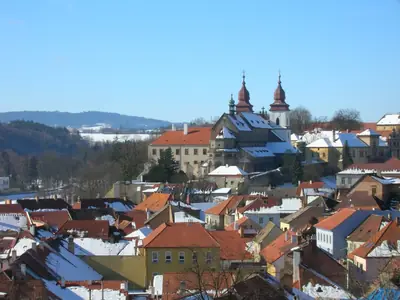
The Basilica of St. Procopius, a Romanesque‑Gothic church built between 1240 and 1260 on the site of an earlier Virgin Mary chapel, stands beside the former Benedictine monastery and Třebíč Castle. Originally dedicated to the Assumption of the Virgin Mary, it received St. Procopius as its patron in 1704, the year of his 500th‑anniversary canonization. The basilica, together with the monastery complex, became a national cultural monument in 2002 and entered the UNESCO list in 2003. The castle was renovated and opened as a museum in 2013.
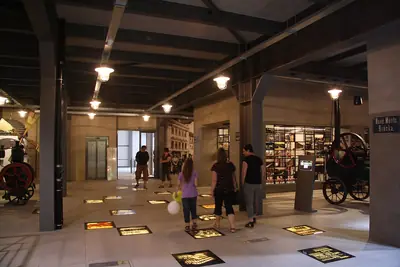
Alternator – ecotechic centre
Housed in the former Baťa factory complex, Alternator opened in June 2015 as a science and technology centre focused on ecology. Its industrial‑style building is itself part of the exhibit, and the centre was named Building of the Year for the Vysočina region in 2016. In summer 2018 it collaborated with the Czech Academy of Sciences on a project that launched the Taranis probe from Kourou in French Guiana.
Muzeum Vysočiny Třebíč
Located in Třebíč Castle, the Museum of the Vysočina Region presents exhibitions of Nativity scenes, pipes, Moravian vltavín glass, minerals and rocks, alongside displays on local history, traditional crafts and mining. The castle, originally a Benedictine monastery turned residence in the 16th century, is a national cultural monument; restoration work that began in 1957 adapted parts for the museum, which has been in the castle since 2003.
Holy Trinity Church
In the Domky area, Holy Trinity Church is a small but historically rich protected monument. The current building was already standing by the early 15th century, with possible origins back to the 9th century. Around 1525 it served as the parish church when Utraquist followers took over the neighbouring Saint Martin’s parish. Its cemetery began in 1607, and the church features a polygonal presbytery, a side chapel once dedicated to Saint Mary Magdalene, a two‑storey tower and a 1677 consecration plaque by Bishop Jan Josef Breuner, with wooden statues of Saint Peter and Saint Paul inside.
Třebíč District
The administrative Třebíč District covers roughly 1,500 km² and is home to about 117,000 people across 173 municipalities, including six towns. Established in 1855, the district office opened in Třebíč in 1868, with later boundary adjustments in 1948 and 1960. The village of Kojetice hosts Sádek, the only vineyard in the Vysočina region and an enclave of the Znojmo wine sub‑region, and a special geocoin bearing the district’s outline was released in 2018 for geocachers.
Třebíč protestant church
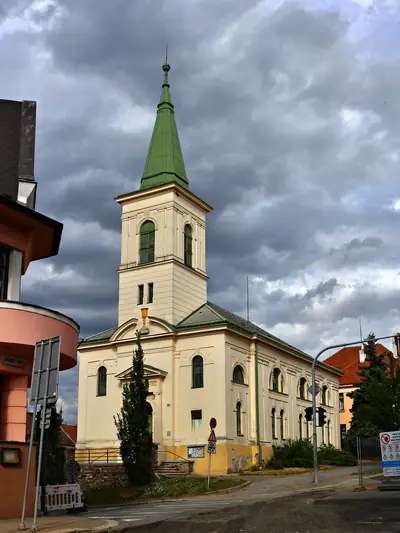
Known locally as the Evangelický kostel, the Třebíč protestant church stands on Bráfova třída and serves the Evangelical Church of the Czech Brethren. Situated within the Třebíč District of the Vysočina region, it reflects the town’s religious diversity alongside its Catholic landmarks.
Subakova koželužna
At the eastern edge of the Jewish quarter in Zámostí, Subakova koželužna recalls centuries of leather production. Tanning in Třebíč dates back to at least 1649, when many Jewish residents were involved. By the 19th century the Subak family led the trade, earning the imperial seal in 1871 and installing a steam engine the following year. The firm exhibited at the Paris World’s Fair in 1878, and in 2022 the ceilings of the house next to the former tannery collapsed, underscoring the fragility of such historic structures.
New synagogue (Back Synagogue)
Dating from 1669, the Back Synagogue—originally called the New Synagogue—is one of the oldest surviving synagogues in the region. Its eastern wall faces Israel, where the Torah ark once stood, and the interior preserves Baroque‑era paintings from 1706 and 1707 with Torah verses and Talmud quotations, plus stucco work on the ceiling. A women’s gallery was added in 1837; after religious use ended in 1926 the building served as a warehouse until a major renovation (1988‑1997) restored it.
Strážná hora
Strážná hora is a quiet hill that offers a panoramic view over Třebíč and the surrounding Moravian countryside, providing a peaceful spot for a brief pause during a walk.
Divadlo Pasáž
Divadlo Pasáž is a theatre that has become a recognizable part of Třebíč’s cultural life. Next door stands the Fórum building, which during the communist era housed the district committee headquarters of the Communist Party.
Church of Saint John of Nepomuk (Slavice)
In the village of Slavice, this small protected monument serves as a filial church of the Třebíč‑Jejkov parish. Built in 1718 at the expense of the Lesonice estate, it stands in a triangular village square and contains two memorial plaques dedicated to the victims of the First World War.
Church of the Transfiguration
Located in the Jejkov district, the Church of the Transfiguration (Kostel Proměnění Páně) was completed in 1693 on the site of a former Protestant congregation and originally belonged to a Capuchin monastery. Its simple Roman Catholic architecture reflects the layered religious history of the area.
Galerie Franta
Housed in the historic National House on Karlovo náměstí, Galerie Franta showcases the work of native artist František Mertl. Mertl donated 34 pieces to the city, valued at around 15 million koruna, with the agreement signed on 7 May 2014 requiring public display. The gallery marked its tenth anniversary in 2024, and the building—erected in 1871 as a centre of Czech patriotic life—also hosts a cyclopoint and an infocentre.
Experience Třebíč with Neywo
Neywo’s free audio guide includes two walking tours and one bus route. The “Třebíč’s Old Town: Squares, Sgraffito and Spires” walk covers 1.65 km in about 82 minutes with 11 stops, while the “UNESCO Třebíč: The Jewish Quarter and the Basilica” route is 1.22 km, 65 minutes and 9 stops. The “City Bus 10: Through the Old Town to the Castle” line runs 4.2 km in roughly 18 minutes with 7 stops. Each narrated story plays automatically as you reach the location, letting you explore at your own pace without a group or a fixed schedule. The guide is available in 11 languages, so you can choose the one that suits you best.
If you’d like to dig deeper into the region, consider a day trip to the nearby UNESCO town of Telč or extend your stay with a visit to the capital Prague. Both are easy to reach and complement the quiet charm of Třebíč, which lies in the heart of the Czech Republic. Download Neywo today and let the stories of this remarkable town unfold at your own pace.
Places with an audio guide in Třebíč
8 places in Třebíč with a Neywo audio guide. Each one starts telling its story as you reach it.
Self-guided tours in Třebíč
3 tours in Třebíč, free in the Neywo app. Each stop tells its story as you reach it.
- Bus ride
City Bus 10: Through the Old Town to the Castle
Třebíč city bus 10 runs from the south of town through the old-town squares and past the Painted House and the theatre. It ends in Podklášteří, below the castle and the UNESCO Basilica of St Procopius.
Václavské náměstí · Purkyňovo náměstí · Třebíč protestant church · Divadlo Pasáž · Painted house · Žerotín square, Třebíč …
Open this tour: City Bus 10: Through the Old Town to the Castle - Walk
Třebíč's Old Town: Squares, Sgraffito and Spires
Start on Charles Square, one of the largest squares in the Czech Republic, and walk past a Renaissance house decorated with sgraffito. Then visit the church of St Martin with its 75-metre tower, and finish among the churches of the Domky quarter.
Charles square · Painted house · Galerie Franta · Church of Saint Martin (Třebíč) · Masaryk square · Divadlo Pasáž …
Open this tour: Třebíč's Old Town: Squares, Sgraffito and Spires - Walk
UNESCO Třebíč: The Jewish Quarter and the Basilica
Walk through one of the best-preserved Jewish quarters in Europe, a UNESCO site. See the largest Jewish cemetery in Moravia, two synagogues and an old tannery, then climb to the Romanesque-Gothic Basilica of St Procopius and the castle museum beside it.
Jewish cemetery, Třebíč · Subakova koželužna · Nám. Rabína Ingbera · Židovské muzeum · Old synagogue · Tiché náměstí …
Open this tour: UNESCO Třebíč: The Jewish Quarter and the Basilica
Walk Třebíč with Neywo
Neywo turns Třebíč into a self-guided audio tour. Stories arrive as you reach the place they belong to, and the route reshapes when you wander off it.

