Guayaquil, Ecuador: Self-Guided Walking Tour
Things to Do in Guayaquil: What to See in Ecuador’s Riverfront City
Looking for things to do in Guayaquil? Ecuador’s largest city brings together a historic center, the Guayas River, museums, churches, public parks and a distinctive urban wildlife experience. It is also a lively place to explore on foot, with landmarks ranging from the Malecón 2000 to Santa Ana Hill. Neywo has a free audio guide for Guayaquil with 22 narrated places, available in 11 languages.
Guayaquil is a natural starting point for discovering Ecuador, but it deserves more than a quick stop. Its museums preserve archaeological and artistic heritage, its churches reflect centuries of change, and its riverfront connects many of the city’s most notable sights.
What to see in Guayaquil
Malecón 2000 and La Perla
Malecón 2000 follows the Guayas River and brings together several of Guayaquil’s cultural and urban landmarks. Along the riverwalk, you can visit museums and reach historic areas including Santa Ana Hill.
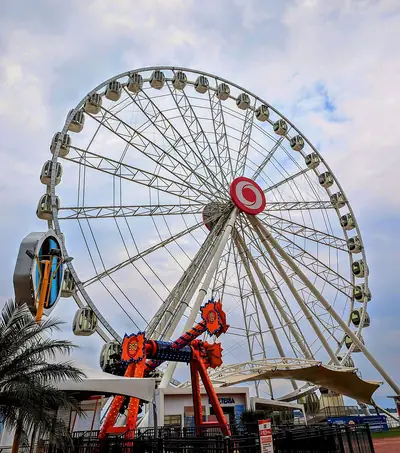
At the northern end of the promenade, La Perla rises 57 metres above a platform on the river. Completed in June 2016 and opened to the public in August of that year, it was Ecuador’s first observation Ferris wheel. Its position adds a different perspective to the riverfront and the city centre.
Museo Antropológico y de Arte Contemporáneo
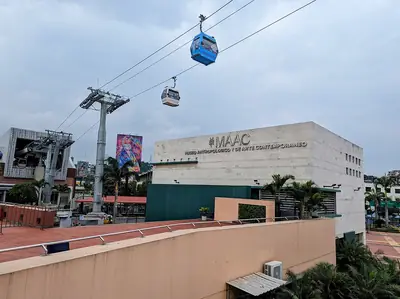
The Museo Antropológico y de Arte Contemporáneo, known as MAAC, is one of Guayaquil’s principal cultural attractions. Located beside Malecón 2000, it explores Ecuadorian, Latin American and Pre-Columbian art and culture.
Its collection includes around 50,000 Ecuadorian archaeological pieces and more than 3,000 modern works of art. Together, they connect the country’s pre-Columbian heritage with later artistic expression. The museum was inaugurated on July 30, 2003, with a purpose that includes strengthening cultural heritage and encouraging artistic culture at local, regional and national levels.
Museo Presley Norton
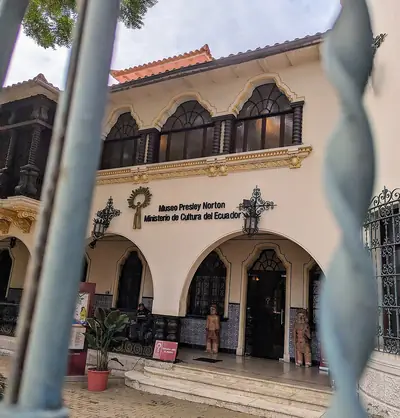
The Presley Norton Museum is devoted to Ecuador’s archaeological heritage. Its collection contains around 8,000 artefacts, including pottery and figurines made by the country’s original settlers. Some objects date as far back as 3000 B.C., offering a view of Ecuador’s distant past.
The museum occupies the Villa Rosa Herlinda mansion, once owned by Ismael Pérez Pazmiño, founder of the newspaper El Universo. Admission is free to the public.
Santa Ana Hill and Las Peñas
Santa Ana Hill rises beside the Guayas River next to Las Peñas, one of Guayaquil’s traditional neighbourhoods. The area offers a historic contrast to the city’s more modern commercial districts.
Santa Ana Hill is also one of the places where Guayaquil’s past and geography come together particularly clearly: the hill stands beside the river, while Las Peñas occupies its slopes. It is a central stop for anyone planning a Guayaquil self-guided walking tour.
Parque Seminario and its iguanas
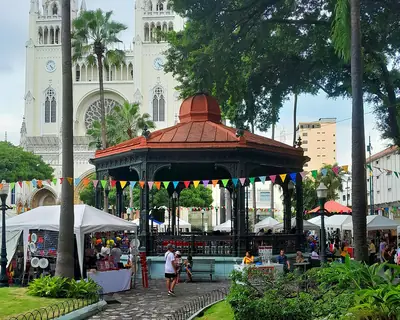
Parque Seminario sits in the Rocafuerte sector at the heart of downtown Guayaquil. Before becoming a public park, it was the Plaza de Armas during the colonial period. President Eloy Alfaro inaugurated it as a park on July 25, 1895.
A monument to Simón Bolívar stands at the centre, while mature trees shade the paths. A small lagoon provides a home for turtles, which can often be seen at the water’s edge. The park’s most famous residents, however, are its green iguanas. Hundreds roam across the grass, climb tree trunks and rest on the benches; a 2017 city count put their number at around 350.
Guayaquil Metropolitan Cathedral
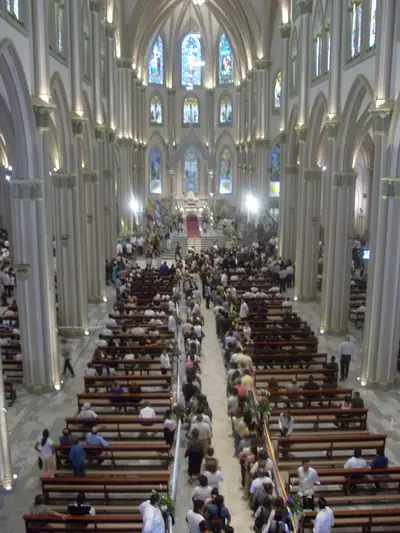
Beside Parque Seminario stands the Guayaquil Metropolitan Cathedral, officially the Cathedral of Saint Peter. It is one of the city’s most important historic churches and a prominent neo-Gothic landmark.
The present cathedral was built in reinforced concrete between 1924 and 1937. It replaced an earlier wooden church whose history reached back to the middle of the sixteenth century, when it stood on Santa Ana Hill. That building was destroyed by fire in 1892.
San Francisco Church
The Church of San Francisco, also known as the Church of Our Lady of the Angels, is the third oldest Catholic church in Guayaquil. The Franciscan Order founded it in 1702 after moving to the Old City district in 1693.
Its original structure was made of wood, and repeated fires led to several reconstructions. The current façade therefore reflects a long process of rebuilding and the persistence of the Franciscan community in Guayaquil.
Archivo Histórico del Guayas
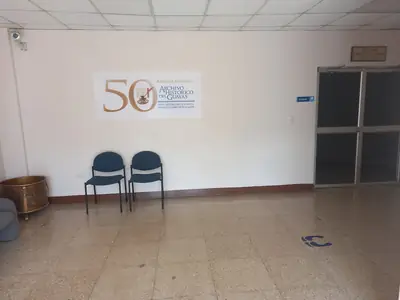
The Archivo Histórico del Guayas preserves the history of Guayaquil and the wider region through original documents, photographs and other historical materials. Founded on May 7, 1971, during the sesquicentennial celebrations of Guayaquil’s independence, it is now a division of Ecuador’s Ministry of Culture and Heritage attached to MAAC.
Its holdings include more than 15,000 historical documents dating from the sixteenth to the twentieth century, over 5,700 original visual records, more than 10,000 images in its Historical Digital Photographic Collection and 400 pieces in its Contemporary Collection. The archive preserves both everyday historical records and documents connected with major events, including the only criminal case initiated in connection with the workers’ massacre of November 15, 1922.
Luis Adolfo Noboa Naranjo Museum
The Luis Adolfo Noboa Naranjo Museum, or LANN Museum, presents a private collection of paintings by important contemporary Ecuadorian artists and artists connected with Luis Noboa Naranjo. Created on January 25, 2006, by Álvaro Noboa, the museum preserves the collection gathered by the late Ecuadorian entrepreneur.
Ten exhibition halls display 97 works, including three murals by Manuel Rendón and paintings by artists such as Oswaldo Guayasamín, Eduardo Kingman, Humberto Moré and Oswaldo Viteri. The museum also displays Noboa’s private office, formerly located on the first floor of the Noboa Banana Export Company.
Museo Nacional del Cacao
The Museo Nacional del Cacao explores the history, culture and international reach of Ecuadorian cacao. It opened on July 28, 2021, inside the Guzmán-Aspiazu Heritage House.
The building itself adds to the visit: constructed between 1927 and 1929, it is an Art Nouveau heritage house. The museum therefore links Ecuador’s cacao story with one of Guayaquil’s historic architectural settings.
Other places to include in your route
Several additional landmarks reveal different aspects of the city. Iglesia Católica El Sagrario is a Catholic church connected with Guayaquil’s Roman Catholic life, while Iglesia del Cristo del Consuelo, also known as the Sanctuary of Christ of Consolation, stands in the populous southwest neighbourhood that shares its name.
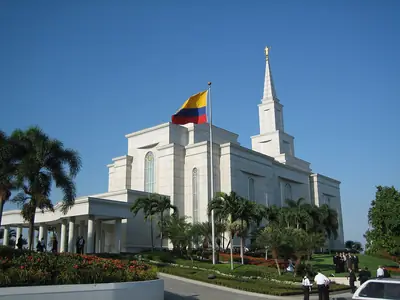
The Guayaquil Ecuador Temple was the first temple of the Church of Jesus Christ of Latter-day Saints built in Ecuador. Its groundbreaking ceremony took place in August 1996, and it was dedicated in August 1999.
The city’s cultural life also includes the Orquesta Sinfónica de Guayaquil, founded by legislative decree on November 4, 1949. Since 2009, the oldest orchestral ensemble in Guayaquil has had its permanent stage at the Teatro Centro Cívico Eloy Alfaro.
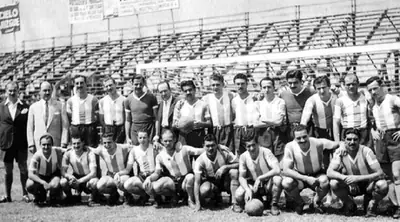
Football is another part of the city’s history. Every match of the 1947 South American Championship was played at Estadio George Capwell. Eight teams took part in that tournament, held from November 30 to December 31, 1947. Guayaquil later hosted the 1959 South American Championship, played entirely at Estadio Modelo.
Explore Guayaquil with Neywo
Download Neywo and explore Guayaquil with two walking tours and 22 narrated places. The route Iguanas, Heroes and Cathedrals: Old Guayaquil covers 2.53 km in 76 minutes and includes 8 stops, including San Francisco Church, Parque Seminario, the Guayaquil Metropolitan Cathedral and Parque Centenario de Guayaquil.
The Malecón 2000 to Santa Ana Hill walk covers 1.79 km in 46 minutes and has 4 stops, including the Luis Adolfo Noboa Naranjo Museum, La Perla, MAAC and Santa Ana Hill. The app tells the story of each place as you reach it, at your own pace, with no group and no schedule.
Guayaquil is also a useful base for comparing Ecuador’s destinations, from Quito, the country’s capital, to Cuenca, Baños de Agua Santa and Otavalo.
Places with an audio guide in Guayaquil
8 places in Guayaquil with a Neywo audio guide. Each one starts telling its story as you reach it.
Self-guided tours in Guayaquil
2 tours in Guayaquil, free in the Neywo app. Each stop tells its story as you reach it.
- Walk
Iguanas, Heroes and Cathedrals: Old Guayaquil
Wander downtown Guayaquil from the plaza where independence was plotted in 1820 to the famous Iguana Park, where hundreds of wild iguanas roam among the benches. Pass the neo-Gothic cathedral, a Franciscan church and the old Lizard Park, then end at Parque Centenario and the column to the heroes of October 9.
Monumento a la Fragua de Vulcano · Vicente Rocafuerte · San Francisco Church, Guayaquil · Parque seminario · Guayaquil Metropolitan Cathedral · Parque La Victoria …
Open this tour: Iguanas, Heroes and Cathedrals: Old Guayaquil - Walk
Malecón 2000 to Santa Ana Hill
Start at a private museum of Ecuadorian painting, then follow the Guayas riverfront promenade past the Ferris wheel La Perla and the anthropology and contemporary art museum, ending at the foot of Santa Ana Hill and the old Las Peñas quarter.
Luis Adolfo Noboa Naranjo Museum · La Perla · Museo Antropologico y de Arte Contemporaneo · Santa Ana Hill
Open this tour: Malecón 2000 to Santa Ana Hill
Walk Guayaquil with Neywo
Neywo turns Guayaquil into a self-guided audio tour. Stories arrive as you reach the place they belong to, and the route reshapes when you wander off it.

