Things to Do in Otavalo, Ecuador: Walking Guide
Things to Do in Otavalo, Ecuador
Otavalo is a highland city in northern Ecuador known for its Kichwa Indigenous heritage, textile traditions, and mountain setting. Surrounded by the volcanoes Imbabura, Cotacachi, and Mojanda, it is worth visiting for the way living culture and Andean landscapes come together. Neywo offers a free audio guide for Otavalo with 1 narrated place.
What to See in Otavalo
Discover Otavalo’s Kichwa heritage
Otavalo is known as the Intercultural Capital of Ecuador, and the city’s identity is closely connected with the Otavalo people, a Kichwa Indigenous community. Their textile work and role in commerce are central to the city’s cultural life, making local traditions an important part of what to see in Otavalo.
Explore Otavalo’s textile traditions
Textile work is one of the practices most closely associated with the Otavalo people. Traditional skills have been maintained as part of everyday cultural life, and the city is widely recognised for its textile makers and commerce.
Otavalo’s craft traditions also include woodwork and other handmade products. Exploring the city with these living traditions in mind offers more than a search for souvenirs: it provides a way to understand the cultural identity of the community.
Experience the city’s markets
The markets are among the best things to do in Otavalo for visitors interested in local craftsmanship. They bring together textiles, woven products, carved objects, and other handmade goods connected with regional traditions.
Rather than presenting a single historical attraction, Otavalo’s markets show culture in use. They offer a close look at the skills, materials, and forms of commerce that have helped define the city and the wider area.
Take in the Andean setting
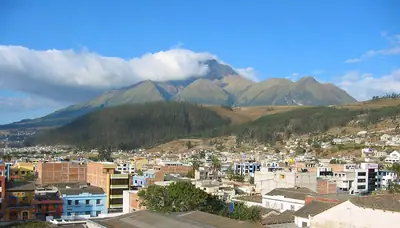
Otavalo lies in Ecuador’s northern Andean region, in Imbabura Province, at roughly 2,500 metres above sea level. Hills, mountains, and areas of forest surround the city, creating a landscape that changes between cultivated land, slopes, and higher volcanic scenery.
The volcanoes Imbabura, Cotacachi, and Mojanda are among the defining features of the setting. Their presence gives Otavalo a strong sense of place and makes the surrounding landscape an important part of any visit.
Understand Otavalo’s history
Otavalo’s origins reach back to the sixteenth century. San Luis de Otavalo was founded by the Spanish in 1534, and the city later received city status through a decree by Simón Bolívar in 1829.
These dates form part of a longer story in which Indigenous heritage and colonial history overlap. The result is a city whose character is shaped both by its historical foundations and by the cultural traditions that remain visible today.
Otavalo and Ecuador’s Highland Landscape
Otavalo’s setting helps explain the connection between its culture and its surroundings. The city is enclosed by mountains and volcanoes, while the wider area includes hills, forests, and varied Andean terrain.
This landscape is also associated with fertile agricultural areas and local produce. Together with the city’s markets and textile traditions, it gives Otavalo a distinctive identity within Ecuador. For travellers exploring the country, the city offers a different perspective from larger destinations such as Quito, Ecuador’s capital, or the colonial atmosphere of Cuenca.
Explore Otavalo with Neywo
Download Neywo’s free audio guide and explore Otavalo at your own pace. The app has 1 narrated place in the city, and its story plays as you reach the place, with no group and no schedule. Narration is available in 11 languages, so you can discover Otavalo while walking independently and listening when you arrive.
Places with an audio guide in Otavalo
1 place in Otavalo with a Neywo audio guide. Each one starts telling its story as you reach it.
Walk Otavalo with Neywo
Neywo turns Otavalo into a self-guided audio tour. Stories arrive as you reach the place they belong to, and the route reshapes when you wander off it.

