Pärnu, Estonia: Self-Guided Walking Tour
Things to Do in Pärnu: What to See in Estonia’s Seaside City
Pärnu is a city on Estonia’s western coast, shaped by the Pärnu River, historic fortifications, churches, museums, and bridges. Its compact centre offers plenty to explore on foot, from the surviving Tallinn Gate to the remains of Pärnu Castle and the city’s distinctive religious and cultural buildings. Neywo has a free audio guide for Pärnu with 23 narrated places.
What to See in Pärnu
Tallinn Gate
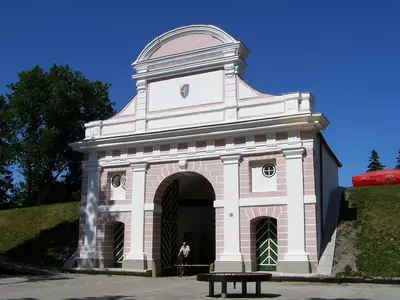
Tallinn Gate is the only surviving seventeenth-century city gate in the Baltic states. Completed in 1669 during the period of Swedish rule, it once marked the route towards Tallinn and was originally known as the King’s Gate, or Carl Gustav’s Gate.
The gatehouse combines fieldstone and brick with façades faced in porous Riga dolomite. A straight passage runs beneath a barrel vault, and the structure could once be closed with doors and a central portcullis. It is one of the clearest reminders of Pärnu’s former fortifications.
Endla Theatre
At Keskväljak, the Building of the Endla Theatre is one of Pärnu’s notable cultural landmarks. The theatre opened in 1967, following a standard Soviet-era design by architect Ilmar Laasi.
Its auditorium has 565 seats, while the black box theatre known as Küün can accommodate up to 150 spectators. A major renovation in 2001 renewed the building while preserving its role in Pärnu’s cultural life.
Pärnu’s historic churches
Several churches add variety to a walk through Pärnu’s streets.
St. Elizabeth’s Church, or Eliisabeti kirik, is a distinctive place of worship on Nikolai Street. The Pärnu Transformation of Our Lord Church is an Orthodox cathedral church for the Pärnu and Saare bishopric of the Estonian Apostolic Orthodox Church. Built between 1902 and 1904, it follows an old Russian style and rises 38 metres above the city. Inside, its eleven-icon iconostasis was completed in 1927.
Other religious buildings include the Pärnu Advent Church, built in 1912, and Pärnu Methodist Church, also known as Pärnu Agape Church. The latter was built in 1995 to a design by Ilmar Klammer.
At Henno 3, the Immanuel Baptist Congregation Prayer House is the oldest Baptist prayer house in Pärnu. Completed in November 1896, it combines a renovated older section with an extension added in 2004.
Pärnu Castle and the Red Tower
Pärnu Castle, also called the Livonian Order Castle, once stood at the mouth of the Pärnu River on its southern bank. It was the administrative and military centre of the Pärnu commandery and the residence of its commander.
Written sources mention the castle and the settlement beside it as early as 1265. New-Pärnu developed next to the castle during the thirteenth century and grew into the modern city. Although the castle no longer survives above ground, its walls and archaeological layers remain beneath the city.
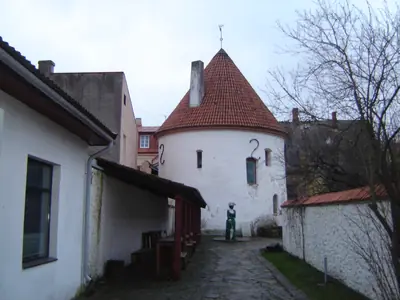
The nearby Red Tower, or Punane torn, is the only above-ground building surviving from the medieval fortifications of New-Pärnu. Together, these remains connect the modern city with its medieval origins.
Pärnu River
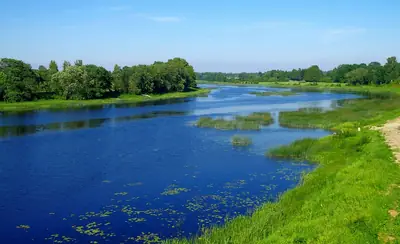
The Pärnu River gives the city its name and provides an important link between Estonia’s inland regions and the coast. It is one of Estonia’s longest rivers, flowing through the central and western parts of the country before reaching Pärnu Bay, an inlet of the Gulf of Riga.
The river is also central to understanding Pärnu’s bridges and the way the city developed on both sides of the waterway.
City Centre Bridge
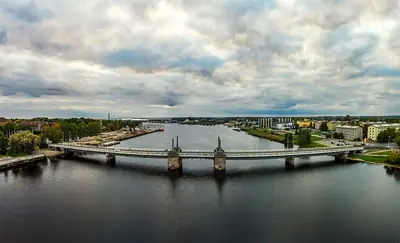
The City Centre Bridge, known locally as Kesklinna sild or Vanasild, crosses the Pärnu River. The present bridge opened on December 31, 1956, about 20 metres upstream from the former Leather Bridge and Wooden Bridge, at the site of the former Great Bridge.
It is a useful landmark for exploring the relationship between Pärnu’s historic centre and the districts beyond the river.
Siimu Bridge
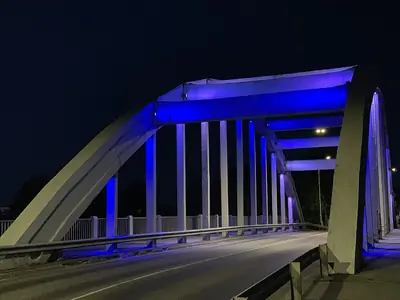
Siimu Bridge, also known as Vana-Pärnu Bridge, crosses the Sauga River and links J. V. Jannsen Street in Ülejõe with Haapsalu Road in Vana-Pärnu.
The first permanent bridge opened on August 6, 1937, but it was destroyed in September 1944. The present bridge was completed in 1958, giving it a history closely connected with the wartime transformation and rebuilding of Pärnu.
Papiniidu Bridge
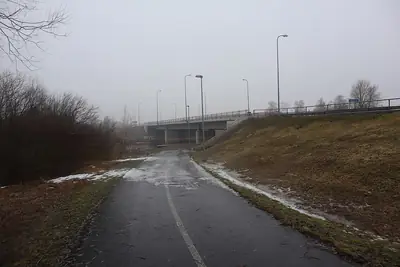
Papiniidu Bridge is an important crossing over the Pärnu River. Its broad structure carries the Tallinn, Pärnu, and Ikla highway between the Papiniidu area and the districts around Ehitajate tee and Tammiste tee.
Completed in 1976, the bridge is 284 metres long. It was built for both road and railway traffic and has also been known as Papiniidu Railway Bridge.
Sauga Bridge
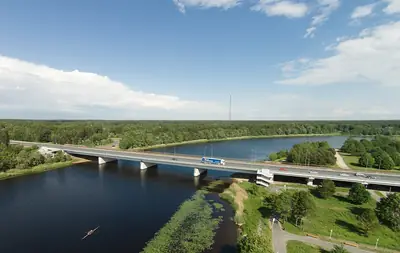
Sauga Bridge carries Airport Road across the Sauga River as part of Pärnu’s western bypass. Completed in 2012, it is 70 metres long and 16.5 metres wide, with two traffic lanes and a four-metre-wide path for pedestrians and cyclists.
Koidula Museum
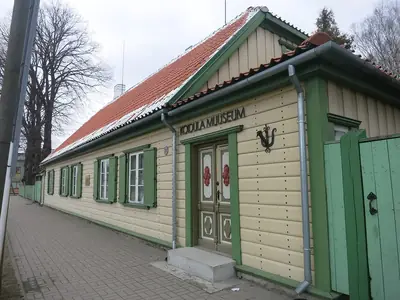
In the Ülejõe district, the Koidula Museum explores the lives and work of Lydia Koidula and her father, Johann Voldemar Jannsen, two important figures in Estonia’s national awakening.
The museum occupies a former village school building completed in 1850. The building is a listed historical monument, while the exhibits place both figures within the wider history of Estonia’s national awakening. The Koidula Museum is a branch of the Pärnu Museum.
Uue Kunsti Muuseum
The Museum of New Art, known in Estonian as Uue Kunsti Muuseum, focuses on art from the twentieth and twenty-first centuries. Since November 2020, it has been located at Rüütli 40a in a former bank building beside Iseseisvuse Square.
The institution began in 1992 as Chaplin’s Art Centre and was renamed in 1998. One of its notable recurring exhibitions is Mees ja naine, or Man and Woman, which reflects the museum’s interest in modern and contemporary art.
Explore Pärnu with a Self-Guided Audio Tour
Neywo offers two walking tours in Pärnu, along with one bus route and one bike route. The app tells the story of each place as you reach it, at your own pace, with no group and no schedule. Narration is available in 11 languages.
The tours include:
- Pärnu Old Town: Where Estonia Declared Itself Free — a 1.99 km walk lasting 83 minutes, with 11 narrated stops.
- Across the River: Bridges and the Poet’s Museum — a 2.87 km walk lasting 61 minutes, with 4 stops.
- Bus 10: Old Town to Vana-Pärnu — a 2.9 km route lasting 12 minutes, with 5 stops.
- Pärnu Rannapark Ride: Gate, Church and Castle Tower — a 0.8 km bike route lasting 4 minutes, with 4 stops.
Download Neywo to explore Pärnu independently and hear the city’s history as you move from its gates and churches to its bridges, museums, and castle remains. You can also continue discovering Estonia, or plan another stop in Tallinn, Haapsalu, or Tartu.
Places with an audio guide in Pärnu
8 places in Pärnu with a Neywo audio guide. Each one starts telling its story as you reach it.
Self-guided tours in Pärnu
4 tours in Pärnu, free in the Neywo app. Each stop tells its story as you reach it.
- Bike ride
Pärnu Rannapark Ride: Gate, Church and Castle Tower
A short, easy ride along the car-free paths of Rannapark, the green belt on the old town's edge. Pass the Tallinn Gate, the Baroque St Catherine's, the Red Tower and the Keres monument before the beach.
Tallinn Gate · St. Catherine's Church · Pärnu Castle · Paul Keres monument in Pärnu
Open this tour: Pärnu Rannapark Ride: Gate, Church and Castle Tower - Bus ride
Bus 10: Old Town to Vana-Pärnu
Ride SEBE's city line 10 from the Orthodox church of 1904 through the old town, over the river bridge and past the Koidula museum to Siimu bridge. A cheap way to see both banks of Pärnu.
Pärnu Transformation of Our Lord Church · Pärnu St. Nicholas Church · City Centre Bridge · Koidula muuseum · Siimu sild
Open this tour: Bus 10: Old Town to Vana-Pärnu - Walk
Pärnu Old Town: Where Estonia Declared Itself Free
Walk the compact old town of Estonia's summer capital, from the only surviving 17th-century city gate in the Baltics to the granite balcony replica marking the 1918 Declaration of Independence. On the way: a Baroque church given by Catherine the Great, a medieval red tower, a memorial to a lost Gothic church and the cathedral-sized Orthodox church of 1904.
Tallinn Gate · August Jakobsoni mälestusmärk · Building of the Endla Theatre · St. Catherine's Church · Pärnu St. Nicholas Church · St. Elizabeth's Church …
Open this tour: Pärnu Old Town: Where Estonia Declared Itself Free - Walk
Across the River: Bridges and the Poet's Museum
Cross to Ülejõe, the quieter bank of the Pärnu River. Follow the water, then cross two bridges that were destroyed and rebuilt and visit the 1850 village school where Lydia Koidula and her father shaped Estonia's national awakening.
Pärnu River · Siimu sild · Koidula muuseum · City Centre Bridge
Open this tour: Across the River: Bridges and the Poet's Museum
Walk Pärnu with Neywo
Neywo turns Pärnu into a self-guided audio tour. Stories arrive as you reach the place they belong to, and the route reshapes when you wander off it.

