Tallinn, Estonia: Self-Guided Walking Tour
Things to do in Tallinn
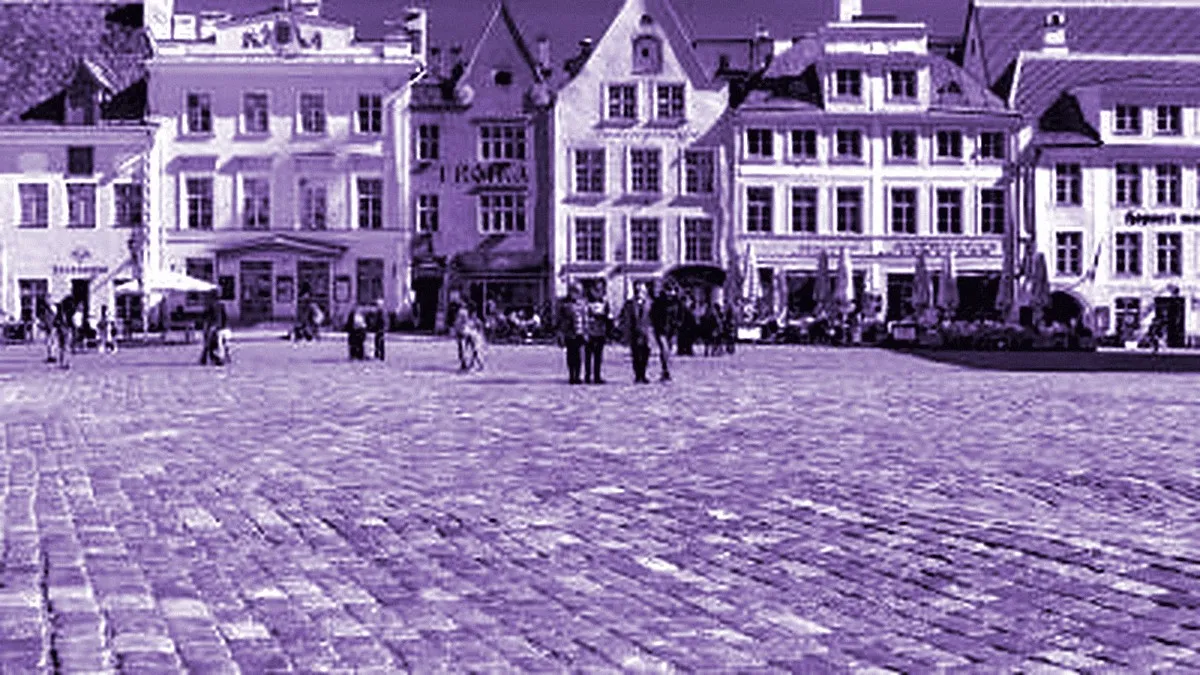
Tallinn is a city of striking contrasts, where a remarkably well‑preserved medieval centre sits beside creative neighbourhoods shaped by industrial history and a forward‑looking digital culture. Located on Estonia’s northern coast beside the Baltic Sea, the capital offers compact urban charm and a layered past shaped by Danish, German, Swedish, Russian, Soviet, and Estonian rule. Neywo provides a free audio guide for Tallinn featuring 149 narrated places.
Explore Tallinn’s highlights
Toompea Castle and Pikk Hermann tower
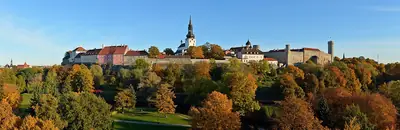
Set on the limestone Toompea Hill, the castle combines medieval fortifications with later government buildings and today houses Estonia’s Parliament, the Riigikogu. Its central section is used by parliament, while the western side preserves the façade of the earlier Small Castle. The Baroque and early Classical wing once accommodated the provincial government. The Pikk Hermann (Tall Hermann) tower rises above the complex, and the flag flown there is one of Estonia’s best‑known symbols of the government in power. The hill’s summit stands about twenty to thirty metres above the surrounding area and has long been a seat of power.
Kadriorg Palace
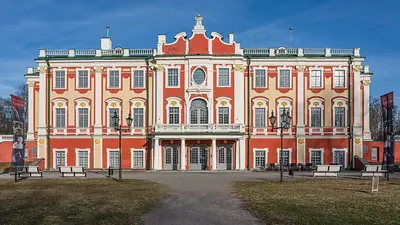
This graceful Baroque palace lies within Kadriorg Park and was built between 1718 and 1725 as a summer residence for Peter the Great after Estonia passed from Swedish to Russian rule. Named for his wife Catherine I, the palace exemplifies Petrine Baroque architecture, with plans by Nicola Michetti and construction by Gaetano Chiaveri and Mikhail Zemtsov. The palace and park form a protected cultural monument ensemble. Over time it has housed the Art Museum of Estonia and served as a residence for Estonia’s head of state in the 1920s and 1930s.
Alexander Nevsky Cathedral
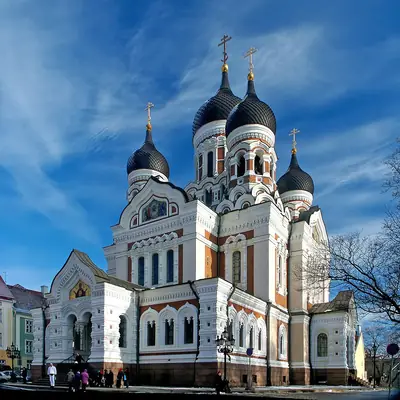
Dominating Toompea Hill, this Eastern Orthodox cathedral is the largest cupola church in Tallinn, reaching about 58 metres in height and designed for roughly 1,500 worshippers. Built between 1895 and 1900 during the Russification policies of Alexander III, its design is credited to Mikhail Preobrazhensky. The cathedral serves as the primary church of the semi‑autonomous Estonian Orthodox Church of the Moscow Patriarchate and is listed as a historical monument in Estonia’s Register of Cultural Monuments.
St. Nicholas’ Church (Orthodox, Haus Galerii)
Situated at 24 Vene Street, this Orthodox church dates from 1820‑1827 and displays a predominantly classical style attributed to Luigi Rusca. It is recognised as both an architectural and historical monument. A notable burial lies beneath the altar: Arseny Matseyevich, a hieromartyr and Metropolitan of Rostov, rests on the church grounds.
St. Nicholas’ Church (Niguliste)
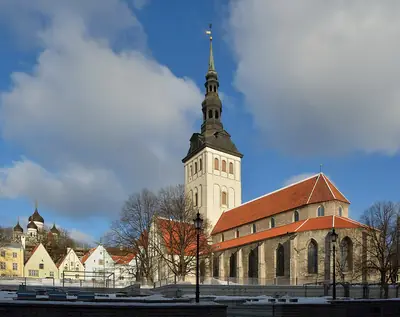
Known locally as Niguliste kirik, this Gothic church was founded in the 13th century by Gotland merchants of Westphalian origin and dedicated to Saint Nicholas, patron of sailors and merchants. Before the Reformation it was Tallinn’s principal church, later yielding that role to St. Olaf’s Church. Today it operates as the Niguliste Museum, displaying significant early church art, including Bernt Notke’s late‑medieval Dance of Death from Lübeck and the high‑altarpiece retable from the workshop of Hermen Rode. A striking four‑metre‑high, seven‑branched candelabrum also stands inside.
St. Mary’s Cathedral (Toomkirik)
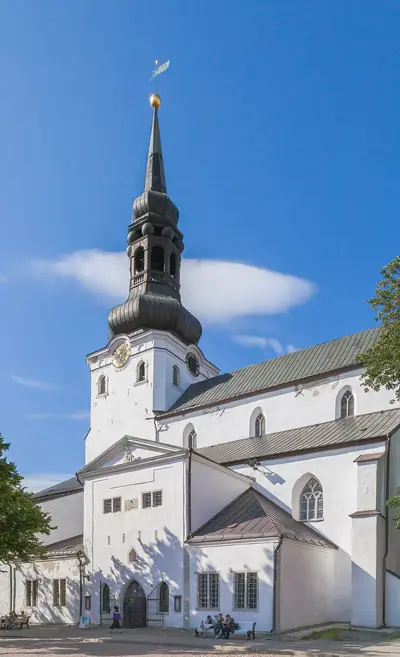
Regarded as the oldest church in Tallinn and mainland Estonia, this Lutheran cathedral was first mentioned in 1219, with the present building likely begun in the 1230s and completed around 1240. It originated as a Roman Catholic cathedral after the Danish conquest and became Lutheran following the Reformation in 1561. The structure shows a Gothic core, a Baroque bell tower, and later chapels. Inside are burials from the 13th to 19th centuries, 107 noble coats of arms, and epitaphs linked to notable figures from the 13th to the 20th centuries. One of its doors, probably made between 1378 and 1394, is the oldest surviving door in Estonia, and the cathedral survived the great fire of 1684.
Kumu
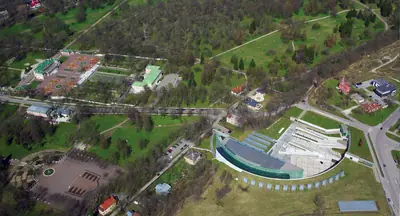
Located in Kadriorg, Kumu is the main building of the Art Museum of Estonia and one of its five branches. Designed by Finnish architect Pekka Vapaavuori after winning a 1994 competition, it was constructed between 2003 and 2006 and opened in 2006. The permanent collection traces Estonian art from the 18th century onward, including works from the occupation period (1940‑1991) that reflect both Socialist Realism and nonconformist tendencies. Temporary exhibitions bring in Estonian and international modern and contemporary art. The name “Kumu” is a shortened form of the Estonian words for “art museum,” chosen in a 2004 naming competition.
Stenbock House
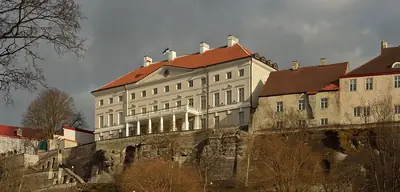
At the northern edge of Toompea, this neoclassical building features a classical façade, a balcony, and six Doric columns. It serves as the seat of the Government of the Republic of Estonia and the State Chancellery. Constructed between 1783 and 1792, it was entered on Estonia’s register of architectural monuments in 1997, and the first session of the Estonian Government convened there on 8 August 2000. The name Stenbock House is also used to refer to the government or the state chancellery themselves.
Church of the Holy Spirit (Püha Vaimu kirik)
Tucked behind Raekoja plats and facing the Great Guild and Maiasmokk, this is the smallest medieval church in Tallinn and one of its most historically meaningful landmarks. Dating back to the 14th century, it is described as the only sacred building in the city that has preserved its original appearance. The first known reference appears in 1316, and the church is associated with the earliest sermons delivered in Estonian. It is used by a congregation of the Estonian Evangelical Lutheran Church and, once a month, by the Institute of Theology of the same church. The tourist stop includes the Kalevi Martsipanituba (Kalev Marzipan Room).
St. Olaf’s Church (Oleviste kirik)
With a tower soaring 123.7 metres above ground, St. Olaf’s is the tallest church building in Estonia; its tower includes an observation platform 60 metres up. Named after Olav II Haraldsson, the Norwegian king who Christianised Norway and died in 1030, the church preserves rebuilding work from the 15th and early 16th centuries. It was restored after lightning‑caused fires in 1625 and 1820, the latter destroying the spire, which was replaced in 1840 when the church also received a Neo‑Gothic interior. Notable interior features include the Chapel of Saint Mary (Bremen Chapel) completed in 1521 by Bernt Wolf and Gert Koningk, and a cenotaph for the merchant Hans Pawels on the chapel’s exterior wall facing Pikk Street. Over time the building has served Roman Catholic, Lutheran, and other Christian traditions.
Raeapteek (Town Hall Pharmacy)
Opposite the Town Hall at number 11, Raeapteek has been operating in the same premises since the early 15th century, making it one of Europe’s oldest continuously operating pharmacies. It is also described as Tallinn’s oldest commercial enterprise and its oldest medical establishment. The building is protected as an architectural and historical monument and listed as a cultural monument in Estonia. The earliest known image of the pharmacy appears in an oil painting by Gustav Adolph Oldekop showing Town Hall Square in 1800; the first photographs date from 1889.
A. Le Coq Arena
Tallinn’s football stadium and home ground of the national team, as well as clubs Flora and Levadia, A. Le Coq Arena opened in 2001 and was designed by architect Haldo Oravas. Earlier known as Lilleküla Stadium, it is the largest stadium in Estonia. A major expansion added seating, a roof over the north stand, a new façade, and extensive renovations that prepared the venue to host the 2018 UEFA Super Cup final. The Lilleküla football complex also includes Sportland Arena, Nike Arena, an indoor A. Le Coq Arena hall, and two full‑size natural‑grass fields belonging to FC Flora.
Estonian Museum of Natural History (Eesti Loodusmuuseum)
Situated a few steps into the Old Town, this national museum explores Estonia’s natural world with a strong focus on nature education. Its permanent exhibition spans two floors: the second floor presents the sea and rivers hall together with the geology hall, while the third floor contains the forest hall and a space devoted to discoveries. Among the exhibits is Maria, the largest fish ever caught in Estonia. The museum hosts several temporary exhibitions each year, covering topics from living spiders to edible and poisonous fungi and minerals, and from spring to autumn it also offers temporary displays in its courtyard.
Vabamu Museum of Occupations and Freedom
Located at 8b Toompea Street, at the corner of Toompea Street and Kaarli Boulevard, Vabamu examines Estonia’s experience of occupation, resistance, and the restoration of independence. Its permanent exhibition, “Freedom Has No Limits,” covers the period 1940‑1991, during which Estonia was occupied first by the Soviet Union, then by Nazi Germany, and again by the Soviet Union. The exhibition traces repression and occupation while also highlighting national resistance and the Singing Revolution that led to renewed independence. Vabamu was created through the private initiative of the Kistler‑Ritso Estonian Foundation, established in 1998 to collect, preserve, study, and present Estonia’s recent history. The museum opened on 1 July 2003, and its collection began forming in 1999 through cooperation with organisations studying repression, the Soviet era, crimes against humanity, and the experiences of victims.
Pirita Convent (Pirita klooster)
The ruins of Pirita Convent reveal what was once the largest convent in Livonia. This Bridgettine religious house stood by the Pirita River, and its surviving remains convey the scale of the medieval complex. The convent’s church, the great surviving ruin at the heart of the site, covers 1 360 square metres and was the largest church building in medieval Estonia—a distinction still evident from the monumental remains. Belonging to the Order of Saint Bridget, it was shared by nuns and monks from 1407 until 1575, with the church consecrated on 15 August 1436, the feast of the Assumption of Mary. Pirita was the third daughter convent of the Bridgettine order on the eastern shore of the Baltic, alongside convents near Tallinn, Lübeck, and Stralsund. From 1384 the order’s mother convent was located at Vadstena in central Sweden.
Experience Tallinn with Neywo
Neywo’s free audio guide lets you explore the city at your own pace, with no group and no schedule. The app offers five walking tours, one bus route, and one bike route in Tallinn.
- Toompea: Parliament, Domes and Medieval Towers – 1.24 km, about 85 minutes, 8 stops (Pikk Hermann, Toompea Castle, Alexander Nevsky Cathedral, St. Mary’s Cathedral, Stenbock House, St. Nicholas’ Church, Swedish Saint Michael’s Church, Kiek in de Kök).
- Town Hall Square and the Merchants’ Old Town – 0.98 km, about 86 minutes, 12 stops (Viru Gate, Helleman Tower, Saint Catherine’s Monastery, St. Peter’s and St. Paul’s Cathedral, Banned Books Museum, Tallinna Linnamuuseum, House of the Blackheads, Eesti Ajaloomuuseum, Church of the Holy Spirit, Raeapteek, Town Hall Square, Tallinn Town Hall).
- Pikk Street to the Sea Gate: Hanseatic Tallinn – 2.77 km, about 93 minutes, 10 stops (St. Michael’s Convent, Church of the Transfiguration of Our Lord, Three Handed Mother of God Church, St. Olaf’s Church, Tallinn horse mill, Fat Margaret, Broken Line, Linnahall, Patarei Sea Fortress, Seaplane Hangars in Tallinn).
- Kadriorg: Peter the Great’s Summer Park – 2.35 km, about 94 minutes, 10 stops (Eduard Vilde muuseum, Kreutzwald monument, Lastemuuseum Miiamilla, Mikkeli muuseum, Kumu, Peter the Great House, Presidential Palace, Kadriorg Palace, Jaan Koort monument, Russalka Memorial).
- Freedom Square and the Theatre Quarter – 1.5 km, about 87 minutes, 12 stops (Charles’ Church, Vabamu Museum of Occupations and Freedom, War of Independence Victory Column, Freedom Square, Solidarity memorial stone, St. John’s Church in Tallinn, Karjavärava plats, Building of the Estonian Drama Theatre, Uus turg, Konstantin Päts memorial, Estonia Theatre, Bank of Estonia Museum).
- Bus 40: From Kadriorg across the Centre to Vabamu – 4.4 km, about 19 minutes, 8 stops (Russalka Memorial, Tuletõrjemuuseum, Church of St. John’s almshouse, Great Synagogue of Tallinn, Estonia Theatre, Bank of Estonia Museum, Solidarity memorial stone, Vabamu Museum of Occupations and Freedom).
- Kadriorg Park by Bike: Palaces, Museums and the Mermaid – 1.8 km, about 9 minutes, 5 stops (Eduard Vilde muuseum, Lastemuuseum Miiamilla, Kadriorg Palace, Russalka Memorial, Kumu).
As you approach each point of interest, the app plays the relevant story automatically, allowing you to linger or move on as you wish. Narration is available in 11 languages, making the guide accessible to visitors from around the world. Download Neywo today and let the city’s history, culture, and atmosphere unfold step by step.
Places with an audio guide in Tallinn
8 places in Tallinn with a Neywo audio guide. Each one starts telling its story as you reach it.
Self-guided tours in Tallinn
7 tours in Tallinn, free in the Neywo app. Each stop tells its story as you reach it.
- Bike ride
Kadriorg Park by Bike: Palaces, Museums and the Mermaid
Cycle the smooth paths of Kadriorg Park, where cycling is allowed and popular. Pass the Vilde museum, the Miiamilla children's museum and Kadriorg Palace, circle to the Russalka memorial on the shore, and end at Kumu.
Eduard Vilde muuseum · Lastemuuseum Miiamilla · Kadriorg Palace · Russalka Memorial · Kumu
Open this tour: Kadriorg Park by Bike: Palaces, Museums and the Mermaid - Bus ride
Bus 40: From Kadriorg across the Centre to Vabamu
A regular city bus from Lasnamäe that rolls past the Russalka memorial, the Firefighting Museum, the synagogue and the Bank of Estonia Museum, ending near Vabamu, the museum of occupations and freedom. Ride it for a cheap tour of Tallinn's 20th-century story.
Russalka Memorial · Tuletõrjemuuseum · Church of St. John's almshouse · Great Synagogue of Tallinn · Estonia Theatre · Bank of Estonia Museum …
Open this tour: Bus 40: From Kadriorg across the Centre to Vabamu - Walk
Toompea: Parliament, Domes and Medieval Towers
Climb the limestone hill where Tallinn's rulers have sat for 800 years. Pass the cannon-scarred Kiek in de Kök tower, the Estonian parliament with its Pikk Hermann flag tower, the onion domes of Alexander Nevsky, and the oldest church in Estonia, then descend to St. Nicholas' and its medieval art.
Pikk Hermann · Toompea Castle · Alexander Nevsky Cathedral · St. Mary's Cathedral · Stenbock House · St. Nicholas' Church …
Open this tour: Toompea: Parliament, Domes and Medieval Towers - Walk
Town Hall Square and the Merchants' Old Town
Follow the Hanseatic merchants through Tallinn's medieval heart: the last Gothic town hall in northern Europe, a pharmacy open since the 1400s, the carved doors of the Blackheads, the Dominican monastery ruins and Catholic cathedral, two small museums and the city-wall towers leading to the Viru Gate.
Viru Gate · Helleman Tower · Saint Catherine's Monastery · St. Peter's and St. Paul's Cathedral · Banned Books Museum · Tallinna Linnamuuseum …
Open this tour: Town Hall Square and the Merchants' Old Town - Walk
Pikk Street to the Sea Gate: Hanseatic Tallinn
Walk down Pikk Street, the old merchants' road to the harbour. See convents and churches, look up at the 124-metre tower of St. Olaf's, pass Fat Margaret by the Great Coastal Gate and follow the shore north past the Linnahall to the Patarei sea fortress and the seaplane hangars.
St. Michael's Convent · Church of the Transfiguration of Our Lord · Three Handed Mother of God Church · St. Olaf's Church · Tallinn horse mill · Fat Margaret …
Open this tour: Pikk Street to the Sea Gate: Hanseatic Tallinn - Walk
Kadriorg: Peter the Great's Summer Park
Stroll through the Baroque park that Peter the Great laid out for his wife Catherine. Visit the Vilde and Mikkel museums, the children's museum and Kumu, Estonia's national art museum, then Peter's own little house, the presidential residence and the palace, and end at the Russalka memorial by the sea.
Eduard Vilde muuseum · Kreutzwald monument · Lastemuuseum Miiamilla · Mikkeli muuseum · Kumu · Peter the Great House …
Open this tour: Kadriorg: Peter the Great's Summer Park - Walk
Freedom Square and the Theatre Quarter
Just south of the Old Town: the Vabamu museum of occupations, the Victory Column on Freedom Square, the Estonia and Drama theatres, the Bank of Estonia museum and the market square of Uus Turg. A walk through twentieth-century Tallinn.
Charles' Church · Vabamu Museum of Occupations and Freedom · War of Independence Victory Column · Freedom Square · Solidarity memorial stone · St. John's Church in Tallinn …
Open this tour: Freedom Square and the Theatre Quarter
Walk Tallinn with Neywo
Neywo turns Tallinn into a self-guided audio tour. Stories arrive as you reach the place they belong to, and the route reshapes when you wander off it.

