Versailles, France: Self-Guided Walking Tour
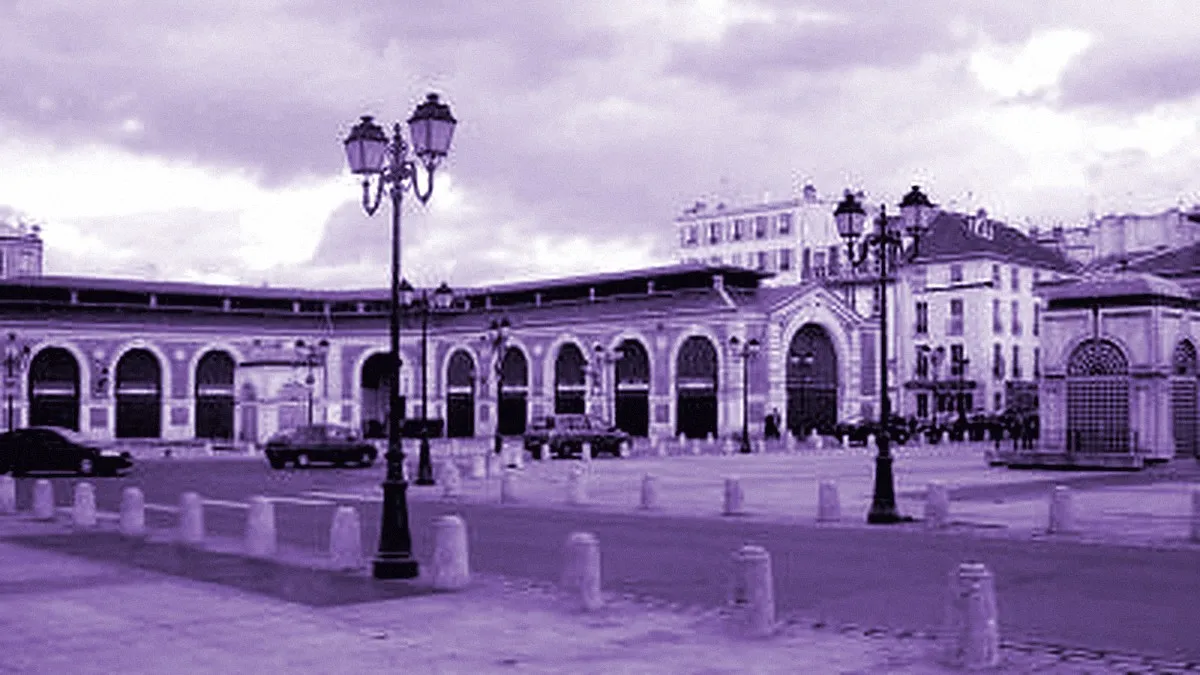
Things to do in Versailles: what to see beyond the palace
Versailles is best known for the Palace of Versailles, but the former royal city also reveals the political, artistic and everyday history of France through its museums, gardens and historic buildings. From the grand palace and Trianon estate to the Tennis Court Oath and the old town, there are plenty of things to do in Versailles beyond a quick visit to the Hall of Mirrors. Neywo offers a free audio guide for Versailles with 114 narrated places.
What to see in Versailles
Palace of Versailles
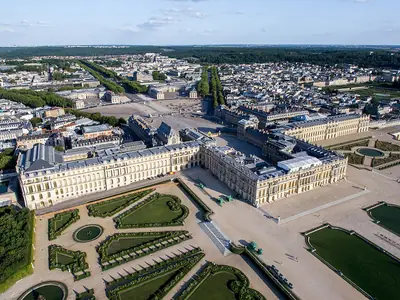
The Palace of Versailles began as a hunting lodge built by Louis XIII in 1623. From 1661, Louis XIV transformed it through a building campaign that lasted more than fifty years, and in 1682 he moved the court and government here. Louis XIV, Louis XV and Louis XVI ruled from Versailles for most of the following century.
The palace is a vast example of French classical architecture, covering more than 63,000 square metres and containing roughly 2,300 rooms. Its scale continues into the park, which covers 815 hectares today, including 93 hectares of formal gardens. The estate’s strict symmetry and enormous avenues express the royal power that Versailles was designed to project.
The palace later became the setting for the Musée de l’Histoire de France. Opened to the public by Louis-Philippe I in 1837, the museum was intended to bring together the different chapters of French history, including the monarchy and the Revolution.
Hall of Crusades
The Hall of Crusades occupies five rooms in the palace’s north wing. Louis-Philippe created it in 1843 for his museum of French history, reflecting the nineteenth-century fascination with the medieval past.
More than 120 paintings depict battles, councils and other episodes from the Crusades. Portraits of crusader leaders, coats of arms and extensive lists of family names fill the rooms. The galleries therefore reveal both the medieval events they depict and the nineteenth-century interpretation of that history.
Palace gardens and the Grotte
The gardens extend the palace’s formal architecture into the landscape. Their history includes the Water Theater Grove, designed by André Le Nôtre as an outdoor theatre for elaborate water displays. Turf seating overlooked a stage with fountains, while statues and water features were rearranged between 1680 and 1715.
The original grove disappeared during a major replanting ordered by Louis XVI in the winter of 1774–1775. The simpler Green Round Grove replaced it, leaving the Grotte as a reminder of the gardens’ changing designs.
Grand Trianon
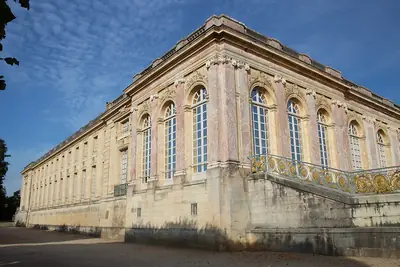
The Grand Trianon was built for Louis XIV in 1687 as a retreat from court ceremony. Designed by Jules Hardouin-Mansart, it was originally known as the Trianon de Marbre because its exterior was clad in pink marble.
Its layout is more intimate than that of the main palace. A courtyard leads to the central colonnaded gallery, or Péristyle, which connects two long wings, including the Trianon-sous-Bois. The gardens were created for pleasure rather than ceremony, with flower beds, geometric designs, shaded groves and fountains.
Petit Trianon
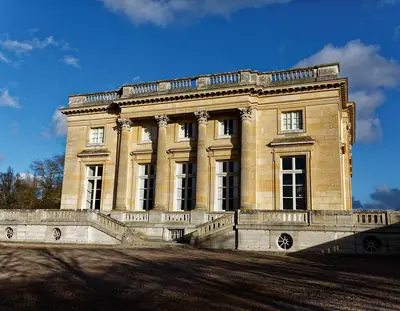
The Petit Trianon was commissioned by Louis XV and built between 1762 and 1768 by Ange-Jacques Gabriel. It was intended as a retreat connected to the botanical gardens developed at the king’s request, with help from the botanist Bernard de Jussieu.
When Louis XVI gave the château to Marie-Antoinette, she turned it into a private refuge from the demands of court life. The building is a refined example of neoclassicism: a square structure with four almost identical façades, each with five tall windows framed by Corinthian columns or pilasters.
The surrounding estate includes the French Pavilion, the Cool Salon, the Théâtre de la Reine, the Belvédère, the Temple de l’Amour and the Queen’s Hamlet. Together, these places show a more private and playful side of Versailles than the formal palace.
Musée Lambinet
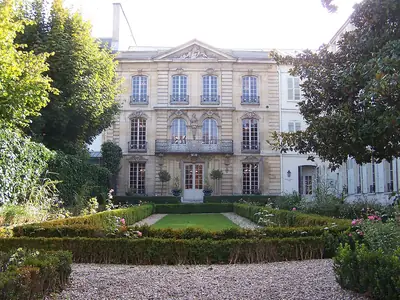
In the historic Notre-Dame quarter, the Musée Lambinet occupies an elegant eighteenth-century townhouse designed in 1751 by Élie Blanchard. The building was constructed on land once occupied by the Clagny lake, and its garden façade features a sculpted pediment topped by an allegorical figure of Architecture.
The museum opened in 1932 after the Lambinet family bequeathed the house to the town. Its 35 rooms are arranged in three sections. One presents European painting from the sixteenth to the twentieth century; another recreates an eighteenth-century apartment; and the third explores the history of Versailles.
Salle du Jeu de Paume
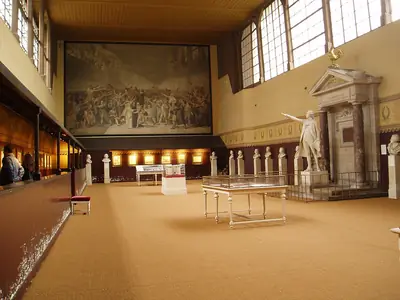
The Salle du Jeu de Paume was built in 1686 as an indoor court for jeu de paume, the royal household’s favourite ball game and an ancestor of modern tennis. Its historical importance, however, comes from the events of 20 June 1789.
After deputies of the Third Estate found their usual meeting hall closed, they gathered here and made the Tennis Court Oath. They pledged not to separate until France had a constitution, marking a decisive moment at the beginning of the Revolution.
Hôtel des Menus Plaisirs
At 22 avenue de Paris, the Hôtel des Menus Plaisirs hosted the final Estates General of the Ancien Régime in 1789. The Assembly of Notables had also met here in 1787 and 1788 to discuss the financial crisis affecting the monarchy.
The building’s façades have been classified as historic monuments since 1929, while the rest of the structure was listed in 1927. It stands among the places that connect Versailles directly to the political crisis that led to the Revolution.
Coach Gallery
The Coach Gallery occupies the Great Stable, the Grande Écurie, opposite the palace. Its collection focuses mainly on nineteenth-century carriages used by royalty and courtiers.
The vaulted setting is part of the experience: the stable was originally built to house the king’s horses and carriages. Until 2006, the museum was known as the Musée des Carrosses; it was later renamed the Galerie des Carrosses.
Maison de Madame Elisabeth
The eight-hectare estate of Madame Elisabeth offers a quieter setting away from the main palace. Louis XVI bought the property in 1783 and gave it to his younger sister, Princess Elisabeth of France, who was 19 at the time.
The house includes a planned bedroom, a Turkish salon and a harpsichord room. Its park follows the Anglo-Chinese style, with winding paths, wooded areas, a decorative cave and carefully framed views.
Monument Pershing–Lafayette
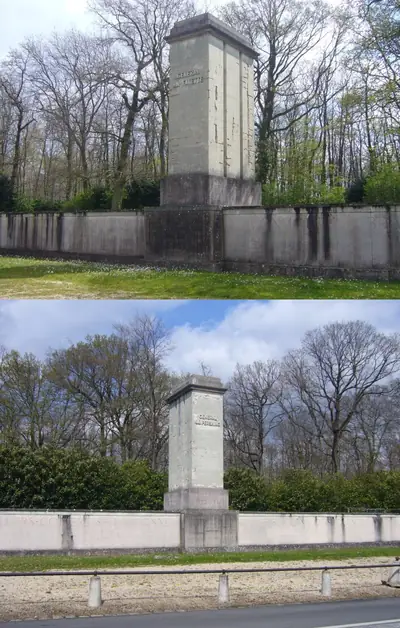
The Pershing–Lafayette Monument commemorates two chapters of shared French-American history: the American forces who fought in the First World War and the army involved in the American War of Independence. Located on the heights of Versailles, it reflects the long historical connection between France and the United States.
Hôtel des Réservoirs
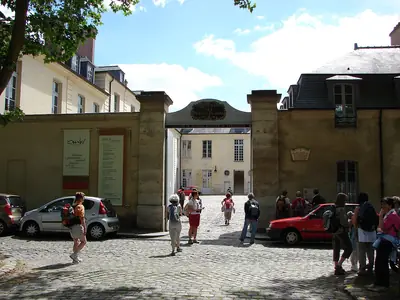
The Hôtel des Réservoirs takes its name from the large reservoirs beside the palace gardens, which supplied the famous fountains. It began as a private mansion and was later joined to the neighbouring Hôtel du Garde-Meuble before becoming a luxury hotel in the 1870s.
The French state purchased the building in 1934. It has since housed departmental architecture and heritage services, official accommodation and, from 2006, the European School of Economic Intelligence.
Explore Versailles with a self-guided audio tour
A Versailles self-guided walking tour with Neywo lets you explore the city while hearing its history at the places where it happened. The app has four walking tours, one bus route and one bike route:
- The Sun King’s Palace: From the Forecourt to the Royal Opera — 0.93 km, 48 minutes and 6 narrated stops.
- Fountains, Gods and Frogs: the Gardens of the Sun King — 1.44 km, 50 minutes and 7 stops.
- Marie-Antoinette’s Escape: the Trianon Estate — 1.61 km, 66 minutes and 7 stops.
- Royal Town, Revolution Town: Notre-Dame and the Tennis Court Oath — 2.5 km, 79 minutes and 7 stops.
- Bus 6202: Through the Notre-Dame Quarter and Saint-Louis — 6.5 km, 28 minutes and 8 stops.
- Versailles Park by Bike: Apollo Basin and the Trianons — 1.3 km, 6 minutes and 3 stops.
Neywo has 114 narrated places in Versailles, with narration available in 11 languages. The app tells the story of each place as you reach it, at your own pace, with no group and no schedule.
Download Neywo and discover Versailles
Download Neywo to explore the Palace of Versailles, its gardens, the Trianon estate and the historic town with a free audio guide. If you are extending your trip, you can also continue through Île-de-France, visit Paris, or discover Auvers-sur-Oise nearby.
Places with an audio guide in Versailles
8 places in Versailles with a Neywo audio guide. Each one starts telling its story as you reach it.
Self-guided tours in Versailles
6 tours in Versailles, free in the Neywo app. Each stop tells its story as you reach it.
- Bike ride
Versailles Park by Bike: Apollo Basin and the Trianons
Rent a bike at Petite Venise and ride the park avenues from the head of the Grand Canal to the Grand Trianon and the Petit Trianon. Bikes are allowed in the park but not in the formal gardens or the Trianon grounds, so lock up at the racks and walk in.
Bassin d'Apollon · Grand Trianon · Château du Petit Trianon
Open this tour: Versailles Park by Bike: Apollo Basin and the Trianons - Bus ride
Bus 6202: Through the Notre-Dame Quarter and Saint-Louis
A frequent city line that runs from north of the old town through the Notre-Dame market quarter and past the churches of Saint-Louis and Sainte-Élisabeth to Porchefontaine. A cheap way to see the Versailles the court left behind, away from the palace crowds.
Place de la Loi · Church of Notre-Dame, Versailles · Place du Marché Notre-Dame · Place du Maréchal Lyautey · Place des Françines · Église Sainte-Élisabeth de Versailles …
Open this tour: Bus 6202: Through the Notre-Dame Quarter and Saint-Louis - Walk
The Sun King's Palace: From the Forecourt to the Royal Opera
Start on the Place d'Armes, where Louis XIV's bronze rides towards the gates of his hunting lodge turned seat of power. Step inside for the king's private apartment, the 120-metre Gallery of Battles, the royal chapel where Marie-Antoinette was married and the opera house built for her wedding.
Equestrian Statue of Louis XIV · Palace of Versailles · Appartement du roi · Galerie des Batailles · Chapel of Versailles Palace · Opéra royal de Versailles
Open this tour: The Sun King's Palace: From the Forecourt to the Royal Opera - Walk
Fountains, Gods and Frogs: the Gardens of the Sun King
Le Nôtre laid out the gardens as a story about Apollo, the sun god who stood for Louis XIV. Walk from the terrace vases past Latona and her frogs, the Mirror and the gilded Saturn, to the sun god's chariot rising out of its basin at the head of the Grand Canal.
Vase de la Paix · Latona Fountain · Bosquet des Rocailles · Bassin du Miroir · Bassin de Saturne, ou de l'Hiver · Bosquet de la Colonnade …
Open this tour: Fountains, Gods and Frogs: the Gardens of the Sun King - Walk
Marie-Antoinette's Escape: the Trianon Estate
Louis XIV built the pink marble Grand Trianon to escape court etiquette, and Marie-Antoinette took the idea further. Wander from the Grand Trianon to the Petit Trianon, her private theatre, the Belvédère and the Temple of Love, and end at the thatched cottages of the Queen's Hamlet.
Grand Trianon · Pavillon frais · Château du Petit Trianon · Théâtre de la Reine · Belvédère du Petit Trianon · Temple de l'Amour …
Open this tour: Marie-Antoinette's Escape: the Trianon Estate - Walk
Royal Town, Revolution Town: Notre-Dame and the Tennis Court Oath
Versailles was built as a town for the court. Visit Madame de Pompadour's mansion, the Italian theatre and the parish church of Notre-Dame, then see the royal stables and the real tennis court where the deputies swore the Tennis Court Oath in 1789. Finish at the king's kitchen garden.
Hôtel des Réservoirs · Théâtre Montansier · Church of Notre-Dame, Versailles · Musée Lambinet · Grande Écurie · Salle du Jeu de Paume …
Open this tour: Royal Town, Revolution Town: Notre-Dame and the Tennis Court Oath
Walk Versailles with Neywo
Neywo turns Versailles into a self-guided audio tour. Stories arrive as you reach the place they belong to, and the route reshapes when you wander off it.

