Visiting Bayonne, France: Top Sights on Foot
Things to do in Bayonne
Bayonne is a historic city in the Nouvelle‑Aquitaine region of southwestern France, where the Nive and Adour rivers meet and French and Basque traditions blend. Its compact centre invites wandering past medieval fortifications, elegant mansions, museums that house Renaissance drawings and Basque ethnography, and a synagogue that preserves a centuries‑old ark. Neywo offers a free audio guide for Bayonne with 37 narrated places, letting you hear the story of each site as you walk at your own pace.
Explore Bayonne’s historic sites
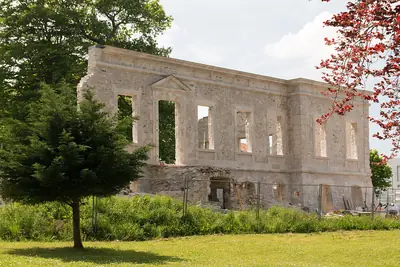
Château de Marracq
The romantic ruins you see today are the remains of an eighteenth‑century castle built for Mariana de Neoburgo, widowed queen of Spain. In 1808 Napoleon Bonaparte stayed here with Empress Josephine, and the Spanish Bourbons signed their abdications in these rooms, handing the throne to Joseph Bonaparte. After a fire in 1825 only the two grand gate arches survived; a major restoration completed by 2012 repaired the walls and replaced damaged stones.
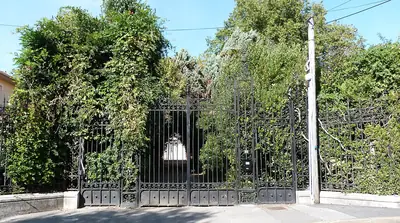
Château du Vigneau
Situated along the chemin de Laharie, this former wine estate was destroyed during the 1814 siege of Bayonne, rebuilt in 1848, and given its present form in 1918 by architect Gómez. The whole property has been a protected historical monument since 2009, including its distinctive railings and entrance portal.
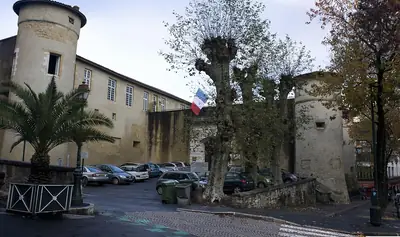
Château‑Vieux
Known in Basque as Gaztelu Zaharra, this medieval fortress overlooks the Grand Bayonne district from Jacques Portes plaza. Over the centuries it has been rebuilt many times, each reconstruction adding a new layer to its story.
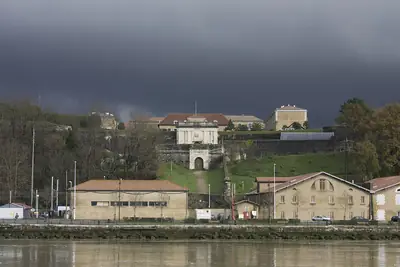
Citadelle de Bayonne
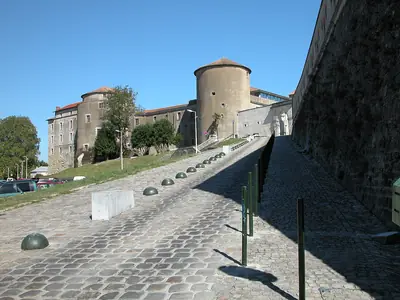
Perched on a hill above the Adour River, the citadel was designed by Vauban in 1680 for Louis XIV and finished before the century’s end. For generations it was simply called La Citadelle; in September 1999 it was renamed the Citadelle Général Georges Bergé to honour a distinguished French general.
Château Neuf
Also called Castillo Nuevo, this castle stands in the Petit Bayonne district, the capital of Labourd. It is a notable landmark while exploring the southern part of the city.
Musée Bonnat‑Helleu
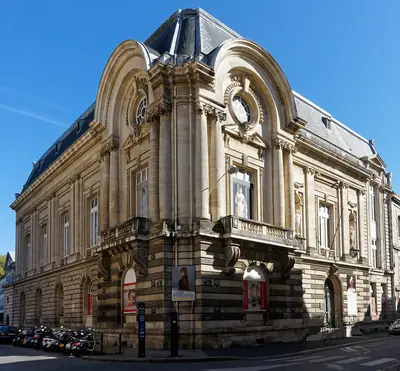
After fourteen years of closure and a twenty‑nine‑million‑euro renovation, the museum reopened in late 2025 with double its exhibition space. Its drawing collection ranks among the largest in the region and, alongside the Louvre, is the only place in France where you can see original sketches by Leonardo da Vinci, Michelangelo, and Raphael. The reopened galleries follow the motto l’Art d’encore plus près — art, even closer — and display around seven thousand works spanning painting, sculpture and graphic arts.
Basque Museum in Bayonne
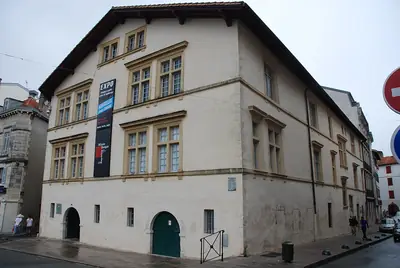
Located on the Quai des Corsaires in Petit Bayonne, the museum has been telling the story of Basque culture since 1924. Housed in the sixteenth‑century Maison Dagourette (Agorreta etxea in Basque), a classified historic monument, it displays tools, domestic arts, traditional paintings, games and dances that trace Basque identity from protohistory to the present. Its library remains a resource for researchers, and the building is managed by a partnership between the city, the Côte Basque‑Adour agglomeration and other local bodies.
Galerie des Corsaires
This is Maison Lapeyre, a beautifully preserved sixteenth‑century house on Coursic Street. Recognised as a historic monument in December 2006, it is one of the older residential structures still standing in Bayonne.
Hôtel de Belzunce
Tucked into the old town’s streets, this historic private mansion dates from the late sixteenth or early seventeenth century. Tradition holds that it was the town palace of the Beltzuntze family.
Maison Saubist
A historic house in Bayonne, noted for its age and traditional construction, though the source notes give no further detail.
Ancienne abbaye Saint‑Bernard de Bayonne
The site of the former Abbey of Saint‑Bernard once housed a community of Cistercian nuns. Though the monastery has been deconsecrated and abandoned, the name survives in the neighbourhood that grew up around it.
Carmel de Bayonne
A monastery situated in the Pyrénées‑Atlantiques region, it continues the religious presence that has long been part of the city’s landscape.
La Plane Manor House
Built in the seventeenth century for Jean de Roll‑Montpellier, who served as a jurat — a municipal magistrate — of Bayonne, this manor exemplifies the residential architecture of the period.
Musée du judaïsme bayonnais Suzanne et Marcel Suarès
The synagogue on Rue Maubec, erected between 1836 and 1837, replaced an earlier house of worship destroyed during the French Revolution. It preserves the holy ark from the original synagogue, linking today’s worshippers with earlier generations. Built on a basilica plan with a neoclassical façade, it became a historic monument in 1995 and received full classification in 2012.
ТРИЗУБ (Tryzub)
In Bayonne you can see a work known as the Tryzub — the Ukrainian word for trident. The artist is recognised for large‑scale murals composed of bold, interlocking geometric patterns.
Discover Bayonne with Neywo
Neywo’s audio guide turns a simple walk into a self‑guided tour. In Bayonne you can choose from two walking routes, one bus line and one bike route:
- Bayonne in Twelve Stops: Two Rivers, Three Cultures – 2.24 km, 98 minutes, 12 stops including Château‑Vieux, Musée Bonnat‑Helleu, the Basque Museum and Château Neuf.
- North of the Adour: Vauban’s Citadelle, a Synagogue and Chocolate – 3.77 km, 87 minutes, 6 stops covering the Citadelle, the synagogue, Saint‑Étienne church and the Bayonne Chocolate Museum.
- Bus 114 from Château du Vigneau to the Ruins of Marracq – 7.8 km, 33 minutes, 4 stops linking the château, the synagogue, the town hall and theatre, and the Marracq ruins.
- Bayonne by Bike: Station to Porte de Mousserolles – 1.3 km, 6 minutes, 4 stops passing Saint‑Esprit church, the town hall and theatre, the Musée Bonnat‑Helleu and the Porte de Mousserolles.
Each story plays automatically when you reach the location, allowing you to explore at your own pace with no group and no schedule. Narration is available in 11 languages, so you can enjoy the guide in the language that suits you best.
Ready to explore?
If you’re looking for what to see in Bayonne, a self‑guided walking tour or a free audio guide, Neywo puts the city’s stories in your pocket. Download the app, select a tour, and let Bayonne reveal its layers of history, art and flavour as you stroll through its streets.
For more on the surrounding area, see the Nouvelle‑Aquitaine region, the country of France, or nearby destinations such as Biarritz and Bordeaux.
Places with an audio guide in Bayonne
8 places in Bayonne with a Neywo audio guide. Each one starts telling its story as you reach it.
Self-guided tours in Bayonne
4 tours in Bayonne, free in the Neywo app. Each stop tells its story as you reach it.
- Bike ride
Bayonne by Bike: Station to Porte de Mousserolles
A short, flat ride on the cycle lanes of the quays. Start at the Église Saint-Esprit by the station, cross towards the Hôtel de Ville on Place de la Liberté, then roll along the Nive to the Musée Bonnat-Helleu and the Porte de Mousserolles, one of the old town gates.
Église Saint-Esprit (Bayonne) · Town Hall and Theatre of Bayonne · Musée Bonnat-Helleu · Porte de Mousserolles
Open this tour: Bayonne by Bike: Station to Porte de Mousserolles - Bus ride
Bus 114 from Château du Vigneau to the Ruins of Marracq
Line 114 of the Bayonne network runs from the northern edge of town through the Saint-Esprit district and the old centre to the south. Ride it past the Château du Vigneau, the neoclassical synagogue of 1836-37, the Hôtel de Ville on Place de la Liberté and, at the end, the romantic ruins of the Château de Marracq. A cheap way to see Bayonne beyond the walls.
Château du Vigneau · Musée du judaïsme bayonnais Suzanne et Marcel Suarès · Town Hall and Theatre of Bayonne · Château de Marracq
Open this tour: Bus 114 from Château du Vigneau to the Ruins of Marracq - Walk
Bayonne in Twelve Stops: Two Rivers, Three Cultures
Walk from the Old Castle through the lanes and squares of Grand Bayonne to the town hall on Place de la Liberté, then cross the Nive by the Mayou Bridge into Petit Bayonne. There you find the Bonnat-Helleu fine arts museum, a C215 stencil portrait, the Basque Museum in a 16th-century mansion, and Château Neuf. Basque, Gascon and Jewish Bayonne meet along the way.
Château-Vieux · Place Louis-Pasteur · Place des Victoires · Place des 5 Cantons · Place de la Liberté · Town Hall and Theatre of Bayonne …
Open this tour: Bayonne in Twelve Stops: Two Rivers, Three Cultures - Walk
North of the Adour: Vauban's Citadelle, a Synagogue and Chocolate
Cross the Adour to Bayonne's quieter northern districts. Start at Vauban's 17th-century Citadelle, pass the neoclassical synagogue and the Saint-Esprit church by the station, walk on to the neighbourhood churches of Saint-Étienne and Sainte-Croix, and end at the chocolate factory museum where Bayonne's famous chocolate is still made.
Citadelle de Bayonne · Église Saint-Esprit (Bayonne) · Musée du judaïsme bayonnais Suzanne et Marcel Suarès · Église Saint-Étienne de Bayonne · Église paroissiale Sainte-Croix (Bayonne) · Bayonne Chocolate Museum
Open this tour: North of the Adour: Vauban's Citadelle, a Synagogue and Chocolate
Walk Bayonne with Neywo
Neywo turns Bayonne into a self-guided audio tour. Stories arrive as you reach the place they belong to, and the route reshapes when you wander off it.

