What to See in Bordeaux, France: Free Audio Guide
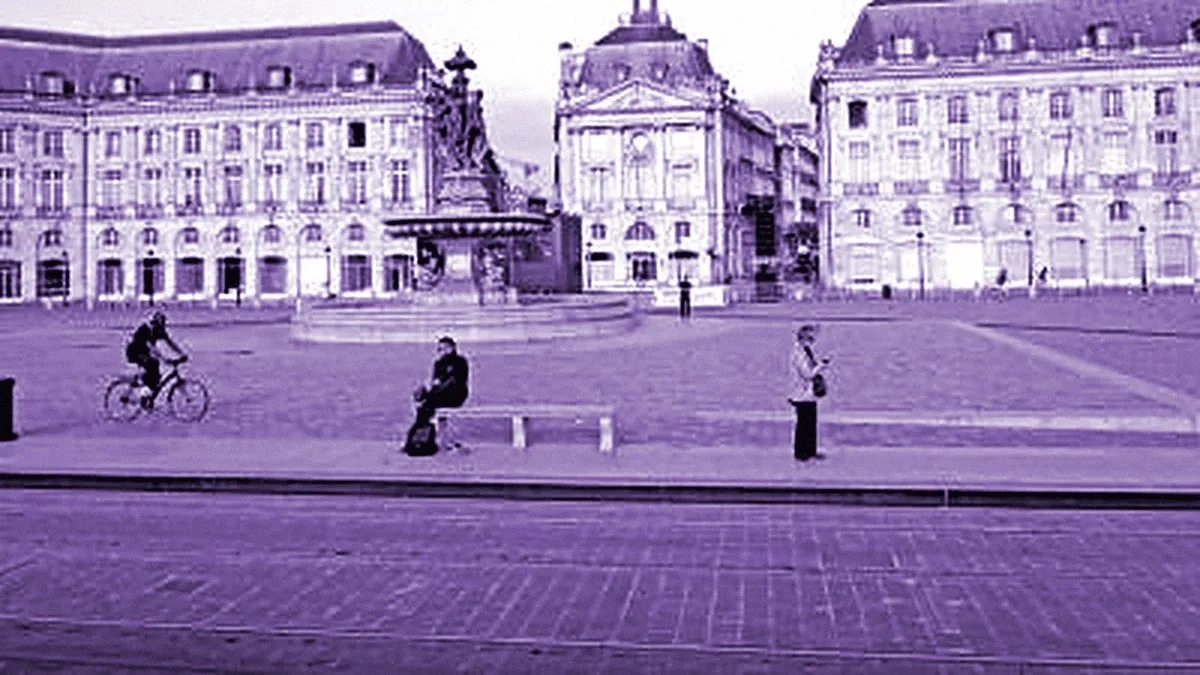
Things to Do in Bordeaux: What to See in the Historic City Centre
Bordeaux is a city of Gothic churches, monumental gates, elegant civic buildings and reminders of its maritime history. Its historic centre brings together centuries of architecture, from the Cathedral of Saint-André and the Porte Cailhau to the Grosse Cloche and the Basilica of St. Michael. Neywo has a free audio guide for Bordeaux with 62 narrated places, so you can discover the city as you walk.
Part of Nouvelle-Aquitaine in southwestern France, Bordeaux is particularly rewarding on foot. Its landmarks are spread through a series of squares, streets and historic districts, making a self-guided visit a natural way to explore.
What to see in Bordeaux
Bordeaux Cathedral and Tour Pey-Berland
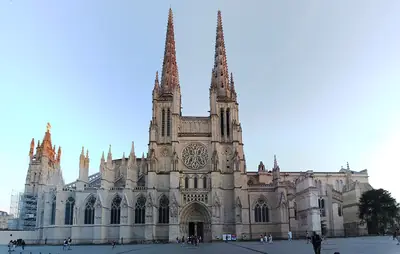
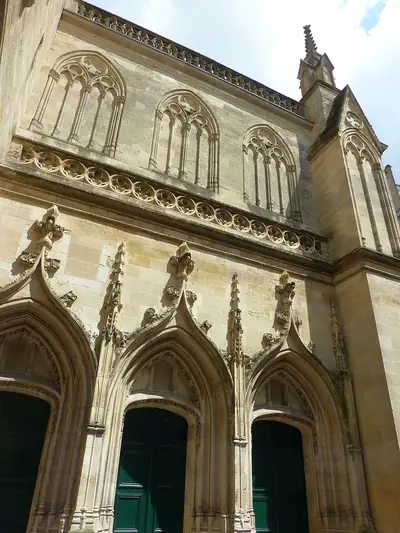
The Cathedral of Saint-André stands on Pey-Berland Square and is one of Bordeaux’s most imposing religious buildings. Construction began in 1096, and the structure was developed and rebuilt in Gothic style between the 12th and 16th centuries. The Royal Gate, dating from the early 13th century, is one of its most detailed features.
The cathedral’s two towers rise to 81 metres and shape the city skyline. It also has an important place in royal history: in 1137, it hosted the marriage of Aliénor d’Aquitaine, who was then fifteen years old.
Beside the cathedral, the separate Tour Pey-Berland was commissioned by Archbishop Pey Berland and built between 1440 and 1500. Its independent position protected the cathedral from the vibrations of the bells and allowed it to house bells that were too heavy for the main building. The Gothic tower rises to 66 metres, and its summit can be reached by climbing 233 steps for panoramic views of Bordeaux.
Palais Rohan
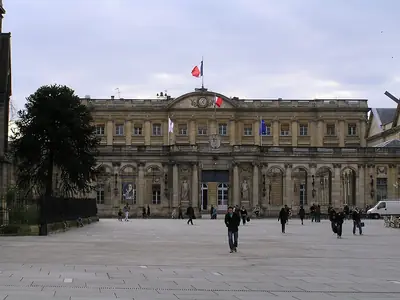
The Palais Rohan is Bordeaux’s City Hall and stands in the city’s civic quarter, close to the cathedral. Its construction began in 1771 under Archbishop Ferdinand Maximilien Meriadec de Rohan and was completed in 1784.
The building has held several roles. It was first the Archbishop’s Palace, then became the seat of the revolutionary tribunal in 1791, a prefecture in 1800, an imperial palace under Napoleon I in 1808 and a royal palace under Louis XVIII in 1815. Since 1835, it has been Bordeaux’s town hall.
Its interior reflects the elaborate Bordelais style, with sculpted woodwork, trompe-l’oeil paintings by Lacour and a grand central staircase.
Museum of Decorative Arts of Bordeaux
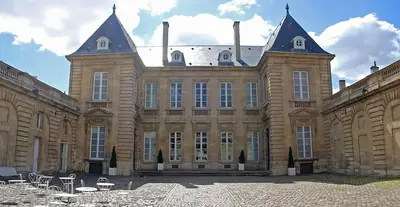
The Museum of Decorative Arts of Bordeaux occupies the Hôtel de Lalande, an elegant 18th-century aristocratic mansion. Its collections focus on decorative arts and furniture, particularly from the 18th and 19th centuries, with a strong connection to Bordeaux.
The exhibits include furniture, ceramics, glassware, silverwork, port-related furnishings, musical and measuring instruments, miniatures and tableware. The museum has also developed a programme connecting decorative arts with design, and its permanent exhibitions include Art Deco and Art Nouveau.
Grosse Cloche and Église Saint-Éloi
The Grosse Cloche, or Big Bell, is one of Bordeaux’s best-known medieval landmarks. The gate and its towers once formed part of the city’s defensive and civic structure. Over time, the building became both a belfry and a town hall.
Its architecture combines Gothic and Renaissance influences. Two octagonal towers are joined by a central archway, above which Bordeaux’s coat of arms is displayed. The bell itself was cast in 1775 and weighs 7,800 kilograms.
Next to the gate is Église Saint-Éloi, the historic church of the Jurade de Bordeaux. Together, the church and the Grosse Cloche form one of the city’s most distinctive historic ensembles.
Porte Cailhau
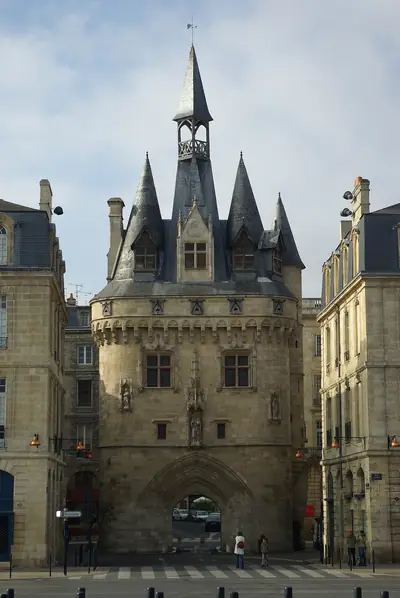
The Porte Cailhau, also known as the Porte du Palais, was built as a monumental entrance to Bordeaux in the late 15th century. It commemorated King Charles VIII’s victory at the Battle of Fornovo and combined the functions of a defensive gate and a triumphal arch.
Its pointed turrets and detailed carvings blend Gothic and Renaissance elements. A niche in the façade contains a representation of the king. The name “Cailhau” is believed to come from the Gascon word for pebbles, possibly referring to ballast stones used by ships docking nearby.
Porte Dijeaux
Porte Dijeaux is another historic gateway, with origins reaching back to the Roman city of Burdigala. It is also known as Porte Jupiter, from the Latin Porta Jovis. The name gradually became “Dijeaux” in the local dialect.
The present gate was designed by architect André Portier and built between 1748 and 1750. It has been protected as a historic monument since 2 June 1921.
Basilica of St. Michael
The Basilica of St. Michael is one of Bordeaux’s most striking landmarks. Built between the 14th and 16th centuries, it is a major example of Flamboyant Gothic architecture.
Like Bordeaux Cathedral, the basilica has a separate bell tower. Its campanile rises to 114 metres, making it the highest in the south of France and one of the tallest structures in the country. A preserved crypt at the base of the tower was originally used as an ossuary and later became an exhibition space for mummies exhumed during the development of Place Meynard.
The basilica was classified as a historic monument in 1846 and became a minor basilica in 1903.
Place des Quinconces and the Monument aux Girondins
Place des Quinconces is home to the Monument aux Girondins, built between 1894 and 1901 in memory of Girondin deputies who were victims of the Reign of Terror during the French Revolution.
A tall column rises above the monument, crowned by a statue of Liberty breaking free from her chains. At its base, allegorical figures and bronze sculptures decorate the fountains and basins. The monument was damaged during the Second World War, and the metal figures at its foot were removed to be melted down. They were recovered after the German occupation and returned to the monument in 1983.
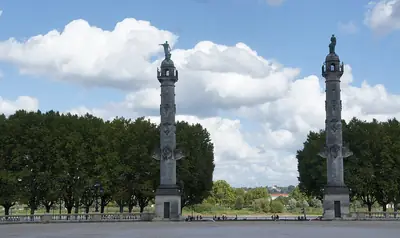
The square also features Bordeaux’s rostral columns, monuments connected with navigation and trade. The northern column is associated with the Statue de la Navigation, Artemis, while the southern column is linked with the Statue du Commerce, Mercure.
CAPC musée d’art contemporain de Bordeaux
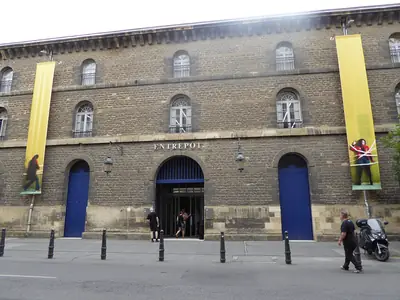
In the Chartrons district, the CAPC musée d’art contemporain de Bordeaux occupies the former Entrepôt Lainé. The museum opened in 1984 and is dedicated to contemporary and conceptual art.
The building’s history is also significant. The Entrepôt Lainé was originally intended to receive goods produced by enslaved people in colonial plantation settings. This context forms part of the building’s story as visitors encounter its contemporary collections.
Other historic places to find
Bordeaux’s streets contain many more landmarks worth adding to a walk:
- Porte de Bourgogne, a striking triumphal arch protected as a historic monument since 2 June 1921.
- Porte de la Monnaie, one of the city’s historic gates.
- Château Labottière, also known as the hôtel Labottière or Maison Tivoli, an 18th-century private townhouse created in 1773 for Jacques and Antoine Labottière and designed by the architects Laclotte.
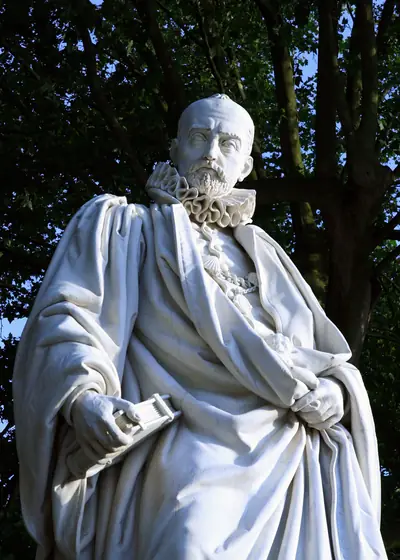
- The Montaigne statue, a tribute to one of Bordeaux’s best-known thinkers.
- Porte Dijeaux, which connects the modern city with the site of the Roman Porta Jovis.
- The Garonne riverfront, where the city’s maritime and trading identity remains visible through its monuments and historic quays.
A Bordeaux self-guided walking tour with Neywo
Neywo offers six walking tours in Bordeaux, including routes through the cathedral quarter, the southern gates, Place de la Bourse, Saint-Michel and the Jardin Public. The walks range from 0.68 to 5.22 km and from 36 to 185 minutes, with between 5 and 15 narrated stops.
There is also one 3.2-km bus route lasting 14 minutes, with 4 narrated stops, and one 4-km bike route lasting 20 minutes, with 7 stops. The app’s narration is available in 11 languages.
Download Neywo and explore Bordeaux at your own pace. The app tells the story of each place as you reach it, with no group and no schedule.
Places with an audio guide in Bordeaux
8 places in Bordeaux with a Neywo audio guide. Each one starts telling its story as you reach it.
Self-guided tours in Bordeaux
8 tours in Bordeaux, free in the Neywo app. Each stop tells its story as you reach it.
- Bike ride
Along the Garonne Quays by Bike
Cycle the flat riverside path that turned Bordeaux's old docks into its favourite promenade. Start at the Cap Sciences science centre, pass the contemporary art museum in its former warehouse, the rostral columns and the Water Mirror, and finish at the medieval gates of Porte de Bourgogne and Porte de la Monnaie.
Cap Sciences · CAPC musée d'art contemporain de Bordeaux · Rostral columns in Bordeaux · Miroir d'eau · Porte Cailhau · Porte de Bourgogne …
Open this tour: Along the Garonne Quays by Bike - Bus ride
Lianes 15: From the Capucins Market to the Garonne Quays
TBM's Lianes 15 is one of Bordeaux's main trunk lines and cuts straight through the city from south to north. Ride it from the Marché des Capucins, the city's biggest food market, past the Porte d'Aquitaine and the Fine Arts Museum to the Hôtel de la Marine near the quays.
Marché des Capucins · Porte d'Aquitaine · Musée des Beaux-Arts de Bordeaux · Hôtel de la marine (Bordeaux)
Open this tour: Lianes 15: From the Capucins Market to the Garonne Quays - Walk
Quinconces, the Grand Théâtre and the port of the Moon
The eighteenth-century river frontage that made Bordeaux rich, from the contemporary art museum in the old colonial warehouse along the quays to the Girondins monument and Victor Louis's colonnaded theatre.
CAPC musée d'art contemporain de Bordeaux · Port of the Moon · Rostral columns in Bordeaux · Statue de Montesquieu · Place des Quinconces · Montaigne …
Open this tour: Quinconces, the Grand Théâtre and the port of the Moon - Walk
Saint-Michel and the southern gates
The other Bordeaux — the working quarter around the Saint-Michel basilica and its detached bell tower, the surviving medieval gates, the synagogue, and both bridges: Eiffel's iron railway crossing and the stone one Napoleon ordered.
Passerelle Eiffel · Church of the Holy Cross · Porte de la monnaie · Basilica of St. Michael, Bordeaux · Chapelle du Saint-Cœur-de-Marie · Porte d'Aquitaine …
Open this tour: Saint-Michel and the southern gates - Walk
The cathedral, Pey-Berland and the fine arts museum
Around the archbishop's palace, now the town hall, with the cathedral where Eleanor of Aquitaine married the future Louis VII, its freestanding bell tower, and three museums — fine arts, decorative arts and Aquitaine — in the streets behind.
Musée des Beaux-Arts de Bordeaux · Palais Rohan, Bordeaux · Museum of Decorative Arts of Bordeaux · Center Jean Moulin · Bordeaux Cathedral · Tour Pey-Berland …
Open this tour: The cathedral, Pey-Berland and the fine arts museum - Walk
Place de la Bourse and the water mirror
A kilometre of Bordeaux at its most photographed: the Bourse facades reflected in two centimetres of water, the medieval Porte Cailhau, the customs house, and the arcaded Place du Parlement behind.
Porte Cailhau · Église Saint-Pierre de Bordeaux · Hôtel des Douanes · Miroir d'eau · Place de la Bourse · Église Saint-Rémi (Bordeaux) …
Open this tour: Place de la Bourse and the water mirror - Walk
The Jardin Public and the Palais Gallien
A short walk in the public garden — botanical beds, the natural history museum, an eighteenth-century mansion — ending at the surviving arches of the Roman amphitheatre stranded in a residential street.
Jardin public · Jardin botanique du Jardin Public · Muséum d'histoire naturelle de Bordeaux · Hôtel Lisleferme · Palais Gallien
Open this tour: The Jardin Public and the Palais Gallien - Walk
The Ultimate Bordeaux: the water mirror to Saint-Michel
Three and a half kilometres of the UNESCO-listed centre: Place de la Bourse, the Grand Théâtre, the cathedral and Pey-Berland tower, then south to the great bell and the Saint-Michel quarter.
Hôtel des Douanes · Place de la Bourse · Église Saint-Rémi (Bordeaux) · Grand Théâtre de Bordeaux · Église Notre-Dame de Bordeaux · Porte Dijeaux …
Open this tour: The Ultimate Bordeaux: the water mirror to Saint-Michel
Walk Bordeaux with Neywo
Neywo turns Bordeaux into a self-guided audio tour. Stories arrive as you reach the place they belong to, and the route reshapes when you wander off it.

