Things to Do in Hampi, India: Walking Guide
Things to Do in Hampi: Ruins, Temples and the Lost Capital of Vijayanagara
Hampi is a historic city in Karnataka, India, where vast ruins meet granite boulders, rocky hills and the Tungabhadra River. Once the capital of the Vijayanagara Empire, it is now a UNESCO World Heritage Site filled with temples, royal buildings, sacred spaces and the remains of a major medieval city. Neywo has a free Hampi audio guide with 10 narrated places, available in 11 languages.
What to See in Hampi
The best things to do in Hampi are spread across an extensive archaeological landscape. The ruins include a sacred centre, a royal centre, riverside structures, temples, shrines, pillared halls and water structures. More than 1,600 surviving remains reveal the scale and variety of the former capital.
Virupaksha Temple
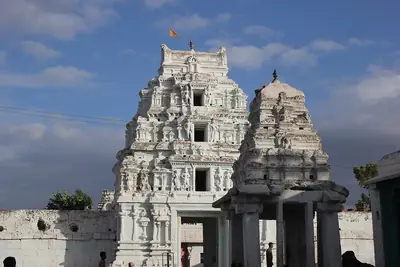
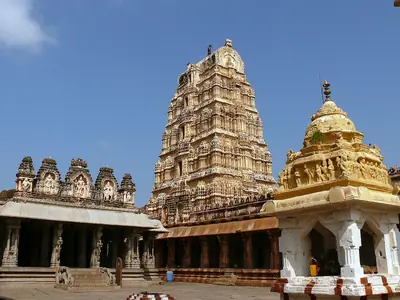
Virupaksha Temple is Hampi’s main pilgrimage centre and remains an active place of worship. Dedicated to Virupaksha, a form of Shiva, the temple stands beside the Tungabhadra River and has origins reaching back to the seventh century.
Its importance grew during the Vijayanagara Empire, when it was expanded by Lakkan Dandesha, a chieftain serving Deva Raya the Second, also known as Prauda Deva Raya. The temple is also connected with Virupaksha, or Pampapati, the revered deity of the Vijayanagara Empire.
The Ruins of Vijayanagara
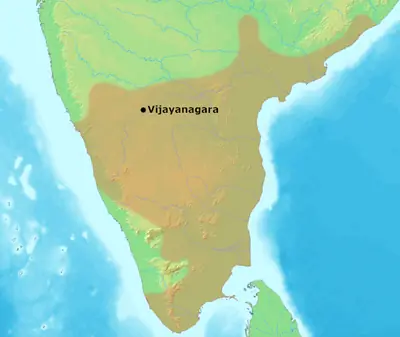
Hampi preserves the remains of Vijayanagara, the capital of the powerful Vijayanagara Empire. Founded in 1336 by the brothers Harihara I and Bukka Raya I of the Sangama dynasty, the empire ruled much of southern India and reached its peak in the early sixteenth century under Krishnadevaraya.
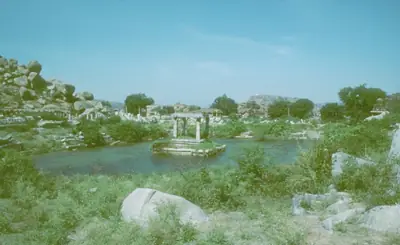
The city stood beside the Tungabhadra River, whose gorge formed a natural defensive barrier among the surrounding boulders and rocky hills. Its remains include both royal and sacred areas, as well as monuments connected with the older settlement of Hampi.
From 1336 to 1565, the city developed into a major centre of religion, commerce and political power. Accounts by Persian and European travellers describe temples, farms and busy trading markets. After the defeat of Vijayanagara’s forces in 1565, the capital was conquered, pillaged and abandoned. The ruins that remain today preserve the memory of that lost city.
Lotus Mahal Pavilion
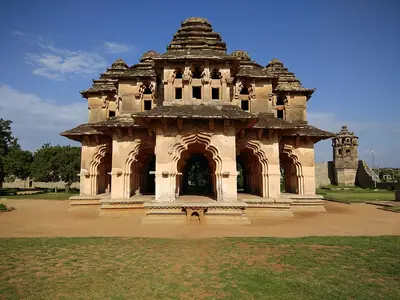
The Lotus Mahal Pavilion, also known as Chitrangini Mahal, is one of Hampi’s notable secular buildings. This two-storey structure was built in rubble masonry and finished with finely applied plaster, giving it a distinctive appearance within the royal centre.
The pavilion served as a residence for the royal family of the Vijayanagara Empire. Unlike the city’s many religious monuments, it offers a glimpse of the architectural world associated with courtly and domestic life.
Hazara Rama Temple
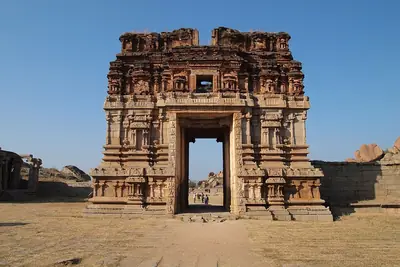
Hazara Rama Temple, also known as Hazararama Temple, is one of the named historic monuments within Hampi’s archaeological landscape. It forms part of the remains that show how sacred buildings were integrated into the larger city of Vijayanagara.
Achyutaraya Temple
Achyutaraya Temple is another historic place of worship among Hampi’s monuments. Its ruins form part of the extensive collection of temples and structures spread through the former capital.
Vitthala Temple
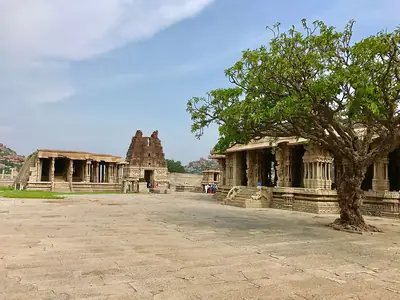
Vitthala Temple, also known as the Vijaya Vittala Temple, is one of Hampi’s largest and most famous monuments. The fifteenth-century complex belongs to the Vishnu tradition and is dedicated to Vitthala, a form of Krishna. It stands in the northeastern part of Hampi, near the Tungabhadra River.
The temple is best known for its stone chariot, a hall built in the form of a chariot and carved from stone. The complex is also celebrated for its musical pillars, which demonstrate the remarkable craftsmanship of its builders. Together, the architecture, carvings, chariot and pillars make Vitthala Temple one of the principal places to see in Hampi.
Mosque in Dannaik’s Enclosure
The Mosque in Dannaik’s Enclosure is one of the named monuments included within Hampi’s historic site. Its presence adds another layer to the architectural and cultural variety of the former capital.
Hampi’s Landscape and History
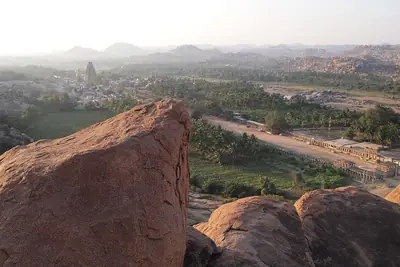
The landscape is an essential part of the experience. Large granite boulders and rocky hills surround the ruins, while the Tungabhadra River passes through a gorge near the city. The natural setting helped protect Vijayanagara and now gives the archaeological site its distinctive character.
Hampi covered roughly 4,100 hectares, and its remains extend across a landscape that once supported temples, farms, royal complexes and trading areas. Walking between the monuments makes it possible to see how the city’s religious, political and everyday spaces were connected.
Hampi forms part of the wider heritage of India, while its history is closely tied to the development of southern India. It can also be combined with visits to other destinations in the region, including Mysore, Bangalore or Vijayapura.
Explore Hampi with Neywo
Download Neywo and discover Hampi with a self-guided walking tour: “Hampi: Walking the Lost Capital of Vijayanagara” covers 6.11 km in 117 minutes and includes 6 narrated stops. The route features Virupaksha Temple, Vijayanagara, Lotus Mahal Pavilion, Hampi, Achyutaraya Temple and Vitthala Temple.
Neywo’s free Hampi audio guide includes 10 narrated places. Each story plays as you reach the place, at your own pace, with no group and no schedule.
Places with an audio guide in Hampi
8 places in Hampi with a Neywo audio guide. Each one starts telling its story as you reach it.
Self-guided tours in Hampi
1 tour in Hampi, free in the Neywo app. Each stop tells its story as you reach it.
- Walk
Hampi: Walking the Lost Capital of Vijayanagara
In the 16th century Hampi was probably the richest city in India. Start at the living Virupaksha Temple, cross the boulder-strewn heartland of the Vijayanagara Empire to the royal Lotus Mahal, and follow the Tungabhadra to the Achyutaraya Temple and the famous stone chariot of Vitthala. Bring water and a hat: the monuments are spread across a vast landscape.
Virupaksha Temple · Vijayanagara · Lotus Mahal Pavilion · Hampi · Achyutaraya temple · Vitthala Temple, Hampi
Open this tour: Hampi: Walking the Lost Capital of Vijayanagara
Walk Hampi with Neywo
Neywo turns Hampi into a self-guided audio tour. Stories arrive as you reach the place they belong to, and the route reshapes when you wander off it.

