Mysore, India: Self-Guided Walking Tour
Things to Do in Mysore: Palaces, Museums and Royal Heritage
Mysore, also known as Mysuru, is a historic city in Karnataka celebrated for its palaces, royal traditions and cultural institutions. The former capital of the Kingdom of Mysore is worth visiting for its richly decorated architecture, museums, places of worship and stories connected with the Wadiyar dynasty. Neywo has a free audio guide for Mysore with 18 narrated places, available in 11 languages.
What to See in Mysore
Mysore Palace
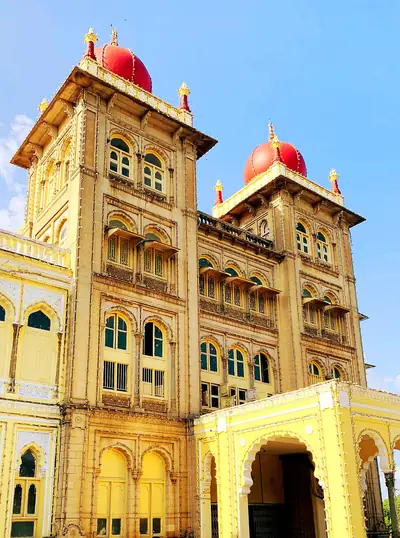
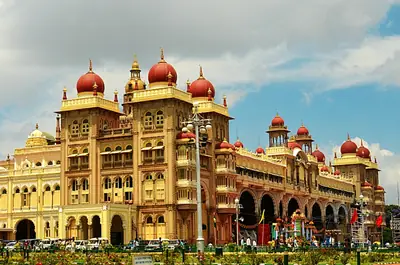
Mysore Palace, also known as Amba Vilas Palace, is the city’s defining landmark. It was once the home of the Wadiyar dynasty and the seat of the Kingdom of Mysore. The present building was commissioned by Krishnaraja Wodeyar IV after an earlier wooden palace was destroyed by fire in 1897. Construction began that year and was completed in 1912.
Designed by British architect Henry Irwin, with Edwin Wollaston Fritchley also associated with the project, the palace is a major example of Indo-Saracenic architecture. Its design brings together Indo-Islamic, Rajput, Hoysala and Gothic influences. The site has an even longer history: a small fort was recorded here in the late fourteenth century, and earlier palaces occupied the same ground.
Jaganmohan Palace
About 200 metres west of Mysore Palace, Jaganmohan Palace is a former royal residence that now contributes to the city’s artistic life. Built between 1856 and 1861, it was used by the royal family during construction and renovation work at their main palace. After the old Mysore Palace burned in 1897, the family lived here again.
The palace’s large wooden doors are carved with images of Vishnu’s ten avatars. The complex also includes the Sri Jayachamarajendra Art Gallery, widely known by the former name Jaganmohana Palace. Its Darbar Hall, or Kalyana Mantapa, has hosted concerts, plays, cultural activities and university ceremonies. Today, the palace serves as an arts museum and auditorium.
Lalitha Mahal
Near the Chamundi Hills, the white façade of Lalitha Mahal makes it one of Mysore’s most distinctive palaces. Built in 1921 by Maharaja Krishnaraja Wodeyar IV, it was created for the exclusive stay of the Governor-General of India and for the Maharaja’s important guests.
Its design was inspired by St Paul’s Cathedral in London. Inside, Italian marble floors and stairways, Belgian crystal chandeliers and Persian carpets preserve the atmosphere of a royal residence. The palace became a heritage hotel in 1974 and is now known as Lalitha Mahal Palace Hotel. It is the second-largest palace in Mysore after Mysore Palace.
Chittaranjan Palace
Chittaranjan Palace is a lesser-known royal residence, originally built for a princess of the Mysore royal family. Its present purpose gives the building an additional dimension: profits from the hotel are given to charity.
Parakala Mutt
Parakala Mutt is a Vaishnava monastery whose headquarters has been based in Mysore since its foundation. Established in 1268 during the Hoysala Empire, it is regarded as the first medieval monastery of the Vadakalai tradition within Vaishnavism.
The monastery primarily worships Vishnu and Lakshmi in the forms of Hayagriva and Vageesha. Its hereditary acharya remains connected to the Mysore royal family, and the mutt continues to oversee royal ceremonies. It is a place of worship and learning with a long-standing relationship to the city’s royal tradition.
St. Philomena’s Cathedral
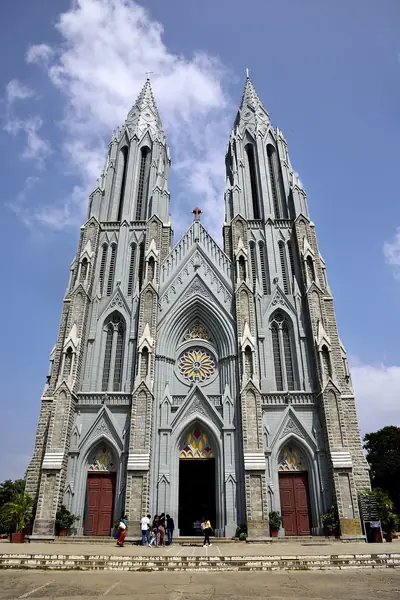
The Cathedral of St. Joseph and St. Philomena, also known as St. Joseph’s Cathedral, is one of Mysore’s most recognizable places of worship. Its Neo-Gothic form and tall towers were inspired by Cologne Cathedral in Germany, giving the building a striking profile.
The cathedral was constructed in 1936 during the reign of Maharaja Krishnaraja Wadiyar IV. It serves as the cathedral of the Diocese of Mysore and is counted among the tallest churches in Asia. Its history is also associated with the French missionary Fr François Jarige, who helped lay the foundations for the establishment of Mysore.
Mysuru Rail Museum
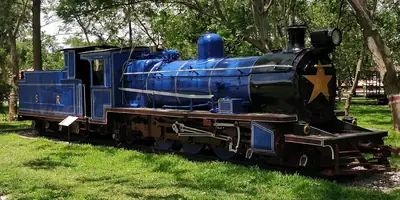
The Mysuru Rail Museum is an outdoor collection devoted to vintage locomotives and the history of rail travel in India. Established by Indian Railways in 1979, it was the second museum of its kind in India, after the National Railway Museum in Delhi.
Locomotives, railway signals and lamps provide the main exhibits, while photographs and paintings trace the development of railways in India. A battery-operated miniature train offers short rides around the grounds and is especially popular with children.
Regional Museum of Natural History
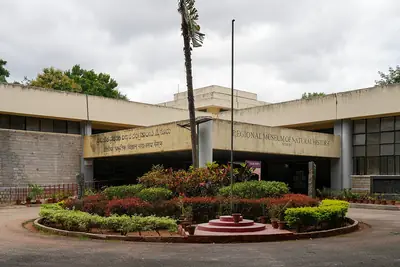
Beside Karanji Lake, the Regional Museum of Natural History introduces visitors to the plants, animals and geology of southern India. Established in 1995 and managed by the Forest Department of the Government of India, its exhibits focus on the natural history of the southern region.
Folk Lore Museum
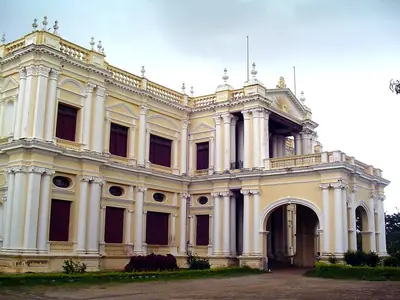
The Folk Lore Museum, also known as Jayalakshmi Nivas or the University Folklore Museum, presents folk art and traditional crafts collected from across Karnataka. It offers a look at the many artistic traditions represented throughout the state.
Mysore Sand Sculpture Museum
At the base of the Chamundi Hills, the Mysore Sand Sculpture Museum is India’s first museum devoted to sand sculptures. It opened in 2014 on a one-acre site, with around 150 sculptures covering approximately 13,000 square feet.
The collection explores Mysore’s heritage, culture, wildlife and religious themes, as well as mythology and folk tales. Every sculpture was created by sand artist M. N. Gowri, using more than 100 truckloads of sand.
Chamundeshwari Temple and Mahishasura
The Sri Chamundeshwari Temple stands at the summit of Chamundi Hills, about 13 kilometres from Mysuru. Dedicated to Chamundeshwari, the fierce form of Shakti, it is one of the city’s most revered sacred places.
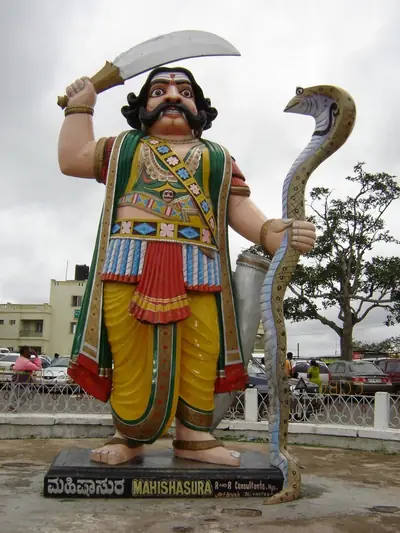
The hill is linked to the story of Mahishasura, a powerful asura who could take the form of a buffalo. According to the legend, Goddess Durga fought and defeated him at the summit. The tradition connects the place with the name Mahishooru, meaning the place of Mahisha, which later developed into Mysuru. A monument to Mahishasura recalls this story and its enduring place in Hindu mythology.
Karnataka Kalamandira
Karnataka Kalamandira has a special role in the cultural life of the state and is recognized as Karnataka’s oldest art institution. It was founded on 12 August 1919 by Akkihebbal Narasimhaiah Subbarao, popularly known as Aa. Na. Su. The institution marked its centenary anniversary in 2019.
Mysore’s Royal and Cultural Story
Mysore served as the capital of the Kingdom of Mysore and the traditional seat of the Wadiyar dynasty for almost six centuries, from 1399 to 1947. The kingdom was founded by Yaduraya near the modern city and began as a feudal vassal of the Vijayanagara Empire. After that empire declined, Mysore became independent and expanded across parts of what are now southern Karnataka and Tamil Nadu.
The eighteenth century brought the rule of Hyder Ali and Tipu Sultan, as well as four wars against the British. Their period also contributed to the growth of silk production and the planting of mulberry trees. Together with the Wadiyar legacy, these chapters shaped Mysore’s identity as the City of Palaces and the Cultural Capital of Karnataka.
Explore Mysore with Neywo
A Mysore self-guided walking tour lets you discover the city without joining a group or following a fixed schedule. Neywo offers two walking tours:
- Maharajas, Manuscripts and Locomotives: 5.4 km, 120 minutes and 8 narrated stops.
- Gothic Spires and Colonial Churches: 2.81 km, 66 minutes and 4 narrated stops.
The app tells the story of each place as you reach it, at your own pace, with no group and no schedule. Download Neywo and explore Mysore through its palaces, museums, churches and royal history. For more destinations in the state, see Karnataka; you can also continue exploring India or discover nearby Bangalore, Vijayapura and Hampi.
Places with an audio guide in Mysore
8 places in Mysore with a Neywo audio guide. Each one starts telling its story as you reach it.
Self-guided tours in Mysore
2 tours in Mysore, free in the Neywo app. Each stop tells its story as you reach it.
- Walk
Maharajas, Manuscripts and Locomotives
Cross the royal heart of Mysuru from the vintage locomotives of the Rail Museum and the state's oldest art institution to the palm-leaf manuscripts of Jubilee Hall, the carved doors of Jaganmohan Palace and the glittering Mysore Palace. Finish at two colonial-era churches beside the palace grounds.
Mysuru Rail Museum · Karnataka Kalamandira · Oriental Research Institute Mysore · Jaganmohan Palace · Parakala Mutt · Mysore Palace …
Open this tour: Maharajas, Manuscripts and Locomotives - Walk
Gothic Spires and Colonial Churches
A short stroll from the Mysore Palace to the city's Victorian churches: St Bartholomew's, the Wesley Cathedral, and the twin-spired St Philomena's, whose design is modelled on Cologne Cathedral.
Mysore Palace · St. Bartholomew's Church, Mysore · Wesley Cathedral, Mysore · St. Philomena's Cathedral
Open this tour: Gothic Spires and Colonial Churches
Walk Mysore with Neywo
Neywo turns Mysore into a self-guided audio tour. Stories arrive as you reach the place they belong to, and the route reshapes when you wander off it.

