Visiting Madurai, India: Top Sights on Foot
Things to Do in Madurai: Temples, Palaces and Living Heritage
Madurai is a historic city in Tamil Nadu known for its temples, royal architecture and diverse religious heritage. The city’s landmarks reveal layers of Hindu, Muslim and Christian history, while its streets remain closely connected to everyday worship and local life. Neywo has a free audio guide for Madurai with 9 narrated places.
What to See in Madurai
Meenakshi Temple
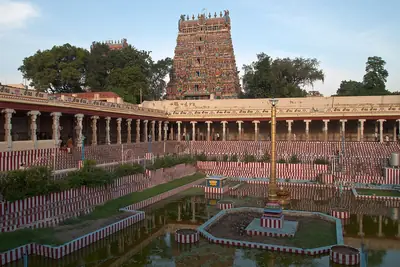
The Meenakshi Sundareswarar Temple is Madurai’s defining landmark and one of its most impressive places of worship. Dedicated to Meenakshi, a form of Parvati, and Sundareswarar, a form of Shiva, the Hindu temple covers about 5.7 hectares within several concentric enclosures and high masonry walls.
Four great gopurams mark the outer walls, accompanied by smaller towers and richly sculpted images of Hindu gods. The southern gopuram is the tallest, rising about 52 metres, and was built in the sixteenth century. Inside the innermost enclosure are the principal shrines, along with numerous mandapas and smaller shrines.
Two features are especially notable: the famous thousand-pillared hall and the Golden Lotus Pond, or Potramarai Kulam, the temple’s main tank. Together, the architecture, sculpture and continuing religious practice make Meenakshi Temple an essential place to visit in Madurai.
Thirumalai Nayakkar Mahal
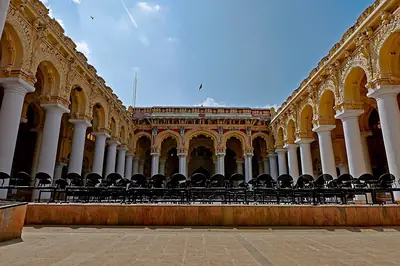
Southeast of Meenakshi Temple, Thirumalai Nayakkar Mahal is a grand seventeenth-century palace associated with Tirumala Nayaka, a king of the Madurai Nayak dynasty. Completed in 1636, it served as the king’s living quarters.
The surviving building was once part of a palace complex four times larger than what remains today. Its Indo-Saracenic design is believed to have been created by an Italian architect. An extension included an area known as the Ten Pillars. The palace was restored in 1872 by Francis Napier, the governor of Chennai under British India, and is now a protected national monument maintained by the Archaeology Department of the Government of Tamil Nadu.
Gandhi Memorial Museum
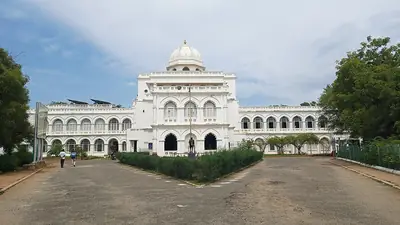
The Gandhi Memorial Museum, locally known as Gandhi Ninaivu Arungatchiyagam, was established in 1959 as a place dedicated to the memory of Mahatma Gandhi. It is one of five Gandhi museums in India, known as Gandhi Sanghralayas.
One of its most powerful exhibits is part of the blood-stained garment Gandhi wore when he was assassinated by Nathuram Godse. The museum also documents Gandhi’s relationship with Tamil Nadu: he visited the state twenty times, including five visits to Madurai.
St. Mary’s Cathedral
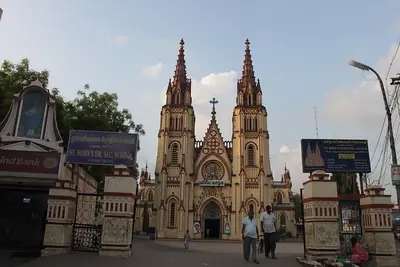
St. Mary’s Cathedral, also called the Church of Our Lady of Dolours, is a Roman Catholic church in Madurai. It became a cathedral in 1969.
The building is particularly easy to recognise by its two bell towers, each rising 42 metres. Their height gives the cathedral a distinctive presence within the city and adds a Christian landmark to Madurai’s varied religious landscape.
Arasu Arungatchiyagam – Madurai
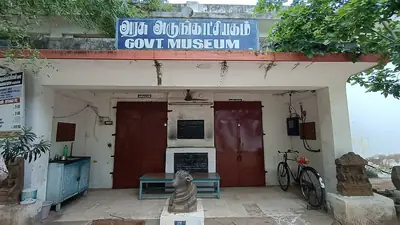
Arasu Arungatchiyagam, also known as the Government Museum, is another museum to include among the things to do in Madurai. Located in the city, it forms part of the wider group of cultural and historic places that can be explored beyond the major temple and palace.
Subramaniya Swamy Temple, Thiruparankundram
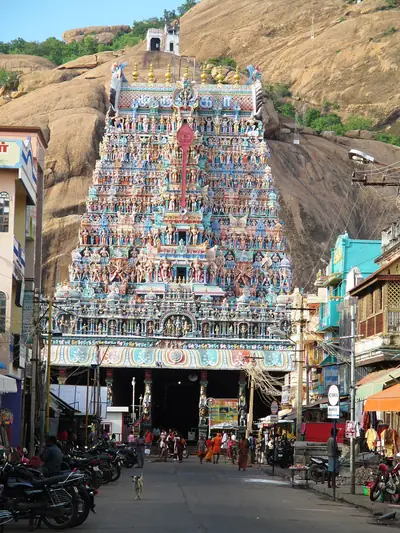
Beyond Madurai, in the town of Thiruparankundram, the Subramaniya Swamy Temple is built directly into a hillock. Also known as the Arulmigu Subramaniya Swami Temple, it is regarded as the first of Murugan’s six sacred abodes.
The original structure was built by the Pandyas during the sixth century. Its rock-cut design makes the hill itself part of the temple experience. According to Hindu mythology, Murugan married Deivanai, the daughter of Indra, here after defeating the asura Surapadman at Tiruchendur. Murugan is represented in his marriage form, while Shiva is worshipped as Parangirinathar.
Goripalayam Mosque
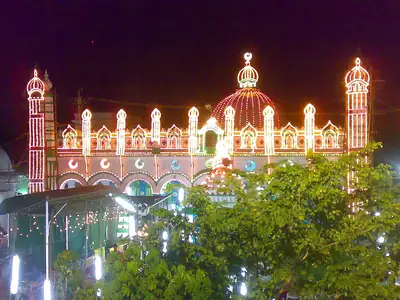
Goripalayam Mosque, also known as Goripalayam Dargah, is a major Islamic site in the Goripalayam area. The mosque and dargah complex is particularly known for its large dome, which measures about 21 metres across and 6 metres high.
According to tradition, the dome was made from a single block of stone brought from the Azhaga Hills. Another tradition connects the mosque with Thirumalai Nayak, who is said to have built it for his Muslim subjects. The site therefore reflects both Islamic history and the period of Madurai’s Nayak rulers.
Kazimar Big Mosque and Sungam Mosque
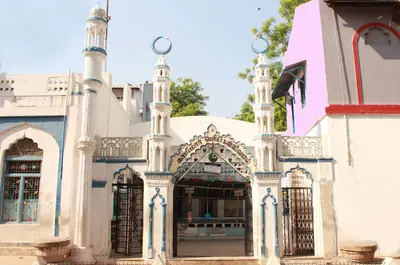
Kazimar Big Mosque, or Kazimar Periya Pallivasal, is regarded as the oldest mosque in Madurai and one of the oldest Muslim places of worship in Tamil Nadu. It was founded by Kazi Syed Tajuddin and built in 683 AH, corresponding to 1284 or 1285 CE, on land received from King Kulasekara Kun Pandiyan.
The mosque is a Sufi Hanafi place of worship with space for about 1,200 worshippers. In the Nelpettai area, Sungam Mosque, also known as Sungam Pallivasal, offers another chapter in the city’s Muslim heritage. Founded by members of the local Muslim Jamath and completed in 1840, it follows the Mughal architectural style. Its name is associated with the Tamil word for a toll mosque.
Tamilnadu Theological Seminary
In Arasaradi, the Tamilnadu Theological Seminary is an ecumenical Christian seminary serving the churches of Tamil Nadu. It is affiliated with the Senate of Serampore College and Madurai Kamaraj University.
The seminary is dedicated to theological education and the preparation of Christian clergy. On 28 October 2018, it marked its fiftieth Seminary Day, celebrating five decades of its work.
Explore Madurai with a Self-Guided Walking Tour
A Madurai self-guided walking tour is a simple way to connect several of the city’s central landmarks. Neywo currently offers one walking tour: “Madurai: Gopurams, a Nayak Palace and Gandhi.”
The route covers 5.31 km, takes about 115 minutes and includes 6 narrated stops:
- Meenakshi Temple
- Thirumalai Nayakkar Mahal
- St. Mary’s Cathedral, Madurai
- Goripalayam Mosque
- Gandhi Memorial Museum
- Arasu Arungatchiyagam – Madurai
The app tells the story of each place as you reach it, at your own pace, with no group and no schedule. Narration is available in 11 languages. Download Neywo to explore Madurai independently and turn a walk through the city into a self-guided audio experience.
If you are planning a wider journey through southern India, discover more of Tamil Nadu and continue exploring India.
Places with an audio guide in Madurai
8 places in Madurai with a Neywo audio guide. Each one starts telling its story as you reach it.
Self-guided tours in Madurai
1 tour in Madurai, free in the Neywo app. Each stop tells its story as you reach it.
- Walk
Madurai: Gopurams, a Nayak Palace and Gandhi
Start inside the great Meenakshi Temple, whose gopurams define Madurai's skyline. Continue to the Nayak king's surviving palace and the twin-towered cathedral, then head north to a mosque with a famous stone dome and finish at the Gandhi memorial and the Government Museum beside it.
Meenakshi Temple · Thirumalai Nayakkar Mahal · St. Mary's Cathedral, Madurai · Goripalayam Mosque · Gandhi Memorial Museum · Arasu Arungatchiyagam - Madurai
Open this tour: Madurai: Gopurams, a Nayak Palace and Gandhi
Walk Madurai with Neywo
Neywo turns Madurai into a self-guided audio tour. Stories arrive as you reach the place they belong to, and the route reshapes when you wander off it.

