Visiting Tel Aviv, Israel: Top Sights on Foot
Things to Do in Tel Aviv: What to See from Jaffa to the Yarkon
The best things to do in Tel Aviv range from exploring historic squares and museums to discovering Jaffa’s churches and walking beside the Mediterranean. The city combines modern cultural landmarks, public art, religious heritage and large green spaces, making it well suited to exploring on foot. Neywo offers a free audio guide for Tel Aviv with 141 narrated places.
What to See in Tel Aviv
Rabin Square and the Tel Aviv Museum of Art
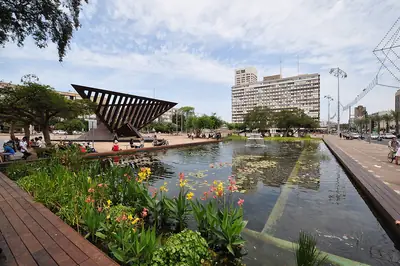
Rabin Square is one of central Tel Aviv’s most important public spaces. Designed with Tel Aviv City Hall in 1964 by architects Yaski and Alexandroni, the broad, mostly paved square has hosted political rallies, parades, concerts, festivals and national celebrations. It was renamed in memory of Prime Minister Yitzhak Rabin after his assassination there on November 4, 1995.
In the southern section, the Holocaust and Revival Memorial by sculptor Yigal Tumarkin takes the form of an inverted pyramid balanced on its point, built from rusted iron and glass.
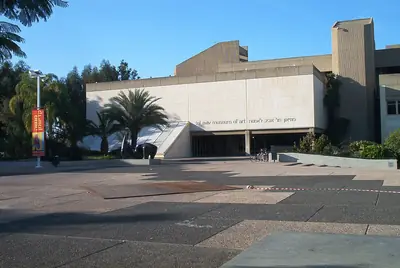
Nearby, the Tel Aviv Museum of Art is one of Israel’s major cultural institutions. Founded in 1932, it focuses on modern and contemporary art from Israel and around the world. Its collections include Israeli art, photography, design and architecture, European art from the sixteenth to the nineteenth centuries, and works by artists including Pablo Picasso, Marc Chagall, Francis Bacon and Anish Kapoor. The museum occupies three buildings, including the Samuel and Herta Amir Building.
Habima Theatre and Habima Square
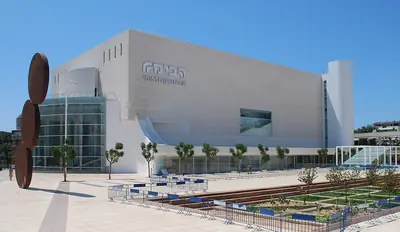
Habima Theatre is the national theatre of Israel and an important institution for Hebrew-language performance. It received the Israel Prize in 1958 and belongs to the Union of European Theatres. Its position on Habima Square makes this part of central Tel Aviv a natural stop for visitors interested in the city’s cultural life.
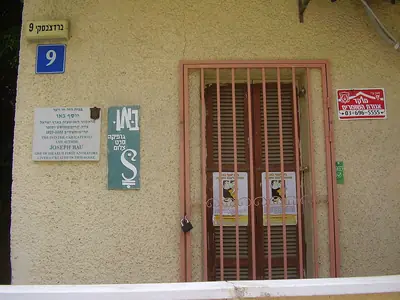
A nearby museum offers a very different artistic experience. The Joseph Bau House Museum occupies the artist’s former studio, where graphic art, language, writing and animation came together. The museum contains animation equipment, paintings, drawings, letters, photographs and graphic works, as well as a screening room.
Dizengoff Square and Fire and Water
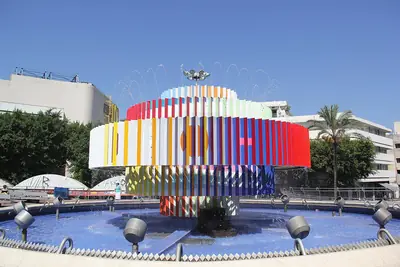
Dizengoff Square is associated with Fire and Water, also known in Hebrew as “Esh VeMayim.” Created by Israeli artist Yaacov Agam and dedicated in 1986, the work combined a fountain with kinetic sculpture. Its movement and changing visual effect made it one of Tel Aviv’s distinctive public artworks.
The installation was removed in 2016 while the square was temporarily relocated during reconstruction, and it has not been restored. Today, the history of Fire and Water is part of the story of how Dizengoff Square has changed.
The seafront: Atarim Square, London Square and HaKnesset Square
Tel Aviv’s promenade connects a series of public spaces beside the Mediterranean.
Atarim Square is a notable example of Brutalist architecture in Israel. Designed by Yaakov Rechter and Werner Joseph Wittkower, it combines shops, roads, parking, restaurants and public areas in a multi-level structure. The complex links the promenade with the marina, Ben-Gurion Boulevard and Hayarkon Street. Its upper level becomes a public plaza with restaurants, an amphitheatre and the round, glass-covered building known as the Colosseum.
London Square stands at the western end of Bograshov Street, between the Herbert Samuel Promenade and Hayarkon Street. Its name honours the citizens of London who endured the Blitz during the Second World War.
At the point where Allenby Street meets the Herbert Samuel Promenade, HaKnesset Square recalls the First Knesset. The assembly met for nine months in the nearby Kesem Cinema building before moving to Jerusalem in December 1949.
Further along the promenade, “Beyond the Limit,” also known as “Beyond the Realm,” is an outdoor sculpture by Zadok Ben-David. Installed in 1990, it combines an orange oval form with the silhouette of an upside-down monkey. It was one of twelve sculptures placed along the promenade as part of a project curated by Micha Levin.
Hassan Bek Mosque and Neve Tzedek
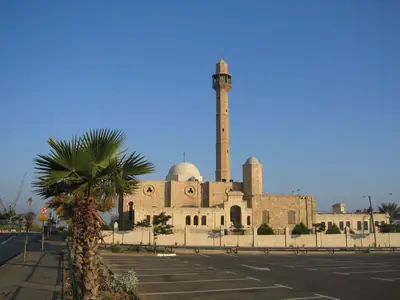
Between Neve Tzedek and the road to Jaffa stands Hassan Bek Mosque, also called the Hasan Bey Mosque. Built in 1916 in the Manshiya neighbourhood, it was commissioned by Hassan Bek, the Ottoman military governor of Jaffa. Its Ottoman-style architecture and Islamic character contrast sharply with the contemporary high-rises around it.
The mosque is included in the Neywo walk through Neve Tzedek, which also visits the Suzanne Dellal Center for Dance and Theater, Beit Gidi, Immanuel Church, Rokach House and the Nahum Gutman Museum of Art.
Jaffa’s churches and religious heritage
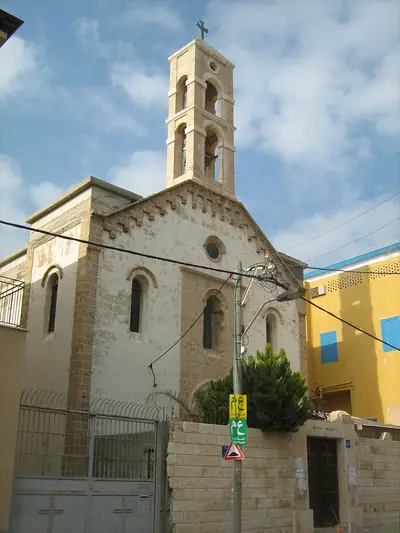
Jaffa brings a different historical and architectural atmosphere to Tel Aviv. In the Ajami neighbourhood, Saint Anthony Maronite Church—also known as the Maronite Monastery of Saint Anthony—has a white façade with brown kurkar stone bricks. Established in 1904 by a wealthy Maronite merchant, the church and monastery were created after the Maronites left Jaffa’s Old City.
The entrance faces east and is framed by three tall, narrow windows and a round window. Above it rises a two-storey bell tower topped with a cross. The site also contains an archive cared for by two monks.
Jaffa’s religious landmarks continue beyond Ajami. Neywo’s Old Jaffa walk includes Siksik Mosque, Mahmoudiya Mosque, Al-Bahr Mosque, Saint Nicholas Monastery, St. Peter’s Church and St. Archangel Michael Monastery, alongside the flea market, the Arab-Hebrew Theater, Hasimta Theatre and Nalaga’at.
Yarkon Park and the museums by the river
Yarkon Park, officially Ganei Yehoshua, is one of Tel Aviv’s largest open spaces. Extending along the Yarkon River from the Ramat HaHayal business district to the river’s mouth at the Mediterranean, it covers about 3,750 dunams, or roughly 3.5 square kilometres.
The park includes lawns, botanical gardens, an aviary, sports facilities, water attractions, lakes and two outdoor concert venues. It was named after Yehoshua Rabinowitz, who served as mayor of Tel Aviv–Jaffa from 1969 to 1974 and later became Israel’s finance minister.
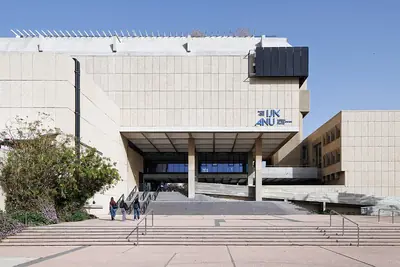
The area also provides access to several museums and cultural sites. At the Tel Aviv University campus, ANU—the Museum of the Jewish People—explores Jewish identity, culture and history from antiquity to the present. Opened in 1978 as Beit Hatfutsot, it reopened in March 2021 after major renovation. Its galleries include exhibitions on Jewish culture, religion and history, temporary exhibitions, full-scale synagogue models and an interactive exhibition for children about Jewish pioneers and trailblazers.
Plumer Square and the old exhibition complex
Near the old Tel Aviv Port, Plumer Square marks the main entrance to the historic Exhibition of the East complex. It has carried its name since the fair opened in 1934, honouring Lord Herbert Plumer, the British High Commissioner for Mandatory Palestine.
Two L-shaped buildings frame the square. They were restored and renovated in 2013, when a new entrance to the complex was also created.
Shaul Hamelech Light Rail Station
For a glimpse of contemporary Tel Aviv’s urban infrastructure, Shaul Hamelech Light Rail Station lies underground beneath Begin Road, close to the Kirya. It forms part of the Red Line of the DanKal light rail system and is situated south of Shaul Hamelech Boulevard, perpendicular to Mozes Street. The site is also associated with the names Mozes Bridge, Shaul HaMelech and The Sleepers.
Explore Tel Aviv with a self-guided audio tour
Neywo’s Tel Aviv audio guide includes seven walking tours, one bus route and one bike route, with 141 narrated places in total. The walks range from 2.37 to 3.90 km and from 69 to 108 minutes; the bus route covers 4.8 km in 21 minutes, and the bike route covers 4.3 km in 22 minutes.
You can choose among routes through Old Jaffa, Neve Tzedek, the White City, the seafront, central Tel Aviv, Ajami and the Yarkon area. Each story plays as you reach the place, at your own pace: no group and no schedule. Narration is available in 11 languages.
Download Neywo and explore Tel Aviv with a free audio guide that lets the city tell its story as you walk, cycle or ride through it. To continue planning your trip around Israel, you can also discover Jerusalem and Haifa.
Places with an audio guide in Tel Aviv
8 places in Tel Aviv with a Neywo audio guide. Each one starts telling its story as you reach it.
Self-guided tours in Tel Aviv
9 tours in Tel Aviv, free in the Neywo app. Each stop tells its story as you reach it.
- Bike ride
Tel Aviv by Bike: Rothschild to the Beach Promenade
Ride Tel Aviv's cycle lanes north from the Rothschild quarter, past Joseph Bau's studio and the national theatre, around Rabin Square and out to the Brutalist Atarim Square by the sea. Mostly flat, with protected lanes for much of the way.
Tel Aviv Community House · Joseph Bau House · Habima Theatre · Masaryk Square · Rabin Square · Atarim Square
Open this tour: Tel Aviv by Bike: Rothschild to the Beach Promenade - Bus ride
Bus 4: Allenby Street, Carmel Market and Dizengoff Square
Dan line 4 runs up Allenby Street, the old spine of Tel Aviv, past Kikar HaMoshavot, the Art Deco Great Synagogue and Magen David Square, the gateway to Carmel Market, and on towards Hashoter and Dizengoff Squares and the White City. Get off for the market, the squares and the cafes that line Dizengoff.
Karov Theatre · Kikar HaMoshavot · Great Synagogue · Olam "Naḥmani" · Magen David Square · HaShoter Square …
Open this tour: Bus 4: Allenby Street, Carmel Market and Dizengoff Square - Walk
Old Jaffa: Mosques, Monasteries and the Sea Wall
Start in the lanes around the Flea Market, then follow the old city west towards the water. You pass Jaffa's largest mosque and its oldest surviving one, the small Sea Mosque, then an Armenian monastery facing the Mediterranean and the Franciscan bell tower that sailors have used as a landmark for centuries. A short walk through one of the world's oldest ports. Along the way you pass the Arab-Hebrew Theater, the Hasimta Theatre and Nalaga'at, the deaf-blind theatre, before the story of Jaffa itself.
Flea market in Jaffa · Siksik Mosque · Mahmoudiya Mosque · The Arab-Hebrew Theater · Al-Bahr Mosque · Saint Nicholas Monastery …
Open this tour: Old Jaffa: Mosques, Monasteries and the Sea Wall - Walk
Neve Tzedek: The First Neighbourhood Outside Jaffa
Tel Aviv began here. Walk from the Ottoman minaret of Hassan Bek Mosque, built to hold back the new city, through the lanes of Neve Tzedek: the first synagogue of 1890, the Suzanne Dellal dance centre, the old Cafe Lorenz and the houses of writers and founders. Low houses, bougainvillea and small museums. The route also loops down to the seafront by Beit Gidi and the IDF History Museum, past Immanuel Church, before returning to Neve Tzedek's lanes.
Hassan Bek Mosque · Synagogue Chevra Shas · Or Zoreah Synagogue · Suzanne Dellal Center for Dance and Theater · Beit Gidi · Israel Defense Forces History Museum …
Open this tour: Neve Tzedek: The First Neighbourhood Outside Jaffa - Walk
Birth of a City: Rothschild Boulevard to Dizengoff Square
Follow the story of the first Hebrew city. Start at the hall on Rothschild Boulevard where Ben-Gurion declared independence, pass Nahum Gutman's mosaic fountain and the Haganah's house, then walk Allenby Street from the Art Deco Great Synagogue and the richly decorated Mosav Zkenim synagogue to six-way Magen David Square. Continue past PhotoHouse and the Rubin Museum to Bialik Square, with its poet's house, old city hall and Bauhaus museum, and end at the round plaza that became a symbol of the White City.
Independence Hall · Nahum Gutman Fountain · Bet Eliyahu · Great Synagogue · Mosav Zkenim Synagogue · Magen David Square …
Open this tour: Birth of a City: Rothschild Boulevard to Dizengoff Square - Walk
Stage, Square and Museum: Habima to Rabin Square
Tel Aviv's civic heart in one easy loop: Joseph Bau's studio, the national theatre of Israel on Habima Square, the hall where the provisional government sat, leafy Masaryk Square, the vast open plaza of Rabin Square with its rusted-iron memorial, and the Tel Aviv Museum of Art with the square in front of it that became a place of national mourning and hope.
Joseph Bau House · Habima Theatre · Habima Square · Museum of Provisional Peoples Council and Administration · Masaryk Square · Rabin Square …
Open this tour: Stage, Square and Museum: Habima to Rabin Square - Walk
Ajami and the Churches of Southern Jaffa
Leave the old port behind and walk south through the Ajami quarter, where the Maronite, Catholic, Presbyterian and Coptic churches of Jaffa stand a few steps from each other. The route ends at the Ajami and Jabaliya mosques, in the neighbourhood that grew up outside the old walls.
Saint Anthony Maronite Church, Jaffa · Saint Anthony Catholic Church, Jaffa · Presbyterian Saint Peter Church, Jaffa · St. Anthony's Coptic Church · Ajami mosque · Jabaliya Mosque
Open this tour: Ajami and the Churches of Southern Jaffa - Walk
The White City: Dizengoff to Atarim Square
A stroll through the heart of the UNESCO White City: Bauhaus and International Style buildings, the Fire and Water fountain, small galleries, and the Brutalist Atarim Square by the sea, ending in the shade of Gan Ha'atzmaut park.
White City · Bet Arlozorov · Fire and Water Fountain · Katz Art Gallery · Givon Art Gallery · Yodfat Gallery …
Open this tour: The White City: Dizengoff to Atarim Square - Walk
The Yarkon and Ramat Aviv: Museums by the River
Follow the Yarkon river north: the ancient mound of Tell Qasile, the Eretz Israel Museum and the Palmach Museum, then the Yitzhak Rabin Center. Cross to the university campus of Ramat Aviv for the Museum of the Jewish People at Beit Hatfutsot and the Steinhardt Natural History Museum.
Tell Qasile · Eretz Israel Museum · Palmach Museum · Yitzhak Rabin Center · Tel Aviv University · Cymbalista Synagogue and Jewish Heritage Center …
Open this tour: The Yarkon and Ramat Aviv: Museums by the River
Walk Tel Aviv with Neywo
Neywo turns Tel Aviv into a self-guided audio tour. Stories arrive as you reach the place they belong to, and the route reshapes when you wander off it.

