Haifa, Israel: Self-Guided Walking Tour
Things to Do in Haifa: Museums, Sacred Sites and Carmel Views
Haifa is a city on the slopes of Mount Carmel, where Mediterranean views meet religious landmarks, museums, railway history and neighborhoods shaped by different communities. The best things to do in Haifa range from seeing the Bahá’í terraces and exploring Wadi Nisnas to visiting historic museums and discovering the city’s maritime heritage. Neywo has a free audio guide for Haifa with 73 narrated places, available in 11 languages.
What to See in Haifa
The Bahá’í Gardens and the Shrine of the Báb
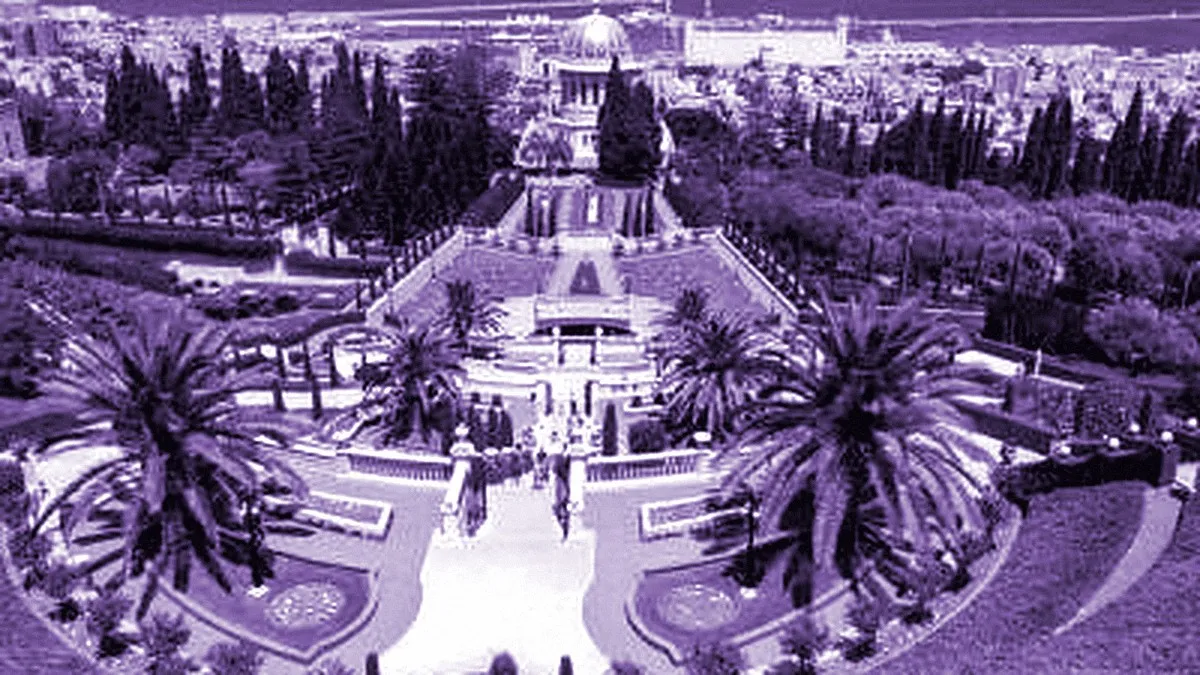
The Bahá’í Gardens are among Haifa’s most recognizable sights. Also known as the Hanging Gardens of Haifa, they extend across 19 terraces on Mount Carmel, combining carefully shaped greenery, flowing water and strong geometric lines. The gardens are recognized as a UNESCO World Heritage Site.
The terraces were built between 1987 and 2001 under the guidance of architect Fariborz Sahba. From the upper terrace, a panoramic balcony looks across Haifa, the German Colony and the Mediterranean Sea. The route continues down the mountain to the Shrine of the Báb on Hatzionut Avenue.
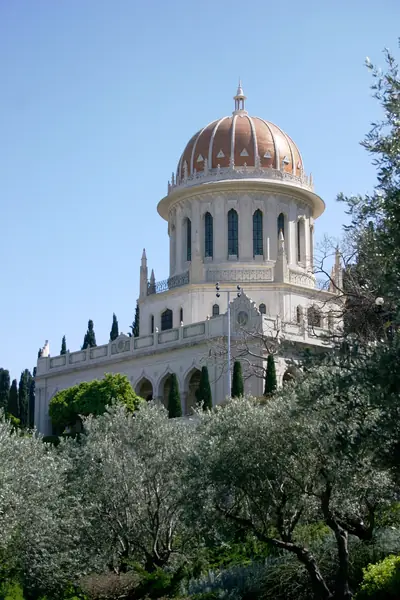
The shrine is the resting place of the Báb, founder of the Bábí Faith. Its architecture includes a stone arcade, an octagonal structure, an eighteen-windowed drum and a golden dome. The site was designated on Mount Carmel by Bahá’u’lláh in 1891, and the Báb’s remains were placed in a specially built tomb in 1909.
The Bahá’í World Centre also includes the Bahá’í Arc and the Centre for the Study of the Sacred Texts. Completed in 1999 and inaugurated in 2001, the Centre contains study and meeting rooms, a reference library and an underground structure illuminated by skylights.
Tikotin Museum of Japanese Art
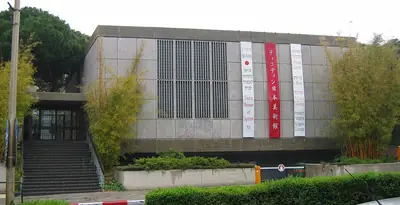
On the crest of Mount Carmel, the Tikotin Museum of Japanese Art offers a different cultural experience. Founded in 1959 through the initiative of Felix Tikotin and Abba Hushi, it was created to introduce Israeli audiences to Japanese art and encourage understanding between Israel, Japan and the peoples of East and West Asia.
Its collection contains more than 7,000 objects, including paintings, prints, drawings, textiles, illustrated books, ceramics, netsuke, metalwork, lacquerware and antique swords. The museum presents both traditional and modern Japanese works, with older pieces dating from the fourteenth to the nineteenth centuries.
Haifa Museum of Art
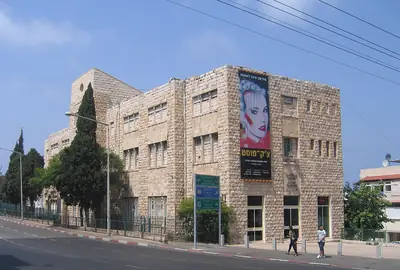
At the meeting point of Hadar HaCarmel and Wadi Nisnas, the Haifa Museum of Art occupies a preserved stone building that originally served as an Anglican school for girls. The museum has operated there since 1978, while the institution itself was founded in 1951 as Haifa’s first museum.
Its collection contains more than 7,000 works, mostly modern and contemporary Israeli art alongside international pieces. Painting, sculpture, photography, video art, installations and multimedia projects are displayed across the galleries. The museum’s position between Jewish and Arab neighborhoods makes it a cultural crossroads as well as an exhibition space.
Madatech
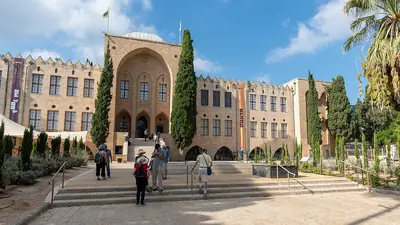
Madatech, the Israel National Museum of Science, Technology and Space, is housed in the historic former building of the Technion in Hadar HaCarmel. Designed by Jewish German architect Alexander Baerwald, the building was completed in 1913 and served the Technion from 1925 to 1965.
The museum invites visitors to interact with science through exhibitions, demonstrations and simulations. Topics include physics, electricity, optics, mechanics, communication, medicine, robotics, environmental science, space exploration, engineering and the human body. There is also a planetarium, a 4D theater and the Youth Science Park, where children can explore aerodynamics, renewable energy, water, sound and motion through play.
Israel Railway Museum
At Haifa East Railway Station, the Israel Railway Museum tells the story of the country’s railways. The former station no longer carries passengers, but its buildings and track yard now contain locomotives, carriages, railway signs, tickets, photographs, tools, equipment, stamps, cards and model trains.
Some retired carriages and engines can be entered. A pedestrian bridge connects the two parts of the museum and offers views of trains moving through the yard. The museum also presents the development of Israel’s railways, including the first railway line between Jaffa and Jerusalem, opened in 1892.
Stella Maris Monastery
On the slopes of Mount Carmel, Stella Maris Monastery is an active monastery of Discalced Carmelite friars. Its name means “Star of the Sea”, and the main church is said to contain the Cave of Elijah, a grotto associated with the biblical prophet Elijah.
The site has attracted Jewish, Christian, Muslim and Druze pilgrims. Built in the nineteenth century, the monastery resembles a fortified wall, with small openings and a square plan surrounding an inner courtyard. Its Neo-Gothic architecture, frescoes, stained-glass windows and religious artworks give it a distinctive presence above the city.
Haifa’s churches and cathedrals
Haifa’s religious heritage continues through several churches in the Lower City and around Wadi Nisnas. St. Elijah Cathedral, also known as St. Elias Greek-Melkite Cathedral, is the home of Haifa’s Melkite Greek-Catholic community. Designed by Sammihom Atallah, it was built between 1938 and 1939.
St. Louis the King Cathedral is a Maronite Catholic church whose building dates from 1880. The Maronite presence in Haifa is recorded as early as 1677. These churches, together with the city’s mosques and synagogues, reflect Haifa’s layered religious history.
Wadi Nisnas and Hadar HaCarmel
Wadi Nisnas is one of the city’s most distinctive neighborhoods, with a multicultural character and a setting close to Haifa Museum of Art and several churches. It is included in a walking route through churches, art and Haifa’s mixed quarter.
Hadar HaCarmel adds another layer to the city. The neighborhood is home to Madatech and Hadar Central Synagogue, also known as the Great Synagogue of Haifa. Established in 1937, the synagogue opened for prayer on the eve of Rosh Hashanah in September 1938. The area also includes Shuk Talpiot, Haifa City Hall and the Old Technion building.
Explore Haifa with a Self-Guided Audio Tour
A Haifa self-guided walking tour with Neywo lets you explore the city while its stories play at the places they describe. Haifa has four walking tours and one bus route:
- Gardens of Light: Haifa’s Bahá’í Terraces and Carmel Views — 1.85 km, 78 minutes and 11 narrated stops.
- Wadi Nisnas: Churches, Art and Haifa’s Mixed Quarter — 2.54 km, 88 minutes and 11 narrated stops.
- Old Haifa: Mosques, a Market and the Rails — 3.4 km, 94 minutes and 10 narrated stops.
- Stella Maris and the Sea: Haifa’s Maritime Side — 4.51 km, 114 minutes and 11 narrated stops.
- Line 3: From Bat Galim to the Carmel Through Hadar — a 10.5 km bus route lasting 45 minutes, with 9 narrated stops.
The routes include places such as the Tikotin Museum of Japanese Art, the Bahá’í World Centre, Haifa Museum of Art, the Israel Railway Museum, Stella Maris Monastery, the Israeli Navy Museum and Haifa’s historic neighborhoods.
Download Neywo and explore Haifa at your own pace: the app tells the story of each place as you reach it, with no group and no schedule. You can also continue exploring Israel, or plan visits to Acre, Nazareth, Jerusalem and Tel Aviv.
Places with an audio guide in Haifa
8 places in Haifa with a Neywo audio guide. Each one starts telling its story as you reach it.

Self-guided tours in Haifa
5 tours in Haifa, free in the Neywo app. Each stop tells its story as you reach it.
- Bus ride
Line 3: From Bat Galim to the Carmel Through Hadar
Egged's city line 3 climbs from the harbour district past the Navy Museum, the lower-city churches and Wadi Salib's mosque into Hadar HaCarmel, with City Hall and the Haifa Tower on the way. A cheap way to cross the city's layers from sea level to the Carmel.
Israeli Navy Museum · Beit Cris · St. Joseph's Church, Haifa · St. Louis the King Cathedral, Haifa · Istiklal Mosque · Haifa City Hall …
Open this tour: Line 3: From Bat Galim to the Carmel Through Hadar - Walk
Gardens of Light: Haifa's Bahá'í Terraces and Carmel Views
Walk the northern slope of Mount Carmel from the Louis Promenade and Yefe Nof Street to the golden-domed Shrine of the Báb and the 19 terraces of the Bahá'í Gardens. Along the way, stop at a Japanese art museum and the world centre of the Bahá'í Faith, with Haifa Bay below you.
Mane-Katz Museum · Moshe Stekelis Museum of Prehistory · Louis Promenade · Yefe Nof street · Tikotin Museum of Japanese Art · International Teaching Centre …
Open this tour: Gardens of Light: Haifa's Bahá'í Terraces and Carmel Views - Walk
Wadi Nisnas: Churches, Art and Haifa's Mixed Quarter
Explore the lower city where Jewish and Arab neighbourhoods meet. Visit Catholic, Anglican, Armenian and Maronite churches, an Arabic-language theatre and a museum in a former girls' school, ending at Paris Square, the old Churches District.
Dick house, Haifa · Beit Cris · St. Joseph's Church, Haifa · St. Elijah Cathedral · St. John church in Haifa · Falafel HaZkenim …
Open this tour: Wadi Nisnas: Churches, Art and Haifa's Mixed Quarter - Walk
Old Haifa: Mosques, a Market and the Rails
Follow Natanzon Street through the old Ottoman lower town. See the Great Mosque of Haifa with its 1901 clock tower and the small Al Zaghir Mosque, then Wadi Salib's Istiklal Mosque, the 1940 Talpiot market and the national railway museum in the old Haifa East station. Then climb through Hadar to the Haifa Tower, the stone-faced City Hall and the Old Technion, built in the Land of Israel style.
Al Jarina mosque · Sail Tower · Al Zaghir Mosque, Haifa · Istiklal Mosque · Israel Railway Museum · Shuk Talpiot …
Open this tour: Old Haifa: Mosques, a Market and the Rails - Walk
Stella Maris and the Sea: Haifa's Maritime Side
Start at the Carmelite monastery of Stella Maris, said to hold the Cave of Elijah, and ride down to the shore at Bat Galim. See two maritime museums, a retired submarine, an immigrant-era landing craft and the concrete skeleton of the old Bat Galim Casino. The walk ends at the old Carmelite nuns' stone house and the Commonwealth war cemetery.
Papa Square · Stella Maris Monastery · Bat Galim cable car · Israeli National Maritime Museum · Israeli Navy Museum · Af Al Pi Chen …
Open this tour: Stella Maris and the Sea: Haifa's Maritime Side
Walk Haifa with Neywo
Neywo turns Haifa into a self-guided audio tour. Stories arrive as you reach the place they belong to, and the route reshapes when you wander off it.

