Daugavpils, Latvia: Self-Guided Walking Tour
Things to Do in Daugavpils: What to See in Latvia’s Multicultural City
Looking for things to do in Daugavpils? Latvia’s second-largest city brings together a vast nineteenth-century fortress, remarkable churches, museums, public parks and traces of its Jewish, Orthodox, Lutheran, Catholic and Old Believer communities. It is the cultural heart of Latgale, and a rewarding place to explore on foot. Neywo has a free audio guide for Daugavpils, with 21 narrated places in 11 languages.
Daugavpils stands along the Daugava River and is shaped by a layered history. Its landmarks reflect periods of Russian, German and Soviet rule, while the city’s religious buildings and cultural institutions show the diversity that continues to define it.
What to see in Daugavpils
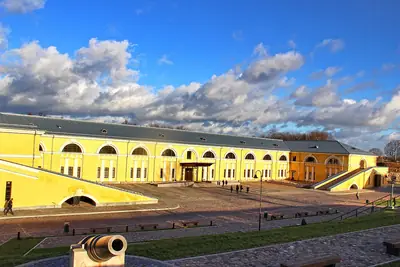
Daugavpils Fortress
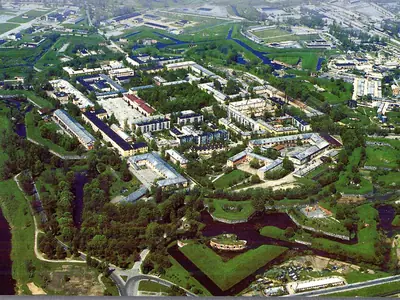
Daugavpils Fortress, or Daugavpils Cietoksnis, is the city’s most significant cultural and historical monument. The vast complex covers about two square kilometres and has survived almost completely.
Construction began in 1810 on the site of the old city of Dinaburg and beside an earlier fortification dating from the late sixteenth century. The fortress was built in preparation for Napoleon’s expected invasion and faced its first attacks during the War of 1812, when it successfully repelled them. Construction ended in 1878, by which time the bastion-style fortress was already outdated.
Its planned layout reflects the idea of a fortified ideal city, with military structures arranged as a defensive settlement. It is regarded as the last bastion fortress built in Europe and remains an unusually well-preserved example of an early nineteenth-century fortress in Eastern Europe.
Daugavpils Mark Rothko Art Centre
Inside the former arsenal of Daugavpils Fortress, the Daugavpils Mark Rothko Art Centre presents the work and legacy of Mark Rothko alongside contemporary art and educational activities.
The centre’s Rothko Room contains original paintings by the artist on permanent public display. The works are on loan from his estate, and the museum is described as the only place in Europe with such a permanent public display of Rothko’s original paintings. Other spaces include museum-quality reproductions, a multimedia exhibition about Rothko’s life and artistic activities, artists’ residences, a video room, an archive and library, conference and seminar rooms, and a restaurant.
The centre opened on April 24, 2013, in the fortress arsenal. The idea of creating it was born in 2002, and since October 1, 2023, it has been a state-accredited museum under the name Rotko muzejs.
Daugavpils Local History and Art Museum
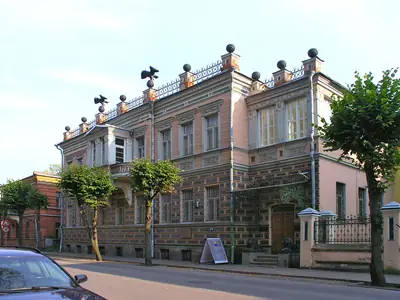
The Daugavpils Local History and Art Museum brings local history and art together. Active since 1938, it occupies two buildings: the main building at 8 Rīgas Street and the exhibition building at 7 Muzeja Street.
The museum was the most visited museum in Latgale in 2018, with 86,457 visits. Its two locations make it a useful stop for understanding the city and the wider region.
Daugavpils Synagogue and the Jewish history of Latgale
Built in 1850, Daugavpils Synagogue, also known as the Kadish Prayer House, is the city’s only active synagogue. It stands on the corner of Lāčplēša Street and Cietokšņa Street. Its interior furnishings were restored after the Second World War, and the building was renovated in 2005.
The synagogue connects present-day Daugavpils with a much larger Jewish community: before the Second World War, the city had 45 functioning synagogues and prayer houses. The second floor contains the museum Jews in Daugavpils and Latgale, which explores Jewish life, family histories, everyday traditions and prayer practices in the city and region.
Saints Boris and Gleb Cathedral
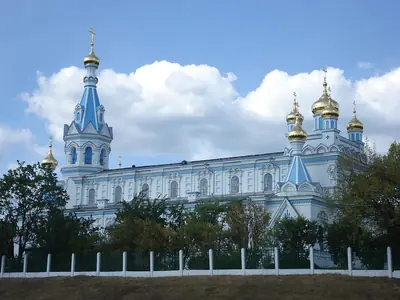
Ss. Boris and Gleb Cathedral is the main Orthodox church of Daugavpils and the largest Orthodox church in Latvia. Built in 1905 as a garrison church for Russian military units, it can hold up to 5,000 people.
The cathedral rises 56 metres above Church Hill and follows a Russian architectural style. It is now the cathedral of the Daugavpils and Rēzekne Diocese of the Latvian Orthodox Church.
Old Believers Church of the Nativity of the Theotokos
The Old Believers Church of the Nativity of the Theotokos stands in the Jaunbūve district at 16a A. Pushkin Street. It is the main Old Believer church in the city and one of Daugavpils’s six Old Believer places of worship.
Built between 1908 and 1928, the church reaches 22 metres in height and is an important landmark on Church Hill.
Martin Luther Cathedral
Martin Luther Cathedral is the largest Lutheran church in Daugavpils. Built in 1893 to a design by architect Vilhelms Neimanis, it has a distinctive red-brick exterior and Neo-Gothic form.
The cathedral stands diagonally across from the Church of the Immaculate Conception of the Blessed Virgin Mary, making this part of the city particularly interesting for comparing different Christian architectural traditions.
Church of the Immaculate Conception of the Blessed Virgin Mary
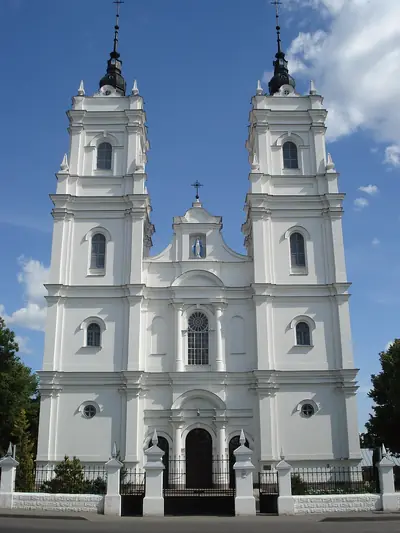
This Roman Catholic church is notable for its tall profile and reaches 52 metres in height. It is recognized as a national architectural monument of Latvia.
Its location near Martin Luther Cathedral makes it part of one of Daugavpils’s most visually striking religious areas.
St Peter’s in Chains Roman Catholic Church
St Peter’s in Chains Roman Catholic Church is known for its elegant colonnade and Rome-inspired design. Its landscaped grounds create a peaceful setting and add another dimension to Daugavpils’s religious heritage.
Alexander Nevsky Church
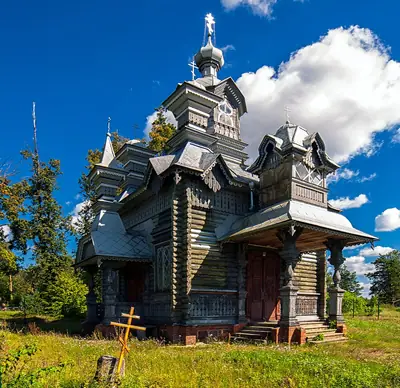
Near the old garrison cemetery and the fortress area, Alexander Nevsky Church is a small wooden Orthodox church built in 1897. Its North Russian style and rich wooden carvings make it an important monument of wooden architecture.
The church was funded by the Petersburg merchant M. Chukasov, while the project and building supervision were carried out by the engineer Rashevsky. Craftsmen from Daugavpils Fortress built it. After a period of abandonment, it was restored in the 1990s and remains a protected cultural monument.
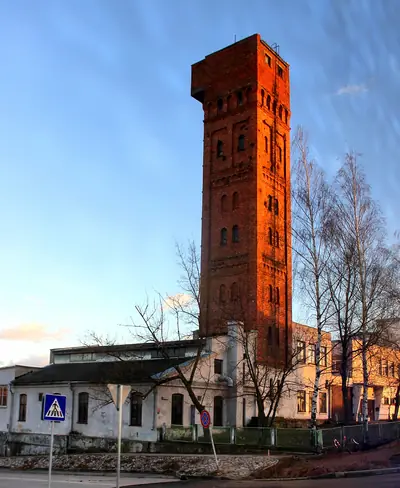
Daugavpils Shot Factory
The Daugavpils Shot Factory is a distinctive industrial site and part of the city’s manufacturing history. The Latvian company is known for producing sporting and hunting ammunition.
The factory was built in 1885 and stands at 28 Varšavas Street. It offers a different perspective on Daugavpils, beyond its fortifications, churches and museums.
Dubrovin Park and the monument to Pāvels Dubrovins
Dubrovin Park provides a greener setting in the city centre, with mature paths, sculptures and a fountain. It is named after Pāvels Dubrovins, the former head of Dinaburg, who served from 1876 to 1890 and founded the park in 1882.
A bronze monument to Dubrovins stands in a square near the fountain. It was unveiled on September 16, 2007, during celebrations of the park’s 125th anniversary. The park and fountain later underwent a major reconstruction completed in 2009.
Daugavpils Theatre and the Museum of Shmakovka
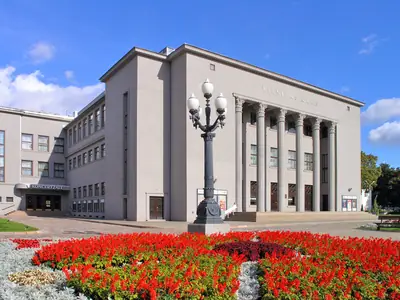
Daugavpils Theatre is a professional theatre established in 1988. Its performances take place in Latvian, Russian and Latgalian, reflecting the city’s multilingual character. The repertoire includes productions for adults and children.
The Museum of Shmakovka is another place to pause while exploring central Daugavpils. Together, these cultural stops show how the city’s heritage extends beyond its historic buildings.
Other churches worth seeing
Daugavpils has many more religious landmarks. The Church of Saint Nicholas, built in 1894, is a red-brick Orthodox church within the grounds of Daugavpils Orthodox Cemetery and a regional cultural monument.
The Daugavpils Peter and Paul Orthodox Church stands at 52 Zeltkalna Street in the Jaunā Forštate area. Its current building was consecrated in 1934 using materials from an earlier wooden church and chapel, and it was expanded in the twenty-first century, with new domes added in 2008.
In Grīva, the Virgin Mary Church at 28 Baznīcas Street is a Roman Catholic parish church and a state-importance architectural monument.
Explore Daugavpils with a free audio guide
A Daugavpils self-guided walking tour lets you discover the city without joining a group or following a fixed timetable. Neywo offers two walking tours, with a total of 21 narrated places:
- Daugavpils, Home of Rothko: Squares, Synagogue and Church Hill — 3.61 km, 110 minutes and 11 narrated stops.
- Fortress, Rothko and a Wooden Church — 6.25 km, 117 minutes and 5 narrated stops.
The app tells the story of each place as you reach it, at your own pace, with no group and no schedule. It is a free audio guide for exploring Daugavpils, whether you are following a route through the centre and Church Hill or visiting the fortress and Rothko Art Centre.
Download Neywo and explore Daugavpils with its stories playing as you walk. Once you have discovered the city, continue through Latvia or visit nearby Rēzekne and Ludza.
Places with an audio guide in Daugavpils
8 places in Daugavpils with a Neywo audio guide. Each one starts telling its story as you reach it.
Self-guided tours in Daugavpils
1 tour in Daugavpils, free in the Neywo app. Each stop tells its story as you reach it.
- Walk
Daugavpils, Home of Rothko: Squares, Synagogue and Church Hill
Walk the centre of Latvia's second city, from the Dubrovins Park monument and the 1930s Unity House to the only synagogue that survived. Then climb Church Hill, where Orthodox, Lutheran, Catholic and Old Believer churches stand within a few hundred metres of each other.
Daugavpils Local History and Art Museum · Pāvels Dubrovins, Dinaburgas pilsētas galva · Vienības laukums · Unity House · Šmakovkas muzejs · Saint Peter in chains Roman Catholic Church in Daugavpils …
Open this tour: Daugavpils, Home of Rothko: Squares, Synagogue and Church Hill
Walk Daugavpils with Neywo
Neywo turns Daugavpils into a self-guided audio tour. Stories arrive as you reach the place they belong to, and the route reshapes when you wander off it.

