What to See in Beirut, Lebanon: Free Audio Guide
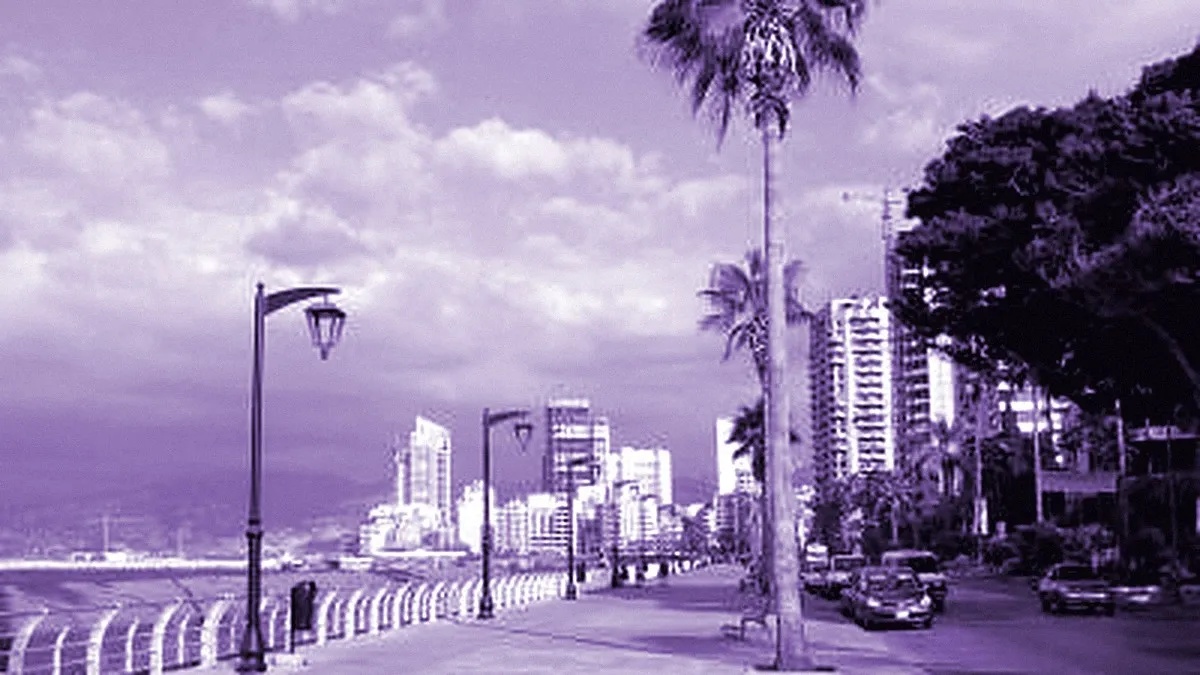
Things to Do in Beirut: Historic Landmarks, Museums and Mediterranean Views
Looking for things to do in Beirut? Lebanon’s capital brings together Roman, Byzantine, Crusader, Ottoman and modern history in a city shaped by successive periods of change. Its churches, mosques, museums, waterfront landmarks and memorials make Beirut rewarding to explore on foot, and Neywo offers a free audio guide for Beirut with 36 narrated places.
What to See in Beirut
Beirut’s historic religious landmarks
Beirut’s central district contains an unusual concentration of religious buildings, reflecting the city’s layered history and diverse communities.
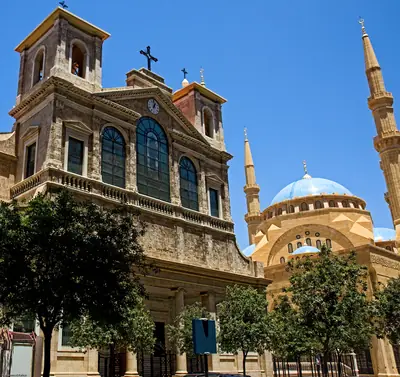
The Mohammad Al-Amin Mosque, often called the Blue Mosque, stands beside the Maronite Cathedral of Saint George. Inaugurated in 2008, it is recognizable by its light-blue tiled domes, high arches and prominent minarets. The mosque replaced an earlier zawiya on the site, and construction moved forward after a donation from former Prime Minister Rafic Hariri.
Next door, the Maronite Cathedral of Saint George was built between 1884 and 1894 under Archbishop Joseph Debs. Its Neoclassical design was inspired by the Basilica di Santa Maria Maggiore in Rome. A coffered gilded ceiling, marble and stucco walls, a prominent altar canopy, and a basilica plan with two lateral aisles define the interior. The cathedral suffered extensive damage during the Lebanese Civil War before being restored.
The Saint George Greek Orthodox Cathedral occupies an even older religious site. It stands over the remains of the Anastasi Romano-Byzantine Cathedral, founded in the 5th century and lost after the earthquake of 551 AD. The present cathedral went through several reconstructions, including changes after the 1759 earthquake, and features a cruciform plan, three naves, a bell tower and a gilded iconostasis.
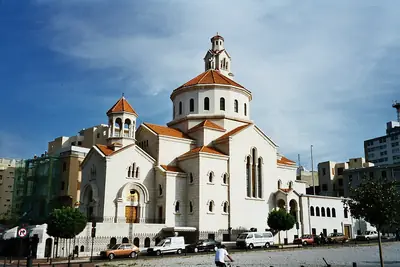
The St. Elie and St. Gregory the Illuminator Armenian Catholic Cathedral is known locally by nicknames including “The Dome” and “The Egg.” Construction began in 1928, and the Romanesque cathedral was completed in 1959. It replaced earlier churches on the site and was heavily damaged during the civil war.
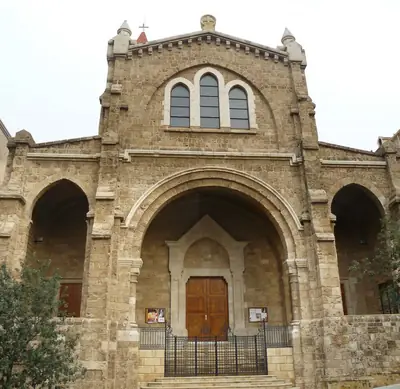
At St. Louis Cathedral, a Latin Catholic cathedral and convent built by Capuchin missionaries in 1864, the tall campanile is the defining feature. The sandy-stone façade and pink wooden windows give the building a distinctive appearance. Nearby, the Roman Baths of ancient Berytus were discovered downtown in 1968.
The Al-Omari Grand Mosque, also known as Jami’ Al-Kabir, shows the city’s religious history particularly clearly. The site began as a Roman temple, later became a Byzantine church, was converted into a Crusader church, and was subsequently turned back into a mosque under the Mamluks. Its present structure includes a courtyard, two minarets and a Mamluk-style entrance added during renovations completed by 1350.
Beirut’s Jewish heritage is represented by the Maghen Abraham Synagogue in Wadi Abu Jamil. Established in 1925, it was funded by Moise Abraham Sassoon and named after his father. The synagogue also served as a community center before the Lebanese Civil War caused serious damage and displaced many Jewish families. Restoration began in 2009, and the synagogue reopened around 2014.
Roman ruins and the old city
The remains known as آثار رومانية offer a glimpse of Roman Beirut within the modern city. They form part of the historical layers found around the central district, where religious buildings, streets and archaeological remains reveal the importance of ancient Berytus.
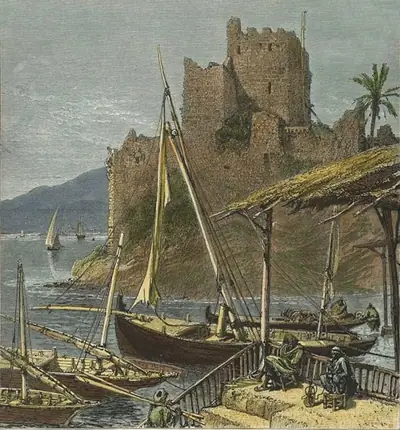
Beirut Castle was a major Crusader castle near the waterfront and downtown area. It was mostly built during the Crusades, later damaged during conflicts in the late Ottoman period and during the Egyptian rule of Beirut, and eventually demolished during work connected with the extension of the Port of Beirut in the late 19th century. A mosque was rebuilt on its ruins in 1844 and later became known as the Al Majidieh Mosque. The castle is also associated with a sea-facing tower and the Phoenico-Persian quarter.
Beit Beirut and the city’s recent history
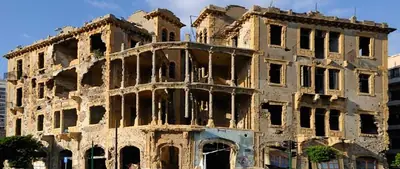
Beit Beirut is a museum and urban cultural center dedicated to the history of Beirut, with particular attention to the Lebanese Civil War. It occupies the restored Barakat building, also called the Yellow House, designed by Youssef Aftimus.
The building deliberately preserves much of its wartime appearance. Bullet holes, sniper barricades and personal belongings of former residents remain part of the site, especially on the ground and first floors. Activists, intellectuals and architects helped save the building from post-war demolition, arguing that its preservation could support collective memory and healing.
The Rafik Hariri Memorial Shrine, identified in the source material as آثار رومانية, commemorates the former prime minister and his bodyguards. Designed by Marc Barani and completed in 2018, it is conceived as a sculpted ground rather than a conventional building. A reflective spiral path moves through the memorial, with views extending from the sea and mountains to Roman ruins and Beirut’s modern skyline.
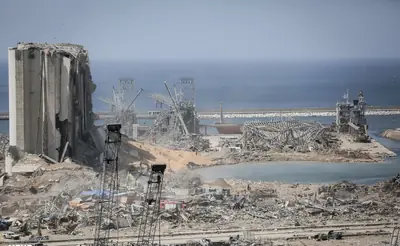
The 2020 Beirut explosions are another defining part of the city’s recent history. On 4 August 2020, ammonium nitrate detonated after a fire in a warehouse at the Port of Beirut. The blast caused extensive damage, including to the adjacent grain silos. Portions of the silos later collapsed in July and August 2022 after fires caused by remaining grain stocks. The explosion was followed by a two-week state of emergency, expanded protests and the resignation of Prime Minister Hassan Diab and his cabinet on 10 August 2020.
Museums and cultural landmarks
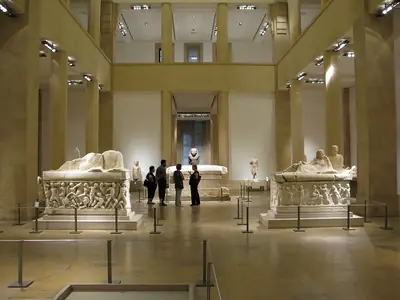
The National Museum of Beirut is Lebanon’s principal archaeology museum. Its collection began after World War I, and the museum officially opened in 1942. Around 1,300 objects are displayed chronologically, from prehistoric times through the medieval Mamluk period, from a wider collection of about 100,000 objects.
The museum itself also tells a story of survival. During the Lebanese Civil War, it stood on the front line between opposing factions and suffered extensive damage. Many artifacts were saved through preemptive measures, and the building later underwent major renovation.
The Sursock Museum, officially the Nicolas Ibrahim Sursock Museum, focuses on modern and contemporary art. It occupies a palace built by Nicolas Sursock in 1912. After his death in 1952, he left the palace to the municipality of Beirut so it could become a museum. Since 1961, it has hosted art and literary exhibitions by Lebanese and international artists. The building and its collection were affected by the Beirut port explosion on 4 August 2020.
Beirut’s waterfront and university district
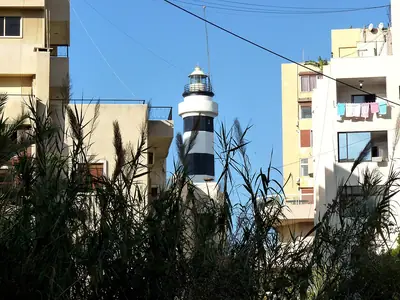
The Old Beirut Lighthouse, known locally as Manara, was originally built in 1835. Its octagonal tower rises 25 metres and is marked by parallel white and black bands. A lantern and circular observation room recall its maritime role during the period when Beirut was becoming an important port and economic center. Although inactive since 2003, it remains a notable landmark.
The American University of Beirut opened on 3 December 1866 as Syrian Protestant College and adopted its current name on 18 November 1920. Its campus occupies 61 acres in Ras Beirut beside Bliss Street, with views of the Mediterranean Sea. The university includes the Archaeological Museum and Natural History Museum among its facilities.
For a broader trip through the country, you can also look at Lebanon, or consider nearby destinations such as Byblos and Baalbek.
Explore Beirut with Neywo
Neywo turns your visit into a Beirut self-guided walking tour: the app tells the story of each place as you reach it, at your own pace, with no group and no schedule. Beirut currently has three walking tours:
- Downtown Beirut: mosques, cathedrals and the Roman ruins — 1.56 km, 92 minutes and 12 narrated stops.
- Riad Al Solh and the Grand Serail — 0.83 km, 35 minutes and 5 narrated stops.
- The Ultimate Beirut: downtown to the National Museum — 3.2 km, 90 minutes and 5 narrated stops.
Download Neywo to explore Beirut with a free audio guide, following the city’s history from Roman ruins and medieval religious sites to museums, memorials and modern landmarks. Narration is available in 11 languages, and every story plays when you arrive at the place it describes.
Places with an audio guide in Beirut
8 places in Beirut with a Neywo audio guide. Each one starts telling its story as you reach it.
Self-guided tours in Beirut
3 tours in Beirut, free in the Neywo app. Each stop tells its story as you reach it.
- Walk
Downtown Beirut: mosques, cathedrals and Place de l’Étoile
The rebuilt centre, where a Crusader-era castle, an Ottoman mosque, Maronite and Greek Orthodox cathedrals, an Armenian Catholic cathedral and excavated Roman columns stand within a few hundred metres of parliament. Beirut's whole argument in one walk.
Beirut Castle · Beirut Souks · Al-Omari Grand Mosque · Emir Munzer Mosque · St. Louis Cathedral · Parliament Building of Lebanon …
Open this tour: Downtown Beirut: mosques, cathedrals and Place de l’Étoile - Walk
Riad Al Solh and the Grand Serail
A short walk around the seat of government: the Ottoman barracks that became the prime minister's palace, the Gibran garden, an evangelical church, and the abandoned Maghen Abraham synagogue of the old Jewish quarter.
Maghen Abraham Synagogue · Grand Serail · Gibran Khalil Gibran Garden · National Evangelical Church of Beirut · Riad Al Solh Square
Open this tour: Riad Al Solh and the Grand Serail - Walk
The Ultimate Beirut: downtown to the National Museum
From the castle and the cathedrals of the centre out past Beit Beirut — the shell-scarred yellow house kept as a memorial to the civil war — to the National Museum and its Phoenician sarcophagi. Just over three kilometres.
Beirut Castle · St. Louis Cathedral · St. Elie and St. Gregory the Illuminator Armenian Catholic Cathedral · Beit Beirut · National Museum of Beirut
Open this tour: The Ultimate Beirut: downtown to the National Museum
Walk Beirut with Neywo
Neywo turns Beirut into a self-guided audio tour. Stories arrive as you reach the place they belong to, and the route reshapes when you wander off it.

