Birgu, Malta: Self-Guided Walking Tour
Things to do in Birgu, Malta
Birgu, also known as Vittoriosa, is a historic harbour city on the Birgu peninsula and one of Malta’s most atmospheric places to explore. Its fortresses, churches, museums and narrow streets tell the story of the Knights of Saint John, the Great Siege of 1565 and Malta’s long relationship with the sea. Neywo has a free audio guide for Birgu with 25 narrated places, so you can discover the city while walking at your own pace.
What to see in Birgu
The best things to do in Birgu are concentrated within a compact historic area. The following places reveal the city’s military, religious and maritime history.
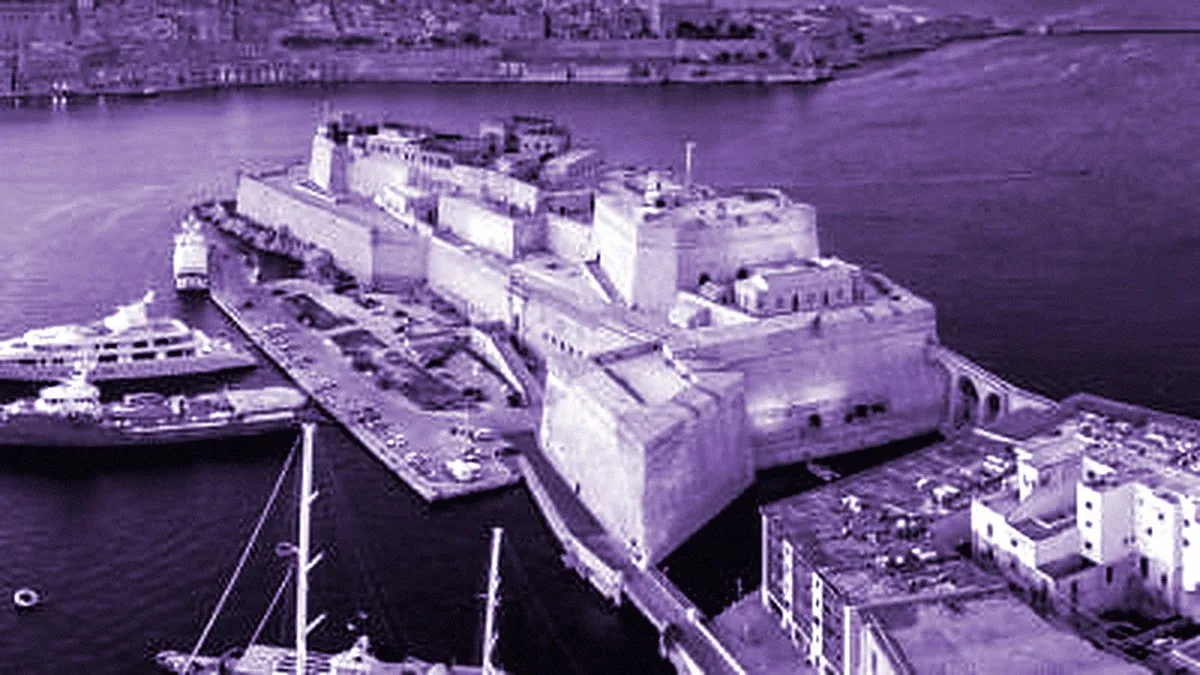
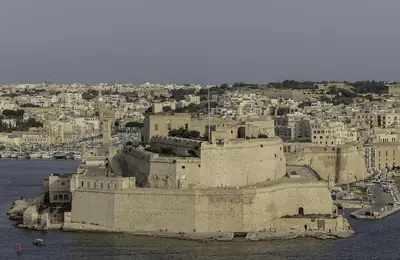
Fort St Angelo
At the tip of the Birgu peninsula, Fort St Angelo rises beside the water, separated from the city by a sea-filled moat. A castle known as the Castrum Maris, or Castle by the Sea, stood here before the Knights of Saint John arrived in Malta in 1530.
The Knights transformed the old castle into a powerful bastioned fortress and made it their headquarters. During the Great Siege of 1565, it became the centre of the Christian defence, coordinating the resistance against the Ottoman forces. Much of the fort’s present form dates from a major reconstruction in the 1690s, designed by the military engineer Carlos de Grunenbergh.
Church of the Nativity of Mary within the fort
Inside Fort St Angelo, the Church of the Nativity of Mary is also known as the Chapel of Our Lady of Victory. Its name reflects the chapel’s connection with the Great Siege of Malta, when the fort was at the heart of the confrontation between the Knights Hospitaller and the Ottoman Empire.
The chapel is a small but significant part of the fort’s religious and military history. It is also known locally as Il-kappella tat-Twelid ta’ Marija and Il-kappella tal-Vitorja.
Chapel of St Anne
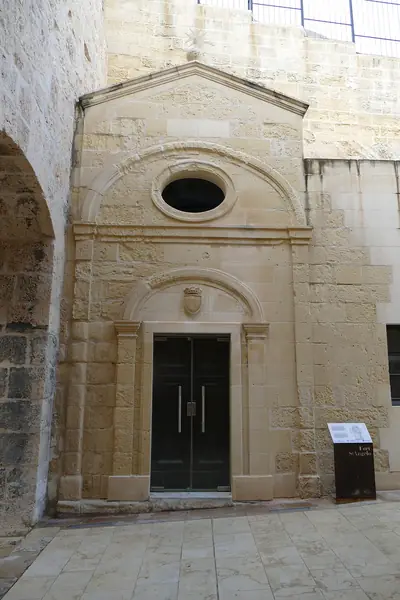
The Chapel of St Anne is another historic religious building within Fort St Angelo. The first written record of a chapel here dates to the thirteenth century, while the present building was largely constructed around 1430 and enlarged by the Order of Saint John in 1532.
For more than two centuries, it served the knights and the fort’s garrison. After the French expelled the Order in 1798, the chapel was used as a store, a school and a Church of England chapel for the British garrison. It later returned to Catholic use.
St. Lawrence’s Church
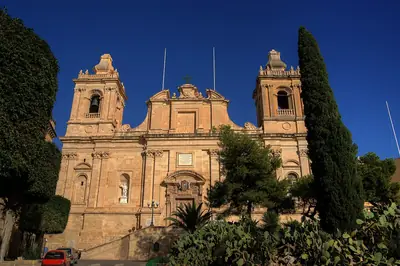
St. Lawrence’s Church was the spiritual centre of the Knights of Saint John before Valletta was built. The present Roman Baroque church was constructed between 1681 and 1697 to designs by the Maltese architect Lorenzo Gafa.
Inside, the main altarpiece by Mattia Preti depicts the martyrdom of Saint Lawrence. The church also contains works by Stefano Erardi, including Christ the Saviour and The Dead Christ. In Saint Joseph’s Chapel, visitors can see the hat and sword of Grand Master Jean de la Valette.
Malta Maritime Museum
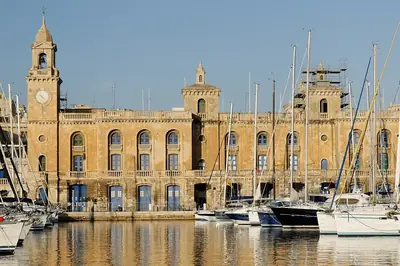
On the Birgu waterfront, the Malta Maritime Museum occupies the former Royal Naval Bakery. Built in the 1840s to supply bread to the Mediterranean Fleet, the building retains the atmosphere of an important naval and industrial site.
Its collection includes more than twenty thousand artefacts covering seven thousand years of Malta’s relationship with the sea. Anchors, paintings, navigational instruments and sailors’ tools explore the island’s maritime life, including the role of corsairing and the meeting of different cultures and faiths around Malta.
The waterfront itself has changed over time. It was a naval base under the Knights of Saint John and later a centre for the Royal Navy. Today, historic buildings stand beside super-yachts and leisure spaces.
Oratory of St Joseph and the Chapel of Our Lady of Damascus
The Oratory of St Joseph contains the Chapel of Our Lady of Damascus, known locally as Tal-Griegi, or the Greek chapel. It once served Birgu’s Greek community and was originally a Greek Catholic church.
This quiet site offers a different perspective on the city’s history, showing how communities from beyond Malta were part of life in Birgu.
Church of the Annunciation
The Church of the Annunciation was originally built in 1450 and entrusted to the Dominican Order in 1528. During the Great Siege of 1565, it became the parish church of Vittoriosa, where people gathered for prayer and refuge while the city was bombarded.
The church was destroyed during the Second World War, but some treasures survived, including the statue of Our Lady of the Rosary and the silver pedestal of Saint Dominic’s statue. A new church was consecrated in 1960. Behind Saint Lawrence’s Parish Church, the Parish Church Museum occupies the former Church of Saint Catherine.
Inquisitor’s Palace
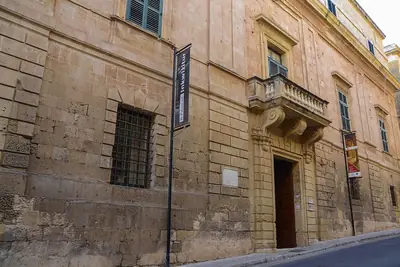
The Inquisitor’s Palace began as the Castellania, the civil courthouse of the Knights of Saint John, in the early sixteenth century. In 1574, it became the residence of Monsignor Pietro Dusina, the first general inquisitor and apostolic delegate for the Maltese Islands.
The building was gradually transformed into a Roman Baroque palace and remained the home of the Inquisition for 224 years. It is one of the very few inquisitorial palaces still standing and the only one open to the public.
The Norman House
On North Street, the Norman House is considered the oldest standing building in Birgu. Dating from the thirteenth century, it reflects the Siculo-Norman architectural style brought to Malta from Sicily during the Norman period.
Its façade is particularly notable for the richly decorated double-light window on the upper floor, with palm motifs. The building also features a horizontal string course and tapered stone doorways similar to those found in medieval houses in Mdina. Inside, the house is arranged over three levels.
Birgu’s historic gates and auberges
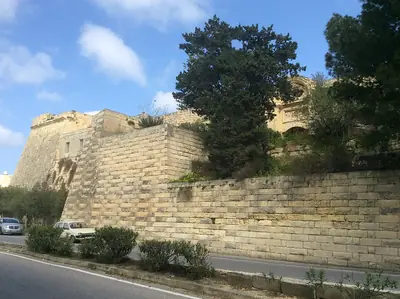
Birgu’s defensive character is especially clear around the Couvre Porte Gate, the Advanced Gate and the Birgu Main Gate. These entrances formed part of the city’s layered fortifications and controlled access to the peninsula.
The former auberges show another side of the Knights of Saint John. Built for different national groups within the Order, Auberge d’Angleterre, Auberge d’Auvergne et Provence, Auberge de France and Auberge de Castille et Portugal reflect the international organisation of the Knights and their presence in Birgu.
Fort San Salvatore
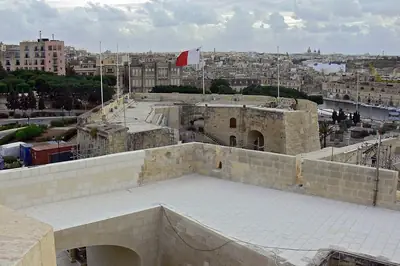
Fort San Salvatore is a smaller fortification built in 1724 on one of the bastions of the Cottonera Lines. From its elevated position, it commanded views of the harbour approaches and the landward approaches to Birgu.
Its later history includes use as a prisoner-of-war site during the Greek War of Independence and the First World War. During the Second World War, it served as an internment camp, while its magazines became a kerosene depot.
The Bishop’s Palace and Curia
The Bishop’s Palace and Curia was built in the sixteenth century as the official residence of the Roman Catholic Bishops of Malta. Known locally as Il-Palazz tal-Isqof, it adds a civic and religious monument to Birgu’s concentration of historic buildings.
Monastery of St. Scholastica
The Monastery of St. Scholastica has been home to Benedictine sisters for centuries. It is dedicated to Saint Scholastica, the twin sister of Saint Benedict and patroness of Benedictine nuns.
The adjoining church is dedicated to Saint Anne and was built in 1679 to designs by Lorenzo Gafà. Its history adds a quieter, devotional chapter to Birgu’s maritime and military story.
Ghost House
Birgu’s Ghost House is one of its oldest surviving buildings. Its history is connected with the Armoury, built by the Knights of Saint John between 1533 and 1537 to store weapons and gunpowder. Its doors on all four sides allowed munitions to be moved quickly when necessary.
During the Great Siege, the building became a field hospital for wounded soldiers. Under British rule, it continued as a military hospital and barracks, and after the Second World War it became a primary school.
Explore Birgu with a self-guided audio tour
A Birgu self-guided walking tour is a practical way to connect the city’s fortresses, churches and museums without joining a group. Neywo tells the story of each place as you reach it, at your own pace, with no group and no schedule. The narration is available in 11 languages.
The free Birgu audio guide includes two walking tours:
- Birgu: Fortress, Siege and Harbour — 1.31 km, 69 minutes and 9 narrated stops.
- Birgu: Gates, Auberges and the Oldest House — 1.35 km, 72 minutes and 11 narrated stops.
Together, the walks cover Fort St Angelo, the Chapel of St Anne, the Malta Maritime Museum, St. Lawrence’s Church, the Church of the Annunciation, Inquisitor’s Palace, the Norman House, Birgu’s gates, its auberges and Fort San Salvatore.
Download Neywo to explore Birgu with its free audio guide, and continue discovering Valletta, Sliema and the wider island of Malta with the stories playing as you arrive at each place.
Places with an audio guide in Birgu
8 places in Birgu with a Neywo audio guide. Each one starts telling its story as you reach it.
Self-guided tours in Birgu
2 tours in Birgu, free in the Neywo app. Each stop tells its story as you reach it.
- Walk
Birgu: Fortress, Siege and Harbour
Start at the tip of the peninsula in Fort St Angelo, the headquarters of the Knights of St John during the Great Siege of 1565. Then follow the waterfront and the old streets to the baroque church of St Lawrence and the only inquisitor's palace in the world open to the public.
Main Gateway – Fort St Angelo · Fort St Angelo · Chapel of St Anne, Fort St Angelo · Siege of Malta · Malta Maritime Museum · St. Lawrence's Church, Vittoriosa …
Open this tour: Birgu: Fortress, Siege and Harbour - Walk
Birgu: Gates, Auberges and the Oldest House
Enter Birgu the way an attacker would, through its three bastioned gates, then wander the lanes where the knights of France, England, Auvergne and Castile once lived. Find the oldest standing house in the city and finish at Fort San Salvatore on the Cottonera Lines.
Malta at War Museum · Couvre Porte Gate · Advanced Gate · Birgu Main Gate · The Bishop’s Palace and Curia · The Norman House …
Open this tour: Birgu: Gates, Auberges and the Oldest House
Walk Birgu with Neywo
Neywo turns Birgu into a self-guided audio tour. Stories arrive as you reach the place they belong to, and the route reshapes when you wander off it.

