Kathmandu, Nepal: Self-Guided Walking Tour
Things to Do in Kathmandu: Historic Squares, Sacred Sites and Living Heritage
The best things to do in Kathmandu include exploring royal squares, Buddhist stupas, Hindu temples, museums and streets where historic traditions remain part of everyday life. Nepal’s capital is the cultural heart of the Kathmandu Valley and rewards travellers who take time to walk between its monuments, courtyards and markets. Neywo offers a free audio guide for Kathmandu with 38 narrated places, so you can discover the city while its stories play at the places themselves.
What to See in Kathmandu
Basantapur Durbar Square
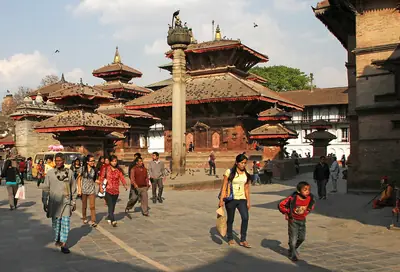
Basantapur Durbar Square is the historic heart of Kathmandu and one of three Durbar squares in the Kathmandu Valley recognised as a UNESCO World Heritage Site. Its Newar architecture includes temples with finely carved façades dating from the sixteenth-century Malla period, as well as the nine-storey Nautalle Durbar palace, built by Prithvi Narayan Shah to mark the unification of Nepal.
The square’s origins reach back to the third century, although most of the buildings visible today took shape during the Malla and Shah eras. It is also known as Hanuman Dhoka Durbar Square, after the statue of Hanuman at its entrance.
Within the square, Gaddi Baithak stands out for its neoclassical façade. Commissioned in 1908 by Chandra Shumsher Jang Bahadur Rana, it served as a venue for royal coronations and a reception hall for foreign heads of state. Its symmetrical design and classical details contrast with the surrounding traditional Newari buildings.
Kaal Bhairav is another memorable landmark in the square. The stone image represents a fierce form of Shiva and is believed to have been carved from a single block. According to local legend, King Pratap Malla brought it to the square after it was discovered in a paddy field. In the past, the statue was also used as a makeshift court.
Swayambhunath and the Swayambhu Buddhist Museum
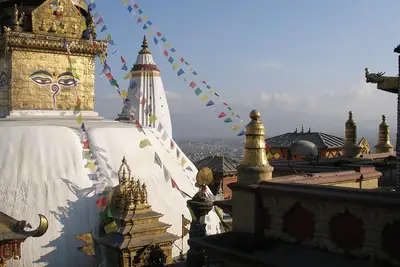
On a hill west of Kathmandu, Swayambhunath is an ancient stupa complex shared by Buddhist and Hindu pilgrims. UNESCO recognised the site as a World Heritage Site in 1979. The stupa is marked by the Buddha’s all-seeing eyes, while its popular name, the Monkey Temple, refers to the monkeys that roam the hillside.
Visitors can reach the complex by climbing the long eastern stairway or by following the road around the hill from the south-west. The Swayambhu Buddhist Museum is located within the complex, adding a museum visit to the pilgrimage site and its hilltop views.
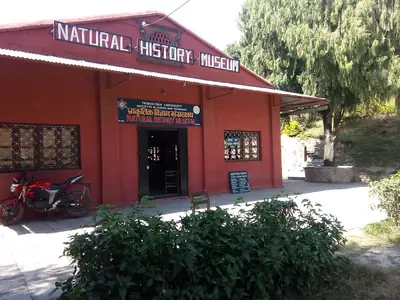
Nearby, the Natural History Museum of Nepal preserves the country’s natural heritage. Affiliated with Tribhuvan University’s Institute of Science and Technology, it displays more than fifty thousand specimens representing Nepal’s flora, fauna and fungi. Established in 1975, it also runs training and outreach programmes connected with CITES.
Boudhanath Stupa
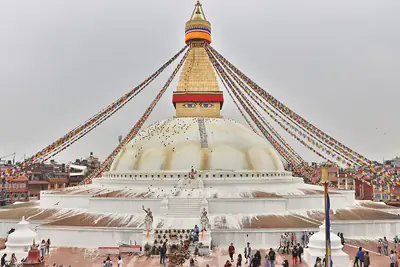
Boudhanath Stupa, also written Baudhanath, is northeast of Kathmandu and is the largest spherical stupa in Nepal. Its enormous layout follows a mandala pattern, and the present structure most likely dates from the fourteenth century. It became a UNESCO World Heritage Site in 1979.
A shrine to Mammo Pukkasi, locally known as the fierce Hariti or Ajima, stands at the main northern entrance. The Mahaguru Gompa facing the stupa cares for its rites and Ganachakra offerings. Traditions also associate the stupa with the origins of Tibetan Buddhism and with sacred relics believed to come from Kassapa Buddha and Shakyamuni Buddha.
The National Museum of Nepal
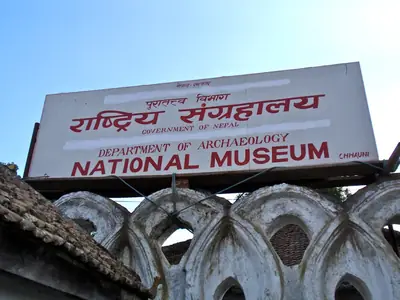
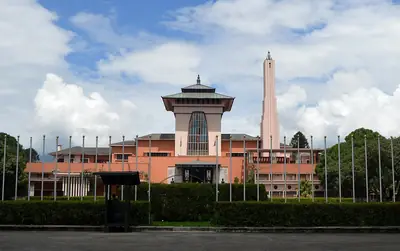
At the foot of Swayambhu hill, the National Museum of Nepal is the country’s first and largest museum. Its grounds include gardens, open spaces and several buildings, organised around the War Victory Hall, the Buddha Art Gallery and the main building.
The collections cover ancient weapons, clothing, coins, gifts from former kings, sculptures, paintings and murals. A dedicated display presents weapons used during the eighteenth and nineteenth centuries. The museum has also contributed to Nepal’s archaeological work and to the development of museums across the country.
Narayanhiti Palace Museum
Next to the Thamel district, Narayanhiti Palace Museum occupies the former residence of Nepal’s monarchs. The existing palace was commissioned by King Mahendra in 1963 as a royal residence and centre of state affairs. After the 2006 revolution ended the monarchy, the complex became a museum and opened to the public in 2008.
The palace grounds include courtyards, gardens and numerous buildings. The museum also preserves the memory of the tragic events of 1 June 2001, when a mass shooting at Narayanhiti Palace resulted in the deaths of King Birendra, Queen Aishwarya and others.
Dharahara and Sundhara
In the Sundhara area, Dharahara rises above the surrounding rooftops. Also called Bhimsen Stambha, the tower is nine storeys high and reaches 72 metres. Its interior contains a spiral staircase of 213 steps leading to a circular balcony on the eighth floor, topped by a 5.2-metre bronze mast.
The original tower was commissioned by Queen Lalit Tripurasundari, with Prime Minister Bhimsen Thapa overseeing its construction. The April 2015 earthquake caused most of it to collapse and claimed 180 lives whose bodies were recovered from the debris. Reconstruction began in October 2018, and the tower was partially reopened on 24 April 2021; work continued until September 2024.
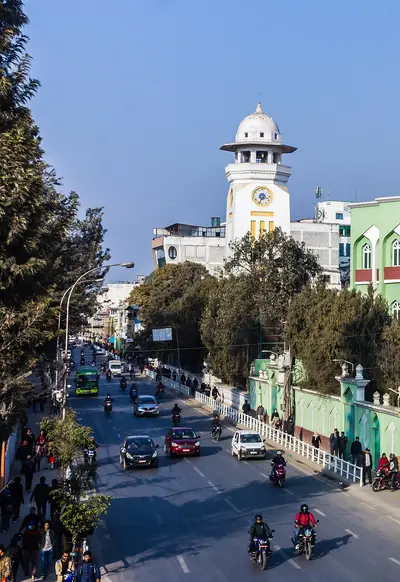
Sundhara itself is a dhunge dhara, a traditional water spout in Kathmandu. Nearby, Ghanta Ghar is the city’s oldest clock tower. Its design was inspired by London’s Big Ben and reflects the Rana era’s interest in Western architecture. The original structure was destroyed in the 1990 BS earthquake and rebuilt on the same site.
Lalitpur and the Kathmandu Valley
For a wider view of the region’s heritage, explore Patan, the historic city also known as Lalitpur or Yala. Its architectural centrepiece is Patan Durbar Square, a UNESCO World Heritage Site surrounded by temples including Kumbeshwar Temple, Patan Buddhist Vihar and Krishna Temple. Workshops and markets also reflect Lalitpur’s long tradition of arts and crafts.
The Kathmandu Valley itself is a bowl-shaped valley and Nepal’s national capital area and economic hub. It includes Kathmandu, Lalitpur, Bhaktapur and other cities, and is known for its architecture, cultural life and large number of jatras, or traditional festivals. Bhaktapur was the valley’s capital until the early eighteenth century, before Kathmandu and Patan became separate capitals.
Explore Kathmandu with a Self-Guided Audio Tour
Neywo’s Kathmandu self-guided walking tour lets you explore the city without joining a group or following a fixed timetable. The app tells the story of each place as you reach it, at your own pace, with no group and no schedule.
Kathmandu currently has three walking tours and one bus route:
- Kathmandu Durbar Square: Palaces, Gods and a Living Goddess — a 2.09 km walk lasting 87 minutes, with 10 narrated stops.
- The Rana Years: Towers, Ponds and Martyrs — a 3.7 km walk lasting 98 minutes, with 9 narrated stops.
- Swayambhu Hill: Monkeys, Stupa and Museums — a 1.69 km walk lasting 51 minutes, with 4 narrated stops.
- Bus 26: Maitighar to the Old Bus Park — a 2.8 km bus route lasting 12 minutes, with 4 narrated stops.
Together, the Kathmandu audio guide covers 38 narrated places, with narration available in 11 languages. Download Neywo and explore the capital independently, hearing the story of each landmark when you arrive rather than trying to match a guide’s schedule.
For more destinations in the area, continue through Bagmati Province, or discover nearby Panauti, Dhulikhel and Pharping. You can also browse the wider Nepal guide.
Places with an audio guide in Kathmandu
8 places in Kathmandu with a Neywo audio guide. Each one starts telling its story as you reach it.
Self-guided tours in Kathmandu
4 tours in Kathmandu, free in the Neywo app. Each stop tells its story as you reach it.
- Bus ride
Bus 26: Maitighar to the Old Bus Park
A city bus on the central axis, from the Maitighar Mandala past Bhadrakali and the Shahid Gate to the Kashmiri mosque by Ratna Park. A slow, local way to cross the middle of Kathmandu between its Rana-era monuments.
Maitighar Mandala · Bhadrakali Temple · Shahid Gate · Pancha Kashmiri Takiya Masjid
Open this tour: Bus 26: Maitighar to the Old Bus Park - Walk
Kathmandu Durbar Square: Palaces, Gods and a Living Goddess
The old royal square is one of the densest heritage sites in Asia. Walk from the rebuilt wooden shelter that gave the city its name past the Rana-era palace, the Hanuman gate, the fierce Kaal Bhairav and the Taleju temple, then follow the old trade route to the market squares of Indra Chowk and Asan and end at the Buddhist-revered Sankata shrine.
Maru, Kathmandu · Kasthamandap · Basantapur Durbar Square · Gaddi Baithak · Hanuman Dhoka · Kaal Bhairav, Kathmandu …
Open this tour: Kathmandu Durbar Square: Palaces, Gods and a Living Goddess - Walk
The Rana Years: Towers, Ponds and Martyrs
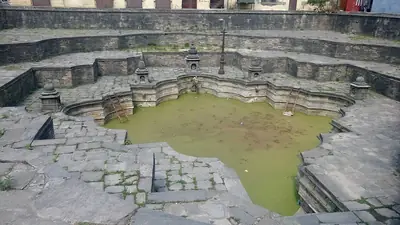
Prime ministers of the Rana family brought London to Kathmandu: a clock tower modelled on Big Ben, a nine-storey tower, a gate for martyrs of democracy. Walk from the Dharahara and the golden-water Sundhara to the Shahid Gate and Bhadrakali, north to the clock tower, the Queen's Pond and the old Kashmiri mosque, and end in the Garden of Dreams and the palace of the last kings.
Dharahara · Sundhara · Shahid Gate · Bhadrakali Temple · Ghanta Ghar · Ranipokhari …
Open this tour: The Rana Years: Towers, Ponds and Martyrs - Walk
Swayambhu Hill: Monkeys, Stupa and Museums
West of the city, the hilltop stupa of Swayambhunath watches over the valley with the Buddha's all-seeing eyes. Start at the natural history museum at its foot, climb to the stupa and its monkeys, then walk down to the National Museum and the Olympic Museum.
Natural History Museum of Nepal · Swayambhunath · Chhauni Museum · Nepal Olympic Museum
Open this tour: Swayambhu Hill: Monkeys, Stupa and Museums
Walk Kathmandu with Neywo
Neywo turns Kathmandu into a self-guided audio tour. Stories arrive as you reach the place they belong to, and the route reshapes when you wander off it.

