What to See in Bitola, North Macedonia: Free Audio Guide
Things to Do in Bitola, North Macedonia
The best things to do in Bitola include exploring Širok Sokak, Magnolia Square, the Old Bazaar and its Ottoman mosques, as well as discovering the city’s churches, museums and historic fortress. Bitola brings together Ottoman, Orthodox and Catholic heritage in a compact city centre, making it especially rewarding to explore on foot. Neywo has a free audio guide for Bitola with 36 narrated places, available in 11 languages.
What to See in Bitola
Širok Sokak and Magnolia Square
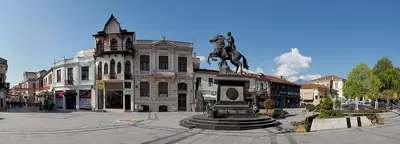
Širok Sokak is Bitola’s main thoroughfare and one of the city’s most lively places. Historic buildings line the pedestrian street, alongside cafés, restaurants and terraces. The route leads towards Magnolia Square, a traditional meeting point in the old town, close to the Clock Tower and Širok Sokak.
Magnolia Square is surrounded by buildings with Ottoman-era features, including stone ground floors and wooden upper levels in the traditional Macedonian-Ottoman style. At its centre stands an eight-and-a-half-metre bronze statue of Philip II of Macedon, founder of ancient Heraclea, above a fountain decorated with the sixteen-ray Vergina Sun. The Magaza art gallery and the contemporary Glass Building add further contrasts around the square.
Co-Cathedral of the Sacred Heart
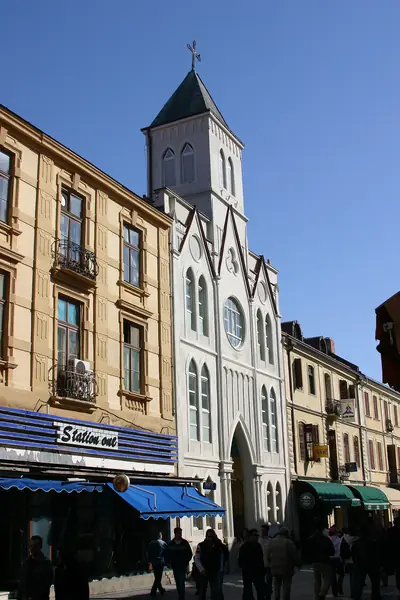
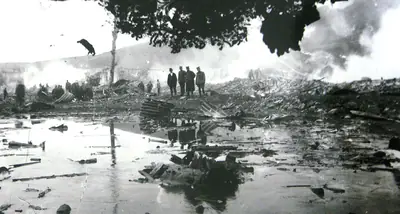
The Co-Cathedral of the Sacred Heart stands on Širok Sokak and is the seat of the Catholic Church in North Macedonia. Catholic activity in Bitola began with French Lazarist missionaries in 1856. A Baroque church built on the site in 1870 was destroyed by fire in 1900, and the present building was completed in 1909.
French architects designed it in a Neo-Gothic style, while local craftsmen carried out the construction. Inside are three altars, including a main altar made of chestnut wood in a German Gothic style.
Jeni Mosque
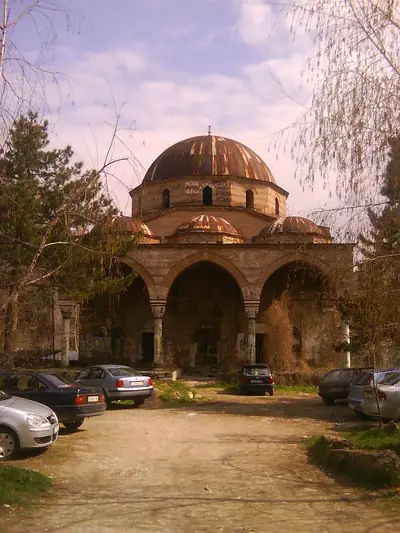
Jeni Mosque dates from 1558 and takes its name from the Turkish word for “new”. It was commissioned by Kadi Mahmud-efendi and follows a classic Ottoman design, with a square prayer hall, a single dome and a slender forty-metre minaret.
Its ornamental decoration is particularly notable. The interior includes stalactite details and glazed decorative elements described as the only examples of their kind in North Macedonia. Excavations beneath the mosque also revealed the foundations of an older Christian church, showing that the site had a religious role before the mosque was built.
St. Demetrius Church
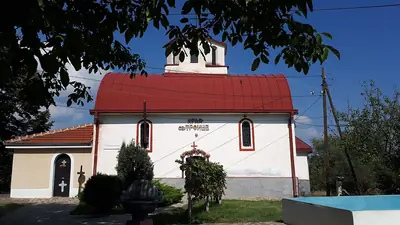
The Church of Saint Demetrius is Bitola’s main Orthodox cathedral and the seat of the Prespa-Pelagonia Diocese. Built in 1830, it has a three-nave basilica plan with side galleries. Its bell tower was added in 1936.
The cathedral’s gilded wooden iconostasis was carved by an unknown team of Macedonian masters. During conservation work in 2005, a hidden fresco of Jesus the Teacher was discovered in the central vault beneath more than a century of candle soot.
Gazi Hajdar Kadi Mosque and the Old Bazaar
In the Old Bazaar, the Gazi Hajdar Kadi Mosque stands near the old Deboj Hamam. Locally known as the Balkan Princess, it is regarded as one of Bitola’s finest classical Ottoman buildings.
The mosque is distinguished by its two slender minarets, each rising nineteen metres. It is the only mosque in North Macedonia with a pair of minarets. A square prayer hall supports a single dome twenty metres high, while tulip motifs provide restrained decoration around the windows and doors.
The Old Bazaar itself preserves narrow lanes, mosques and hammams that reflect Bitola’s importance as a commercial and cultural centre in earlier centuries. Some of the original commercial quarter has disappeared, but the remaining buildings still reveal an important Ottoman layer of the city.
People’s Museum
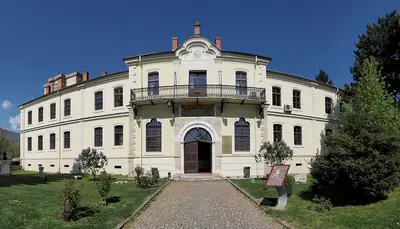
The People’s Museum occupies the former Bitola Military School, founded in 1847. Its exhibitions cover the history of North Macedonia, including the Internal Macedonian Revolutionary Organization, the two World Wars and the ancient city of Heraclea Lyncestis. The museum also holds a collection of religious icons.
Part of the historic building houses the Museum of Kemal Atatürk, funded by the Turkish government. Together, the collections connect Bitola’s local history with wider regional and international events.
Memorial House of Goce Delčev
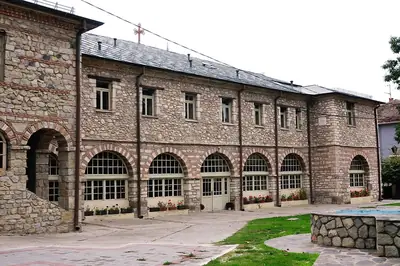
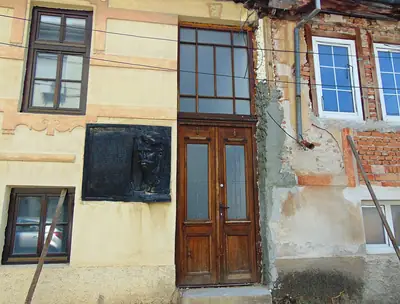
The Memorial House of Goce Delčev on Stevo Patako Street commemorates one of Macedonia’s revolutionary leaders. The building originally belonged to Mihail Rakidzhiev, a member of the Bitola Revolutionary District Committee. Goce Delčev stayed there in 1901 while meeting with Dame Gruev, who was being held in the local prison.
The house was reconstructed between 1987 and 1988, and the museum opened on May 4, 1988. Its two exhibition halls contain documents, photographs and weapons from the Ilinden period, including a revolver that Delčev gave to Rakidzhiev.
Bitola Fortress
Bitola Fortress, known locally as Dzhepane, was built in 1876 on the orders of the Ottoman vali. Its name comes from the Turkish word for arsenal, and the fortress was designed in the shape of a cross, with four stone structures forming its arms.
For much of the twentieth century, it served as a weapons depot for the Yugoslav People’s Army and was closed to the public. After the barracks closed and the property passed to the municipality, the gates opened and the fortress became a venue for cultural events and a place visitors could explore.
Other churches in Bitola
Bitola’s religious heritage extends beyond its main cathedral and mosques. The Church of Saint Naum of Ohrid began as a residential building donated to the Saint Naum Monastery in Ohrid in 1931. It was later converted into a church, with an iconostasis carved by Gjorgji Karadzhovski in 1960.
The Church of Saint Pantaleon is near the Student Dormitory and is associated with a feast day on August 9, when people come to light candles and drink holy water from a well inside the building. The Church of Saint Zlata of Meglen, near the Arena restaurant, was consecrated on September 13, 2014.
Other landmarks include the Church of Saint Athanasius the Great in Nova Bitola, the monastery church of St. Archangel Michael in the Bair district, the Church of Saint Alexander of Salonica and Holy Trinity Church in the village of Bukovski Livadi.
Explore Bitola with a Self-Guided Walking Tour
A Bitola self-guided walking tour is a simple way to connect the city’s main landmarks without joining a group. Neywo’s two walks focus on different sides of Bitola’s history.
The walk through Širok Sokak, the mosques and the Old Bazaar covers 2.26 km in 88 minutes and includes 10 narrated stops. It takes in the National Theatre of Bitola, the Co-Cathedral of the Sacred Heart, Magnolia Square, Jeni Mosque, St. Demetrius Church, Ishak Çelebi Mosque, Gazi Hajdar Kadi Mosque, Hacı Mahmud Bey Mosque, the Nativity of the Theotokos Church and the Broken Mosque.
The second walk, focused on cadets, revolutionaries and the alphabet, covers 1.94 km in 61 minutes with 6 stops. It includes the People’s Museum, Sts. Constantine and Helen Church, the Memorial House of Goce Delčev, Kodža Kadi Mosque, Besim Paşa Cami and the Albanian Alphabet Museum.
Download Neywo and Explore Bitola at Your Own Pace
Neywo offers a free audio guide for Bitola with 36 narrated places and two walking tours. Each walk provides stories about the places along the route, with 2.26 km and 88 minutes on the Širok Sokak, Mosques and the Old Bazaar route, and 1.94 km and 61 minutes on the Cadets, Revolutionaries and the Alphabet route. Together, the tours include the narrated stops listed above, while the city guide covers 36 places in total.
The app tells the story of each place as you reach it, at your own pace, with no group and no schedule. Download Neywo to explore Bitola independently, then continue discovering Ohrid, Prilep or Skopje with the same style of audio guide.
Places with an audio guide in Bitola
8 places in Bitola with a Neywo audio guide. Each one starts telling its story as you reach it.
Self-guided tours in Bitola
2 tours in Bitola, free in the Neywo app. Each stop tells its story as you reach it.
- Walk
Shirok Sokak, Mosques and the Old Bazaar
Bitola was once the City of Consuls. Start on the Shirok Sokak promenade with its theatre and cathedral, sit by Philip II on Magnolia Square, then follow the Ottoman bazaar past the Jeni and Ishak Çelebi mosques and the twin-minaret Gazi Hajdar Kadi to the riverside church.
National Theatre of Bitola · Co-Cathedral of the Sacred Heart, Bitola · Magnolia Square · Jeni Mosque · St. Demetrius Church · Ishak Çelebi Mosque …
Open this tour: Shirok Sokak, Mosques and the Old Bazaar - Walk
Cadets, Revolutionaries and the Alphabet
A quieter walk through the south and west of town: the old military school where Atatürk studied, the Vlach church, the house where Goce Delčev stayed, the Old Mosque and the house where Albanian delegates agreed their alphabet in 1908.
People's Museum · Sts. Constantine and Helen Church · Memorial House of Goce Delčev · Kodža Kadi Mosque · Besim Paşa Cami · Albanian Alphabet Museum
Open this tour: Cadets, Revolutionaries and the Alphabet
Walk Bitola with Neywo
Neywo turns Bitola into a self-guided audio tour. Stories arrive as you reach the place they belong to, and the route reshapes when you wander off it.

