Things to Do in Islamabad, Pakistan: Walking Guide
Things to Do in Islamabad: Museums, Landmarks and Green Spaces
Looking for things to do in Islamabad? Pakistan’s planned capital combines government buildings and modern urban design with museums, public parks, historic mosques and the natural setting of the Margalla Hills. A free Neywo audio guide for Islamabad covers 11 narrated places, helping you discover the city as you move between them.
What to See in Islamabad
Islamabad was deliberately created in the 1960s to replace Karachi as Pakistan’s capital. Greek architect and urban planner Constantinos Apostolou Doxiadis designed its master plan, dividing the city into eight zones that included administrative, diplomatic, residential, educational, industrial, commercial, rural and green areas.
The city lies within the Islamabad Capital Territory, a federal territory created in 1967 after it was separated from Rawalpindi District. Set at the northern edge of the Pothohar Plateau and beneath the Margalla Hills, Islamabad combines its role as the country’s political centre with a spacious, green landscape.
Lal Masjid
Lal Masjid, officially known as Markazi Jami Masjid Islamabad or Central Mosque Islamabad, is one of the city’s oldest mosques. Built in 1966, it has both religious importance and a deeply significant recent history.
The mosque became known for a siege involving its leaders and students. In 2007, a Pakistan Army military operation took place here, resulting in hundreds of deaths. The Jamia Hafsa madrasa is attached to the mosque.
D-Chowk, or Democracy Square
D-Chowk is a large public square in Islamabad’s government district and one of the city’s most prominent gathering places. It was once a popular recreational area before becoming associated with national events and political activity.
The Pakistan Day Parade was held here for several years after moving from Rawalpindi’s Race Course, before later transferring to Shakarparian Parade Ground. In 2016, the government ordered the square to be rebuilt with the aim of making it a no-go area for protesters, although political rallies have continued to take place there.
Golra Sharif Railway Museum
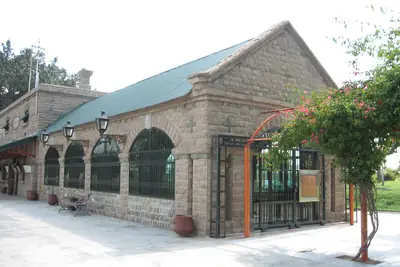
The Golra Sharif Railway Museum, also called the Pakistan Railways Heritage Museum, combines a historic railway station with exhibits about the country’s railway history. Established in 2003 and renovated in 2018, it preserves more than 150 years of railway heritage, including the period of the British Raj.
Inside its two galleries are railway relics, memorabilia and rare historical objects. Outside, locomotives and railway carriages stand on the platforms and in the station grounds, giving the collection a more tangible sense of scale. The museum is a particularly interesting stop for visitors curious about Pakistan’s transport history and railway enthusiasts.
Lok Virsa Museum
Located in the Shakarparian Hills, the Lok Virsa Museum, also known as the Heritage Museum, explores Pakistan’s history, regional cultures and living traditions. Its collection includes objects connected with everyday life and folk arts from across the country.
The museum opened in 1974, the same year its collecting programme began. Its walls use plastering designed to resemble the finish of rural homes, where straw is mixed into mud before walls and rooms are coated. The complex also includes a theatre, outdoor displays connected with folk life, an audio and visual library, books about culture and recordings of music.
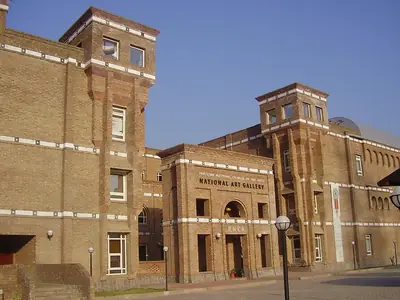
National Art Gallery, Pakistan
Pakistan’s National Art Gallery stands on a small hill opposite the Majlis-e-Shoora, the country’s Parliament, and the Aiwan-e-Sadr, the President’s House. It is the country’s first national art gallery and opened to the public on August 26, 2007.
Part of the Pakistan National Council of the Arts, the gallery contains 14 exhibition galleries across a four-storey building designed by Naeem Pasha and Sohail Abbasi. The wider complex includes a shop, work areas, storage space, a 400-seat auditorium, an open-air theatre and space for dramatic performances. It therefore functions not only as an exhibition venue, but also as a centre for performances and artistic activity.
Fatima Jinnah Park
Fatima Jinnah Park, also known as Capital Park or F-9 Park, occupies the whole of Islamabad’s Sector F-9. Its 304 hectares make it just smaller than New York’s Central Park, creating one of the capital’s largest public green spaces.
Named after Fatima Jinnah, the younger sister of Pakistan’s founder Muhammad Ali Jinnah, the park was inaugurated in 1992. Michael Japero designed it, while its original master plan was prepared by the Japan International Cooperation Agency and later revised in 2005 by Pakistani architect Nayyar Ali Dada.
A steel fence surrounds the park, with entrance doors placed at regular intervals. A footpath runs along a further strip of land outside the fence. In 2024, more than 5,000 mulberry trees were removed and around 10,000 new trees were planted by the Capital Development Authority.
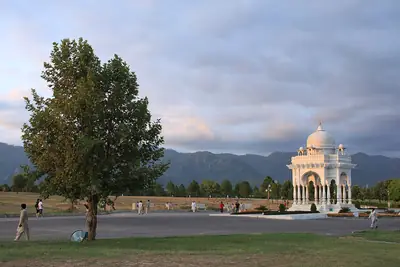
Faisal Mosque, Pakistan Monument and the Margalla Hills
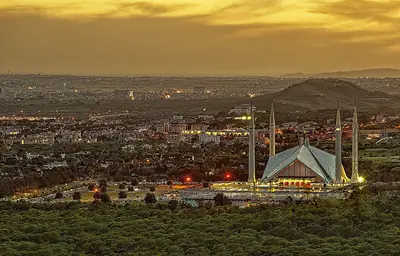
Islamabad’s major landmarks include Faisal Mosque, the Pakistan Monument and Democracy Square. Together, they reflect the capital’s political role and its modern identity.
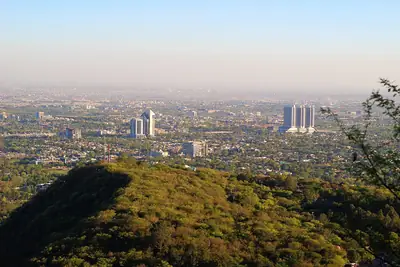
The city’s setting beneath the Margalla Hills adds a strong natural dimension to these urban sights. The hills form the backdrop to Islamabad and help explain the city’s green character. They also offer a change of atmosphere from the government districts, commercial areas and broad planned roads.
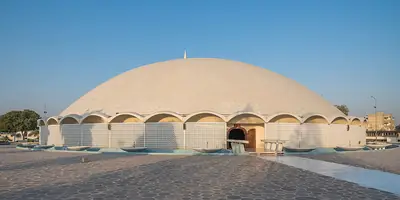
Masjid Tooba
Masjid Tooba, also known as Gol Masjid or the Round Mosque, is not in Islamabad but in Karachi, near Korangi Road in Phase II of the Defence Housing Authority. Construction began in 1966 and was completed in 1969. Pakistani architect Babar Hamid Chauhan designed the mosque, while Zaheer Haider Naqvi was responsible for the engineering work.
Its most distinctive feature is its very large dome. The building is described as possibly the world’s largest mosque with a dome of this size. If you are also visiting Karachi, Masjid Tooba is one of the city’s notable landmarks.
Salman bin Abdulaziz Mosque
The proposed Salman bin Abdulaziz Mosque is a future landmark planned for Islamabad’s Sector H-10. The project was approved by Salman bin Abdulaziz Al Saud and is envisioned as a large complex combining worship, education and cultural facilities.
The plan includes prayer areas for 6,000 people, two libraries devoted to the Holy Mosques, a museum, the Muhammad bin Salman Conference Hall, an office services zone and parking areas.
Plan a Wider Trip Through Pakistan
Islamabad offers a different experience from the country’s older and more densely developed urban centres. To continue exploring, compare it with Lahore, another major Pakistani city, or browse the wider Pakistan destination guide.
Explore Islamabad with Neywo
There are no group departures or fixed schedules to organise. Neywo’s free Islamabad audio guide includes 11 narrated places, and each story plays as you reach the place, at your own pace. Narration is available in 11 languages, so you can explore Islamabad independently while the app explains the landmarks around you.
Places with an audio guide in Islamabad
8 places in Islamabad with a Neywo audio guide. Each one starts telling its story as you reach it.

Walk Islamabad with Neywo
Neywo turns Islamabad into a self-guided audio tour. Stories arrive as you reach the place they belong to, and the route reshapes when you wander off it.

