What to See in Colón, Panama: Free Audio Guide
Things to Do in Colón, Panama
The best things to do in Colón include exploring a Caribbean seaport near the Atlantic entrance to the Panama Canal, discovering historic churches and monuments, and visiting the forts and colonial sites along the coast. The city’s identity is closely tied to shipping, the canal, and the cultural exchange that has shaped Panama’s Caribbean coast. Neywo has a free audio guide for Colón with 11 narrated places, available in 11 languages.
What to See in Colón
Colón City
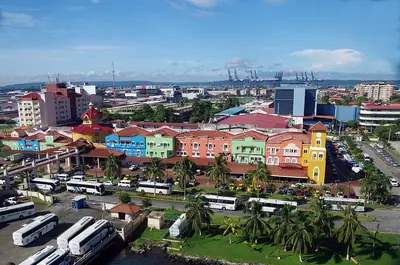
Colón is the capital of Colón Province and one of the largest urban centres on the Caribbean coast of Central America. The city stands near the Caribbean entrance to the Panama Canal, and its character is inseparable from the sea, shipping and the canal’s nearby waterways.
A walk through the city offers a chance to experience Colón as an important gateway rather than simply a point of passage. Its location has connected Panama with maritime routes and international trade for generations.
Immaculate Conception Cathedral
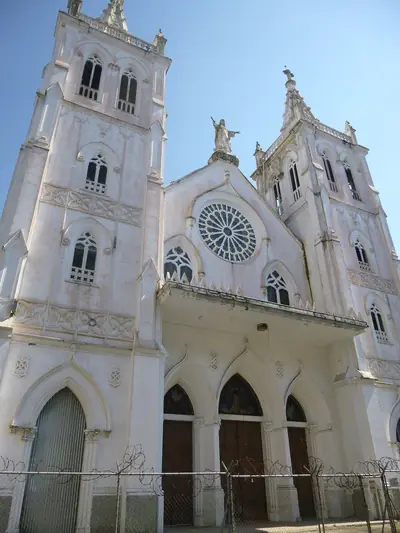
The Immaculate Conception Cathedral, also known as Colón Cathedral, is a Catholic church in the city centre. It belongs to the Diocese of Colón-Kuna Yala, created on June 13, 1997, within the ecclesiastical province of Panama.
The cathedral is one of the city’s principal religious landmarks and a natural stop during a walk through central Colón.
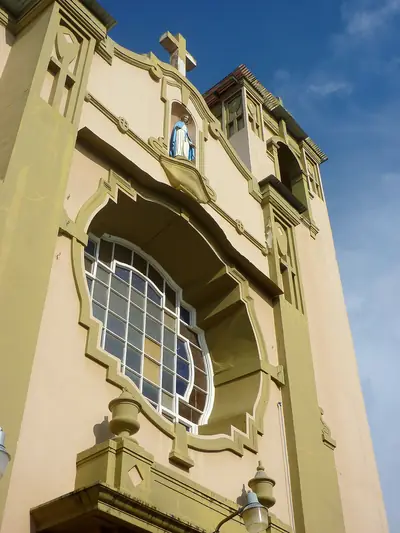
Iglesia de la Medalla Milagrosa
Iglesia de la Medalla Milagrosa is recognised as a cultural monument of Panama. Its importance lies in its role as part of the city’s religious and cultural heritage.
It is one of the places included in Neywo’s Colón walk, making it easy to include alongside the city’s other central landmarks.
Estatua Cristóbal Colón
The Estatua Cristóbal Colón is another cultural monument of Panama. The monument adds a historical point of reference to a walk through Colón and reflects the importance of the city’s name and identity.
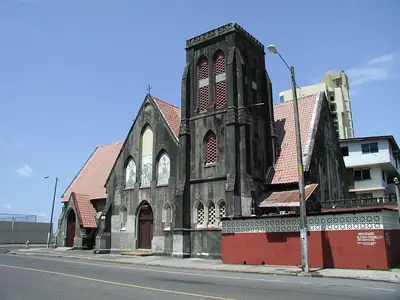
Iglesia de Cristo a Orillas del Mar
Iglesia de Cristo a Orillas del Mar means Christ Church by the Sea. Its name expresses the church’s connection with the shoreline, while its status as a cultural monument gives it a place among Colón’s heritage sites.
Atlantic Bridge
The Atlantic Bridge, or Puente Atlántico, crosses the Panama Canal at its Atlantic side and links the province of Colón across one of the canal’s main approaches. Completed in 2019, it is the third bridge to cross the Panama Canal and the first built on its Atlantic side.
The bridge is cable-stayed, with two pylons and two planes of cables supported by a concrete girder. Its central span measures 530 metres, with side spans of 230 metres each. The approaches extend for 1,074 metres on the east side and 756 metres on the west.
An older bridge built in 1942 was dismantled in November 2018 because it was no longer in good condition. The Atlantic Bridge now forms a prominent part of the landscape around the canal entrance.
Gatun Lake
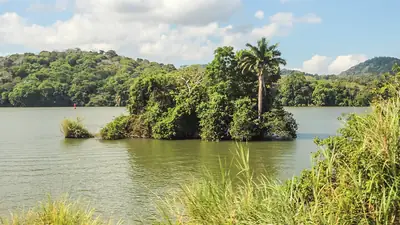
Gatun Lake is the vast artificial reservoir that forms a major part of the Panama Canal. Ships cross the lake during their passage through the Isthmus of Panama, while the reservoir supplies the water needed to operate the canal’s lock system.
The lake was created on June 27, 1913, when the gates of the spillway at Gatun Dam were closed. At that time, the water stood about 14.6 metres above sea level and was expected to rise to its operating level over the following six months. When it was created, Gatun Lake was the largest artificial lake in the world.
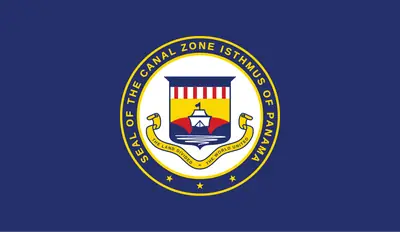
Panama Canal Zone
The Panama Canal Zone was a United States concession in Panama, created around the canal and extending through surrounding land and waters. Established on November 18, 1903, after the Hay–Bunau-Varilla Treaty, it gave the United States authority to construct, maintain, operate, protect and provide sanitation for the waterway.
The zone generally extended five miles, or eight kilometres, on either side of the canal, excluding Panama City and Colón. Its capital was Balboa. The Canal Zone was abolished on October 1, 1979, under the Torrijos–Carter Treaties. The canal remained under joint United States and Panamanian control until its full transfer to Panama on December 31, 1999.
This history explains why the area around Colón is more than a transport corridor: it is a landscape shaped by international agreements, engineering and political change.
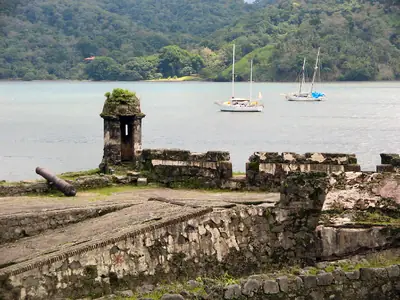
Chagres and Fort San Lorenzo
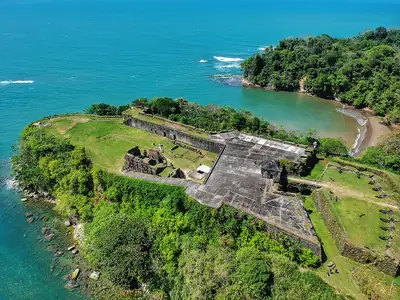
About eight miles west of Colón, Chagres and Fort San Lorenzo occupy a promontory overlooking the mouth of the Chagres River. The site includes the ruins of the fort and the abandoned village of Chagres.
Chagres was once the chief Atlantic port on the Isthmus of Panama. Fort San Lorenzo was built at the river entrance as part of the defensive system protecting the Spanish Crown’s transatlantic trade. Along with the fortifications of Portobelo, it is a significant example of seventeenth- and eighteenth-century military architecture.
The abandoned village and the ruins together reveal the former importance of this Atlantic gateway.
Portobelo
Portobelo is a historic port town on Panama’s Caribbean coast. Its deep natural harbour helped make it one of the most important settlements in the Americas during the Spanish colonial period. Established in 1597, it became a key point on the Spanish Empire’s treasure route.
Wealth from the mines of Peru crossed the Isthmus of Panama through Panama City before reaching Portobelo and continuing by sea to Spain. The town’s defences included Santiago de la Gloria Castle, San Felipe Castle, San Jerónimo Battery, Santiago Fort and Powder House, other batteries, and sections of the walled enclosure known as San Cristóbal.
Portobelo’s wealth also made it a target for British privateers and pirates. In 1739, during the War of Jenkins’ Ear, a successful siege by the British Royal Navy became one of the most important attacks in the town’s history.
Iglesia de San Felipe and the Black Christ
Iglesia de San Felipe in Portobelo is also known as the Black Christ Church. It houses the statue of Cristo Negro, or Black Christ, which was found on the shores of the harbour.
The church was built in 1814 and was declared a national historic monument in 1928. It received the same recognition again under a new law in 1941, preserving its colonial artistic appearance and original construction style.
Explore Colón with a Self-Guided Audio Tour
For a Colón self-guided walking tour, download Neywo and follow the walk Colón, Gateway to the Canal. It covers 1.78 km, lasts around 50 minutes and includes five narrated stops: Colón City, Immaculate Conception Cathedral, Iglesia de la Medalla Milagrosa, Estatua Cristóbal Colón and Iglesia de Cristo a Orillas del Mar.
Neywo has one walking tour in Colón. The app tells the story of each place as you reach it, at your own pace, with no group and no schedule. Download the free audio guide and explore Colón independently, from its city landmarks to the wider history of Panama’s Caribbean gateway.
If you are continuing through the country, discover more destinations with the guides to Panama City, El Valle de Antón and Boquete, or browse the full guide to Panama.
Places with an audio guide in Colón
8 places in Colón with a Neywo audio guide. Each one starts telling its story as you reach it.
Self-guided tours in Colón
1 tour in Colón, free in the Neywo app. Each stop tells its story as you reach it.
- Walk
Colón, Gateway to the Canal
A short stroll through the heart of Panama's Caribbean port city. Begin with the story of Colón's peninsula and its free zone, then visit the Immaculate Conception Cathedral, the Miracle Medal church, the Columbus statue and finally the Church of Christ by the Sea on the waterfront. Go in daylight and stay on the main avenues.
Colón City · Immaculate Conception Cathedral, Colón · Iglesia de la Medalla Milagrosa · Estatua Cristóbal Colón · Iglesia de Cristo a Orillas del Mar
Open this tour: Colón, Gateway to the Canal
Walk Colón with Neywo
Neywo turns Colón into a self-guided audio tour. Stories arrive as you reach the place they belong to, and the route reshapes when you wander off it.

