Panama City, Panama: Self-Guided Walking Tour
Things to do in Panama City: history, museums and the Panama Canal
The best things to do in Panama City include exploring the colonial streets of Casco Antiguo, walking through the ruins of Panamá Viejo, learning how the Panama Canal changed the world and discovering the city’s diverse cultural history. Panama City is the capital of Panama, a Pacific-facing metropolis where skyscrapers, tropical greenery and historic districts exist side by side. Neywo offers a free audio guide for Panama City with 36 narrated places, available in 11 languages.
What to see in Panama City
Casco Antiguo and its historic museums
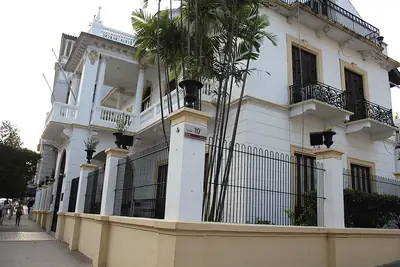
San Felipe, the historic district that forms much of Casco Antiguo, occupies the site where the rebuilt city was founded in 1673. The area was later protected by a wall built in 1678, and its streets bring together religious buildings, defensive remains, museums and civic landmarks.
The Panama History Museum is located on the ground floor of the Municipal Palace. Its exhibits cover three broad periods: the colonial era, Panama’s union with Colombia and the republican period that began in 1903. Historic maps, architectural plans, religious objects, photographs, engravings and political documents help tell the story of the country.
The Panama Canal Museum stands in Independence Plaza, in a building with a particularly layered past. It began as the Grand Hotel, later became the headquarters of the French Interoceanic Canal Company, then served the United States Canal Commission and Panamanian government before becoming a museum. Its exhibitions follow the canal’s history from the French attempt through American construction and the eventual transfer to Panama.
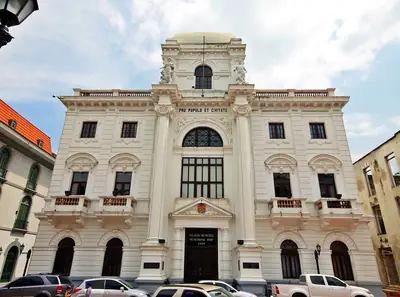
The Casa de la Municipalidad is another cultural monument in the historic centre. The building houses a museum and adds a civic dimension to a walk through Casco Antiguo.
Panama City’s cathedrals and religious heritage
The Metropolitan Cathedral of Panama City is the episcopal see of the Metropolitan Archdiocese of Panama. Construction began in 1688, and the cathedral was consecrated in 1796 after 108 years of work. It stands in San Felipe, close to many of Casco Antiguo’s other historic sites.
The Metropolitan Cathedral of Panama is also a narrated place in the city, while the Museo de Arte Religioso occupies the former Convento de Santo Domingo, once a church and convent. Together, these sites offer two different ways to approach Panama City’s religious heritage: through a working cathedral and through historic religious art.
Baluarte Mano de Tigre and the old city walls
Baluarte Mano de Tigre is a cultural monument connected with the defensive history of the rebuilt city. It fits naturally into a walk through Casco Antiguo, where plazas, churches and remnants of the old fortifications reveal how the city was protected after its relocation.
For a broader route through the district, Neywo’s Casco Antiguo walk includes Plaza de Francia, the former Convento de Santo Domingo, the National Theatre of Panama, the Panama Canal Museum, the Panama History Museum, Palacio de las Garzas, the Metropolitan Cathedral of Panama City, Iglesia de San José, Baluarte Mano de Tigre, Casa de la Municipalidad, Iglesia de Santa Ana and Teatro Variedades.
Panamá Viejo Cathedral and the first Panama City
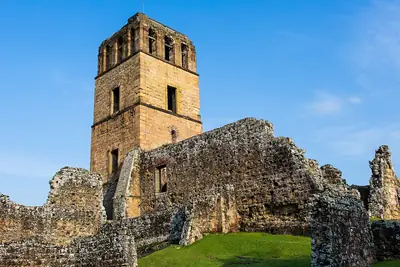
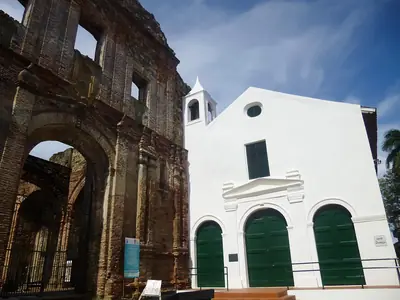
Panamá Viejo is the archaeological site of the original Panama City, founded in 1519 under the name Nuestra Señora de la Asunción de Panamá. The settlement remained the city centre until 1671, when Henry Morgan’s attack destroyed it. Its inhabitants then moved about ten kilometres to the southwest, establishing the foundations of the present capital.
The ruins of Panamá Viejo Cathedral are among the site’s most recognisable remains. Built in 1535 under Bishop Fray Tomás de Berlanga, the Catholic temple stood in the Plaza Mayor and featured a thirty-metre bell tower in front of the apse. The cathedral served the community for more than a century before being destroyed during the 1671 raid.
Walking among the archaeological remains gives Panama City’s history a physical sense of scale: the modern capital grew from a settlement whose streets, churches and public spaces can still be traced through the ruins. Fortín de la Natividad and Puente del Matadero are further cultural monuments associated with the city’s historic landscape.
Biomuseo and the story of the isthmus
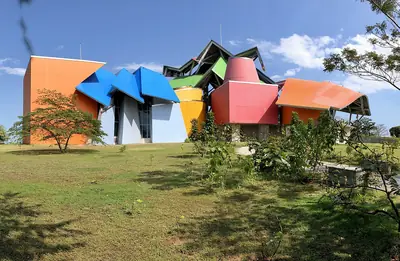
The Biomuseo stands on the Amador Causeway and explores the natural history of Panama. Its central subject is the rise of the Isthmus of Panama three million years ago and the way this geological event reshaped continents, oceans and biodiversity.
The building was designed by Frank Gehry, his first project in Latin America. The museum’s exhibitions explain how the isthmus united North and South America, divided the Atlantic and Pacific and changed global ecosystems. It is a useful complement to the canal museums: while the Panama Canal tells the story of an enormous human engineering project, the Biomuseo explains the much older natural forces that made the isthmus so important.
Miraflores Locks Visitors Center
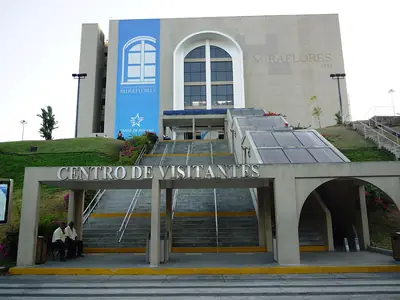
The Miraflores Locks Visitors Center, also known as Centro de Visitantes de Miraflores, is one of Panama City’s places to learn about the Panama Canal in operation. Its location makes it a natural stop for visitors interested in the canal’s locks and the movement of ships between changing water levels.
Afro-Antillean Museum of Panama
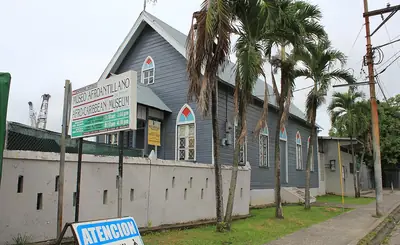
In the Calidonia neighbourhood, the Afro-Antillean Museum of Panama focuses on the Afro-Antillean culture and its role in shaping Panama’s history and identity. The museum occupies a chapel built between 1909 and 1910 as a meeting place for Barbadian Protestants.
Founded on December 23, 1980, by Panamanian anthropologist Dr. Reina Torres de Araúz, it presents personal objects, work tools, household items, photographs, documents and videos. The collection focuses on lived experience as well as historical events, making this an important stop for understanding the communities that helped shape Panama.
Panama Museum of Contemporary Art
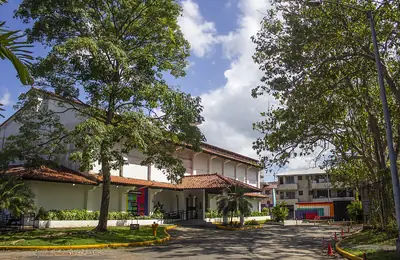
The Panama Museum of Contemporary Art, known as MAC Panamá, is the only museum in Panama dedicated to contemporary art. It is a non-governmental, non-profit institution whose collection includes more than 700 works by Panamanian and Latin American artists from the twentieth and twenty-first centuries.
The museum began in 1962 as the Panamanian Institute of Art and took its current form in 1983. It is located on Calle San Blas along Avenida de los Mártires in the Ancón neighbourhood, offering a different cultural perspective from the colonial and canal museums.
Panamá City Panamá Temple
The Panamá City Panamá Temple stands on a hillside and is the first temple built by the Church of Jesus Christ of Latter-day Saints in Panama. Its exterior is clad in China stone and features art-glass windows, while a central spire is topped by a statue of the angel Moroni.
The temple was dedicated on August 10, 2008. Its public open house attracted nearly 33,000 visitors, according to the source narration.
Explore Panama City with Neywo
Neywo’s Panama City audio guide includes three walking tours and one bus route:
- Casco Antiguo walk: 2.3 km, 96 minutes and 12 narrated stops.
- Panama Viejo walk: 3.27 km, 80 minutes and 6 narrated stops.
- Beyond the Walls walk: 2.41 km, 69 minutes and 7 narrated stops.
- Bus route to Panamá Viejo: 14.4 km, 62 minutes and 4 narrated stops.
The walks cover Casco Antiguo, the ruins of Panamá Viejo and a wider selection of museums and cultural sites, while the bus route connects several historic places beyond the main walking areas. The app tells the story of each place as you reach it, at your own pace, with no group and no schedule. Download Neywo and explore Panama City independently, from its colonial streets to the ruins of its first settlement and the history of the canal.
Places with an audio guide in Panama City
8 places in Panama City with a Neywo audio guide. Each one starts telling its story as you reach it.
Self-guided tours in Panama City
4 tours in Panama City, free in the Neywo app. Each stop tells its story as you reach it.
- Bus ride
Bus C641: Out to the Ruins of Panamá Viejo
A MiBus city line from Albrook that runs through Cincuentenario to Panamá Viejo and El Balboa. Ride it to the little Natividad fort, the King's Bridge and the convent of La Merced in the ruins of the first city, then on to the Carmen church. Cheap and direct from the new town.
Fortín de la Natividad · Puente del Rey · Iglesia y Convento de la Merced · Iglesia del Carmen
Open this tour: Bus C641: Out to the Ruins of Panamá Viejo - Walk
Casco Antiguo: Plazas, Palaces and the Canal Story
Wander the cobbled old quarter that was founded in 1673 after pirates burned the first city. Pass a French-built plaza, the Italian-style National Theatre, the Presidential palace with its resident herons, the cathedral that took 108 years to finish, the museum in the building where the French canal was run, a church with a gold-leaf altar rescued from the first city, and the old bastion and theatres on the western side.
Plaza de Francia, Panama City · Museo de Arte Religioso [Antiguo Convento de Santo Domingo] · National Theatre of Panama · Panama Canal Museum · Panama History Museum · Palacio de las Garzas …
Open this tour: Casco Antiguo: Plazas, Palaces and the Canal Story - Walk
Panama Viejo: Ruins of the First City on the Pacific
Walk the UNESCO ruins of the first European city on the Pacific coast, founded in 1519 and sacked by Henry Morgan in 1671. See the cathedral tower, the convent of the Concepcionist nuns, the churches of San Francisco and La Merced, the small Natividad fort and the old King's Bridge on the road to the Atlantic.
Panamá Viejo Cathedral · Iglesia y Convento de las Monjas de la Concepción · Iglesia y Convento de San Francisco · Iglesia y Convento de la Merced · Fortín de la Natividad · Puente del Rey
Open this tour: Panama Viejo: Ruins of the First City on the Pacific - Walk
Beyond the Walls: Museums, a Mosque and Don Bosco
Leave the old quarter for Calidonia and Santa Ana, the districts that grew around it. Visit the contemporary art museum, the anthropological and Afro-Antillean museums, the statue of Gandhi, the Jama Mosque, a bank's house museum and the Salesian basilica of Don Bosco.
Panama Museum of Contemporary Art · Reina Torres de Araúz Anthropological Museum · Statue of Mohandas K. Gandhi in Panama · Afro-Antillean Museum of Panama · Jama Mosque · Casa Museo del Banco Nacional de Panamá …
Open this tour: Beyond the Walls: Museums, a Mosque and Don Bosco
Walk Panama City with Neywo
Neywo turns Panama City into a self-guided audio tour. Stories arrive as you reach the place they belong to, and the route reshapes when you wander off it.

