Things to Do in Arequipa, Peru: Walking Guide
Things to do in Arequipa
Arequipa, Peru’s “White City,” lies beneath the snow‑capped volcanoes Misti, Chachani and Pichu Pichu and is renowned for its buildings of luminous sillar stone. The city blends grand colonial architecture, lively courtyards and a rich cultural scene, making it a rewarding stop for travelers exploring southern Peru. Neywo offers a free audio guide for Arequipa with 28 narrated places and two self‑guided walking tours.
Explore Arequipa’s historic and cultural sites
Santa Catalina Monastery
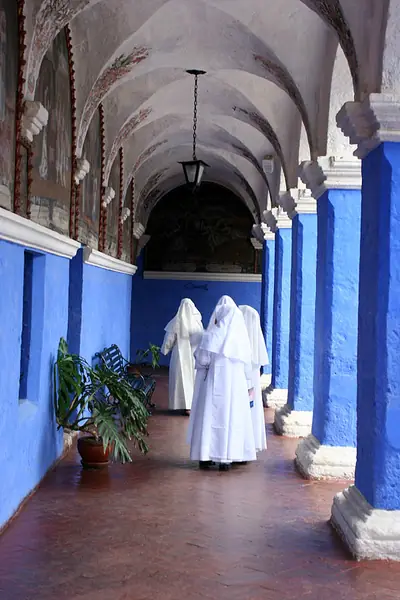
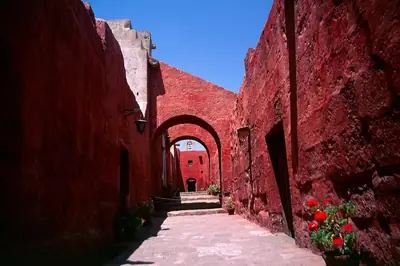
Consecrated in 1579, the Santa Catalina Monastery forms part of the UNESCO World Heritage Site “Historical Centre of the City of Arequipa.” Covering more than 20 000 square metres and containing 22 chambers, its labyrinthine streets invite a slow, immersive walk through centuries of colonial life.
Casona Tristán del Pozo
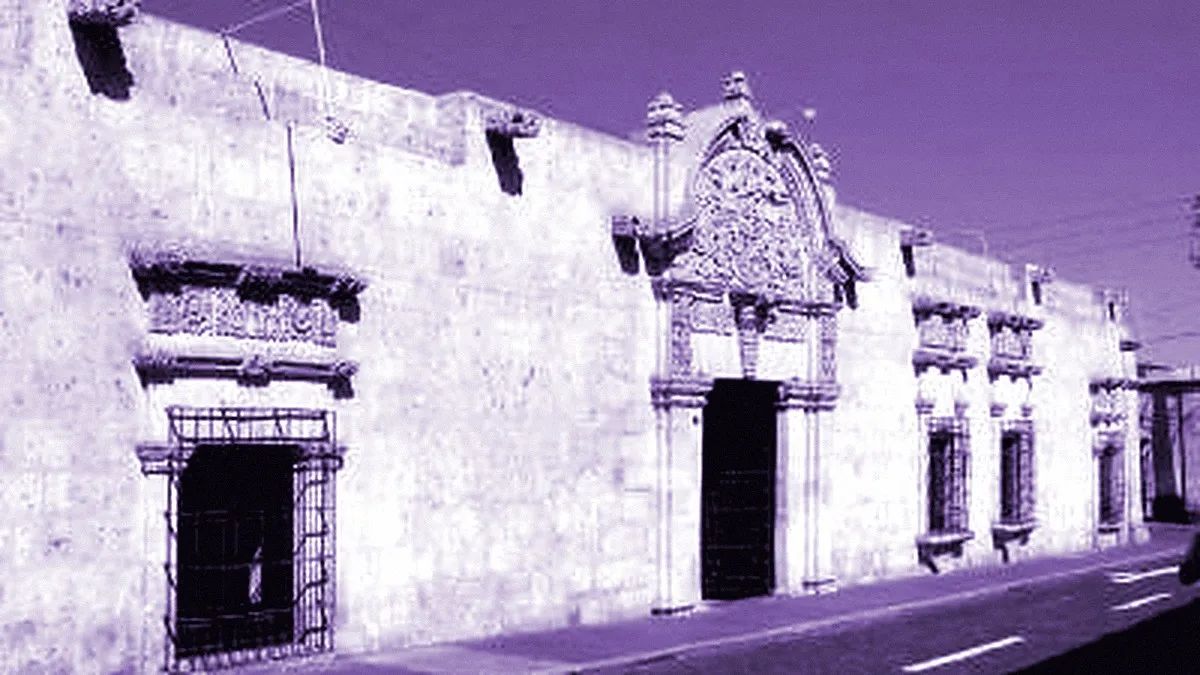
Construction began in 1738 after it was commissioned by Domingo Carlos Tristán del Pozo. Over time the house became known as the Ricketts House and, since 1974, has been owned by BBVA Perú. Its façade reflects the evolving tastes of Arequipa’s elite families.
Historic Centre of Arequipa
Declared a UNESCO World Heritage Site in December 2000, the historic centre exemplifies ornamented architecture that blends European and native characteristics. Walking its streets reveals the city’s distinctive sillar‑stone buildings and vibrant urban fabric.
Goyeneche Palace
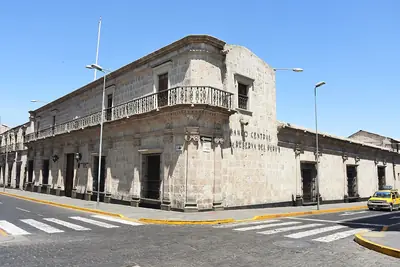
This 17th‑century manorial house features spacious patios, arched ceilings, doors and windows in a colonial baroque style, and a balcony that adds to its classic façade. The shield of José Sebastián de Goyeneche—bishop of Arequipa and later archbishop of Lima—adorns the front, and the palace passed to the Goyeneche family from northern Spain in the eighteenth century.
Casa museo Mario Vargas Llosa
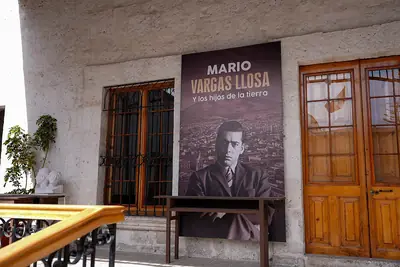
Located in the writer’s childhood home, the museum spans 17 rooms that trace Mario Vargas Llosa’s life from birth to his Nobel Prize. Original manuscripts, personal belongings, books and paintings donated by the author are displayed, alongside videos and holographic presentations that bring his literary and political journey to life.
Casa del Moral
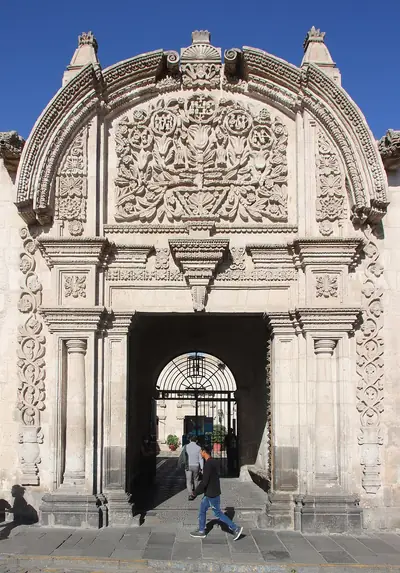
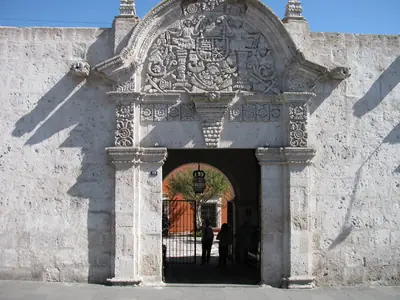
Built around 1730, this colonial mansion is celebrated as one of the best‑preserved examples of Andean Baroque civil architecture. A centuries‑old mulberry tree stands in the centre of its courtyard, while the façade displays intricate griffins, floral patterns and heraldic symbols carved from volcanic sillar stone.
Basilica Cathedral of Arequipa
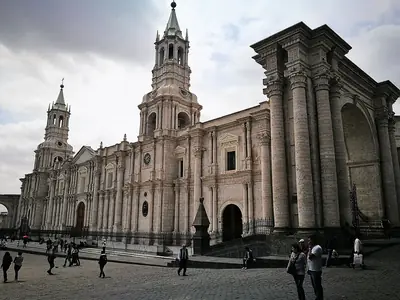
The city’s main Catholic church and seat of the archbishop, the cathedral’s neo‑Renaissance façade is framed by two tall towers and seventy Corinthian columns. Constructed primarily of sillar and ignimbrite, it received an English clock in 1842. Inside, the scale and refinement reveal centuries of religious art and architecture.
Museo de Santa Teresa
Housed within the Monastery of the Discalced Carmelites of San José and Santa Teresa (founded 1710), the museum occupies buildings of sillar stone. Since 2005 part of the monastery has been open to the public, showcasing colonial‑era works from the 16th to the 19th centuries, including paintings from the Cusco School, carved wooden altarpieces, silver objects and devotional artifacts.
Museo Municipal (Fundo El Fierro)
Set in a colonial‑era mansion of sillar stone, this museum traces Arequipa’s evolution from pre‑Hispanic times through the Republican era. Exhibits include archaeological artifacts, colonial paintings, religious art, everyday objects, antique maps and manuscripts, and rooms dedicated to notable local figures and events.
Museo de la Catedral de Arequipa
The Cathedral Passage beside the Basilica on Plaza de Armas offers side views of the volcanoes Misti, Chachani and Pichu Pichu. This pedestrian alley connects the square with San Francisco Street, letting visitors admire sculpted columns and statues, enjoy local flavors, browse crafts and take in some of the White City’s best vistas.
Casa museo goyeneche
An 18th‑century residence of the Basque Goyeneche family, the mansion is built from sillar stone and displays a baroque‑mestizo style with elaborate carved heraldic motifs. Inside, spacious courtyards, vaulted ceilings and elegant archways reflect the refined lifestyle of its former owners, with rooms arranged around central patios.
Museo Arqueológico José María Morante
Dating to around 1866, this historic mansion once served as a university dormitory for the Universidad Nacional de San Agustín. It now preserves more than 8 000 artifacts from local excavations, presenting a timeline from the Preceramic to the Late Horizon, with mummies, pre‑Incan ceramics, textiles, wood carvings and a section highlighting the artistry of ancient craftspeople.
Iglesia San Juan Bautista de Yanahuara
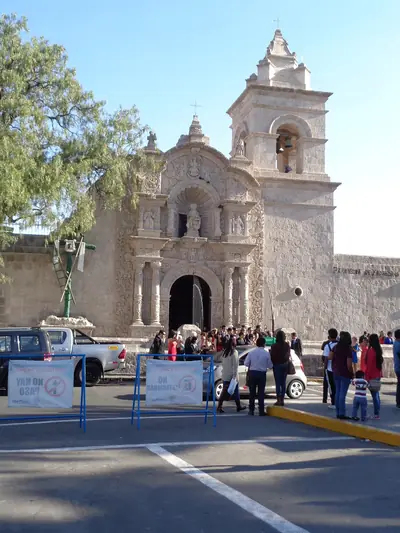
Founded by the Augustinian Recollects in the eighteenth century and completed in 1750, this Yanahuara church is built entirely of sillar stone. Its Baroque façade features eighteenth‑century foliage ornamentation, a portal arch flanked by angels, niches with reliefs of Saint Francis and Saint Dominic, and a central figure of Saint John the Baptist.
Jesuit Church, Arequipa (Iglesia de la Compañia)
Erected by the Jesuits in the late sixteenth century, this church became a spiritual and cultural centre for Arequipa. Its façade combines European motifs with Andean symbols in a baroque‑mestizo style, with flora, fauna, angels and indigenous designs woven into the sillar stone carvings. The interior offers quiet elegance and a richly decorated main altar.
Complejo Cultural Chávez de la Rosa
Housed in La Casa Arrospide, a mansion erected in 1743 and nicknamed the “talking house” for carved messages on its ashlar stone, the centre opened on August 11 2017. It features eight galleries that have hosted nearly 400 exhibitions in the past five years, and on Friday evenings the open courtyard comes alive with music, theater and performance.
Experience Arequipa with Neywo
Neywo provides two walking tours in Arequipa: one route is 1.69 km long, lasts about 87 minutes and includes 12 stops; the other is 2.77 km, lasts about 121 minutes and features 15 stops. As you reach each point, the app plays the story of that place, allowing you to explore at your own pace with no group and no schedule. Download Neywo to enjoy these free, self‑guided walks and discover the city’s volcanic‑stone heritage, vibrant museums and living traditions.
Places with an audio guide in Arequipa
8 places in Arequipa with a Neywo audio guide. Each one starts telling its story as you reach it.
Self-guided tours in Arequipa
1 tour in Arequipa, free in the Neywo app. Each stop tells its story as you reach it.
- Walk
Arequipa in white volcanic stone
The sillar city: a colonial centre built entirely from white volcanic rock, from the Jesuit church's carved facade and the cathedral on the Plaza de Armas to the vast Santa Catalina convent, which is less a building than a walled town.
Historic Centre of Arequipa · Basilica and Convent of San Francisco de Arequipa · Museo Municipal · Santa Catalina Monastery · Casa del Moral · Complejo Cultural Chávez de la Rosa …
Open this tour: Arequipa in white volcanic stone
Walk Arequipa with Neywo
Neywo turns Arequipa into a self-guided audio tour. Stories arrive as you reach the place they belong to, and the route reshapes when you wander off it.

