What to See in Iquitos, Peru: Free Audio Guide
Things to Do in Iquitos: What to See in Peru’s Amazonian City
Looking for things to do in Iquitos? Peru’s largest city in the Amazon region is surrounded by the Amazon, Nanay and Itaya rivers, and its history reflects both Indigenous cultures and global influences. Its historic centre brings together rubber-boom architecture, river heritage, important squares and museums, making Iquitos well worth exploring on foot. Neywo offers a free audio guide for Iquitos with 9 narrated places, available in 11 languages.
What to See in Iquitos
Plaza de Armas of Iquitos
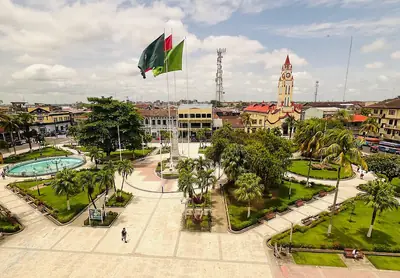
The Plaza de Armas of Iquitos is the historic heart of the city. Established in 1764, it is the oldest and most important urban space in Iquitos, occupying an entire city block and serving as a central gathering place for generations.
Cathedral of Iquitos
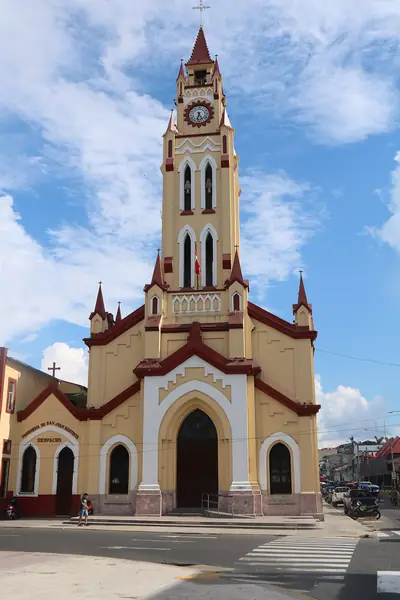
The Cathedral of San Juan Bautista stands at the corner of Arica and Putumayo streets. This neo-Gothic temple is the city’s main Catholic church and its tallest religious building. Construction began in 1911 after the previous temple was demolished. The main body was inaugurated on March 16, 1919, and the tower was completed in 1924. A crypt can be found inside.
Casa de Fierro
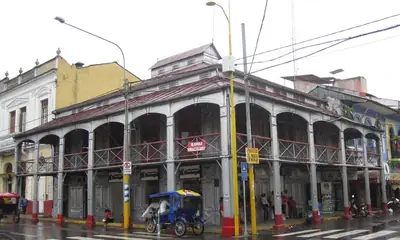
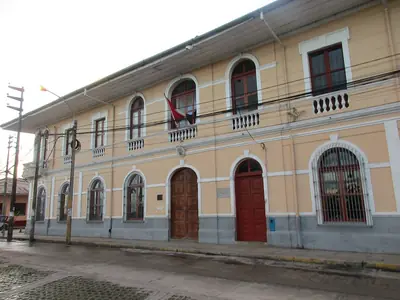
Between Próspero and Putumayo avenues stands the Casa de Fierro, or Iron House, one of Iquitos’s most distinctive landmarks. Built in 1890 during the rubber boom, it is regarded as the first prefabricated house in the Americas and is one of Peru’s best-preserved examples of civil architecture.
Its iron components were made in the Belgian workshops of Les Forges d’Aiseau, bought by rubber baron Anselmo del Aguila at the 1889 Paris Exposition, shipped to Iquitos in pieces and assembled by hundreds of workers. Rectangular iron sheets cover the walls, ceiling and balconies. Today, the building has a restaurant on its second floor and shops on the ground level. Its fictional appearance in Mario Vargas Llosa’s Captain Pantoja and the Special Service offers a different version of its origins.
Ayapua
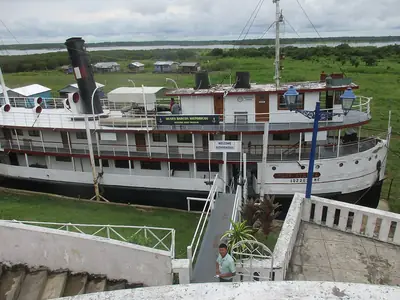
The Museo Barco Histórico Ayapua is a restored steamship on the waterfront. The old Peruvian vessel once navigated the waters around Iquitos and now presents the history and cultures of the Amazon basin.
Inside, a reception hall leads to ten Victorian-style salons furnished with antiques. Measuring 33 metres long and 5 metres wide, the ship can be explored from bow to stern, offering a close look at the period details of a historic river steamer.
Culturas Indigenas Amazonas
The Amazonian Museum is dedicated to the native communities of the rainforest. It opened on March 15, 1996, and is managed by the Loreto Decentralized Directorate of Culture, part of Peru’s Ministry of Culture.
The collection includes 30 statues representing different Indigenous groups of the Amazon. There is also a photographic gallery from the rubber-boom era, together with a display of portraits.
Plaza Ramón Castilla
Plaza Ramón Castilla lies in the northeastern part of Iquitos. Its name refers not only to the open public space but also to the historic and commercial buildings surrounding it, which give the area its character.
The plaza is named after Ramón Castilla y Marquesado, the Peruvian president who, between 1863 and 1864, ordered ships to be sent to colonize Iquitos.
Plaza 28 de Julio
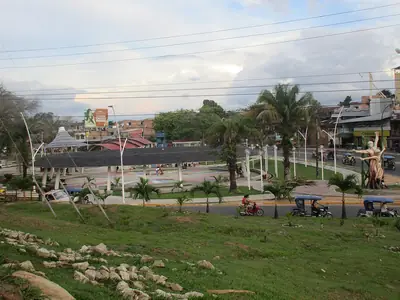
In the southwest of the city centre, Plaza 28 de Julio is the largest square in Iquitos. A redesign announced by the provincial municipality in 2013 aimed to give it a traditional-ecological character. Two long stairways cross the square and meet at its central obelisk.
Plaza Bolognesi
Plaza Bolognesi is a public square and gathering place in the heart of Iquitos. It was completely renovated and reopened on December 31, 2018, adding another urban space to explore while walking through the city.
Explore Iquitos’ History and Neighbourhoods
Iquitos began as a Jesuit reduction called San Pablo de Nuevo Napeanos around 1757. During the rubber boom of the late 19th century, it became a busy export hub headed by the Peruvian Amazon Company. The city’s past is still visible in the Zona Monumental, where the Casa de Fierro, the Cathedral and more than 50 preserved houses stand alongside the Biblioteca Amazónica.
The Barrio de Belén, known as the “Venecia Amazónica” for its canals, offers another perspective on the city. Its surroundings include reminders of Iquitos’s cosmopolitan past, such as the remains of an early opera house and a Jewish cemetery.
The city’s river setting and historic identity make it a distinctive destination within Peru. For travellers continuing through the country, other urban experiences include Lima, Tarapoto and Arequipa.
Explore Iquitos with a Free Audio Guide
Neywo’s Iquitos self-guided walking tour follows the city’s rubber-boom heritage and waterfront landmarks. The one walking tour covers 2.07 km, takes about 65 minutes and includes 7 narrated stops:
- Ayapua
- Plaza Ramón Castilla
- Casa de Fierro
- Plaza de Armas of Iquitos
- Cathedral of Iquitos
- Culturas Indigenas Amazonas
- Plaza 28 de Julio
Download Neywo and explore Iquitos at your own pace. The app tells the story of each place as you reach it, with no group and no schedule.
Places with an audio guide in Iquitos
8 places in Iquitos with a Neywo audio guide. Each one starts telling its story as you reach it.

Self-guided tours in Iquitos
1 tour in Iquitos, free in the Neywo app. Each stop tells its story as you reach it.
- Walk
Iquitos Rubber Boom: Iron House, Steamship and the Amazon Waterfront
Follow the fortunes of the rubber barons through the Zona Monumental of Iquitos, the largest city in the world that no road reaches. Climb aboard the Ayapua steamship, see the prefabricated Iron House shipped from Belgium, cross the Plaza de Armas to the neo-Gothic cathedral and finish among the statues of Amazonian peoples and the broad Plaza 28 de Julio.
Ayapua · Plaza Ramón Castilla · Casa de Fierro · Plaza de armas de Iquitos · Cathedral of Iquitos · Culturas Indigenas Amazonas …
Open this tour: Iquitos Rubber Boom: Iron House, Steamship and the Amazon Waterfront
Walk Iquitos with Neywo
Neywo turns Iquitos into a self-guided audio tour. Stories arrive as you reach the place they belong to, and the route reshapes when you wander off it.

