What to See in Puno, Peru: Free Audio Guide
Things to do in Puno: what to see in the city and surroundings
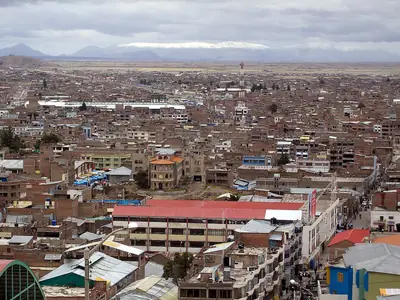
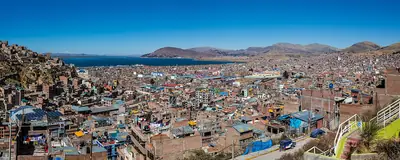
Puno is a city on the shores of Lake Titicaca, where the Andes surround the world’s highest navigable waters. Its history, colonial churches, archaeological sites and living Quechua and Aymara traditions make it one of the most distinctive destinations in Peru. Neywo offers a free audio guide for Puno with 23 narrated places, available in 11 languages.
What to see in Puno
Puno Cathedral
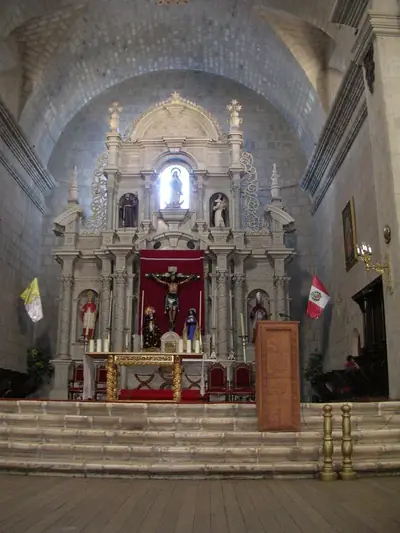
At the centre of the city, Puno Cathedral—also known as the Basilica Catedral de San Carlos Borromeo—is the seat of the Roman Catholic Diocese of Puno and a national cultural heritage site. Completed in 1757, it is a notable example of Andean Baroque, combining European Baroque motifs with local Andean craftsmanship.
The cathedral remains an important landmark in Puno’s religious and cultural life. Its history belongs to the city’s colonial past, when several churches were built to serve Spanish settlers and evangelise Quechua communities.
San Juan Bautista and the Virgen de la Candelaria
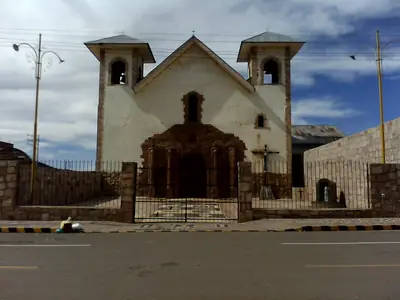
The Church of San Juan Bautista is a cultural heritage site and an important place of devotion in Puno. Inside is the venerated image of the Virgen de la Candelaria, the central figure of one of the city’s most important religious traditions.
On 7 February 1988, the temple was elevated to the status of a sanctuary dedicated to the Santísima Virgen de la Candelaria. The Fiesta de la Virgen de la Candelaria was recognised by UNESCO in 2014 as Intangible Cultural Heritage of Humanity.
Carlos Dreyer Museum
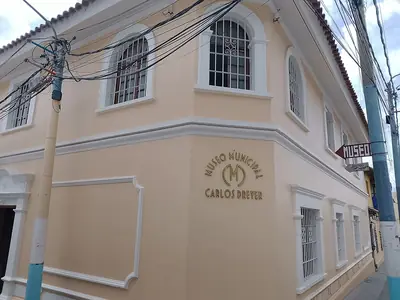
The Carlos Dreyer Museum occupies the historic house where the German collector and artist Carlos Dreyer lived. The building preserves its original layout and was declared Cultural Heritage of the Nation on 23 July 1980.
Its collection contains roughly 1,800 objects covering pre-Inca times, the Inca era, the colonial period and the republican years. The rooms include the Salón Inca, with pre-Columbian objects; the Galería Lítica, dedicated to the Pukara culture; and the Salón Muerte en el Altiplano, which displays artefacts recovered from Sillustani. It is a useful place to begin understanding the many cultures and historical periods represented around Puno.
Trinchira Pukara
Trinchira Pukara, also known as the Fortaleza de Trinchera, is an archaeological site connected with the ancient past of the Puno region. Its remains offer another perspective on the history of the Altiplano beyond the city’s colonial centre.
Inca Uyo
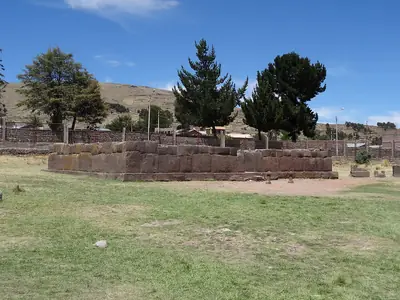
Just outside Chucuito, the archaeological site of Inca Uyo consists of a walled rectangular enclosure containing numerous carved stone pillars. The site is known for its phallic-shaped stones, which led to the popular name “Temple of Fertility”.
Inca Uyo was a place of power before the Inca arrived. It had previously been a major centre of the Lupaca culture, and large buildings once stood within the enclosure. The site’s sacred importance continued into the Inca era.
Pukara Lithic Museum
In Pucará, the Pukara Lithic Museum focuses on the stonework and archaeological heritage of the Pukara culture. Its exhibits include monoliths, tall stelae, zoomorphic sculptures and ceramics.
The collection is organised into three main groups: monoliths, stelae and animal-shaped sculptures. Among the highlights are the two-metre-high Rain or Lightning Stela, the Stone Degollador—also known as Hatun Ñakaj—and the sculpture called El Devorador.
Taquile Island
Taquile Island lies 45 kilometres offshore from Puno on the Peruvian side of Lake Titicaca. Known locally as Intika, it is home to about 2,200 residents who maintain a strong Quechua culture and a celebrated tradition of textile art.
UNESCO recognised Taquile and its textile art in 2005 as a Masterpiece of the Oral and Intangible Heritage of Humanity. The island is roughly 5.5 kilometres long and 1.6 kilometres wide. Its highest point reaches 4,050 metres above sea level, while the main village stands at 3,950 metres.
The island also has the Our Lady church, a church building that forms part of Taquile’s cultural landscape.
Places to visit around Puno
Juli and its historic churches
The town of Juli has several important colonial churches. The Cathedral of Juli, also known as Iglesia San Pedro Mártir, is a cultural heritage site whose construction began around 1565 under Spanish Dominican fathers. The Jesuits completed it in 1576.
The Church of Nuestra Señora de la Asunción began around 1568 under Dominican friars and was completed by the Jesuits in 1602. Its Renaissance-style tower is one of its distinguishing features.
Lampa and the Inmaculada Concepción church
In Lampa, the Inmaculada Concepción church—also known as the Templo de Santiago Apóstol—is built from pink ashlar stone using the traditional calicanto technique. The building was declared a historical monument on 20 February 1941.
Its most striking exterior feature is the 35-metre tower on the right side of the façade. Construction began in the late seventeenth century, and the church was completed between 1675 and 1685. Inside is a replica of Michelangelo’s Pietà.
Juliaca
Juliaca is the capital of San Román Province and the region’s largest city and principal economic and trade hub. Founded in 1826, it stands on the Collao Plateau and connects the Peruvian highlands with neighbouring Bolivia.
The city’s Carnival celebrations take place between February and March, when dancers in traditional Altiplano costumes fill the streets in honour of Pachamama. The feast of Saint Sebastian is observed on 20 January.
La Rinconada
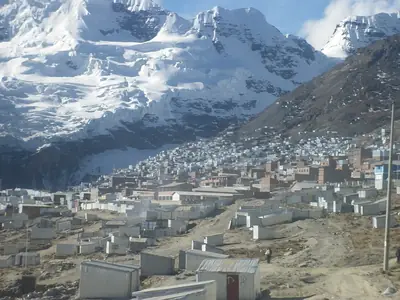
La Rinconada is a remote mining town in the Puno region, perched more than 5,000 metres above sea level near a gold mine. It is often described as one of the highest permanent settlements on Earth.
The town began as a modest mining settlement around the 1990s and grew rapidly during the 2000s as the price of gold rose. Its extreme altitude and difficult living conditions have made it known for altitude sickness, pollution, poverty and crime.
Explore Puno with Neywo
Neywo’s Puno self-guided walking tour takes you through the city’s Baroque heritage, the Candelaria tradition and the former home of Carlos Dreyer. The walk covers 1.35 kilometres, lasts about 39 minutes and includes 4 narrated stops: Puno, Puno Cathedral, the Carlos Dreyer Museum and San Juan Bautista.
Download Neywo and explore at your own pace. The app tells the story of each place as you reach it, with no group and no schedule.
Places with an audio guide in Puno
8 places in Puno with a Neywo audio guide. Each one starts telling its story as you reach it.
Self-guided tours in Puno
1 tour in Puno, free in the Neywo app. Each stop tells its story as you reach it.
- Walk
Puno: Baroque, Candelaria and a Collector's House
Start with Puno's founding story on the shore of Lake Titicaca, then climb to the Andean Baroque cathedral finished in 1757. Visit the house of German collector Carlos Dreyer, full of pre-Inca and colonial treasures, and end at the church that shelters the Virgen de la Candelaria, patron of Puno's famous February festival.
Puno · Puno Cathedral · Carlos Dreyer Museum · San Juan Bautista, Puno
Open this tour: Puno: Baroque, Candelaria and a Collector's House
Walk Puno with Neywo
Neywo turns Puno into a self-guided audio tour. Stories arrive as you reach the place they belong to, and the route reshapes when you wander off it.

