Things to Do in Cebu, Philippines: Walking Guide
Things to Do in Cebu: A Self-Guided Walk Through the City’s Heritage
The best things to do in Cebu include exploring its Spanish-era fort, historic churches, museums and houses that preserve the city’s religious and cultural heritage. As the regional centre of Central Visayas, Cebu is also a major urban hub with a history that reaches back to the earliest Spanish settlement in the Philippines. Neywo has a free audio guide for Cebu with 21 narrated places, available in 11 languages.
What to See in Cebu’s Historic Centre
The most important sights are concentrated around Cebu’s historic core, where forts, churches and museums reveal different chapters of the city’s past.
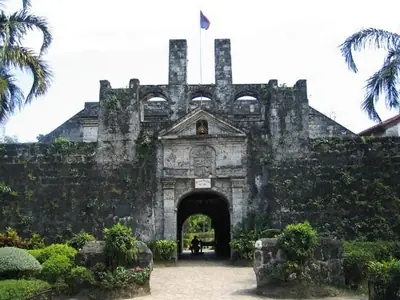
Fort San Pedro
At Plaza Independencia, Fort San Pedro is a centuries-old Spanish fort that guarded Cebu’s pier area. It is the oldest triangular bastion fort in the Philippines and became the nucleus of the first Spanish settlement in the country.
The present stone structure dates to 1738 and has a triangular bastion design. Its first version was a wooden palisade erected shortly after Miguel López de Legazpi’s arrival. The wooden fort was later replaced by stone construction in the early 17th century, partly to defend against Muslim raiders. During the Philippine Revolution at the end of the 19th century, Filipino revolutionaries seized the fort and used it as a stronghold.
National Museum of the Philippines in Cebu
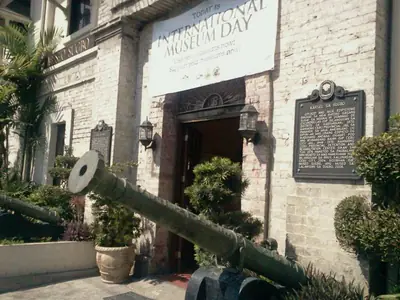
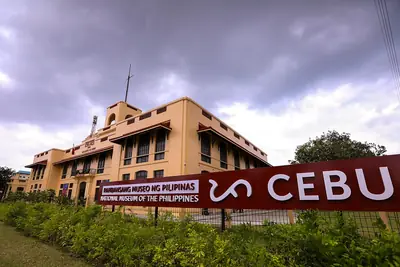
Housed in the Aduana, or Customs, building, the National Museum of the Philippines in Cebu forms part of the country’s national museum network. The building was originally used as the Customs house, giving the museum a direct connection with the city’s historic port and administration.
Magellan’s Cross and the Santo Niño Basilica
The area around Magellan’s Cross is closely connected with the arrival and spread of Christianity in the Philippines. The story centres on the image of the Santo Niño, a statue of the Child Jesus presented by Ferdinand Magellan to the chief consort of Rajah Humabon at their royal baptism on April 14, 1521.
The image was later found preserved inside a wooden box by a soldier named Juan de Camuz, forty years after Miguel López de Legazpi burned a local settlement. The discovery became part of the history of the Santo Niño devotion in Cebu.
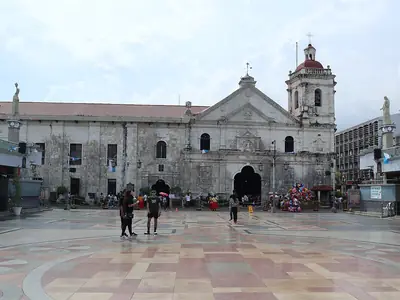
The Minor Basilica of the Holy Child, commonly called the Santo Niño Basilica, was founded in 1565 by the Augustinian friars Andrés de Urdaneta and Diego de Herrera. It is the oldest church in the Philippines and has been designated by the Holy See as the “Mother and Head of all Churches in the Philippines”. The present stone building was completed in 1740, and the shrine was raised to the rank of minor basilica by Pope Paul VI in 1965.
Cebu Metropolitan Cathedral
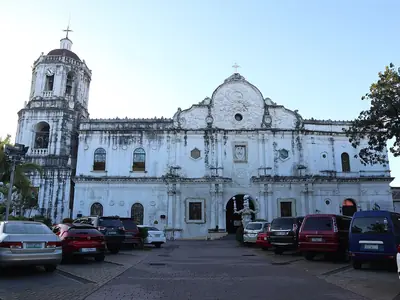
The Cebu Metropolitan Cathedral is the ecclesiastical seat of the Metropolitan Archdiocese of Cebu and an important place of worship in the city. Its thick walls and compact form reflect the architecture of Spanish colonial churches in the Philippines, designed to withstand typhoons.
The façade has a trefoil-shaped pediment with carved floral motifs, an IHS inscription and a pair of griffins. A Spanish Royal Coat of Arms appears in low relief above the main entrance. The cathedral’s origins go back to April 1565, when Miguel López de Legazpi, Andrés de Urdaneta and Diego de Herrera built one of the first churches in the Philippines on this site, dedicated to Saint Vitalis of Milan.
The cathedral was badly damaged by Allied bombing during World War II. The 1835 belfry and façade survived, along with part of the historic structure.
Cathedral Museum of Cebu
Located downtown, the Cathedral Museum of Cebu preserves the sacred heritage of the Roman Catholic Archdiocese of Cebu. It occupies a traditional Bahay na bato building, a stone-and-wood architectural style associated with the Spanish era.
Many of the museum’s objects date from the Spanish colonial period, offering a view of centuries of Catholic life on the island. After a period of closure, the museum reopened in November 2006.
Casa Gorordo
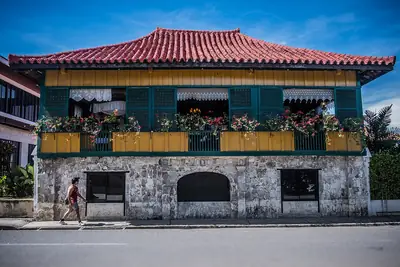
Casa Gorordo is a historic house and museum that offers a more intimate look at life in Cebu. Its rooms and atmosphere preserve the setting of a historic Cebuano home, complementing the larger religious and civic landmarks in the city centre.
Museo Sugbo
Museo Sugbo is Cebu’s provincial museum, housed in the historic Cárcel de Cebú on MJ Cuenco Avenue in the Tejero district. The building dates from 1869 and was designed by Domingo de Escondrillas, the only architect practising in Cebu at that time.
Originally proposed as the Cárcel del Distrito, it served as the main jail for the Visayas region for more than a century. The site was officially declared a museum in 2004, after undergoing several name changes.
More Places to Visit in Cebu
Cebu’s heritage extends beyond the central route. The University of San Carlos Museum is a history museum belonging to the University of San Carlos, while the BPI Museum Cebu includes a historical marker issued by the National Historical Commission of the Philippines commemorating the Bank of the Philippine Islands.
The Matilda L. Bradford Memorial Church, also known as Bradford Memorial Chapel, was built in 1913. It is the only Protestant church in Cebu declared a national historical landmark by the National Historical Commission of the Philippines.
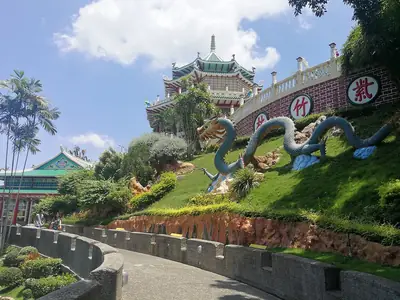
For a different religious tradition, the Cebu Taoist Temple is located in the Beverly Hills Subdivision. The Cebu City Philippines Temple, on Gorordo Avenue in the Lahug district, is a place of worship for members of the Church of Jesus Christ of Latter-day Saints and serves members throughout the Visayas and Mindanao regions.
Other churches included among Cebu’s places of worship are Pardo Church and Saint Joseph the Patriarch Parish Church.
Explore Cebu with Neywo
For a Cebu self-guided walking tour, download Neywo and follow the walk “Where Christianity Reached the Philippines: Fort San Pedro to the Santo Niño.” It covers 2.32 km, takes about 81 minutes and includes 9 narrated stops:
- Fort San Pedro
- Andres Bonifacio historical marker
- National Museum of the Philippines in Cebu
- Magellan’s Cross
- Minor Basilica of the Holy Child
- Cebu Metropolitan Cathedral
- Cathedral Museum of Cebu
- Casa Gorordo
- Museo Sugbo
The app tells the story of each place as you reach it, at your own pace, with no group and no schedule. Download Neywo to explore Cebu’s historic centre while the city’s landmarks unfold around you.
Places with an audio guide in Cebu
8 places in Cebu with a Neywo audio guide. Each one starts telling its story as you reach it.
Self-guided tours in Cebu
1 tour in Cebu, free in the Neywo app. Each stop tells its story as you reach it.
- Walk
Where Christianity Reached the Philippines: Fort San Pedro to the Santo Niño
Walk the oldest streets of the oldest city in the Philippines. Begin at the Spanish bastion fort that guarded the first settlement, pass the old Customs house, then reach the cross Magellan planted in 1521, the basilica that holds the Santo Nino and the cathedral rebuilt after the war. End with a 19th-century Cebuano house museum and the old provincial jail.
Fort San Pedro · Andres Bonifacio historical marker · National Museum of the Philippines (Cebu) · Magellan’s Cross · Minor Basilica of the Holy Child · Cebu Metropolitan Cathedral …
Open this tour: Where Christianity Reached the Philippines: Fort San Pedro to the Santo Niño
Walk Cebu with Neywo
Neywo turns Cebu into a self-guided audio tour. Stories arrive as you reach the place they belong to, and the route reshapes when you wander off it.

