Things to Do in Bacolod, Philippines: Walking Guide
Things to do in Bacolod: a heritage walk through the City of Smiles
The best things to do in Bacolod include exploring historic landmarks, learning about the island’s past, and discovering the city’s public spaces. Known as the City of Smiles, Bacolod offers a relaxed introduction to the heritage and culture of Negros Island, with places that connect its religious history, civic life, and prominent families. Neywo has a free audio guide for Bacolod with 7 narrated places.
Bacolod is in the Negros Island Region, on the island of Negros in the Philippines. Its historic center is particularly rewarding to explore on foot: several important sites are close together, making it possible to experience different chapters of the city’s past in one walk.
What to see in Bacolod
San Sebastian Cathedral
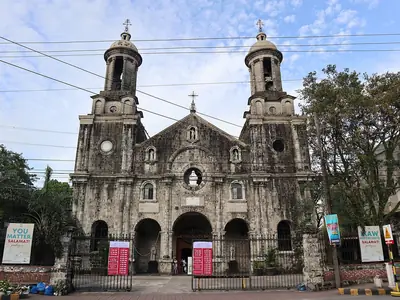
San Sebastian Cathedral is the spiritual heart of Bacolod and the seat of the Diocese of Bacolod. The late 19th-century Roman Catholic cathedral stands on a site with a much longer history.
Before the stone cathedral was built, a small Malay village called Magsungay stood here. In the 1700s, Spanish missionaries placed the settlement under the protection of Saint Sebastian, giving it the name San Sebastian de Magsungay. The present cathedral began to take shape on April 27, 1876, under the direction of Father Mauricio Ferrero. Construction took six years, and the cathedral opened its doors in 1882.
Dizon-Ramos Museum
The Dizon-Ramos Museum occupies an ancestral home and offers a glimpse into Bacolod’s heritage through the setting of the house itself. It is one of the city’s local museums and a useful stop for anyone interested in the families and homes that form part of Bacolod’s history.
Negros Museum
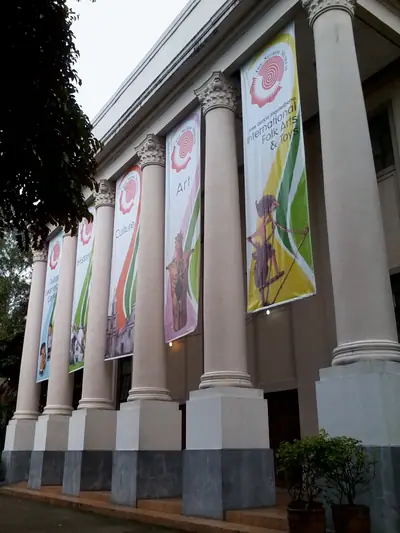
The Negros Museum is a privately owned provincial museum in the Negros Occidental Provincial Capitol Complex. Its building is part of the story: it was constructed in 1925 as the Provincial Agriculture Building before being repurposed as a museum.
The site links Bacolod’s present-day cultural life with the history of the province and its agricultural background.
Bacolod Evangelical Church
Bacolod Evangelical Church is a place of worship in the heart of Bacolod City. Alongside San Sebastian Cathedral, it reflects the presence of religious landmarks within the city center and adds another perspective to Bacolod’s urban heritage.
Daku Balay
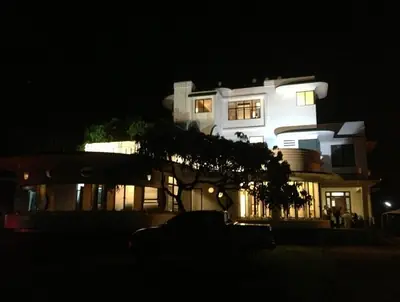
On Burgos Street, Daku Balay means “Big House” in the local language. The heritage house was the ancestral home of Don Generoso Villanueva, one of Bacolod’s prominent families.
Its name and history make it a notable example of the large ancestral homes associated with the city’s past.
Bacolod Public Plaza
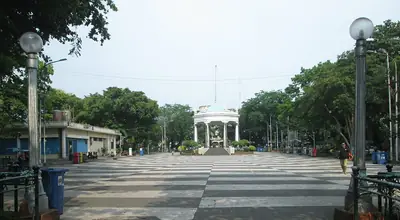
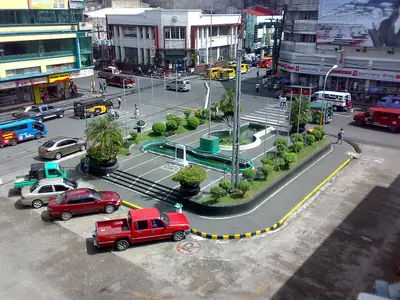
Bacolod Public Plaza, officially known as Plaza del 6 de Noviembre, occupies the heart of downtown Bacolod. It stands across from San Sebastian Cathedral and close to the old city hall.
The plaza takes its name from November 6, 1898, when Spanish forces surrendered Negros Island to local revolutionaries. The event marked the island’s peaceful transition to freedom. The park itself was laid out in 1927 as a place for recreation, political rallies, spiritual events, and cultural celebrations.
Its layout is distinctive: a trapezoidal park surrounded by mature trees, with walking paths, a central gazebo, and four circular fountains. The gazebo also functions as a bandstand. The names of Beethoven, Wagner, Haydn, and Mozart are carved into the edges of its roof, adding a small musical detail to the public square.
Fountain of Justice
The Fountain of Justice marks the location of another important event in Bacolod’s history. On November 6, 1898, Spanish authorities surrendered to Filipino revolutionary forces led by General Aniceto Lacson.
The surrender took place in the house of Jose Ruiz de Luzurriaga, who mediated between the two sides. Colonel Isidro de Castro, the Spanish governor of Negros, signed the document on behalf of the Spanish forces. The event effectively ended Spanish rule in this part of the Philippines during the Negros Revolution.
The original house no longer stands. The fountain now stands in front of the old Bacolod City Hall as a reminder of that peaceful transfer of power, while also remaining part of the city’s everyday civic setting.
A Bacolod self-guided walking tour
The historic landmarks in central Bacolod can be followed as a self-guided route connecting the Fountain of Justice, Bacolod Public Plaza, San Sebastian Cathedral, Daku Balay, and the Negros Museum. Together, these stops bring the city’s religious heritage, public spaces, ancestral homes, and provincial history into one compact itinerary.
For a wider itinerary in the region, Dumaguete and Silay are other cities to explore.
Explore Bacolod with Neywo
Download Neywo and explore Bacolod with a walking tour that tells the story of each place as you reach it. The city currently has 1 walking tour: Bacolod’s Plaza of Surrender, covering 2.17 km in about 59 minutes, with 5 narrated stops: Fountain of Justice, Bacolod Public Plaza, San Sebastian Cathedral, Daku Balay, and Negros Museum.
The app plays each story as you arrive at the place, at your own pace. There is no group and no schedule, and narration is available in 11 languages.
Places with an audio guide in Bacolod
5 places in Bacolod with a Neywo audio guide. Each one starts telling its story as you reach it.
Self-guided tours in Bacolod
1 tour in Bacolod, free in the Neywo app. Each stop tells its story as you reach it.
- Walk
Bacolod's Plaza of Surrender
Bacolod's civic heart is where Spanish rule on Negros ended peacefully in November 1898. Walk from the Fountain of Justice across the plaza and its bandstand to the cathedral, then on to a grand ancestral house and the museum in the old provincial agriculture building.
Fountain of Justice · Bacolod Public Plaza · San Sebastian Cathedral · Daku Balay · Negros Museum
Open this tour: Bacolod's Plaza of Surrender
Walk Bacolod with Neywo
Neywo turns Bacolod into a self-guided audio tour. Stories arrive as you reach the place they belong to, and the route reshapes when you wander off it.

