What to See in Manila, Philippines: Free Audio Guide
Things to Do in Manila: What to See in the Philippine Capital
Looking for things to do in Manila? The Philippine capital brings together Spanish colonial churches, historic houses, Muslim and Chinese heritage, military fortifications, and university landmarks. Its districts reveal different chapters of the city’s history, from the walled streets of Intramuros to the busy religious and architectural landscape of Quiapo.
Neywo has a free audio guide for Manila with 149 narrated places, available in 11 languages.
What to See in Manila
Intramuros and its colonial landmarks
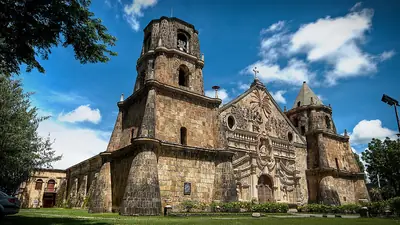
Intramuros is Manila’s historic walled city and the setting for several of the capital’s most important landmarks. San Agustin Church, also known as Iglesia de San Agustín, is the oldest stone church in the Philippines. Completed in 1607, it is one of the four churches included in the Baroque Churches of the Philippines, a UNESCO World Heritage Site since 1993. Its architecture reflects the way European Baroque ideas were reinterpreted by Chinese and Filipino artisans.
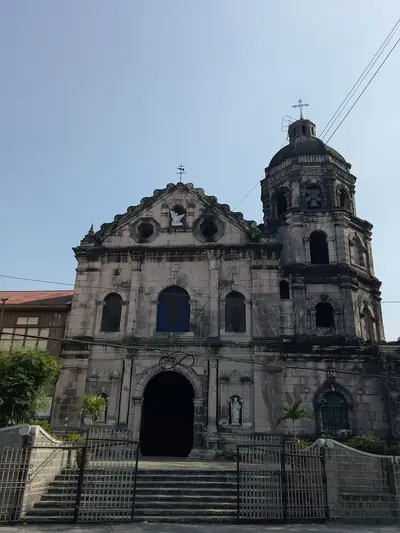
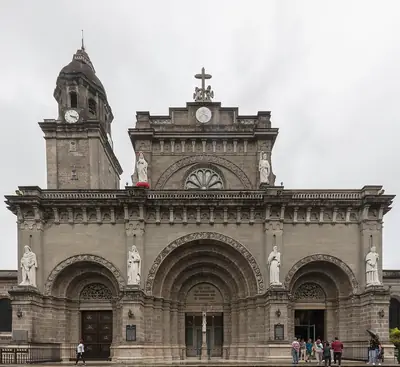
Manila Cathedral, formally the Minor Basilica of the Immaculate Conception, is the seat of the Archdiocese of Manila. The church was established as a parish in 1571, while the original cathedral structure dates from 1581. The present building is the eighth reconstruction and was completed in 1958.
Casa Manila offers a different perspective on the colonial period. The museum was designed to evoke a grand nineteenth-century home, with a stone-and-wood façade based on the San Nicolas House, which stood on Calle Jaboneros. The building was reconstructed during the 1980s around a structure dating from about 1850.
Museo de Intramuros occupies the reconstructed San Ignacio Church and Convent. Managed by the Intramuros Administration, it focuses on the ecclesiastical heritage associated with the historic district.
The Charles IV Monument commemorates King Charles IV and forms another point of interest within Intramuros. Together with the churches, museum, and colonial buildings, it helps make the walled city one of the most substantial places to explore in Manila.
Quiapo’s churches, mosque, and heritage houses
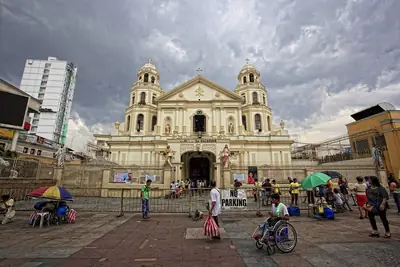
Quiapo brings together major religious landmarks and a remarkable group of historic residences. Quiapo Church, formally the Parish of Saint John the Baptist and also known as the Minor Basilica and National Shrine of Jesus Nazareno, is home to the image of Jesús Nazareno, or the Black Nazarene. Many Filipino Catholics regard the dark statue as miraculous, making the basilica an important place of prayer and devotion.
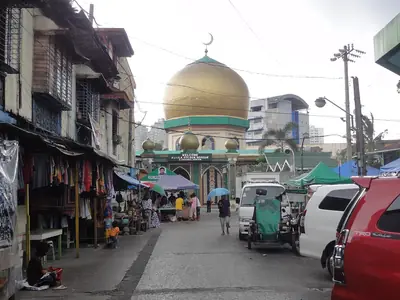
Not far away, Masjid Al-Dahab is known as the Golden Mosque because of its gold-painted dome. Officially called the Manila Golden Mosque and Cultural Center, it is considered the largest mosque in Metro Manila and an important place of Muslim life in Manila. It was built in 1976 under the direction of Imelda Marcos.
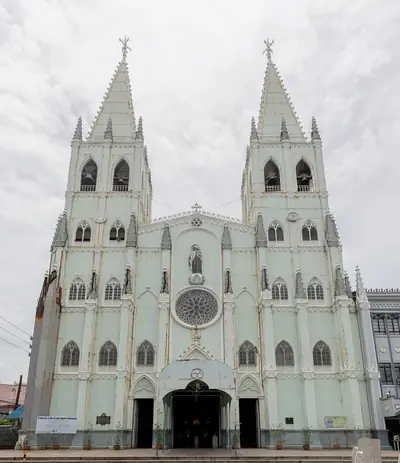
San Sebastian Church stands out for its Gothic Revival design and all-steel construction. Completed in 1891, it is the only steel church building in the Philippines. The church is a minor basilica, the home of the San Sebastian Parish, and the National Shrine of Our Lady of Mount Carmel. It was designated a National Historical Landmark in 1973 and a National Cultural Treasure in 2011.
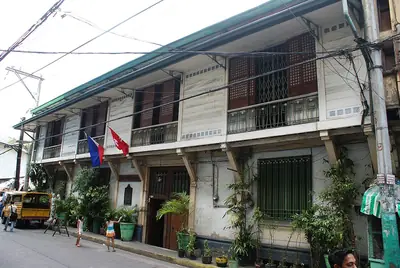
Quiapo is also a useful district for seeing Manila’s traditional residential architecture. The Nakpil–Bautista House, or Bahay Nakpil-Bautista, was built in 1914 by Arcadio Arellano and is now a museum and community center. The ancestral home preserves the character of the bahay na bato tradition.
Boix House, also called the Teotico-Crespo House or Casa Boix, is another surviving bahay na bato. Its decorative bulaklak sa trellis style—“flowers in trellis”—was common in the Philippines during the latter part of Spanish rule, particularly around the 1890s. Nearby, the historical marker for the House of the Nakpils and Bautistas adds another named point of interest to the area.
The Paterno Ancestral House is a historic residence whose materials and architectural style point to the 1870s. It once stood next door to the Enriquez House, at the corner of Hidalgo and Cancer Streets.
Santa Ana’s churches and heritage homes
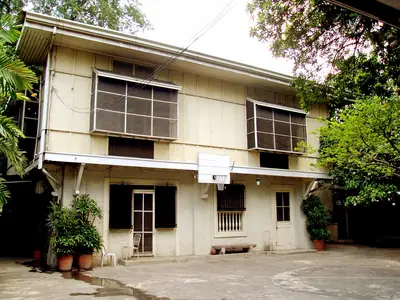
Santa Ana offers a quieter look at Manila’s residential and religious heritage. Lichauco Heritage House, formally the O’Brien-Lichauco Heritage House, is one of the district’s oldest surviving homes. It stands along Pedro Gil Street and was purchased in the late 1940s by Marcial Lichauco, a prominent Filipino lawyer and dignitary.
Santa Ana Church is also known as the National Shrine of Our Lady of the Abandoned. The parish was established in 1578 by Franciscan missionaries, while the present stone church was built between 1720 and 1725 by Vicente Inglés. The church complex includes the Santa Ana Site Museum in the convent patio and the Camarín de la Virgen, or Dressing Room of the Virgin. Both have been declared National Cultural Treasures by the National Museum of the Philippines. In 2021, the church became a national shrine.
Malate’s Spanish fort
Fort San Antonio Abad, also known as Fort Malate or Fort San Antonio, recalls Manila’s military history. Completed in 1584, when Malate was still a separate village, it was built to provide rear protection for Manila and guard the route connecting the city with Cavite.
British forces captured the fort in 1762, turning it into a garrison and using it as a base for their land offensive against the Spanish forces defending Intramuros. Spanish control was restored toward the end of the occupation in 1764, after which the fort became a gunpowder storage facility.
The Arch of the Centuries
At the University of Santo Tomas, the Arch of the Centuries connects the university’s present campus with its first campus in Intramuros. Its two sides tell different stories: the side facing the UST Main Building preserves the ruins of the original arch door, while the side facing España Boulevard is a replica inaugurated in 1954.
The arch was declared a National Cultural Treasure by the National Museum on January 25, 2010. It also remains part of university tradition, as freshmen pass through it during the Thomasian Welcome Walk and graduating students pass through it again after the baccalaureate mass.
Explore Manila with a self-guided audio tour
A Manila self-guided walking tour is a practical way to connect the city’s landmarks without joining a group. Neywo offers seven walking tours, one bus route, and one bike route in Manila, with stories that play as you reach each place. You explore at your own pace, with no group and no schedule.
The walking tours include:
- Inside the Walls: Intramuros, Church to Fort — 2.51 km, 107 minutes, 10 narrated stops.
- Quiapo: Black Nazarene, Golden Dome and Steel Church — 1.74 km, 91 minutes, 8 stops.
- Rizal Park: Museums, Dome and Monument — 3.31 km, 92 minutes, 9 stops.
- Binondo: The Oldest Chinatown in the World — 3.97 km, 107 minutes, 10 stops.
- Mendiola to Sampaloc: Palace Churches and the Thomasian Campus — 4.01 km, 107 minutes, 8 stops.
- Ermita and Malate: Bayside Churches, Plazas and a Spanish Fort — 4.84 km, 117 minutes, 9 stops.
- Santa Ana: Heritage Houses by the Pasig — 1.7 km, 59 minutes, 5 stops.
For travelling beyond a walk, the Jeepney 312: Intramuros and Rizal Park to Roxas Boulevard route covers 5.1 km in 22 minutes and has 8 narrated stops. The Roxas Boulevard Bay Ride bike route covers 2.8 km in 14 minutes and has 5 stops.
Download Neywo and explore Manila at your own pace
Download Neywo for a free Manila audio guide with 149 narrated places and narration in 11 languages. Choose a walk, bus route, or bike route, then let the app tell the story of each place as you reach it—at your own pace, with no group and no schedule.
Manila is one of the gateways to exploring the Philippines, and its historic districts offer a strong introduction to the country’s layered cultural heritage.
Places with an audio guide in Manila
8 places in Manila with a Neywo audio guide. Each one starts telling its story as you reach it.
Self-guided tours in Manila
9 tours in Manila, free in the Neywo app. Each stop tells its story as you reach it.
- Bike ride
Roxas Boulevard Bay Ride
A flat ride along the bay front on Manila's cycle lanes, from Plaza Rueda in Ermita past Ermita Church and the children's museum to Plaza Rajah Sulayman and the Spanish fort of San Antonio Abad in Malate.
Plaza Rueda · Ermita Church · Museo Pambata · Plaza Rajah Sulayman · Fort San Antonio Abad
Open this tour: Roxas Boulevard Bay Ride - Bus ride
Jeepney 312: Intramuros and Rizal Park to Roxas Boulevard
A modern jeepney (EcoDyip route 312, Lawton to PITX) that loops past Intramuros and Rizal Park and runs down Roxas Boulevard along Manila Bay. A cheap, local way to cover the sights between the walled city and the museums.
Liwasang Bonifacio · Gomburza Monument · Baluarte de San Andrés · Third Order of the Franciscans Church · Plaza de España · Charles IV Monument …
Open this tour: Jeepney 312: Intramuros and Rizal Park to Roxas Boulevard - Walk
Inside the Walls: Intramuros, Church to Fort
Spanish Manila at walking pace: the oldest stone church in the Philippines, a colonial house museum, the ruined Jesuit church that was once a golden dream, the cathedral that rose eight times and Fort Santiago, where bronze footsteps trace Jose Rizal's last walk.
Baluarte de San Diego · San Agustin Church · Casa Manila · San Ignacio Church · Manila Cathedral · Plaza de Roma …
Open this tour: Inside the Walls: Intramuros, Church to Fort - Walk
Quiapo: Black Nazarene, Golden Dome and Steel Church
Manila's most devout and most colourful district. Plaza Miranda with its fortune-tellers and amulet sellers, the Black Nazarene of Quiapo Church, the golden dome of Masjid Al-Dahab, bahay na bato mansions and the all-steel Gothic basilica of San Sebastian.
Plaza Miranda · Quiapo Church · Masjid Al-Dahab · Nakpil–Bautista House · Boix House · Ocampo Pagoda Mansion …
Open this tour: Quiapo: Black Nazarene, Golden Dome and Steel Church - Walk
Rizal Park: Museums, Dome and Monument
Manila's great green park and its neoclassical museums: the old Congress building that is now the Fine Arts museum, anthropology and natural history, the Planetarium's 16-metre dome and the guarded Rizal Monument, which holds the hero's remains. Finish at the children's museum on Roxas Boulevard.
Manila Metropolitan Theatre · Liwasang Bonifacio · National Museum of Fine Arts · National Museum of Anthropology · National Museum of Natural History · National Planetarium …
Open this tour: Rizal Park: Museums, Dome and Monument - Walk
Binondo: The Oldest Chinatown in the World
From the French Neoclassical arches of Jones Bridge into Binondo, the Filipino-Chinese heart of Manila: Plaza San Lorenzo Ruiz, renamed several times since the Spanish era, the octagonal belfry of Binondo Church, where Saint Lorenzo Ruiz trained, and Santa Cruz Church beyond.
Jones Bridge · Plaza Moraga · Plaza Cervantes · Don Roman Ongpin Monument · Binondo Church · Plaza San Lorenzo Ruiz …
Open this tour: Binondo: The Oldest Chinatown in the World - Walk
Mendiola to Sampaloc: Palace Churches and the Thomasian Campus
Cross to the north bank for the Goldenberg Mansion and the two churches inside the Malacanang complex, then the steel-framed San Sebastian basilica, Sampaloc's heritage buildings and the Arch of the Centuries, the Spanish-era gateway of the University of Santo Tomas.
Goldenberg Mansion · San Miguel Church · Malacañang Palace · National Shrine of Saint Jude Thaddeus · San Sebastian Church · Gota de Leche Building …
Open this tour: Mendiola to Sampaloc: Palace Churches and the Thomasian Campus - Walk
Ermita and Malate: Bayside Churches, Plazas and a Spanish Fort
South of Rizal Park, old Ermita and Malate trade towers for plazas, early Protestant churches, a Mexican Baroque church facing Manila Bay and the Spanish fort of San Antonio Abad at the end of the walk.
San Vicente de Paul Church · Central United Methodist Church · Plaza Rueda · Cosmopolitan Church · Museum of a History of Ideas · Ermita Church …
Open this tour: Ermita and Malate: Bayside Churches, Plazas and a Spanish Fort - Walk
Santa Ana: Heritage Houses by the Pasig
Away from the centre, Santa Ana keeps some of Manila's oldest surviving homes. Walk from the O'Brien-Lichauco heritage house and the Cobangbang ancestral house to Santa Ana's Spanish colonial church and the museum of the Iglesia ni Cristo.
Cobangbang Ancestral House · Lichauco Heritage House · Plaza Calderon · Santa Ana Church · Iglesia ni Cristo Museum
Open this tour: Santa Ana: Heritage Houses by the Pasig
Walk Manila with Neywo
Neywo turns Manila into a self-guided audio tour. Stories arrive as you reach the place they belong to, and the route reshapes when you wander off it.