Visiting Taal, Philippines: Top Sights on Foot
Things to Do in Taal: Heritage Houses, Churches and Philippine History
The best things to do in Taal are centered on its historic churches, ancestral homes and memorials to important figures in Philippine history. This heritage town in Batangas offers a concentrated look at Spanish Colonial Era architecture, religious traditions and the people who shaped the country. Neywo’s free audio guide for Taal narrates 10 places as you explore.
What to See in Taal
Taal’s heritage attractions are close enough to connect on foot, making the town well suited to a self-guided visit. These are the main places to include.
Ananias Diokno Historical Marker
The Ananias Diokno historical marker commemorates one of the notable figures in Philippine history. Installed by the National Historical Institute, now known as the National Historical Commission of the Philippines, it recognizes Diokno’s contributions to the nation’s history.
Don Gregorio Agoncillo Mansion
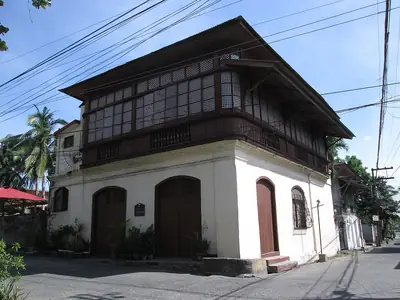
The Don Gregorio Agoncillo Mansion is a preserved ancestral home associated with one of Taal’s prominent families. Today, the museum offers a glimpse into the lives of the Filipino elite during the Spanish colonial era.
Its architecture is one of the main reasons to visit. Wide capiz-shell windows, high ceilings, wooden floors and intricate carvings reflect both the craftsmanship of the period and the practical design of a tropical home. The spacious rooms were built to help keep the heat at bay while expressing the family’s status.
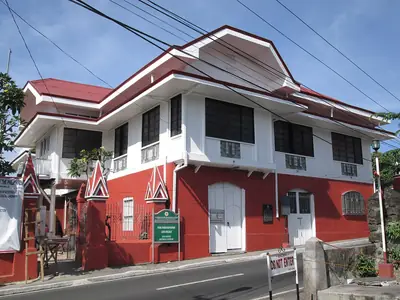
Apacible House
The Apacible House is home to the Museo ni Leon at Galicano Apacible. The historic residence preserves the memory of Leon and Galicano Apacible, two notable Filipino figures who lived there.
As one of Taal’s ancestral museums, it adds another perspective to the town’s history: not only its architecture, but also the people and families connected with the country’s past.
Our Lady of Caysasay Church
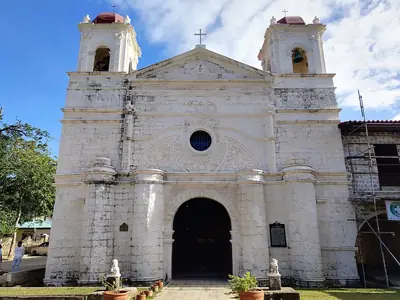
The Archdiocesan Shrine of Our Lady of Caysasay is a small coral-stone chapel in Barrio Caysasay. It is one of Taal’s most revered religious sites and is associated with one of the oldest Marian images in the Philippines.
According to tradition, a fisherman named Juan Maningcad found a small image of the Immaculate Conception in the Pansipit River in 1603. Marian apparitions were later reported here during the seventeenth century and documented by church leaders. A temporary structure was raised in 1611, before Father Alonso Rodriguez built the coral-hewn chapel in 1639.
The image was canonically crowned in 1954. Devotees continue to visit the shrine to seek the Virgin’s intercession.
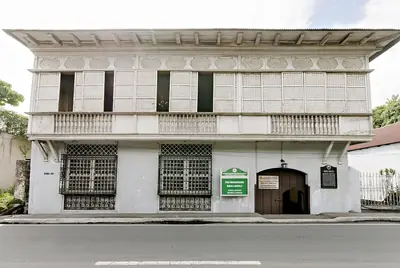
Goco Ancestral House
The Goco Ancestral House is officially designated a Heritage House. Its presence along Taal’s historic streets makes it a useful reminder that the town’s architectural legacy extends beyond its larger museums and churches.
The Town of Taal Historical Marker
A historical marker installed by the National Historical Commission commemorates the founding of Taal in 1572. The date places the town among the oldest settlements in this part of the Philippines and gives context to the centuries of religious and civic history found throughout the town.
Escuela Pia
Escuela Pia is a historic heritage building also known locally as the Taal Cultural Center. It is one of the town’s notable surviving structures and forms part of the architectural story that makes a walk through Taal so distinctive.
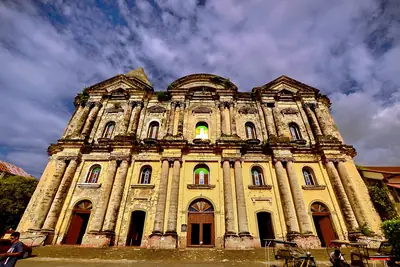
Taal Basilica
The Minor Basilica and Parish of Saint Martin of Tours is the town’s defining landmark. At 88.6 metres long and 48 metres wide, it is described as the largest church building in the Philippines and is widely regarded as the largest church in Asia. It is also the country’s largest Augustinian church.
The basilica’s history reaches back to the foundation of Taal itself. Augustinian missionaries founded the town near the shores of Taal Lake, in what is now San Nicolas, Batangas, in 1572. Construction of the church began in 1575 under Father Diego Espinar.
Its immense scale makes it an essential stop when considering what to see in Taal, especially for travellers interested in religious architecture and the long history of the town.
Felipe Agoncillo y Encarnacion Historical Marker
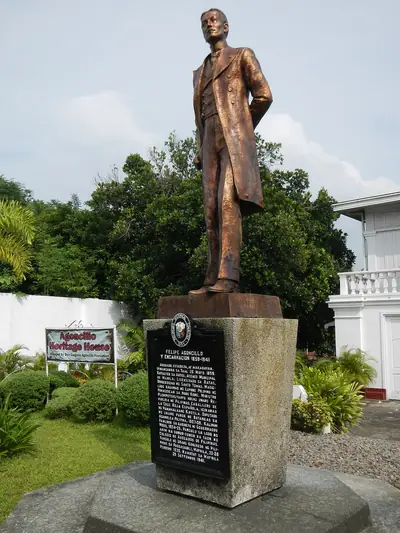
This marker, installed by the National Historical Commission of the Philippines, honours Felipe Agoncillo y Encarnacion, a Filipino diplomat and lawyer.
Agoncillo represented the Philippines during the negotiations of the Treaty of Paris in 1898, which ended the Spanish-American War. He argued for Philippine independence before the American delegation, but the treaty was signed without Filipino representation and the Philippines was ceded to the United States. The marker recalls his diplomatic efforts and the wider struggle for national freedom.
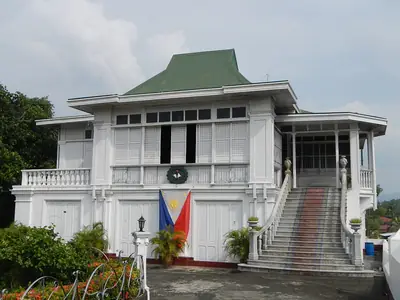
Agoncillo–Mariño House
The Agoncillo–Mariño House is a national shrine dedicated to Marcela Mariño de Agoncillo and Felipe Agoncillo. Marcela sewed the first Philippine flag, while Felipe is remembered as the First Filipino Diplomat.
The house is also one of Taal’s oldest. Don Andrés Mariño, Marcela’s grandfather, built it around the 1780s in the Spanish Colonial Era style. It remained in the Mariño family for generations and passed to Marcela after her grandfather’s death. When she married Felipe Agoncillo in 1889, he came to live in the house as well.
In 1980, their daughters donated the home, its original furniture and family memorabilia to the government. It later opened to the public as the Museo nina Marcela Mariño and Felipe Agoncillo. For many visitors, it is one of the most meaningful places to visit in Taal because it connects domestic heritage with the history of the Philippine flag and diplomacy.
A Taal Self-Guided Walking Tour with Neywo
Neywo’s Taal self-guided walking tour, Taal Heritage Town: Flag-Sewers, Diplomats and Asia’s Biggest Church, covers 2.04 km in 88 minutes and includes 10 narrated stops. It links the town’s historical markers, ancestral houses, Escuela Pia, Our Lady of Caysasay Church and Taal Basilica in one walk.
There is also a bus route, Taal by Jeepney: Four Heritage Houses on the Lemery-Lipa Line. It covers 1.8 km in 8 minutes and has four narrated stops: Apacible House, the Marcela Agoncillo Historical Landmark, the Town of Taal historical marker and Don Gregorio Agoncillo Mansion.
With Neywo, the story of each place plays as you reach it. You can explore at your own pace, with no group and no schedule. The narration is available in 11 languages, making the app a practical way to discover Taal independently.
Download Neywo and Explore Taal
Download Neywo to explore Taal with one walking tour, one bus route and 10 narrated places. Follow the heritage route on foot or use the jeepney route between selected stops, while the app tells the story of each location when you arrive. It is a free audio guide designed for independent exploration: no group, no schedule and no need to keep pace with anyone else. When planning a wider trip through the Philippines, you can also use Neywo to discover destinations such as Manila and Puerto Galera.
Places with an audio guide in Taal
8 places in Taal with a Neywo audio guide. Each one starts telling its story as you reach it.
Self-guided tours in Taal
2 tours in Taal, free in the Neywo app. Each stop tells its story as you reach it.
- Bus ride
Taal by Jeepney: Four Heritage Houses on the Lemery-Lipa Line
Ride the Lemery to Lipa City jeepney line along Taal's heritage streets. It passes the Apacible museum house, the Agoncillo-Marino shrine where the first Philippine flag was sewn, the town's founding marker and the Don Gregorio Agoncillo mansion. Hop on and off to see the old Spanish-era town at local pace.
Apacible House · Marcela Agoncillo Historical Landmark · The Town of Taal historical marker · Don Gregorio Agoncillo Mansion
Open this tour: Taal by Jeepney: Four Heritage Houses on the Lemery-Lipa Line - Walk
Taal Heritage Town: Flag-Sewers, Diplomats and Asia's Biggest Church
Stroll through one of the Philippines' best-preserved Spanish-era towns. Visit the house where Marcela Agoncillo sewed the first national flag, the mansions of Taal's elite, the coral-stone shrine of Our Lady of Caysasay, and finish at the largest church in Asia.
Ananias Diokno historical marker · Marcela Agoncillo Historical Landmark · Apacible House · Our Lady of Caysasay Church · Goco Ancestral House · The Town of Taal historical marker …
Open this tour: Taal Heritage Town: Flag-Sewers, Diplomats and Asia's Biggest Church
Walk Taal with Neywo
Neywo turns Taal into a self-guided audio tour. Stories arrive as you reach the place they belong to, and the route reshapes when you wander off it.

