Things to Do in Vitoria-Gasteiz, Spain: Walking Guide
Things to Do in Vitoria-Gasteiz: What to See in the Basque Capital
Looking for things to do in Vitoria-Gasteiz? The capital of the Basque Country combines a medieval old quarter with palaces, museums, churches and green spaces. Its historic centre is compact enough to explore on foot, while places such as the Salburua wetlands reveal another side of the city. Neywo has a free audio guide for Vitoria-Gasteiz with 89 narrated places.
What to See in Vitoria-Gasteiz
Torre de los Anda and Santa María Cathedral
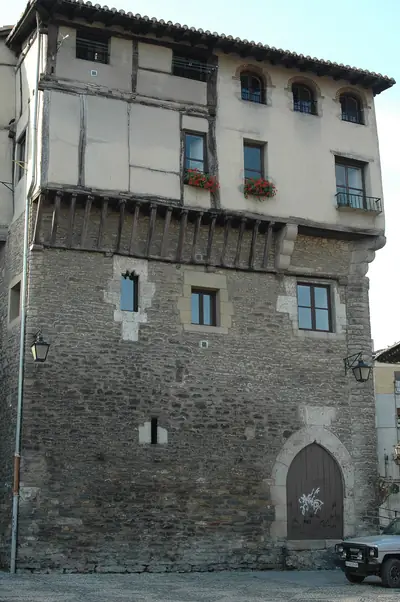
The Torre de los Anda is one of Vitoria’s oldest surviving buildings. Dating from the fifteenth century, it stands beside Santa María Cathedral in Plaza de la Burullería and was once part of the defensive network of noble towers surrounding the medieval Gothic city. Its lower section is made from ashlar stone, while the upper part uses wood and brick. After restoration in 1981, it was declared a Cultural Heritage site of Álava in 1984.
The nearby Cathedral of Santa María is one of the stops on Neywo’s walk through the hill where Vitoria began, a route that places the city’s medieval buildings in context.
Casa del Cordón
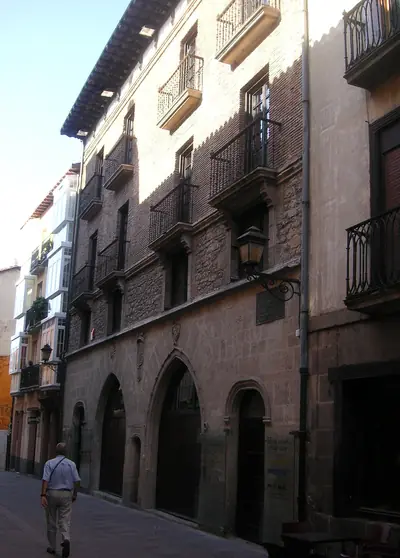
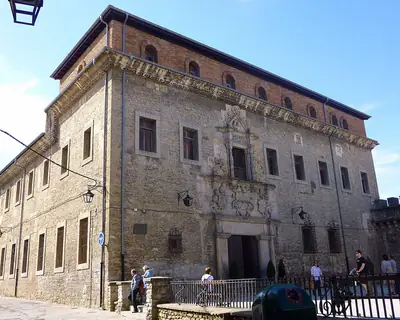
On Cuchillería Street, the fifteenth-century Casa del Cordón is one of the Old Town’s most notable palaces. Its name comes from the carved Franciscan cord above one of its twin entrance arches. Juan Sánchez de Bilbao built the palace around an older tower house; he was a converso, a person who had converted to Christianity.
The street also leads to the Fournier Museum of Playing Cards, making this part of the historic centre particularly rewarding for visitors interested in unusual museums and local history.
Renaissance and Baroque palaces
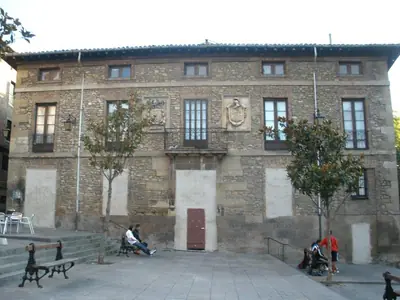
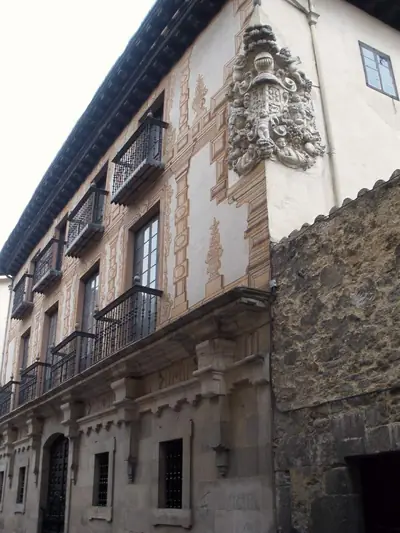
Several historic residences show how Vitoria-Gasteiz developed beyond its medieval defensive core. The Casa Palacio de los Álava-Velasco is a notable noble residence in the city centre. Palacio Escoriaza-Esquivel, in El Campillo, is considered the best-preserved Renaissance palace in Vitoria-Gasteiz and was built in the sixteenth century over part of the old medieval wall.
The Palace of the Marqués de la Alameda, also known as the Casa de los Urbina, is a freestanding example of civil Baroque architecture. It was built between 1731 and 1735 and has been remodelled several times. The Palace of Villa-Suso, known locally as Goiuri jauregia, is another historic landmark in the Old Town.
Historic churches and the Convent of San Antonio
Vitoria-Gasteiz’s churches add another layer to a walk through the centre. The Convent of San Antonio is a seventeenth-century Baroque building on the pedestrianised Plaza del General Loma. Its formal dedication is to La Purísima Concepción, although it is commonly known as San Antonio. The convent is home to a community of Poor Clares, and its church continues to serve as a parish church.
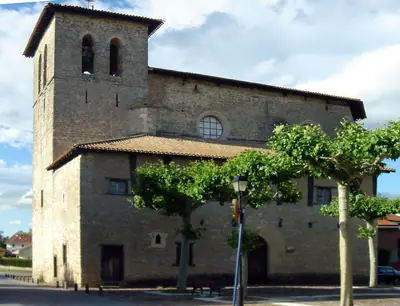
The Church of Nuestra Señora de la Asunción in Lasarte, just outside Vitoria, is a small Gothic church with ribbed vaults. Its walls were reinforced in the nineteenth century, and a dentilated cornice was added above pilasters with composite capitals. Lasarte also had an important civic role: in 1286, King Sancho el Bravo donated the town to Vitoria, and both the local nobility and commoners held their assemblies there.
Museums in the historic centre
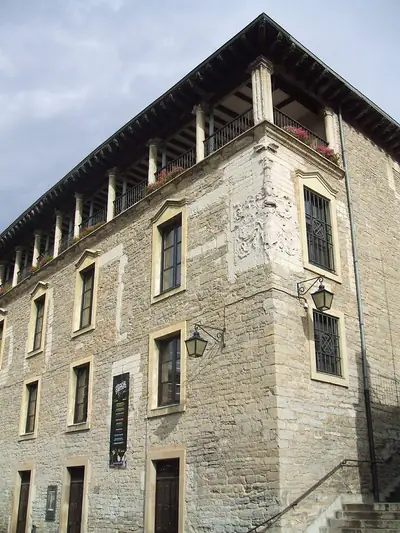
The Fournier Museum of Playing Cards occupies the Bendaña Palace on Cuchillería Street and forms part of the Bibat museum complex with the Museum of Archaeology. Its collection follows the history and art of playing cards from the fifteenth century to the present day. Spanish cards are especially well represented, alongside designs connected with history, art, mythology, fortune-telling, music and bullfighting.
For modern and contemporary art, the Artium Museum on Francia Street holds close to 3,000 works of Basque and Spanish art from the twentieth and twenty-first centuries. The museum opened in 2002, and around three quarters of its building sits below street level, giving it its distinctive “winery-museum” character.
The Memorial Centre for the Victims of Terrorism is housed in the former Bank of Spain building in Vitoria. Inaugurated on 1 June 2021, it is dedicated to preserving the memory of people affected by terrorist attacks in Spain since 1960 and to promoting freedom, human rights and democratic values.
Fine arts and military history
The Museum of Fine Arts of Álava is housed in the Augustin Zulueta Palace, built in 1912 on the Paseo de Fray Francisco. Opened in 1942, it focuses on Spanish art from the eighteenth to the twentieth centuries, with particular attention to Basque art from 1850 to 1950. Its collection includes Spanish and Basque costumbrista and impressionist painting, as well as sculpture.
Nearby, the Armoury Museum of Álava presents weapons, uniforms and objects connected with warfare, from prehistory to the early twentieth century. A dedicated section explores the Battle of Vitoria in 1813, a major event in the Spanish War of Independence.
The Green Belt and Ataria
Vitoria-Gasteiz is also known for its network of parks and green areas. Ataria, the interpretation centre for the Salburua marshes, stands in the northern part of Salburua Park on the eastern edge of the city. The wetlands are recognised as a Ramsar site and classified as a class 1 Habitat of European Community Interest.
Ataria explains the natural value and biodiversity of the wetlands through leisure, interpretation and educational activities. It is also intended as a place for discussion about the management of the park and the protection of its biodiversity. A bike route from the Ensanche to the Salburua wetlands includes Ataria among its narrated stops.
The Tower of Mendoza
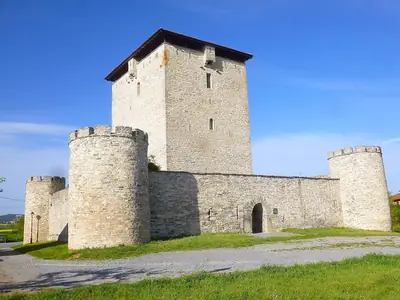
Outside the city, the Tower of Mendoza is a restored fortified tower in the village of Mendoza. Built in the thirteenth century as a residence for the House of Mendoza, it stood between the old roads of Castile and the Ebro River, controlling an important route through the territory.
The tower rises 21 metres and is enclosed by a perimeter wall measuring about 100 metres. It formerly housed the Museum of Heraldry of Álava, whose collection included coats of arms and medieval clothing, but the museum closed to visitors because the building did not meet modern accessibility requirements.
Explore Vitoria-Gasteiz with a self-guided audio tour
Neywo offers a Vitoria-Gasteiz self-guided walking tour experience through four walking tours, one bus route and one bike route. Together, they cover 89 narrated places, from the medieval hill and Cuchillería Street to the nineteenth-century city and the Salburua wetlands.
The four walks are:
- The Hill Where Vitoria Began: 1.53 km, 101 minutes and 12 stops.
- Cuchillería to the Virgen Blanca: 1.07 km, 75 minutes and 10 stops.
- Cathedral, Parliament and the Green Boulevard: 1.93 km, 73 minutes and 9 stops.
- The Nineteenth-Century City: Squares, Stage and Modern Art: 2.87 km, 76 minutes and 7 stops.
There is also a 2.5 km bus route lasting 11 minutes with 5 stops, and a 7.7 km bike route lasting 38 minutes with 6 stops.
Download Neywo and explore Vitoria-Gasteiz at your own pace. The app tells the story of each place as you reach it, with no group and no schedule, and narration is available in 11 languages. If you are continuing through northern Spain, you can also discover Bilbao, San Sebastián or other destinations in Spain.
Places with an audio guide in Vitoria-Gasteiz
8 places in Vitoria-Gasteiz with a Neywo audio guide. Each one starts telling its story as you reach it.
Self-guided tours in Vitoria-Gasteiz
6 tours in Vitoria-Gasteiz, free in the Neywo app. Each stop tells its story as you reach it.
- Bike ride
From the Ensanche to the Salburua Wetlands
Ride north through Vitoria's nineteenth-century city on its cycle lanes: a neighbourhood church, Chillida's Plaza de los Fueros, the Artium contemporary art museum and a pyramid-roofed church, then out to Ataria, the gateway to the Salburua wetlands reserve.
Church of San Cristóbal, Vitoria-Gasteiz · Church of Nuestra Señora de los Desamparados, Vitoria · Plaza de los Fueros · Artium Museum · Church of San Francisco de Asís, Vitoria · Ataria
Open this tour: From the Ensanche to the Salburua Wetlands - Bus ride
Line 4: Across Vitoria from Lakua
TUVISA's line 4 crosses Vitoria from the north every ten minutes. Ride it from Santo Domingo square through the central plazas and past the Baroque convent of San Antonio to the New Cathedral.
Santo Domingo plaza · Ospitale plaza · Babesgabetuen Andre Mariaren plaza · Convent of San Antonio, Vitoria · Museo Diocesano de Arte Sacro de Álava
Open this tour: Line 4: Across Vitoria from Lakua - Walk
The Hill Where Vitoria Began
Climb the medieval hill founded in 1181 as Nueva Victoria. You pass a fifteenth-century tower, the Old Cathedral where restoration is part of the visit, and a string of Renaissance and Baroque palaces. It ends at San Miguel, the church that watches over the city's main square.
Convento de Santo Domingo, Vitoria-Gasteiz · Casa Palacio de los Álava-Velasco · Torre de los Anda · Cathedral of Santa María de Vitoria · Church of Santa María, Vitoria · Museo de Ciencias Naturales de Álava …
Open this tour: The Hill Where Vitoria Began - Walk
Cuchillería to the Virgen Blanca
Walk down Cuchillería, the old knife-makers' street, past the House of the Cord, a museum of playing cards and a Gothic church built from fortress stones. Then follow the stepped arcades of Los Arquillos down to the plazas where Vitoria celebrates its fiestas.
Old Orphanage of Vitoria · Fournier Museum of Playing Cards · Museo de Arqueología de Álava · House of Cordón · Church of San Vicente Mártir · Bank of Spain building in Vitoria …
Open this tour: Cuchillería to the Virgen Blanca - Walk
Cathedral, Parliament and the Green Boulevard
Leave the old town for the 19th-century city along Paseo de la Senda. See the neo-Gothic New Cathedral, the provincial government seat, two fine museums and the residence of the Basque president, among villas and parks.
Church of San Pedro Apóstol · Diputación Foral de Álava building · Museo Diocesano de Arte Sacro de Álava · Church of El Carmen, Vitoria-Gasteiz · Palace of Zulueta · Museo de Bellas Artes de Álava …
Open this tour: Cathedral, Parliament and the Green Boulevard - Walk
The Nineteenth-Century City: Squares, Stage and Modern Art
Step out of the medieval hill into Vitoria's Ensanche. Start at a pyramid-roofed church with a painful modern history, see the museum sunk three quarters below street level, cross Chillida's Plaza de los Fueros, and pass the Neobaroque theatre and the market to reach two neighbourhood churches.
Church of San Francisco de Asís, Vitoria · Artium Museum · Plaza de los Fueros · Teatro Principal Antzokia · Mercado de la Plaza, Vitoria · Church of Nuestra Señora de los Desamparados, Vitoria …
Open this tour: The Nineteenth-Century City: Squares, Stage and Modern Art
Walk Vitoria-Gasteiz with Neywo
Neywo turns Vitoria-Gasteiz into a self-guided audio tour. Stories arrive as you reach the place they belong to, and the route reshapes when you wander off it.


More in the Basque Country
Elsewhere in Spain
- CorralejoCanary Islands
- GarachicoCanary Islands
- LanzaroteCanary Islands
- Las Palmas de Gran CanariaCanary Islands
- Los CristianosCanary Islands
- Puerto de la CruzCanary Islands
- Puerto de MogánCanary Islands
- Puerto del RosarioCanary Islands
- San Cristóbal de La LagunaCanary Islands
- San Sebastián de La GomeraCanary Islands
- Santa Cruz de TenerifeCanary Islands
- ÁvilaCastile and León