Visiting Zumaia, Spain: Top Sights on Foot
Things to Do in Zumaia: A Self-Guided Walk Through the Basque Coast
Looking for things to do in Zumaia? This coastal town in the Basque Country brings together extraordinary geology, historic buildings, and a strong maritime character. Its flysch cliffs record more than 60 million years of Earth’s history, while the Old Town and nearby landmarks reveal Zumaia’s cultural heritage. Neywo offers a free audio guide for Zumaia with 13 narrated places.
What to See in Zumaia
Algorri Interpretation Center
The Algorri Interpretation Center introduces the flysch formations that define Zumaia’s coastline. Its displays explain the geological story visible in the cliffs, making it a useful place to begin before exploring the shore itself.
Zuloaga’s House-Museum
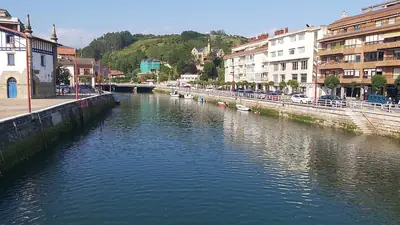
At the meeting point of the Urola River and the sea, between Santiago Beach and the town’s sports port, Zuloaga’s House-Museum occupies the former Santiago Church. Basque painter Ignacio Zuloaga bought the building in the early 1900s and turned it into a creative sanctuary.
The museum preserves his paintings and personal artifacts, along with the atmosphere of the artist whose work helped shape international views of Basque identity. The building is officially recognized as part of Gipuzkoa’s cultural heritage.
Church of San Pedro
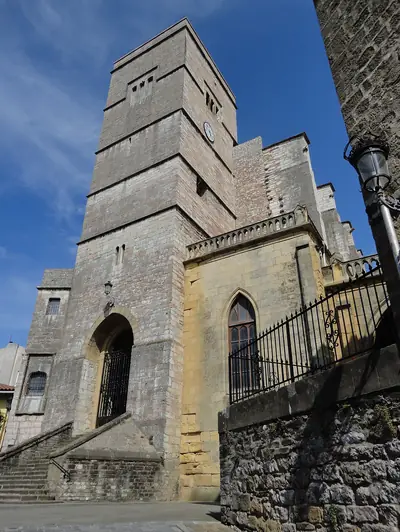
The Church of San Pedro is the main parish church and one of the defining landmarks of Zumaia’s Old Town. Construction began in the fifteenth century and continued into the sixteenth. Its thick stone walls and fortress-like appearance give it the character of a stronghold.
The church has a single nave, a rectangular floor plan, and a square tower rising 34 metres above the entrance. Its position in the heart of the Old Town makes it a natural stop while walking through Zumaia.
Zumaia Jauregia
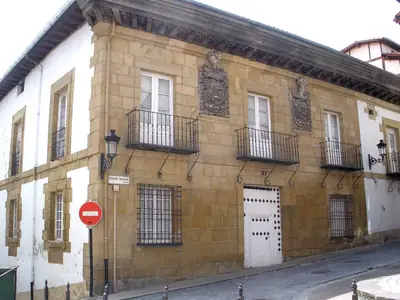
Zumaia Jauregia is a historic palace in the centre of the Old Town, close to the Church of San Pedro. Its location makes it easy to see alongside the town’s other historic residences.
Olazabal House
Olazabal House stands in the old quarter near the San Juan spring, across from Zumaia Jauregia. It was the ancestral seat of the Olazabal family and is one of the historic manor houses that give this part of Zumaia its character.
Ubillos Palace
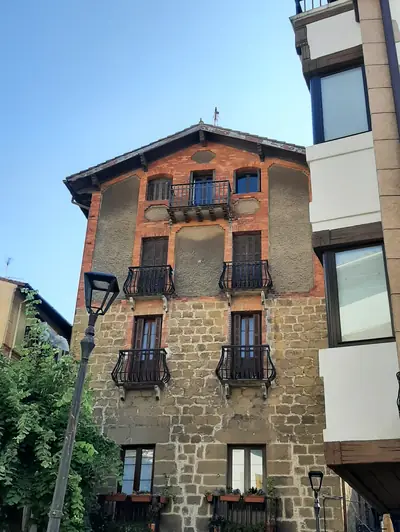
Ubillos Palace recalls another prominent local family. The building takes its name from the Ubillos family, its original owners, whose legacy remains connected to the historic residence.
Foronda Jauregia
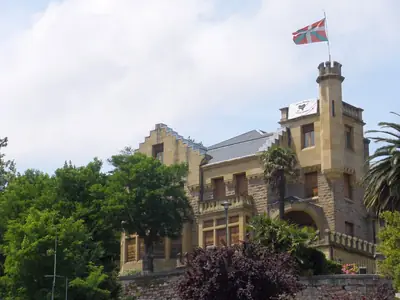
Foronda Jauregia occupies the site of an old mill in Zumaia’s Urola Kosta region. The Basque flag, or Ikurrina, can often be seen flying above the building.
Arritokietako Andre Mariaren Baseliza
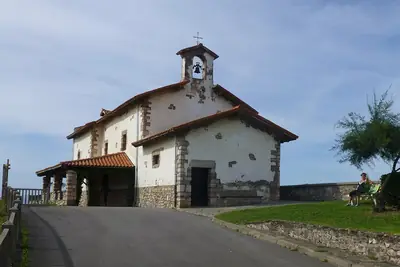
This small hermitage stands on a hill above the Old Town, beside the cemetery and along the coastal route of the Camino de Santiago. Pilgrims may pass by as they follow the route.
Inside, a seventeenth-century altarpiece shelters a sixteenth-century statue of Our Lady of Arritokieta. The hermitage also contains a sixteenth-century Hispano-Flemish triptych depicting the Pietà at its centre, with Saint John the Baptist and probably Saint Francis on either side.
Hermitage of San Telmo
The Hermitage of San Telmo occupies a dramatic position on the cliffs above Itzurun Beach. Built into the flysch formations, the small sixteenth-century chapel stands 150 metres above sea level.
San Telmo is the patron saint of sailors, making this elevated position above the Atlantic especially fitting. The chapel is modest, but its setting combines religious heritage with Zumaia’s most striking coastal scenery.
The Selandian and Thanetian layers
Zumaia’s flysch is more than a dramatic cliff landscape: it is an important geological reference point. At San Telmo Beach, the exposed rock contains the world reference point for the Thanetian stage, the final chapter of the Paleocene epoch.
The Thanetian began about 59.2 million years ago and ended around 56 million years ago. The transition between it and the earlier Selandian stage is marked in Zumaia’s cliffs. The Selandian spans roughly 61.6 to 59.2 million years ago, and these formations provide one of the most complete and accessible records of this period.
The alternating rock layers make the coastline look like an open geological book. Seen from the beach and cliffs, the flysch connects Zumaia’s landscape with a much larger story about the history of the planet.
Mantzisidor Bridge
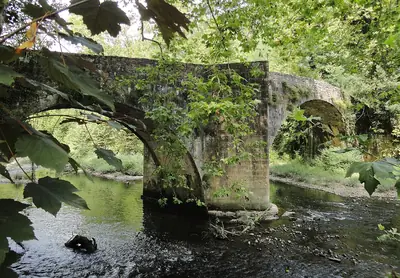
Known locally as Oikiako Bridge, Mantzisidor Bridge crosses the Urola River in Zumaia’s Oikia neighbourhood. It offers another way to encounter the river landscape beyond the coast and Old Town.
Arroaerreka
Arroaerreka, also known locally as the Narrondo, is a tributary of the Urola River. It runs for just over ten kilometres before joining the larger river in Zumaia.
For most of its course, it is a narrow mountain stream. The waterway begins where three smaller streams meet: the Usarru, the Arroa, and the Narrondo itself.
Gran Hotel Amaya
The former Gran Hotel Amaya once served both as a hotel and a theatre in the centre of Zumaia. It adds a reminder of the town’s social and cultural history to a walk otherwise dominated by palaces, churches, rivers, and geological landmarks.
A Zumaia Self-Guided Walking Tour
For a compact route through the town and its coastline, Neywo’s walking tour, Zumaia: from Zuloaga’s studio to the flysch cliffs, covers 2.4 kilometres in approximately 79 minutes. It has 9 narrated stops, including Zuloaga’s House-Museum, the Church of San Pedro, Zumaia Jauregia, Olazabal House, Ubillos Palace, Foronda Jauregia, Arritokietako Andre Mariaren Baseliza, the Hermitage of San Telmo, and the Thanetian geological site.
This route is a practical alternative to a conventional free walking tour in Zumaia: it lets you follow the town’s story independently, from its historic centre towards the cliffs.
Explore Zumaia with Neywo
Download Neywo and explore Zumaia with one walking tour, covering 2.4 km in 79 minutes and featuring 9 narrated stops. The app tells the story of each place as you reach it, at your own pace, with no group and no schedule. Narration is available in 11 languages.
Zumaia is also a rewarding stop while exploring Spain and the wider Basque coast, with nearby destinations including San Sebastián, Bilbao, and Azpeitia.
Places with an audio guide in Zumaia
8 places in Zumaia with a Neywo audio guide. Each one starts telling its story as you reach it.
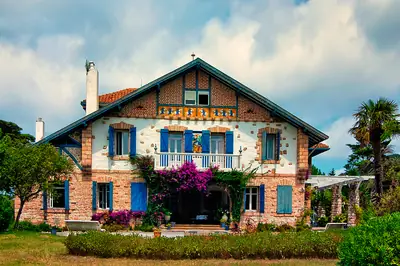
Self-guided tours in Zumaia
1 tour in Zumaia, free in the Neywo app. Each stop tells its story as you reach it.
- Walk
Zumaia: from Zuloaga's studio to the flysch cliffs
Start where the river meets the sea, in the old church that painter Ignacio Zuloaga turned into his home and studio. Cross the old town past its fortress-like parish church and noble palaces, climb to a pilgrim hermitage on the Camino de Santiago, then finish on the cliffs of San Telmo, where 60 million years of Earth's history lie in layers of rock.
Zuloaga's House-Museum · Church of San Pedro, Zumaia · Zumaia Jauregia · Olazabal etxea · Ubillos Palace · Foronda jauregia …
Open this tour: Zumaia: from Zuloaga's studio to the flysch cliffs
Walk Zumaia with Neywo
Neywo turns Zumaia into a self-guided audio tour. Stories arrive as you reach the place they belong to, and the route reshapes when you wander off it.


More in the Basque Country
Elsewhere in Spain
- CorralejoCanary Islands
- GarachicoCanary Islands
- LanzaroteCanary Islands
- Las Palmas de Gran CanariaCanary Islands
- Los CristianosCanary Islands
- Puerto de la CruzCanary Islands
- Puerto de MogánCanary Islands
- Puerto del RosarioCanary Islands
- San Cristóbal de La LagunaCanary Islands
- San Sebastián de La GomeraCanary Islands
- Santa Cruz de TenerifeCanary Islands
- ÁvilaCastile and León