What to See in Las Palmas de Gran Canaria, Spain: Free Audio Guide
Things to Do in Las Palmas de Gran Canaria
The best things to do in Las Palmas de Gran Canaria range from exploring the historic streets of Vegueta to visiting Atlantic-facing museums, fortresses and theatres. The city brings together pre-colonial history, Canarian religious heritage, maritime culture and contemporary art in a compact urban setting. Neywo offers a free audio guide for Las Palmas de Gran Canaria with 75 narrated places.
What to See in Las Palmas de Gran Canaria
Santa Ana Cathedral and the historic heart of Vegueta
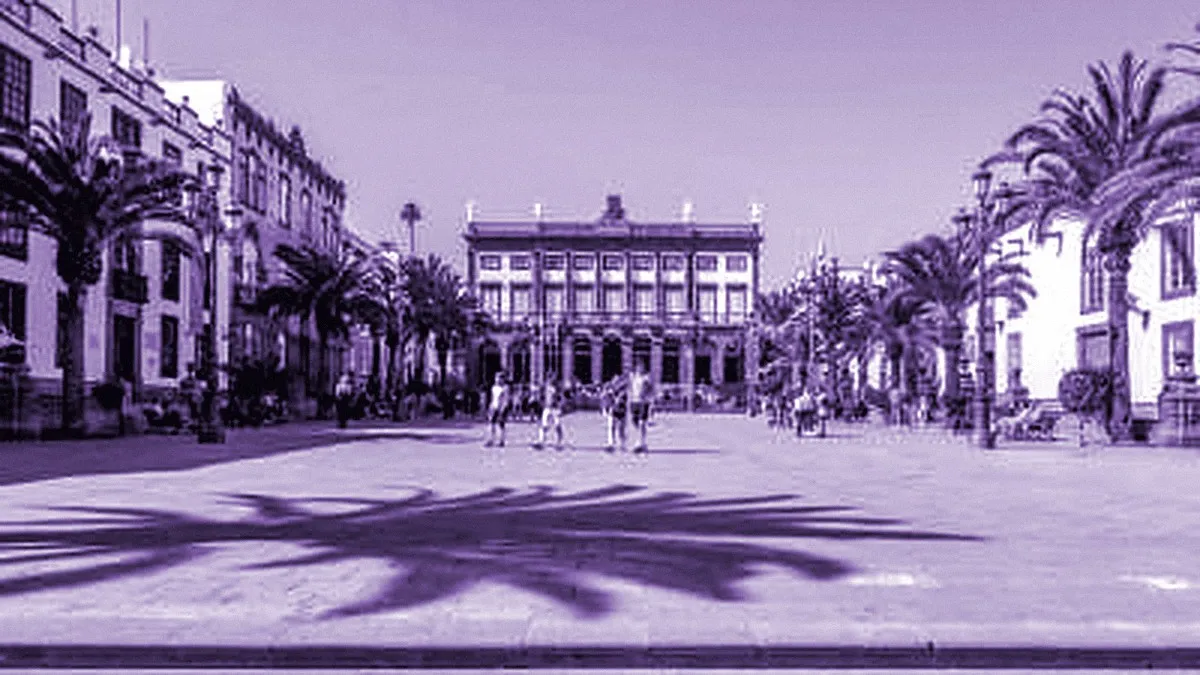
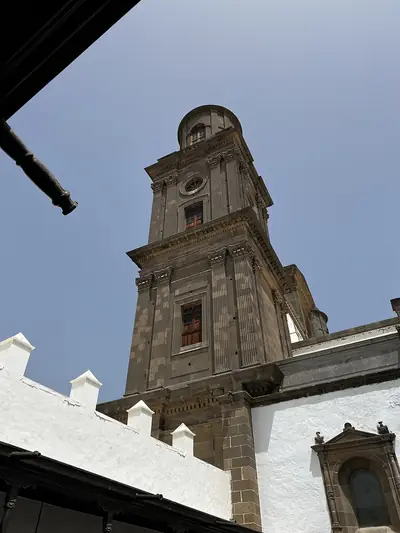
Vegueta is the city’s historic district and the natural place to begin exploring Las Palmas de Gran Canaria. Its centrepiece is the Cathedral Basilica of St. Ann, or Catedral de Santa Ana, in Santa Ana Square. Construction began in 1497 and continued over several centuries, giving the building a blend of architectural periods.
The exterior has a symmetrical façade with twin towers and Neoclassical proportions. Inside, tall stone columns and vaulted ceilings create a Gothic character, while Renaissance elements reflect the cathedral’s long development. The surrounding square and historic buildings make this one of the city’s defining places.
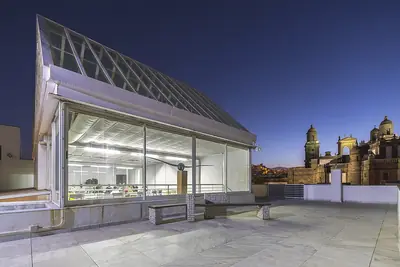
Beside the cathedral, the Museo Diocesano de Arte Sacro de Las Palmas de Gran Canaria occupies rooms around the Patio de Los Naranjos. Created in the seventeenth century, the patio forms part of the cathedral complex. The museum opened in 1984, and the Renaissance-style Puerta del Aire connects it directly with the cathedral.
Casa de Colón and the city’s Atlantic history
Casa de Colón, the House Museum of Christopher Columbus, connects Las Palmas with the history of the Canary Islands and the Americas. It stands on the site of the former residence of the island’s governor. Christopher Columbus stopped in Gran Canaria in 1492, fourteen years after the city was founded, and returned during later voyages.
The building is a late sixteenth-century example of traditional Canarian architecture, with patios and exhibition halls that preserve original features. Its connection with maritime travel makes it one of the most important places to visit in Vegueta.
The Canarian Museum
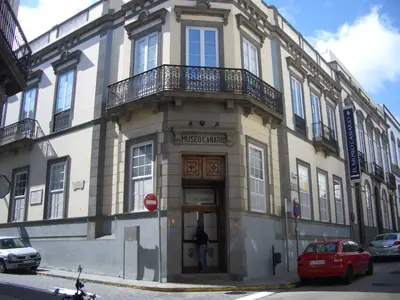
El Museo Canario examines the pre-colonial history of the Canary Islands and the cultural roots of Gran Canaria. Founded in 1879 as a scientific and cultural society, the museum now presents objects connected with daily life in pre-Hispanic times.
The permanent collection includes ceramic vessels, tools, religious artefacts and textiles, as well as displays about farming techniques and social structures. Preserved mummies and human remains offer insight into burial customs and the spiritual beliefs of the islands’ indigenous inhabitants. The museum occupies a nineteenth-century building that was declared a historic-artistic monument in 1962.
CAAM and contemporary Atlantic art
The Centro Atlántico de Arte Moderno, or CAAM, gives Vegueta a contemporary artistic dimension. Its exhibitions explore connections between Africa, the Americas and Europe, reflecting the city’s position in the Atlantic.
Architect Francisco Javier Sáenz de Oiza designed the museum while preserving the façades of two older Neoclassical houses. CAAM opened in 1989 and has presented painting, drawing, sculpture, graphic art and postal art. Its programme encourages dialogue between cultures and artistic movements rather than treating contemporary art as one fixed style.
Castillo de Mata and the city’s fortifications
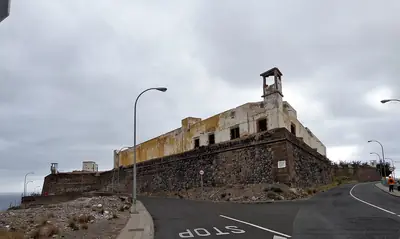
Castillo de Mata, also known as Castillo de Casa Mata and the Alonso Alvarado Barracks, is one of Las Palmas de Gran Canaria’s historic fortifications. It forms part of the city’s wider defensive heritage.
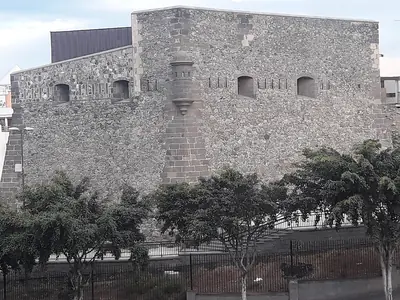
The Castle of San Francisco, also called Castillo del Rey, stands on the mountain of the same name. Construction began in 1601 and the fortress was considered complete by 1625. Its irregular layout follows the shape of the terrain. With an area of about 5,750 square metres, it was the largest defensive platform on Gran Canaria according to the Canary Islands Register of Cultural Interest.
The Batería de San Juan, or Batería de Santa Isabel, offers another reminder of the city’s military past. The former installation included machine-gun nests, artillery positions and other military equipment. Today, the site is abandoned, although the local council has expressed interest in restoring it.
Triana and the Pérez Galdós Theatre
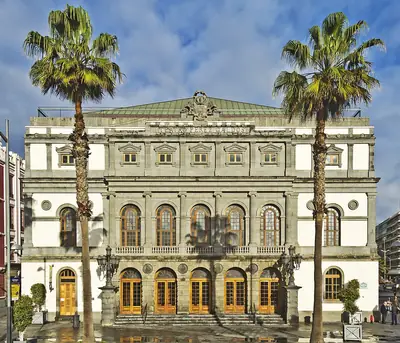
Triana presents a different side of the city, with elegant streets and a more cosmopolitan atmosphere. The district is also home to the Teatro Pérez Galdós, near the sea and beside the mouth of the Guiniguada ravine.
The theatre is Las Palmas de Gran Canaria’s principal theatrical venue and the permanent home of the Alfredo Kraus Las Palmas de Gran Canaria Opera Festival. Its programme includes opera, classical music, theatre and dance. A complete renovation finished in 2007, and one room is dedicated to the French composer Camille Saint-Saëns, who visited Gran Canaria in 1889.
For more literary and architectural discoveries, the Triana area also features places included in Neywo’s route, such as the Gabinete Literario, Casa-Museo Pérez Galdós, Calle Mayor de Triana, Palacete Rodriguez Quegles and Parque de San Telmo.
Castillo de la Luz and the port
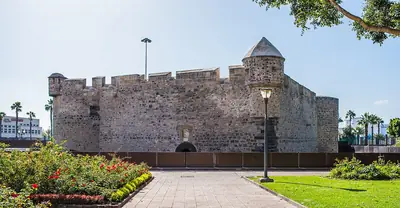
Near La Isleta and the Puerto de La Luz, Castillo de la Luz shows how closely the city’s history is tied to the sea. Built in 1494, the fortress defended Las Palmas against maritime threats until the nineteenth century. It became a Historic Artistic Monument in 1941.
The castle has a compact square plan, three levels, ashlar stone walls, an external moat with a drawbridge, two circular towers and a sentry box. A cistern inside recalls the practical needs of a defensive stronghold. Today, the fortress also brings together the city’s archaeological heritage and the artistic vision of Canarian sculptor Martín Chirino.
Nearby, the Elder Museum of Science and Technology occupies a historic building once belonging to a prominent shipping company. Opened in 1999, the museum uses interactive exhibits and immersive experiences to explore science and technology. Its four floors include temporary exhibitions, a digital planetarium and a large-format 3D cinema. Historical objects include a steam locomotive from 1885, a marine diesel engine, models of old steamships and a CASA-Northrop F-5 supersonic combat aircraft.
La Regenta and the Santa Catalina area
The Centro de Arte la Regenta, in the Puerto-Canteras district, focuses on contemporary art from the Canary Islands. Its urban setting makes it a useful stop when exploring the area around Santa Catalina and the port.
Parque de Santa Catalina provides another important reference point in this part of the city. It brings together transport, cultural attractions and maritime history, including the Elder Museum and the nearby Poema del Mar Aquarium.
Alfredo Kraus Auditorium and Las Canteras
At the edge of Las Canteras beach, the Auditorio Alfredo Kraus is one of the city’s most distinctive buildings. Designed by Óscar Tusquets with Carlos Díaz, it was built between 1993 and 1997 and opened in 1997.
Its architecture was conceived as both a protective fortress and a lighthouse. The main hall’s enormous window opens towards the Atlantic behind the orchestra, while sculptural details by Juan Bordes incorporate forms inspired by the marine fauna of Las Canteras beach. The wider complex includes the Palacio de Congresos de Canarias, with spaces for congresses, relaxation and leisure.
San Francisco and San José
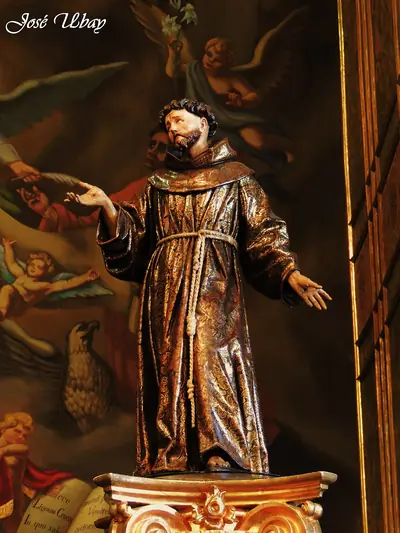
The Parroquia de San Francisco de Asís, in Alameda de Colón, is also a Marian sanctuary dedicated to Our Lady of Solitude of the Porter’s Lodge. The Archconfraternity’s origins date to 1636, and the church was declared a Site of Cultural Interest in 1985.
The Church of San José, or Iglesia de San José, is another cultural property in Las Palmas de Gran Canaria, adding to the city’s collection of historic religious sites.
Explore Las Palmas de Gran Canaria with Neywo
Neywo works as a Las Palmas de Gran Canaria self-guided walking tour and audio guide. The app has four walking tours, one bus route and one bike route:
- Vegueta: Where Columbus Stopped and the City Began — 1.15 km, 78 minutes and 10 narrated stops
- Triana: Modernist Balconies, Literary Salons and San Telmo — 1.5 km, 65 minutes and 9 narrated stops
- Santa Catalina and La Isleta: Port, Aquarium and Fortress — 2.01 km, 66 minutes and 7 narrated stops
- Pueblo Canario: A Painter’s Dream Village — 1.67 km, 43 minutes and 4 narrated stops
- Guagua 1: From the Port to Vegueta’s Theatre — a 5.3 km bus route lasting 23 minutes, with 5 narrated stops
- Triana Cycle Lane: Sculptures, Shops and Squares — a 3.5 km bike route lasting 18 minutes, with 6 narrated stops
Download Neywo and explore Las Palmas de Gran Canaria with the story of each place playing as you reach it. You choose the pace, with no group and no schedule. Narration is available in 11 languages, and the city guide includes 75 narrated places.
Las Palmas is part of the Canary Islands, an island region of Spain with many other destinations to explore.
Places with an audio guide in Las Palmas de Gran Canaria
8 places in Las Palmas de Gran Canaria with a Neywo audio guide. Each one starts telling its story as you reach it.
Self-guided tours in Las Palmas de Gran Canaria
6 tours in Las Palmas de Gran Canaria, free in the Neywo app. Each stop tells its story as you reach it.
- Bike ride
Triana Cycle Lane: Sculptures, Shops and Squares
Follow the city cycle lane from the giraffe-and-girl statue near Pueblo Canario down to Triana and Vegueta. Pass modern sculpture, the Espiral del Viento, the pedestrian shopping street of Triana and the Pérez Galdós Theatre, finishing at the Square of the Frogs.
Planeta Ella · Otomana · Espiral del viento · Calle Mayor de Triana · Teatro Pérez Galdós · Plaza Hurtado de Mendoza
Open this tour: Triana Cycle Lane: Sculptures, Shops and Squares - Bus ride
Guagua 1: From the Port to Vegueta's Theatre
Ride the municipal bus line 1 from the Santa Catalina port district to the Pérez Galdós Theatre in Vegueta. It passes the cat-lady statue, the contemporary art of La Regenta, the Plaza de la Feria and the Espiral del Viento sculpture, a simple way to see the whole city for the price of a ticket.
Statue of Lolita Pluma · Centro de Arte la Regenta · Plaza de la Feria · Espiral del viento · Teatro Pérez Galdós
Open this tour: Guagua 1: From the Port to Vegueta's Theatre - Walk
Vegueta: Where Columbus Stopped and the City Began
Stroll the cobbled heart of the 1478 founding settlement. Pass the island's oldest market and a theatre where a French composer once hid, visit the house where Columbus stayed, then reach Santa Ana Square with its cathedral twin towers, its bronze dogs that gave the islands their name and the museum of the island's pre-Hispanic mummies.
Teatro Pérez Galdós · Mercado de Vegueta · Centro Atlántico de Arte Moderno · Plaza del Pilar Nuevo · House museum of Christopher Columbus · Museo Diocesano de Arte Sacro de Las Palmas de Gran Canaria …
Open this tour: Vegueta: Where Columbus Stopped and the City Began - Walk
Triana: Modernist Balconies, Literary Salons and San Telmo
Walk from the Square of the Frogs up the pedestrian Calle Mayor de Triana, past an 1844 literary club, the birthplace of novelist Benito Perez Galdos and a modernist palacete. End in San Telmo Park with its 1923 kiosk, a Mudejar hermitage and a wind-spiral sculpture.
Plaza Hurtado de Mendoza · Gabinete Literario, Las Palmas de Gran Canaria · Casa-Museo Pérez Galdós · Calle Mayor de Triana · Palacete Rodriguez Quegles · Teatro Cuyás …
Open this tour: Triana: Modernist Balconies, Literary Salons and San Telmo - Walk
Santa Catalina and La Isleta: Port, Aquarium and Fortress
Explore the port district where the city meets Las Canteras beach. Visit Santa Catalina Park, a science museum with a real fighter jet, a Columbus-ship replica, an aquarium inspired by an artist's poem and a 1494 castle with a drawbridge guarding the port.
Centro de Arte la Regenta · Statue of Lolita Pluma · Parque de Santa Catalina · Niña III · Elder Museum of Science and Technology · Poema del Mar Aquarium …
Open this tour: Santa Catalina and La Isleta: Port, Aquarium and Fortress - Walk
Pueblo Canario: A Painter's Dream Village
Leave the harbour for the garden district. Start at the lava-stone obelisk of Constitution Square and walk to Pueblo Canario, the village of Canarian-style houses conceived by painter Nestor and built by his brother, with the museum devoted to his work.
Obelisk · Museo Néstor · Pueblo Canario · Planeta Ella
Open this tour: Pueblo Canario: A Painter's Dream Village
Walk Las Palmas de Gran Canaria with Neywo
Neywo turns Las Palmas de Gran Canaria into a self-guided audio tour. Stories arrive as you reach the place they belong to, and the route reshapes when you wander off it.

