What to See in Montpelier, United States: Free Audio Guide
Things to Do in Montpelier: Vermont’s Historic State Capital
Montpelier, Vermont, is the capital of Vermont and a compact city shaped by government, history, rivers, and wooded hills. Its walkable center brings together the Vermont State House, historic churches, civic buildings, and distinctive architecture, making it an easy place to explore on foot. Neywo offers a free audio guide to Montpelier with 10 narrated places, available in 11 languages.
What to See and Do in Montpelier
The best things to do in Montpelier are concentrated around the city center and Seminary Hill. A self-guided walk connects the main landmarks in an easy sequence, while the surrounding Washington County setting adds mountains, forests, rivers, and lakes to the experience.
Vermont State House
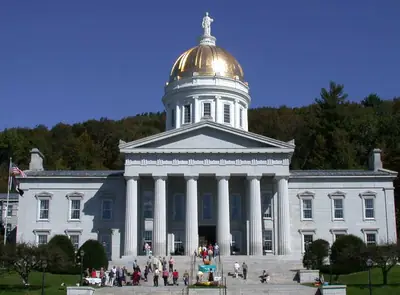
The Vermont State House is Montpelier’s most recognizable landmark and the seat of Vermont’s legislature. Its gilded dome is topped by a statue of Ceres, the Roman goddess of agriculture, reflecting Vermont’s rural heritage.
Completed in 1859, the current building is the third State House on the site. It was designed by Thomas Silloway after the previous structure was destroyed by fire in 1857. Its architecture combines Neoclassical and Greek Revival elements, with local granite and a preserved Doric portico from the earlier building.
Inside, the legislative chambers retain much of their historic character. Rooms feature American Empire, Renaissance Revival, Rococo Revival, and later nineteenth-century decorative styles.
Vermont Supreme Court
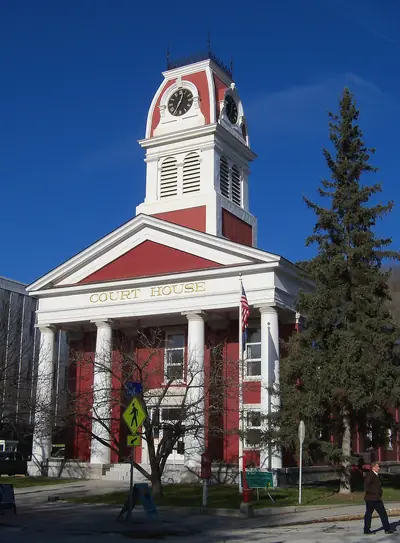
The Vermont Supreme Court is the state’s highest judicial authority. It reviews important appeals and helps shape the operation of Vermont’s court system.
Vermont has no intermediate appeals court, so appeals pass directly from the trial courts to the Supreme Court. The court consists of a chief justice and four associate justices. Their appointments are made by the governor with confirmation by the Vermont Senate, and the Vermont General Assembly votes on whether they should continue in office every six years.
The Pavilion
On State Street, The Pavilion connects Montpelier’s present-day government with an older political tradition. It is the principal workplace of Vermont’s governor and contains government offices, a reception room, a press briefing room, and living apartments.
The building also houses the offices of the attorney general and state treasurer, along with the Agency of Administration. Completed in 1971, it stands on the site of earlier buildings, including a nineteenth-century hotel called the Pavilion. That hotel was closely linked to Vermont’s political life and was once known as the state’s “third house.”
Christ Episcopal Church
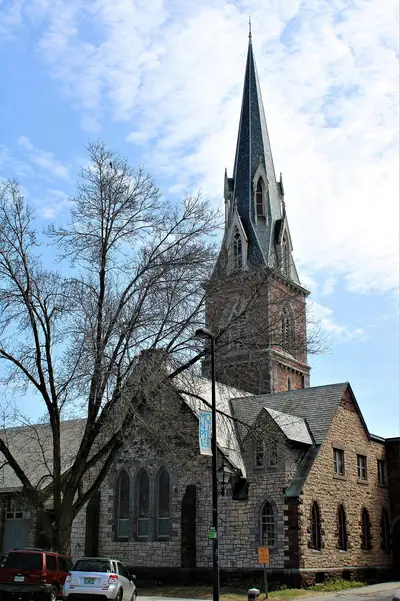
Christ Episcopal Church, at 64 State Street, has been part of Montpelier’s religious and civic life since its founding in 1840. The building’s history includes periods of construction, damage, and restoration.
The church also has a musical connection. Its organs have been the subject of extensive research by Stephen L. Pinel, giving the site an added cultural dimension beyond its architecture and religious history.
Bethany Church, UCC
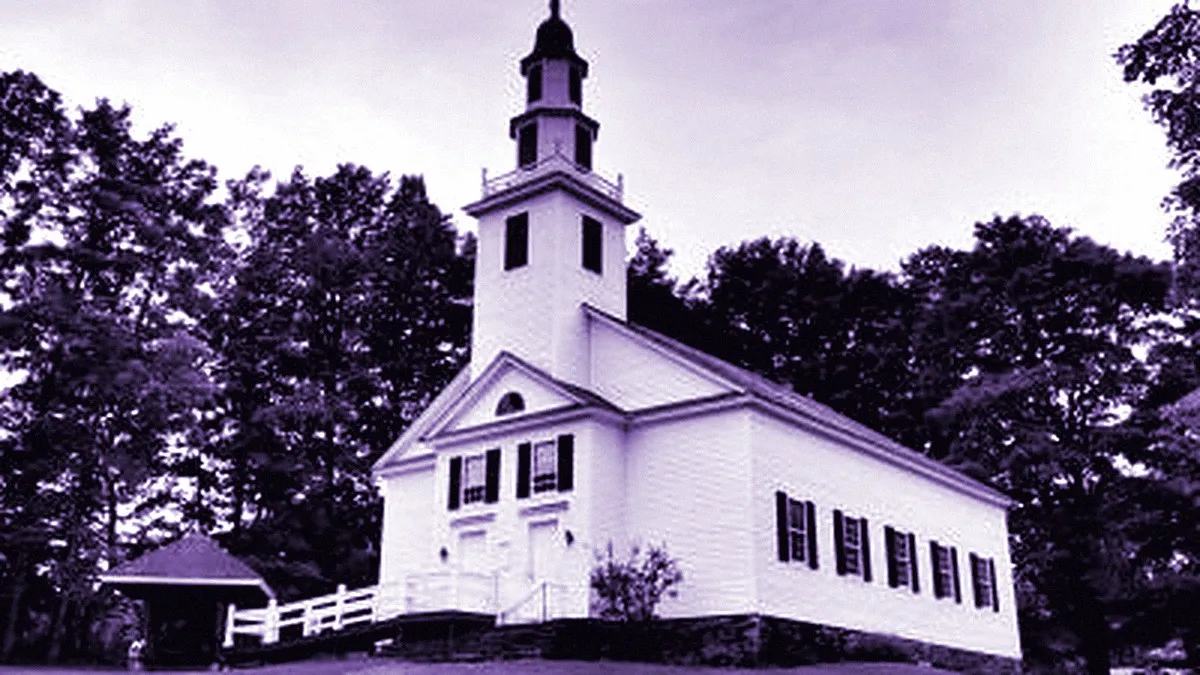
Bethany Church, UCC, is another church landmark along the Montpelier route. Its American church architecture forms part of the city’s built landscape and offers a quieter contrast to the larger civic buildings around State Street.
Cadwell House
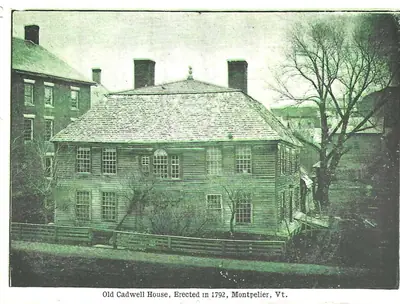
Cadwell House is a historic building in downtown Montpelier. It stands among the city’s civic landmarks, local businesses, and everyday streets, offering a glimpse of the architectural character that gives the center its compact, historic feel.
Montpelier City Hall
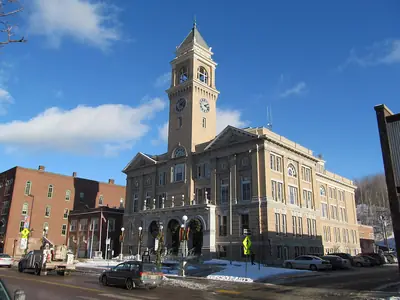
Montpelier City Hall remains the city’s main administrative center and an active part of local community life. It was built as a permanent municipal headquarters after years in which city offices occupied rented spaces. Construction was accelerated so the building could host the 1911 governor’s ball.
Designed by George G. Adams, City Hall follows the Italian Renaissance Revival style. Its yellow brick façade, granite details, and prominent clock tower give it a strong presence above the surrounding streets. The building occupies the site of a former open-air market and reflects the City Beautiful movement’s interest in dignified public spaces.
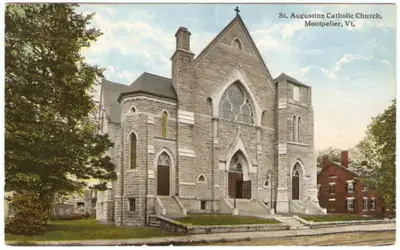
Saint Augustine Church
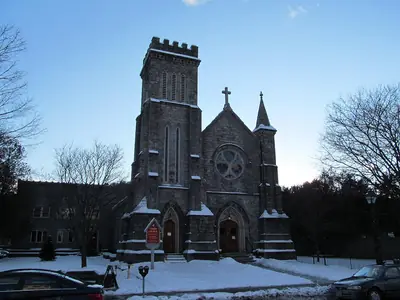
Saint Augustine Church stands on Barre Street, within the Montpelier Historic District. Its gray granite walls, twin towers, slate roof, and central rose window make it one of the city’s most distinctive religious buildings.
Completed in 1903 after more than a decade of construction, the church was designed in the Gothic Revival style. Its history reaches back to 1830, when the first Catholic Mass in Montpelier was held for a small community made up mainly of French Canadian residents. Before the present church was established, services took place in private homes and temporary spaces.
The interior originally included decorative painting and stained glass, although some of these details were simplified in later years.
College Hall
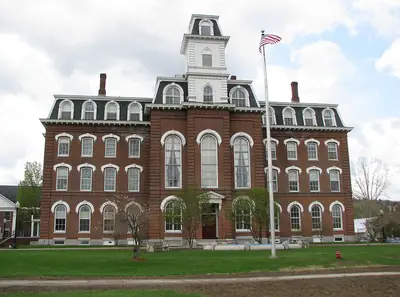
College Hall rises on Seminary Hill as the central building of the Vermont College of Fine Arts campus. Completed in 1872, it has shaped Montpelier’s skyline from Ridge Street for more than a century.
The Second Empire building has a cruciform brick plan, a mansard roof, and a central tower above the entrance. Arched windows illuminate the former chapel space, while decorative brickwork and granite details add to its formal appearance.
The site had previously been used as a Civil War military hospital. In 1866, it was selected for a Methodist seminary, partly because of its proximity to rail connections and the state capital. Construction took place between 1868 and 1872, and College Hall has remained in continuous educational use through later institutional changes.
Montpelier and Washington County
Montpelier is the county seat of Washington County, a largely mountainous part of Vermont named after George Washington. The county was founded on January 15, 1777, and originated from Gloucester County in the former state of New York.
The wider landscape includes the Green Mountains, Northfield Mountains, and Worcester Mountains. Named peaks and hills include Camel’s Hump, Mount Hunger, Mount Ellen, Mount Worcester, and Lincoln Peak. Forests are also a major feature, including municipal forests in Montpelier and neighboring communities.
Montpelier’s position within this setting helps explain its character: the city’s civic center is compact, while mountains, forests, rivers, and lakes shape the wider landscape.
For another Vermont destination, compare Montpelier with Burlington, Vermont, or continue exploring the state with Stowe. You can also see the wider destination page for Vermont.
Explore Montpelier with Neywo
Neywo’s free Montpelier audio guide includes 10 narrated places and one walking tour:
- Montpelier: The Smallest Capital, Stop by Stop — a 2.06 km walk lasting 67 minutes, with 9 narrated stops.
The route includes the Vermont State House, Vermont Supreme Court, The Pavilion, Christ Episcopal Church, Bethany Church, UCC, Cadwell House, Montpelier City Hall, Saint Augustine Church, Montpelier, and College Hall. Each story plays as you reach the place, at your own pace, with no group and no schedule. Download Neywo and explore Montpelier as you walk.
Places with an audio guide in Montpelier
8 places in Montpelier with a Neywo audio guide. Each one starts telling its story as you reach it.
Self-guided tours in Montpelier
1 tour in Montpelier, free in the Neywo app. Each stop tells its story as you reach it.
- Walk
Montpelier: The Smallest Capital, Stop by Stop
Vermont's capital is the least populous state capital in the US, and you can cross its civic heart on foot. Start at the gilded dome of the State House, pass the governor's Pavilion and the Supreme Court, then drift through downtown's churches and City Hall, and finish up on Seminary Hill at College Hall.
Vermont State House · Vermont Supreme Court · The Pavilion · Christ Episcopal Church · Bethany Church, UCC · Cadwell House …
Open this tour: Montpelier: The Smallest Capital, Stop by Stop
Walk Montpelier with Neywo
Neywo turns Montpelier into a self-guided audio tour. Stories arrive as you reach the place they belong to, and the route reshapes when you wander off it.

