Manaus, Brazil: Self-Guided Walking Tour
Discover Manaus: Landmarks, River Culture, and Amazon Heritage
Manaus is a vibrant destination in northern Brazil, offering travelers an unforgettable mix of opulent rubber-boom architecture, rich river culture, and access to the world’s most famous rainforest. Whether you are planning your itinerary or searching for a free walking tour Manaus travelers can easily follow, the city reveals a fascinating blend of urban history and raw wilderness. Neywo has a free audio guide for Manaus featuring 25 narrated places, ready to accompany you through every sight.
What to See in Manaus
When considering what to see in Manaus, the city’s historic center provides an extraordinary journey back to the late 19th and early 20th centuries, when the rubber trade brought immense wealth to the region.
Amazon Theatre
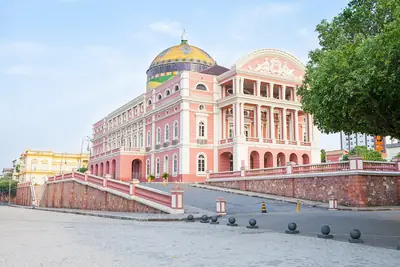
Standing proudly in the historic center at Largo de São Sebastião, the Amazon Theatre (Teatro Amazonas) is the city’s principal cultural symbol. Opened in 1896 during the height of the rubber boom, this magnificent opera house features a Renaissance-style exterior, a striking decorative dome, and richly decorated interiors. Recognized as a national historic heritage site in 1966 and a UNESCO World Heritage Site in 2026, it continues to host major performances and the annual Amazonas Opera Festival.
Igreja de São Sebastião
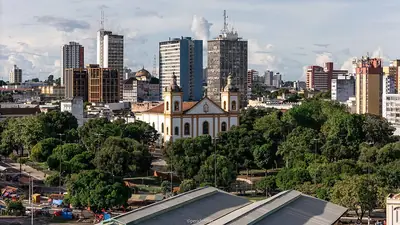
Also located at Largo de São Sebastião, the Church of Saint Sebastian was inaugurated in 1888 and later became a parish in 1912. Listed as a Historical Heritage Site by the Amazonas State Council, the church combines eclectic architectural traditions, featuring both Gothic and Neoclassical influences.
Catedral Metropolitana de Manaus
Standing on a rise opposite the Port of Manaus at Praça XV de Novembro, the Metropolitan Cathedral of Manaus—also known as the Mother Church—traces its origins to a chapel built by Carmelite missionaries in 1695. The present neoclassical Greek structure was inaugurated in the 1870s using materials imported from Europe, including European bells, Lisbon limestone, and painted tiles.
Rio Negro Palace and Rio Branco Palace
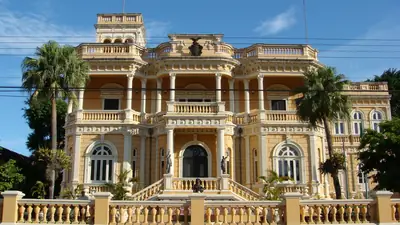
The city’s political and commercial history is anchored by its former government buildings. Rio Negro Palace, originally built as the Scholz Palace by German rubber baron Karl Waldemar Scholz, later served as the official residence of the state governor. Nearby, Rio Branco Palace previously housed the headquarters of the Legislative Assembly of Amazonas.
Chaminé Theatre and Other Historic Landmarks
Constructed originally in 1910 as a sewage treatment station, the Chaminé Theatre takes its name from its most prominent architectural feature: a twenty-four-meter-tall chimney. Other notable stops in the city include the Beit Yaacov and Rabi Meyr Synagogue, which highlights the history of Amazonian Jews, the Bernardo Ramos Museum of Numismatics, the Capela de Santo Antônio do Pobre Diabo in the Cachoeirinha neighborhood, and the Church of Our Lady of the Remedies.
Natural Landmarks: Rio Negro and Arena Amazônia
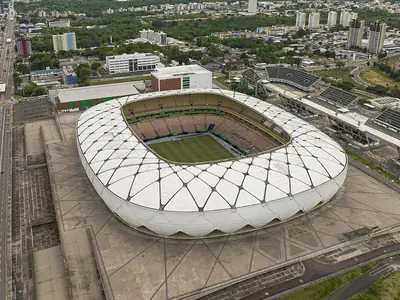
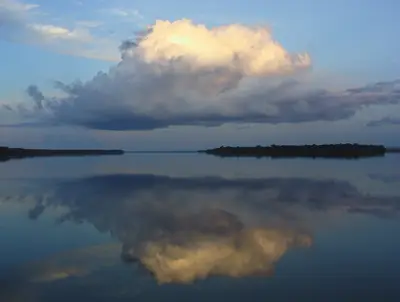
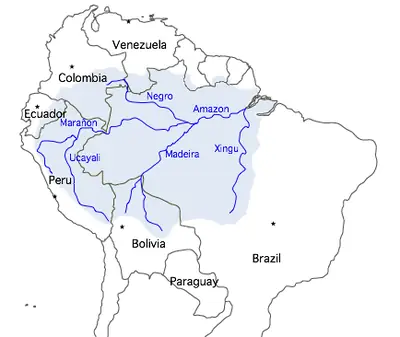
Beyond its architecture, Manaus is defined by its immense natural setting. The Rio Negro flows past the city as the largest left-bank tributary of the Amazon, exhibiting a powerful annual flood cycle that reached a historic record of 30.02 metres in June 2021. Within the city, sports enthusiasts can visit the Arena Amazônia (officially Arena da Amazônia Vivaldo Lima), a multiuse football stadium with a capacity of 42,924 people built for the 2014 FIFA World Cup and later used during the 2016 Summer Olympics.
Explore Manaus with a Self-Guided Audio Tour
To experience the city at your own pace without schedules or tour groups, download Neywo and let the app narrate the history of each place as you arrive. Neywo offers a complete Manaus audio guide with 25 narrated places and 2 walking tour(s) available in 11 languages. You can choose between two detailed routes:
- “The Paris of the Tropics: Opera, Port and Rubber Fortunes” covers 3.47 km over 105 minutes across 11 stops, including the Amazon Theatre, the synagogue, the cathedral, and the port.
- “Rubber Baron Palaces and Indigenous Memory” spans 3.61 km over 82 minutes across 6 stops, taking you past the Rio Negro Palace, the Chaminé Theatre, and historic neighborhood chapels.
Places with an audio guide in Manaus
8 places in Manaus with a Neywo audio guide. Each one starts telling its story as you reach it.
Self-guided tours in Manaus
2 tours in Manaus, free in the Neywo app. Each stop tells its story as you reach it.
- Walk
The Paris of the Tropics: Opera, Port and Rubber Fortunes
In the 1890s rubber barons turned a jungle outpost into the Paris of the Tropics. Walk from the synagogue and one of the city's oldest squares, past the university's Amazon museum, to the domed opera house, climb to the Mother Church above the harbour, and finish at the old English-built engine house of the port, where the riches of the Amazon once left for the world.
Beit Yaacov/Rabi Meyr Synagogue · Missing Square · Manaus Crime Museum · Amazon Museum of the Federal University of Amazonas · Amazon Theatre · Largo de São Sebastião …
Open this tour: The Paris of the Tropics: Opera, Port and Rubber Fortunes - Walk
Rubber Baron Palaces and Indigenous Memory
A quieter walk through the eastern historic centre. See the numismatic museum and a church of the old quarter, a theatre born from a failed sewage station and its 24-metre chimney, the palace of a German rubber baron, and the museum that keeps the objects and rituals of the peoples of the Upper Rio Negro. End at the little Chapel of Santo Antônio do Pobre Diabo, a state historical monument in the Cachoeirinha neighbourhood.
Bernardo Ramos Museum of Numismatics · Church Our Lady of the Remedies · Chaminé Theatre · Rio Negro Palace · Museu do Índio de Manaus · Capela de Santo Antônio do Pobre Diabo
Open this tour: Rubber Baron Palaces and Indigenous Memory
Walk Manaus with Neywo
Neywo turns Manaus into a self-guided audio tour. Stories arrive as you reach the place they belong to, and the route reshapes when you wander off it.

