Salvador, Brazil: Self-Guided Walking Tour
What to See in Salvador: Landmarks and Afro-Brazilian Heritage
If you are planning your trip and wondering what to see in Salvador, Brazil’s vibrant first capital delivers an intense mix of colonial architecture, deep-rooted African heritage, and sweeping coastal views along All Saints Bay. Founded in 1549, the city preserves the largest surviving ensemble of colonial architecture in Latin America, while its streets pulse with everyday music, faith, and cuisine. Neywo features a free audio guide for Salvador with 160 narrated places to help you explore every corner.
Key Landmarks and What to Do in Salvador
The city’s rich history unfolds across its neighborhoods, from the steep, cobbled lanes of the old center to the fortifications guarding the bay.
Historic Centre and Pelourinho
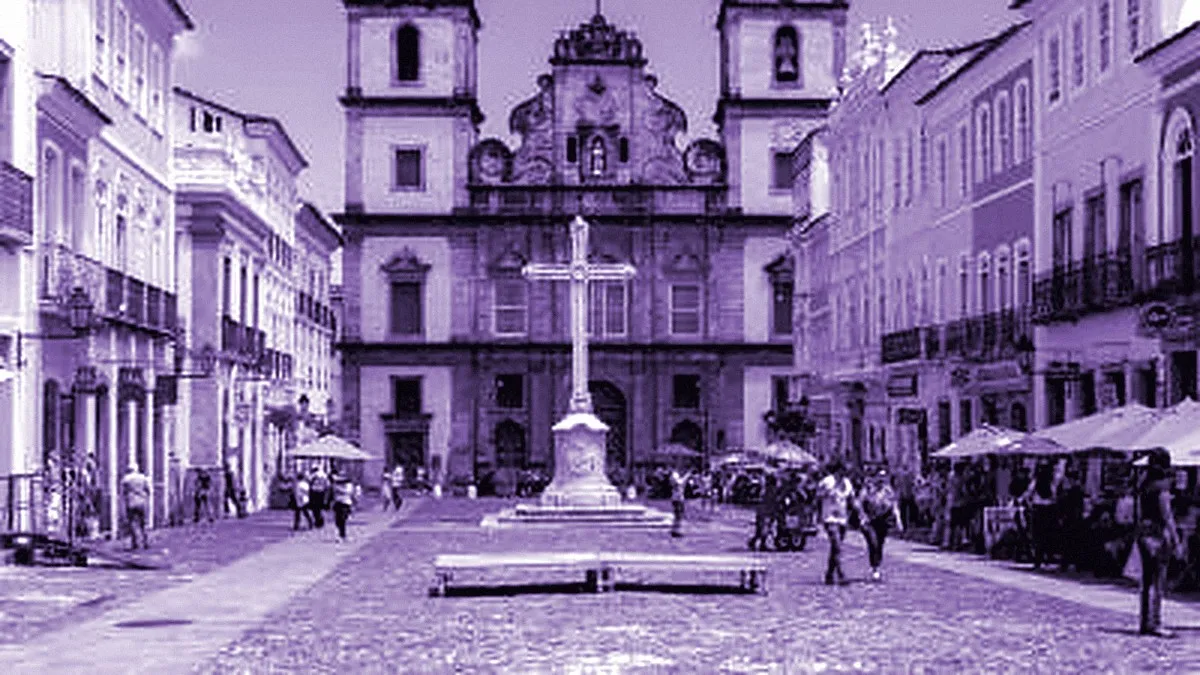
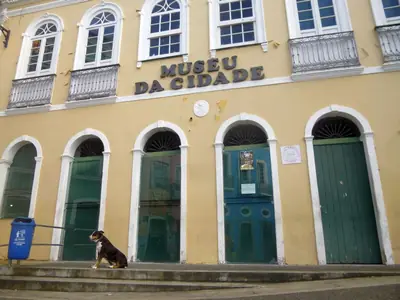
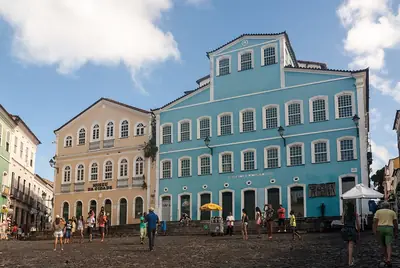
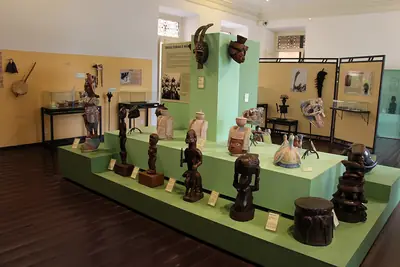
The heart of the city’s origins is the Historic Center of Salvador da Bahia, often called the Pelourinho or “Pelô.” Named after the whipping post that once stood in its central square, this neighborhood grew into an early slave market where enslaved Africans arrived to work plantations and mines. Today, it stands as a vibrant cultural hub for Salvador’s Afro-Brazilian community. Facing Largo do Pelourinho is the City Museum of Salvador, opened in 1973 to showcase the city’s artistic, religious, and cultural diversity. Nearby in the historic center, the Afro-Brazilian Museum highlights African roots with cedar carvings by Carybé and panels depicting candomblé orixás, while Casa do Benin reflects the historical ties between Bahia and Benin.
Convento do Carmo and Colonial Churches
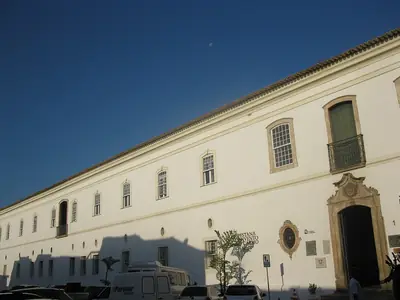
On Ladeira do Carmo stands the Convento do Carmo, one of the oldest Carmelite convents in Brazil, established in 1586. Its thick walls once provided refuge during the war against the Dutch. Alongside it sits the Church of the Third Order of Carmo.
Coastal Sights and Museums
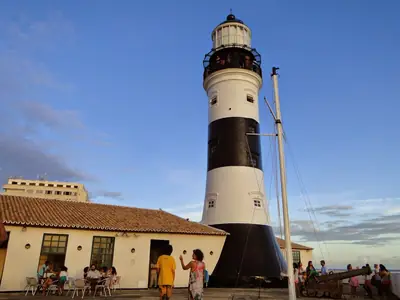
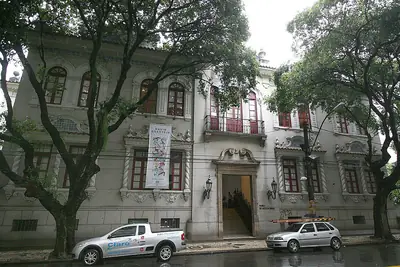
At the southern tip of the city stands the Barra Lighthouse inside the Fort of Santo Antônio da Barra. Operating since 1698, it is the oldest lighthouse still working in the Americas, paired with the Museu Náutico da Bahia. Nearby on Rua da Graça, the Museu de Arte Contemporânea da Bahia occupies the Palacete do Comendador Bernardo Martins Catharino, featuring a founding collection transferred from the Museum of Modern Art of Bahia.
Modern and Cultural Landmarks
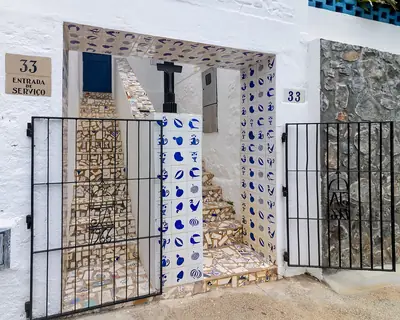
Near Mercado Modelo on Praça Cayru, the Sobrado Azulejado—or Casarão dos Azulejos Azuis—stands out with walls entirely covered in Portuguese azulejo tiles. In the Rio Vermelho neighborhood, Casa do Rio Vermelho preserves the former home of writers Jorge Amado and Zélia Gattai as a memorial housing their ashes in the garden. Overlooking the city, Arena Fonte Nova stands as Salvador’s modern football stadium, built on the site of the older Estádio Octávio Mangabeira for the 2014 FIFA World Cup.
Explore Salvador with a Self-Guided Audio Tour
Discovering this coastal metropolis is seamless when you use the Neywo app as your Salvador audio guide. The app offers 6 walking tour(s) and 1 bus route(s), covering a total of 160 narrated stops across walks ranging from 1.2 km to 3.84 km and lasting between 68 and 111 minutes.
Each story plays automatically as you reach the place, allowing you to explore at your own pace with no group and no schedule. The narration is available in 11 languages, making it easy to dive deep into the history of Brazil while walking through its most storied coastal city.
Places with an audio guide in Salvador
8 places in Salvador with a Neywo audio guide. Each one starts telling its story as you reach it.
Self-guided tours in Salvador
7 tours in Salvador, free in the Neywo app. Each stop tells its story as you reach it.
- Bus ride
Line 0429: Barra to Iapi Through the Heart of Salvador
A public Integra bus that runs from Barra across the Campo Grande theatre district and down to the harbour, passing a Benedictine church, the Teatro Castro Alves, Teatro Vila Velha, the Basilica of the Immaculate Conception, the blue-tiled Sobrado Azulejado and the Commercial Association palace. A cheap way to see how the Upper and Lower City fit together.
Church and Monastery of Our Lady of Grace · Teatro Castro Alves · Teatro Vila Velha · Basilica of the Immaculate Conception · Sobrado Azulejado · Inglaterra square (Salvador) …
Open this tour: Line 0429: Barra to Iapi Through the Heart of Salvador - Walk
Pelourinho: Cobblestones, Carmelites and the Pillory Square
Start at a tile-covered prayer column from 1743 and climb the Ladeira do Carmo into the pastel heart of Brazil's first capital. You will pass a Carmelite convent turned hotel, a baroque church whose steps are a graduation-photo tradition, the reggae square, and the square where the pillory once stood. End among museums that tell the story of Bahia's Afro-Brazilian roots.
Oratório da Cruz do Pascoal · Convento do Carmo de Salvador · Church of the Third Order of Mount Carmel · Church of the Blessed Sacrament at Rua do Passo · Church of the Third Order of Our Lady of the Rosary of the Black People · Praça do Reggae …
Open this tour: Pelourinho: Cobblestones, Carmelites and the Pillory Square - Walk
Terreiro de Jesus: Jesuits, Saints and the Fallen Cross
Walk the great square the Jesuits built and the cathedral that dominates it. Along the way: a church facade carved straight into limestone, the cross-topped square of Saint Francis, a lost first cathedral remembered by a twelve-metre sculpture, and the hospital church founded in the same month as the city. End at the House of the Seven Lamps.
Church of the Third Order of Saint Francis · Largo do Cruzeiro de São Francisco · Igreja da Ordem Terceira de São Domingos · Church of Saint Peter of the Clergymen · Praça Terreiro de Jesus · Afro-Brazilian Museum …
Open this tour: Terreiro de Jesus: Jesuits, Saints and the Fallen Cross - Walk
Down the Elevator: From the Upper City to the Port
Start where Brazil's first governor-general stood, then ride the Lacerda Elevator, the first urban elevator in the world, down to the old harbour. The Lower City brings blue-tiled mansions, Carnival and the merchants who made Salvador rich.
Praça Tomé de Souza · Palácio Tomé de Sousa · Elevador Lacerda · Praça Cairu · Memorial of the Baianas · Sobrado Azulejado …
Open this tour: Down the Elevator: From the Upper City to the Port - Walk
Victory to the Lighthouse: Forts and Museums of the Bay Mouth
Follow the Corredor da Vitória past a geological museum, Brazil's oldest state museum and the Costa Pinto collection, then the second-oldest church in the country and the newest contemporary art museum in the city, and on to Porto da Barra beach. Two forts guard the old harbour, and the Barra lighthouse, the oldest working lighthouse in the Americas, closes the walk.
Museu Geológico da Bahia · Bahia Museum of Art · Museu Carlos Costa Pinto · Igreja de Nossa Senhora da Vitória · Museu de Arte Contemporânea da Bahia · Church of Saint Antony of Barra …
Open this tour: Victory to the Lighthouse: Forts and Museums of the Bay Mouth - Walk
Poets, Basilicas and Convents: Praça Castro Alves to Lapa
Walk the upper city west of the Pelourinho, where the Jesuits raised one of Brazil's first chapels in 1549. Pass the basilica of the Immaculate Conception, Praça Castro Alves where Salvador's grandest theatre once stood, the Benedictine basilica of St Sebastian, and the convent of Lapa, the second-oldest convent for women in Brazil.
Chapel of Our Lady of Help · Basilica of the Immaculate Conception · Teatro São João · Praça Castro Alves · Teatro Gregório de Matos · Praça da Barroquinha …
Open this tour: Poets, Basilicas and Convents: Praça Castro Alves to Lapa - Walk
Campo Grande: Independence, Theatres and the Governors' Palace
Walk Salvador's monumental avenue of the Dois de Julho. See the column that celebrates Bahian independence, the palace that was the governors' residence, the Passeio Público and Teatro Vila Velha, where Caetano Veloso and Gilberto Gil began, and the Teatro Castro Alves, the city's largest stage.
Largo Dois de Julho · Igreja e Convento de São Raimundo · Igreja do Senhor Bom Jesus dos Aflitos · Palácio da Aclamação · Passeio Público · Teatro Vila Velha …
Open this tour: Campo Grande: Independence, Theatres and the Governors' Palace
Walk Salvador with Neywo
Neywo turns Salvador into a self-guided audio tour. Stories arrive as you reach the place they belong to, and the route reshapes when you wander off it.

